Political geography is the study of the spatial organization of political systems, the impact of geography on political structures, and how spatial relationships shape political activity across the globe.
Defining Political Geography
Political geography is a subfield of human geography that focuses on the ways political processes and structures are influenced by spatial and geographic factors. It explores how power is distributed across space and how territory, borders, and resources play central roles in shaping global and domestic politics.
Political geography analyzes how space and place affect governance, conflict, international relations, and identity.
It connects with other disciplines such as political science, economics, sociology, and anthropology to understand how states function, how borders are created and maintained, and how political decisions affect spatial arrangements.
Key areas of study in political geography include:
The creation and maintenance of states and nations.
The structure and function of borders.
The exercise of sovereignty and territoriality.
The role of international organizations and global governance.
The relationship between geography and political power.
The spatial impacts of conflict, migration, and colonialism.
Political geographers use tools like maps, spatial analysis, geographic information systems (GIS), and fieldwork to interpret political phenomena in a geographical context.
What Is a State?
A state is a politically organized entity with a defined territory, permanent population, recognized sovereignty, and an effective government. In international law, the state is considered the primary actor in global politics.
Essential characteristics of a state:
Defined territory: Clearly demarcated geographic boundaries that separate it from neighboring states.
Permanent population: People who reside within the territory on a continuous basis.
Sovereign government: An authority that governs independently, with control over domestic and foreign po
International recognition: Other states and international bodies recognize the entity as a legitimate government.
Examples of states include the United States, Brazil, Russia, France, and India. Each of these entities exercises authority over its population and land, and is recognized by others as a member of the international community.
States can have different forms of government (democracy, monarchy, authoritarianism) and different levels of political organization (unitary vs. federal systems). Their power may be centralized or distributed across multiple levels of governance.
The Nation
A nation refers to a group of people who share common cultural characteristics such as language, religion, ancestry, traditions, and historical experiences. Nations are united by a collective identity and often have a shared sense of belonging to a specific geographic area.
Characteristics of a nation:
Cultural unity: A shared sense of heritage, customs, and values.
Historical continuity: A belief in a common past and often aspirations for a common future.
Linguistic identity: Common language, although not always universal.
Emotional connection to land: Many nations consider a specific region or homeland central to their identity.
Examples of nations:
The Japanese nation is unified by language, culture, and a strong national identity.
The Kurdish nation is a distinct ethnic group with its own language and culture, living in parts of Iraq, Turkey, Syria, and Iran, but without a state.
The Maori people in New Zealand are an indigenous nation with a unique language and tradition.
The term nation is often used interchangeably with state, but in political geography, they are distinct. A state is a political entity, while a nation is a cultural concept.
Nation-State
A nation-state occurs when a state's boundaries closely align with the boundaries of a nation. This concept is often idealized in political geography, where a single cultural group is governed by a single political authority.
Features of a nation-state:
Unified culture and language across the population.
Strong sense of nationalism and political unity.
Alignment of national and state boundaries.
Political legitimacy often derived from cultural homogeneity.
Examples of nation-states
Japan: Has a largely homogeneous population with a strong shared identity and language.
Iceland: Culturally unified with minimal immigration, making it a classic example.
Portugal and Sweden: Strong shared language and history within clear national borders.
Nation-states foster a sense of national pride and unity, but in today’s globalized world, truly homogeneous nation-states are rare. Immigration, globalization, and cultural exchange often create diverse societies.
Multinational States
A multinational state is a single political entity that contains multiple nations within its borders. These nations may maintain their own cultural identities and traditions and may seek varying degrees of autonomy or representation.
Characteristics of multinational states:
Ethnic and cultural diversity within state boundaries.
Multiple official or regional languages.
Potential for political tension or conflict between groups.
Mechanisms for power-sharing or regional governance.
Examples:
Russia: Contains over 190 distinct ethnic groups, including Tatars, Chechens, and Bashkirs.
The United Kingdom: Comprises four distinct nations—England, Scotland, Wales, and Northern Ireland—with separate cultural identities and devolved governments.
Belgium: Divided between Dutch-speaking Flanders and French-speaking Wallonia.
Multinational states must carefully manage interethnic relations, language rights, and representation to maintain political stability and avoid secessionist movements.
Stateless Nations
A stateless nation is a group of people with a shared national identity, culture, or language, but without their own sovereign state. These groups may be spread across multiple countries or live as minorities within a dominant state.
Key features:
Lack of independent political sovereignty.
Cultural or ethnic cohesion.
Desire for self-determination or recognition.
Often face political marginalization or repression.
Examples:
Kurds: A large ethnic group seeking independence, living across Turkey, Iraq, Syria, and Iran.
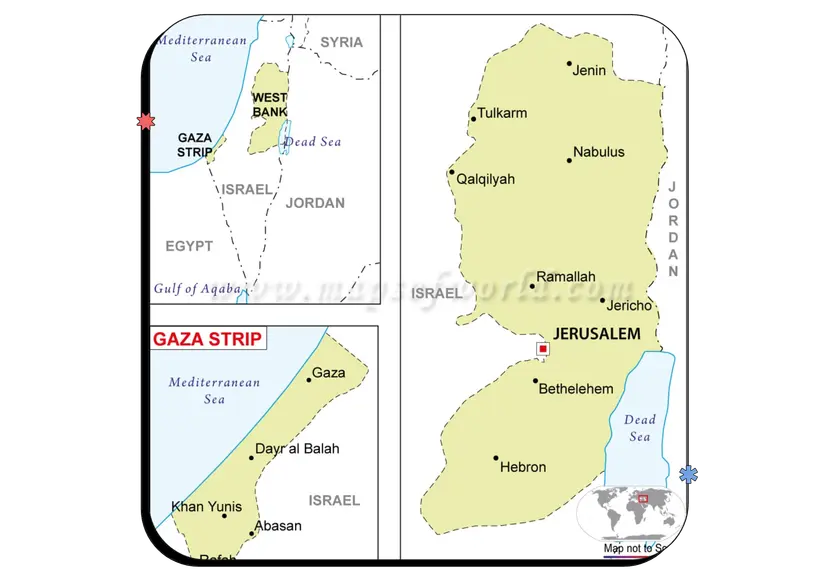
Palestinians: A stateless people living in the West Bank, Gaza Strip, and refugee communities in neighboring countries,
Tibetans: A culturally distinct group under Chinese rule, seeking autonomy or independence.
Basques: An ethnic group in Spain and France seeking greater autonomy or independence.
Stateless nations often advocate for political rights, autonomy, or recognition, and their struggles can be sources of regional instability.
Source: Newell Weebly
Multistate Nations
A multistate nation is a cultural or ethnic group that exists across the boundaries of multiple sovereign states. These groups may or may not have a political structure representing them in each country, but they share a collective identity.
Characteristics:
Dispersed across several countries.
May form diaspora communities with shared identity.
Cultural connection despite political separation.
Examples:
Koreans: Divided between North and South Korea, sharing language and culture but under different governments.
Hungarians: Found in Hungary, but also in Romania, Slovakia, and Serbia, where Hungarian minorities maintain cultural traditions.
Arabs: Spread across numerous states in the Middle East and North Africa, with a shared cultural and linguistic heritage.
Romani people: Dispersed throughout Europe and the Americas, without a single homeland.
Multistate nations often push for cultural preservation and sometimes for political unification or enhanced rights in the countries where they live.
Sovereignty and Autonomy
Sovereignty
Sovereignty is the full right and power of a governing body to govern itself without any interference from outside sources or bodies. It includes both internal control and external recognition.
Internal sovereignty: Ability to enforce laws and govern within borders.
External sovereignty: Being recognized as a legitimate state by other states and international institutions.
Challenges to sovereignty include foreign interventions, terrorism, supranational organizations, and global economic pressures.
Autonomy
Autonomy refers to the degree of self-governance exercised by a region, cultural group, or ethnic minority within a larger state. Autonomy may be granted as a way to prevent conflict or recognize cultural distinctiveness.
Examples of autonomous regions:
Scotland: Has its own parliament within the United Kingdom.
Catalonia: Has a high degree of autonomy in Spain, with its own language and parliament.
Greenland: An autonomous territory within the Kingdom of Denmark.
Autonomy is often a compromise between full independence and full integration, but it can also lead to further demands for sovereignty.
The Role of International Organizations
International organizations influence political geography by regulating relations among states, resolving conflicts, and shaping global norms.
Major international organizations:
United Nations (UN): Addresses global peace, security, and humanitarian efforts.
European Union (EU): Promotes political and economic integration among European states.
African Union (AU): Focuses on unity and cooperation among African countries.
NATO (North Atlantic Treaty Organization): A military alliance formed for collective defense.
These organizations can limit sovereignty, as members often agree to adhere to shared rules or judgments. They also affect border recognition, human rights policies, and economic development programs.
Geography and Political Power
Geographic features and resources play major roles in shaping political power and spatial organization. Certain locations offer strategic advantages, while others present challenges to governance.
Influential geographic factors:
Mountains and rivers: Often serve as natural boundaries.
Oceans and coasts: Provide trade access and naval strength.
Natural resources: Control of oil, minerals, and water affects political influence.
Climate and terrain: Influence settlement patterns and defense strategies.
Political geography analyzes how geography influences war, alliances, development, and infrastructure, as well as internal divisions such as voting districts and administrative regions.
Spatial Organization of Power
The distribution of power within a state also has a spatial dimension, shaping how governance is conducted at national and local levels.
Unitary states: Centralized government with limited regional autonomy (e.g., France).
Federal states: Divide power between central and regional governments (e.g., United States, Germany)
Confederations: Loose alliances of independent states with limited central authority.
FAQ
Sovereignty is essential in political geography because it defines a state's legal and political authority to govern its territory without external interference. It enables states to enact laws, control resources, conduct foreign relations, and ensure internal stability. Sovereignty is what distinguishes independent states from dependent territories or colonies.
It ensures that a state has the right to control its population and borders.
Sovereignty underpins international recognition and membership in global organizations like the UN.
Challenges to sovereignty, such as foreign intervention or occupation, can lead to conflict and shifts in territorial control.
The rise of supranational entities like the EU and international agreements often require states to share or limit certain aspects of sovereignty, affecting how political power is exercise
Physical geography plays a foundational role in the formation of states and their boundaries. Natural features like mountains, rivers, and deserts often serve as clear, defensible borders that limit movement and define territorial extent.
Mountains can act as natural barriers (e.g., the Andes in South America) that separate populations and limit conflict.
Rivers often form boundaries (e.g., the Rio Grande between the U.S. and Mexico) but can also be sources of dispute if shared.
Deserts may separate political units due to the difficulty of sustaining populations and movement across them.
Access to coastlines significantly impacts trade and power projection, giving some states strategic advantages.
Geographic obstacles can influence how easily a state can maintain unity and defend its territory, affecting long-term political stability.
Nationalism is a powerful force in political geography, as it connects people to a shared identity and often drives movements for state formation, independence, or unity. Nationalism can either unify or divide, depending on how it is expressed and the context in which it arises.
It can promote state formation when a cultural group seeks political sovereignty (e.g., creation of Germany and Italy in the 19th century).
It strengthens existing states by fostering loyalty and unity among citizens, especially during conflicts or crises.
In multinational states, nationalism can create tensions when minority nations seek autonomy or independence (e.g., Catalonia in Spain).
Nationalist ideologies have also been used to justify exclusionary or aggressive policies, including territorial expansion or suppression of minority groups.
Understanding nationalism helps explain why political borders do not always align with cultural boundaries and why some areas experience separatist movements.
Cultural factors such as language, religion, and ethnic identity significantly influence how states are organized and governed. Cultural homogeneity often promotes cohesion, while cultural diversity can present governance challenges if not managed inclusively.
Shared language and traditions can reinforce national identity and political unity.
Cultural diversity may lead to demands for regional autonomy, especially if groups feel underrepresented.
States with multiple official languages or religious groups often implement federal systems to accommodate regional differences.
Failure to address cultural differences can result in social unrest, civil conflict, or secessionist movements.
Cultural factors often determine how power is shared within a state and shape the development of legal systems, education policies, and public administration.
Microstates are sovereign states with very small land areas and populations, but they retain full rights under international law and often exercise unique geopolitical and economic strategies to survive and thrive.
Examples include Monaco, Liechtenstein, San Marino, and Tuvalu.
Microstates often depend on larger neighbors for defense, economic aid, and trade partnerships.
They may generate revenue through tourism, banking, or by offering favorable tax and regulatory environments.
Despite their size, microstates can be members of the United Nations and participate in international diplomacy.
They often use strategic alliances and diplomacy to maintain their sovereignty and independence.
Practice Questions
Explain the difference between a nation, a state, and a nation-state. Provide one example of each.
A state is a politically organized territory with defined borders, a permanent population, and sovereignty, such as Brazil. A nation is a group of people sharing cultural characteristics like language or history, such as the Kurds, who do not have a state of their own. A nation-state is a sovereign state whose population shares a common identity and culture, such as Japan. While states focus on political organization, nations are about shared identity, and nation-states combine both. Understanding the distinction helps explain global political organization and why conflicts can arise when national identity and state boundaries do not align.
Describe how a multinational state may face challenges in maintaining political unity. Use a specific example to support your response.
Multinational states face challenges in maintaining political unity due to cultural, linguistic, and ethnic diversity that can lead to internal divisions. These divisions may cause groups to seek autonomy or even independence, creating tension or conflict. For example, the United Kingdom includes England, Scotland, Wales, and Northern Ireland, each with distinct identities. Scotland has held referendums on independence, reflecting ongoing national differences. To address these challenges, governments often grant regional autonomy or cultural recognition. However, balancing national unity with regional demands remains complex and may affect political stability, representation, and national policies in multinational states.