Understanding the structure of economic sectors reveals how countries produce, trade, and consume goods and services across space and development levels.
The Structure of the Global Economy
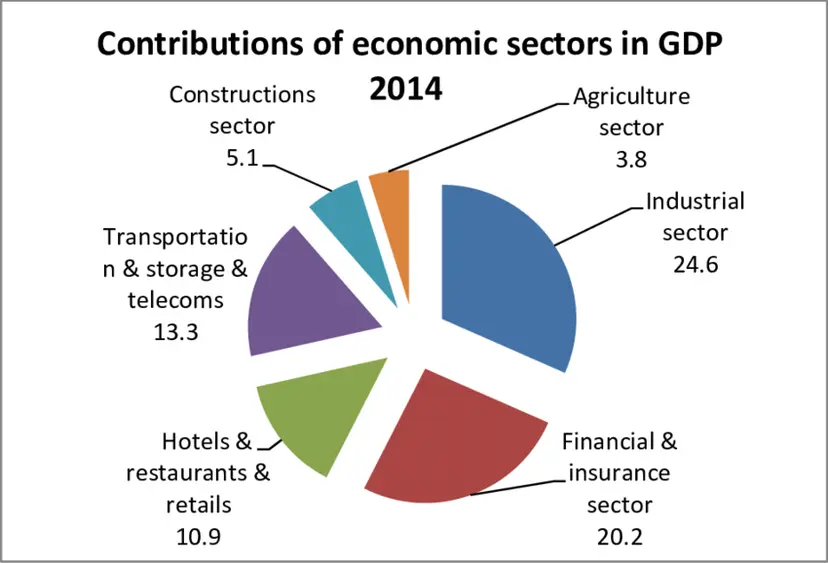
Economic activity can be divided into five distinct sectors that represent different types of work and economic functions. These sectors are categorized based on their position in the production and value chain. Each stage—from extracting raw materials to delivering services and making policy decisions—plays a critical role in shaping the geography of economic development.
Primary Sector
The primary sector involves the extraction and collection of natural resources directly from the Earth. This is the foundation of all economic activity and includes industries that gather raw materials to be processed or consumed. These activities are most prevalent in less developed countries (LDCs), where economies rely heavily on agriculture and raw material exports.
Examples of primary activities:
Agriculture: Cultivating land to grow food and cash crops like wheat, rice, cotton, and coffee.
Livestock raising: Breeding animals for meat, milk, wool, and labor.
Fishing: Harvesting marine or freshwater organisms.
Forestry: Cutting and collecting timber for construction, paper, and fuel.
Mining and quarrying: Extracting coal, oil, minerals, and stone for industrial use.
Primary sector jobs are often labor-intensive and seasonally dependent. These occupations are also highly vulnerable to climate change, soil degradation, overfishing, and resource depletion. In many LDCs, governments and development agencies focus on improving agricultural efficiency and sustainable resource management to boost the primary sector.
Secondary Sector
The secondary sector involves processing raw materials into finished goods. This sector marks the transition from an agrarian economy to an industrial economy. It typically includes manufacturing, construction, and energy production and is more common in newly industrialized countries (NICs) or parts of semi-periphery regions.
Examples of secondary production:
Manufacturing: Assembling automobiles, electronics, chemicals, or clothing.
Construction: Building infrastructure like roads, railways, buildings, and bridges.
Utilities and energy: Producing electricity from fossil fuels, nuclear energy, or renewables like solar or wind power.
Secondary sector activities contribute greatly to a country’s GDP and urbanization. Industrialization drives infrastructure development, creates employment opportunities, and encourages foreign investment. However, it also leads to pollution, waste generation, and sometimes labor exploitation in low-wage factories. Countries in this stage often experience rapid economic growth, but may face challenges with labor rights, environmental degradation, and economic dependency on manufacturing.
Tertiary Sector
The tertiary sector, also known as the service sector, focuses on the provision of services rather than the production of goods. This includes services provided to businesses and individuals, and is often the largest contributor to GDP in developed countries.
Examples of tertiary activities:
Retail and trade: Selling goods in stores or online.
Finance and insurance: Banking, investing, and risk management services.
Healthcare: Providing medical care through clinics, hospitals, and private practices.
Education: Schools, universities, tutoring, and training institutions.
Tourism and hospitality: Accommodations, restaurants, and entertainment for travelers.
Transportation: Moving goods and people by road, rail, air, and sea.
This sector depends heavily on communication, infrastructure, and technology. As countries grow wealthier and people have more disposable income, the demand for services increases. Many tertiary jobs are non-routine and interpersonal, requiring soft skills and specialized training. This sector is also highly variable in wages—ranging from low-paying jobs in retail to high-paying jobs in finance and medicine.
Quaternary Sector
The quaternary sector involves knowledge-based economic activities. It includes information technology, research, consulting, and media, focusing on the creation, processing, and transmission of knowledge and information. This sector is vital for innovation and technological progress and is increasingly significant in post-industrial societies.
Examples of quaternary sector roles:
Software engineers: Developing apps, programs, and operating systems.
Data analysts: Using statistics and modeling to extract insights from data.
Academic researchers: Working at universities and institutions on scientific breakthroughs.
Consultants: Advising businesses on strategy, efficiency, and market trends.
These roles require high levels of education and skill, and are often centered in global cities with strong financial and educational infrastructure. Investment in the quaternary sector boosts economic diversification, competitiveness, and the capacity for innovation.
Quinary Sector
The quinary sector represents the highest level of decision-making and includes executive, legislative, and high-level managerial roles. It also encompasses services that improve quality of life, such as cultural, non-profit, and wellness services.
Examples:
Corporate executives: CEOs and board members directing company strategy.
Government officials: Presidents, prime ministers, and policy advisors.
Think tanks: Researchers crafting public policy and international strategy.
Healthcare leaders: Hospital administrators and public health strategists.
University presidents: Managing education systems and research priorities.
This sector plays a crucial role in shaping economic policy and directing resources. It also often overlaps with the quaternary sector and represents the concentration of human capital and power in advanced economies.
Courtesy of ResearchGate
Core, Semi-Periphery, and Periphery Model
Economic sectors also help illustrate global inequalities in development. The World Systems Theory, developed by sociologist Immanuel Wallerstein, divides the world into:
Core countries: Highly industrialized and economically dominant. They specialize in quaternary and quinary services. Examples include the U.S., Germany, and Japan.
Semi-periphery countries: Intermediate development. They often rely on manufacturing and have expanding service economies. Examples include China, India, and Mexico.
Periphery countries: Least developed. Economies are dependent on agriculture and raw material exports. Examples include many African and South Asian nations.
This structure helps explain trade imbalances and labor exploitation, where core countries consume high-value goods produced by the labor of periphery nations.
Commodity Chain
A commodity chain represents the sequence of steps a product takes from raw material to consumer. These chains span across economic sectors and often across international borders.
Stages in a commodity chain:
Extraction (primary sector): Mining iron ore.
Processing (secondary): Turning ore into steel beams.
Distribution (tertiary): Shipping and selling steel.
Design and branding (quaternary): Marketing steel structures for architects.
Policy oversight (quinary): Regulation of international trade.
Commodity chains reveal interdependencies between countries and sectors, as well as potential environmental and ethical concerns like child labor, pollution, and unfair trade practices.
Break-of-Bulk Points
A break-of-bulk point is where cargo changes transportation modes—a key location in global trade.
Common examples:
Ports: Ship containers transferred to rail or truck.
Airports: Air cargo moves to road transport for last-mile delivery.
Rail yards: Goods shift between trains and trucks.
These points are often urban hubs with strategic locations, such as Singapore, Rotterdam, and Los Angeles. Efficient break-of-bulk infrastructure reduces transport costs, improves logistics, and encourages economic growth.
Deindustrialization
Deindustrialization is the decline in manufacturing activity, typically in developed countries transitioning toward service-based economies.
Causes:
Globalization: Companies move factories to countries with cheaper labor.
Automation: Machines replace human workers.
Trade policies: Opening markets increases imports of cheaper goods.
Impacts:
Job losses in the secondary sector, especially among low-skilled workers.
Urban decay, especially in industrial regions.
Widening income inequality and regional disparities.
Examples:
United States: The Rust Belt region (Ohio, Michigan, Pennsylvania) lost factories as manufacturing declined.
United Kingdom: Former industrial areas like Sheffield and Newcastle faced economic stagnation after coal and steel industries collapsed.
Governments often respond by investing in education, retraining programs, and technology innovation to help affected workers and communities adjust to economic change.
Spatial Organization and Global Patterns
Economic activities tend to cluster in particular geographic areas based on labor availability, infrastructure, and policy support.
Industrial parks: Attract manufacturing with favorable taxes and logistics.
Global cities: House quaternary and quinary sector jobs due to access to capital and talent.
Rural areas: Often focus on primary production due to available land and labor.
Outsourcing and offshoring are key geographic strategies:
Outsourcing: Contracting business tasks (like customer service) to external firms.
Offshoring: Moving company operations to other countries to lower costs.
Countries like India, Vietnam, and the Philippines have become global leaders in outsourced services and low-cost manufacturing.
Trading Between Countries
International trade links all economic sectors and relies on the specialization of labor among nations. Different countries focus on the sectors where they have a comparative advantage.
Core nations: Export capital-intensive goods and services.
Semi-periphery nations: Export manufactured goods and intermediate products.
Periphery nations: Export raw materials and agricultural products.
FAQ
Government policies can significantly shape the growth or decline of specific economic sectors through regulation, taxation, subsidies, infrastructure investment, and trade agreements. These tools can either encourage or discourage economic activities, often based on national development goals.
Primary sector: Governments may provide subsidies for agriculture, regulate land use, and invest in rural development.
Secondary sector: Industrial policies can include tax breaks for manufacturers, zoning laws, or investments in transport and energy infrastructure.
Tertiary to quinary sectors: Policies promoting education, digital infrastructure, and innovation hubs can attract service-based and knowledge-intensive businesses.
Tariffs and trade agreements influence which sectors are globally competitive or protected from foreign competition.
Cities specialize based on geographic, historical, economic, and political factors that make certain types of economic activity more viable. Urban economies evolve according to their location advantages, labor availability, infrastructure, and policy environment.
Service and knowledge-focused cities like New York or Tokyo have advanced education systems, corporate headquarters, and financial institutions.
Industrial cities like Detroit historically grew due to proximity to raw materials, transport networks, and access to labor for manufacturing.
Resource-oriented cities often emerge near natural reserves—e.g., oil towns in Texas or mining centers in South Africa.
Agglomeration economies reinforce this specialization, where industries cluster and build on existing strengths in labor and infrastructure.
Each economic sector has unique environmental impacts, and understanding these differences is crucial for sustainable development planning. The intensity of resource use and waste generation varies significantly from one sector to another.
Primary sector: Heavy reliance on land and water. Deforestation, soil erosion, and overfishing are common issues.
Secondary sector: High energy consumption and industrial pollution, including greenhouse gas emissions and toxic waste.
Tertiary sector: Lower physical impact but rising digital carbon footprints from data centers and logistics.
Quaternary/quinary sectors: Indirect impacts through policy-making, R&D, and urban planning.
Sustainable practices include enforcing regulations, investing in clean technologies, promoting circular economies, and improving supply chain transparency across all sectors.
Informal economic activities often exist alongside formal sector activities but are typically unregulated, untaxed, and not officially included in GDP or labor statistics. These activities are essential in many developing countries and span multiple sectors.
Primary: Subsistence farming, informal mining.
Secondary: Small-scale home manufacturing, unlicensed workshops.
Tertiary: Street vending, informal transportation services (e.g., motorcycle taxis).
Informal work is often driven by poverty, limited access to education, and insufficient formal job opportunities.
While it provides income and employment, the informal sector can lead to worker exploitation, lack of benefits, and unmonitored environmental damage, making its integration into development planning complex but necessary.
Transportation advancements transform economic landscapes by reducing costs, increasing connectivity, and enabling new spatial arrangements of industries and services. These changes can redefine regional economic specialization and access to global markets.
Railroads and steamships historically enabled mass industrialization and secondary sector expansion.
Highways and air freight facilitated the growth of the tertiary sector by connecting people and services rapidly.
Containerization and global shipping allowed secondary and tertiary industries to spread globally, leading to offshore manufacturing and global commodity chains.
Digital infrastructure and automation now influence the rise of quaternary and quinary sectors by enabling remote work, data exchange, and innovation diffusion.
Each wave of innovation restructures economic geographies, often contributing to deindustrialization in old hubs and growth in new, strategically connected regions.
Practice Questions
Explain how the spatial distribution of economic sectors reflects levels of development across the core, semi-periphery, and periphery. Provide one example for each category.
The spatial distribution of economic sectors reveals distinct development levels. Core countries like the United States are dominated by tertiary, quaternary, and quinary sectors due to high income, education, and technology. Semi-periphery countries, such as China, balance secondary manufacturing with growing service sectors as they industrialize and expand trade. Periphery countries like Chad remain reliant on primary activities such as agriculture and resource extraction due to limited infrastructure and investment. This uneven distribution reflects global economic hierarchies where wealthier countries specialize in value-added services while poorer nations provide raw materials and labor-intensive goods.
Describe the role of break-of-bulk points in shaping industrial location and economic activity. Provide an example.
Break-of-bulk points influence industrial location by minimizing transportation costs where goods shift between transport modes. These points attract businesses that benefit from proximity to ports, rail yards, or airports, encouraging agglomeration of manufacturing and logistics industries. For example, the Port of Rotterdam in the Netherlands functions as a key break-of-bulk point, connecting maritime shipping with European road and rail networks. This has led to significant industrial development in the region, with warehouses, factories, and distribution centers clustering nearby to streamline operations and access global markets efficiently, reinforcing the port’s strategic economic importance.