

Contents
Newton's laws of motion form the cornerstone of classical mechanics and are pivotal in understanding linear motion. This section explores their application in scenarios involving linear motion of a particle with constant mass, particularly under various force conditions like friction, tension, and air resistance.
Newton's First Law of Motion
- Law of Inertia: A body at rest stays at rest, and a body in motion stays in motion unless acted upon by an external force.
- Problem: A soccer ball is lying still on a field. What keeps it at rest?
- Solution: Inertia. No external force is acting on it to change its state.
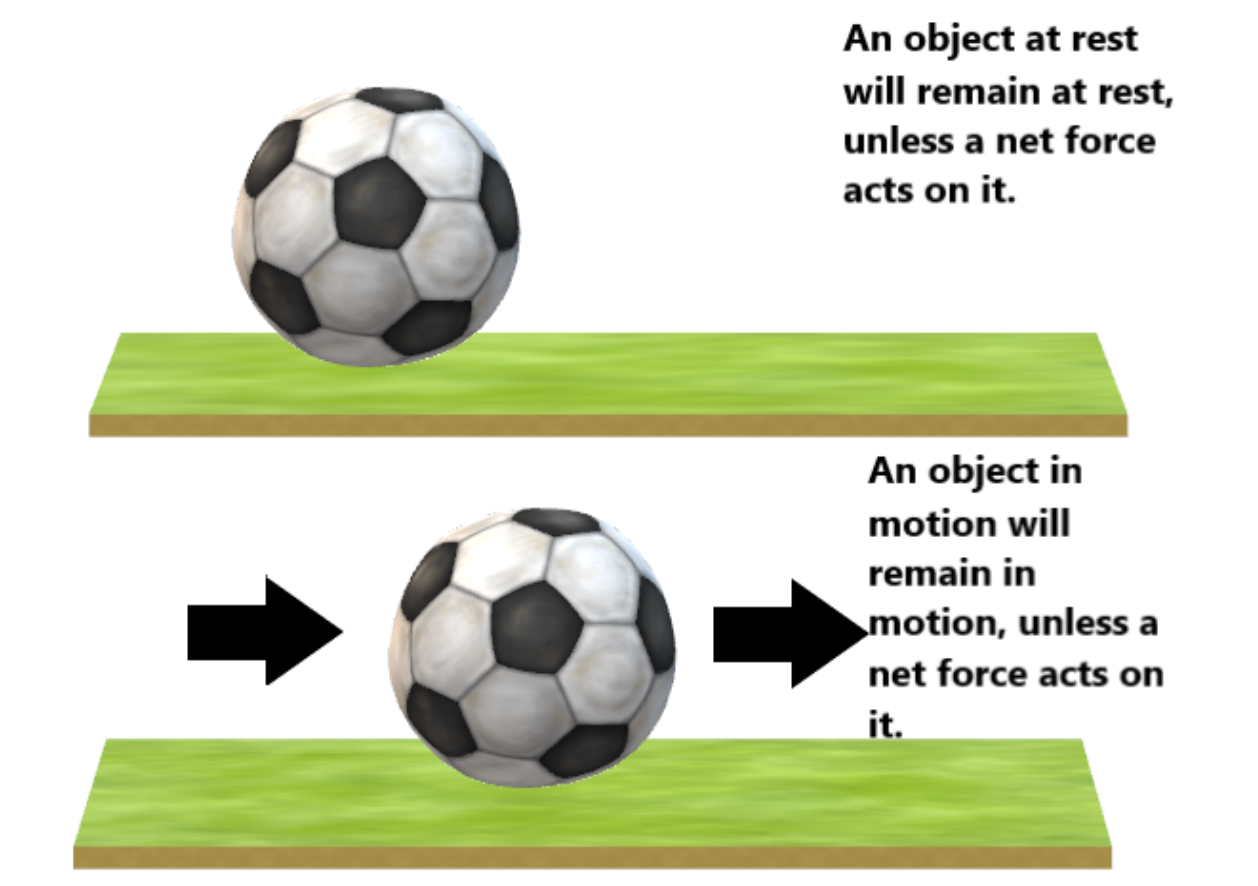
Image courtesy of geeks for geeks
Newton's Second Law of Motion
- Force Equation: Force equals mass times acceleration .
- Problem: Calculate the force needed to accelerate a object at .
- Solution:.
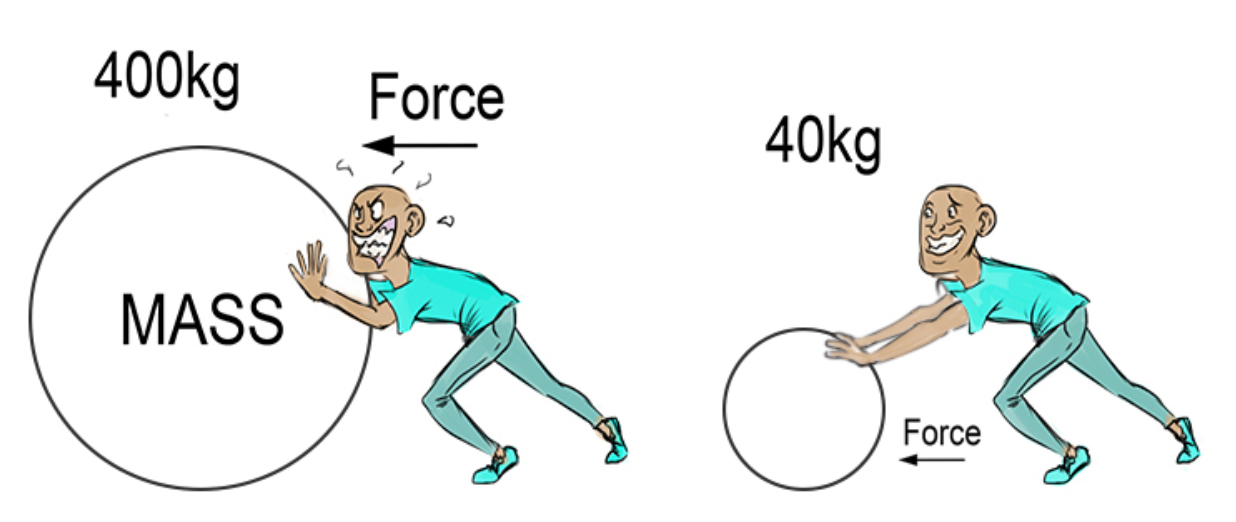
Image courtesy of mammothmemory
Newton's Third Law of Motion
- Action-Reaction: Every action has an equal and opposite reaction.
- Problem: If you push a wall with a force of , what is the force exerted by the wall on you?
- Solution: in the opposite direction.
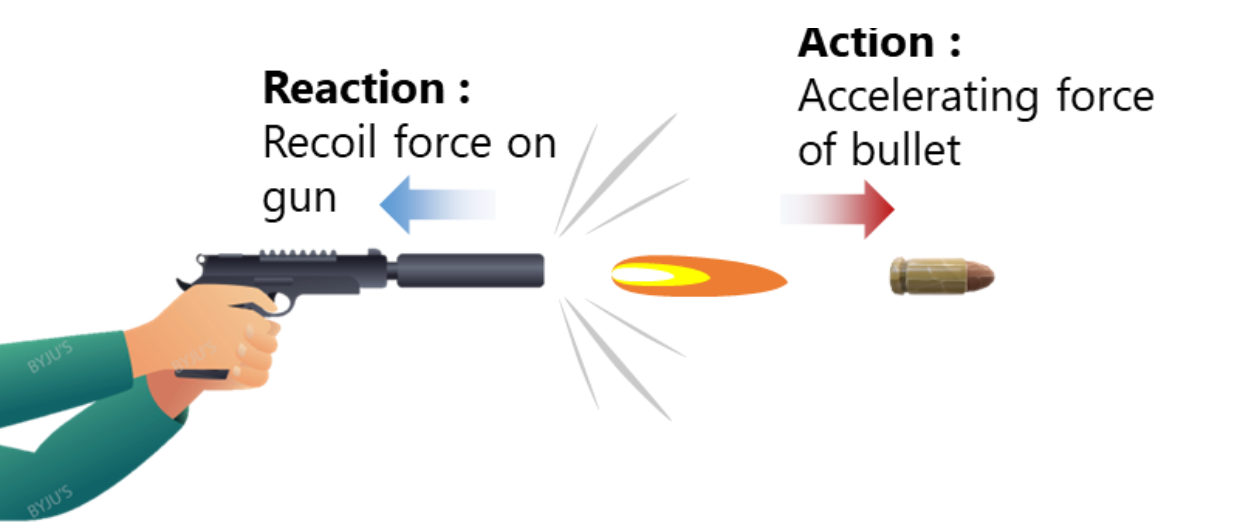
Image courtesy of aakash
Friction
- Friction: The resistive force between two surfaces.
- Problem: Calculate the frictional force for a box on a surface with a friction coefficient of .
- Solution: Frictional force = .
Tension
- Tension: The force in a rope or string when stretched.
- Problem: Find the tension in a rope holding a object at rest.
- Solution: Tension = .
Air Resistance
- Air Resistance: The force opposing an object's motion through air.
- Problem: Estimate the air resistance on a falling object if the drag force is .
- Solution: Air resistance = .
