IB Syllabus focus:
'- Normal aging vs. pathological decline
- Strategies to maintain memory health
- Role of lifelong learning and stimulation'
Aging affects memory in complex ways, involving both natural cognitive shifts and the potential onset of pathological decline. Understanding these changes supports better mental health.
Normal aging vs. pathological decline
Normal cognitive aging
As individuals age, changes in memory and cognitive processing are expected and considered a natural part of life. These changes are referred to as normal cognitive aging and differ significantly from the symptoms of neurological disorders like Alzheimer’s disease. While these changes may be frustrating, they usually do not interfere significantly with a person’s ability to function independently or perform everyday tasks.
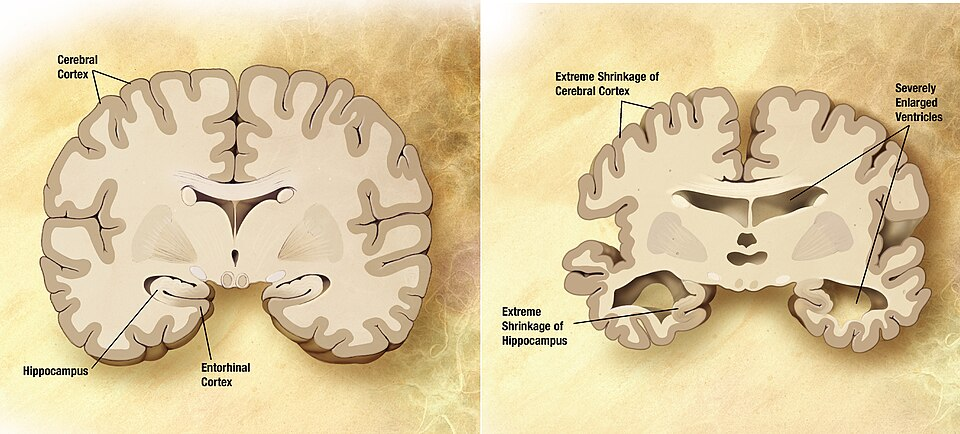
This side-by-side image contrasts a healthy older adult brain with an Alzheimer’s brain, highlighting cortical atrophy and enlarged ventricles characteristic of neurodegeneration. The visual supports the distinction between normal age-related change and pathological decline that impairs daily function. Source.
Key characteristics of normal aging include:
Slower information processing: Older adults may require more time to recall information or perform mental tasks. For example, it may take longer to remember the name of an acquaintance or solve a familiar problem.
Occasional forgetfulness: Misplacing items or forgetting appointments every so often is typical. These lapses are usually minor and can often be managed with reminders or routines.
Mild decline in working memory: The capacity to hold and manipulate information temporarily, such as remembering a phone number long enough to dial it, may be reduced.
Intact procedural and long-term memory: Skills such as riding a bike or long-held memories from early life are usually preserved. Semantic memory (knowledge of facts and general information) also tends to remain stable or even improve slightly with age.
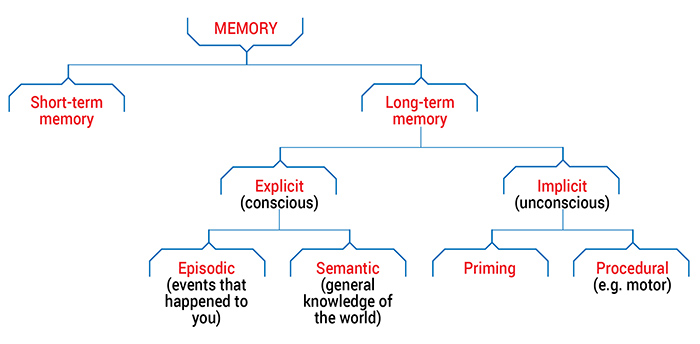
This diagram organizes memory into short-term/working memory and long-term systems, highlighting explicit (episodic, semantic) and implicit/procedural memory. It aligns with evidence that working memory declines modestly in aging while semantic and procedural knowledge are often preserved. Source.
These changes reflect the brain's natural aging process and can be influenced by genetics, lifestyle, and environmental factors. Importantly, they do not significantly impair daily functioning.
Pathological cognitive decline
In contrast to normal aging, pathological cognitive decline involves changes that are more severe, persistent, and disruptive to daily life. These declines are most commonly associated with neurodegenerative diseases such as Alzheimer’s disease, Parkinson’s disease, and other forms of dementia.
Signs of pathological decline include:
Consistent memory loss: Forgetting important personal events, familiar routes, or names of close friends and family. The frequency and severity of memory lapses are much greater than in normal aging.
Difficulty performing familiar tasks: Struggling with household chores, managing finances, or following directions, even in familiar settings.
Disorientation: Confusion about time, date, or place. Individuals may become lost in their own neighborhoods or believe they are in a different decade.
Language difficulties: Problems with vocabulary, following conversations, or repeating oneself frequently in conversations.
Poor judgment: Making unusual decisions, such as dressing inappropriately for the weather or falling victim to scams.
Pathological decline often progresses over time and significantly affects independence and quality of life. Early detection and diagnosis are crucial for intervention and planning.
Mild cognitive impairment (MCI)
MCI is considered an intermediate stage between normal aging and dementia. People with MCI experience cognitive changes greater than expected for their age, but these changes do not yet interfere significantly with daily functioning.
Features of MCI include:
Noticeable decline in memory, attention, or thinking skills.
The individual or close others may observe a difference, though the person is still capable of handling everyday tasks.
Increased risk of progressing to dementia, particularly Alzheimer’s disease. However, MCI does not always lead to dementia; some individuals remain stable or even improve.
Health professionals may use cognitive tests, brain imaging, and a medical history review to distinguish between normal aging, MCI, and dementia.
Strategies to maintain memory health
Maintaining brain health is a lifelong process. While aging is inevitable, a growing body of research shows that certain lifestyle choices and interventions can help preserve and even improve memory performance into older age. These strategies target different areas of brain function and help maintain neuroplasticity—the brain’s ability to reorganize and form new connections.
Physical activity and brain health
Physical exercise is one of the most effective ways to support memory and overall cognitive functioning. Regular movement increases blood flow to the brain, promotes the release of growth factors, and supports the formation of new neural connections.
Benefits of physical activity include:
Stimulates the growth of new neurons in the hippocampus, a region critical for memory formation.
Improves mood and reduces stress, which in turn supports cognitive functioning.
Enhances cardiovascular health, reducing the risk of stroke and vascular dementia.
Recommended activities:
Aerobic exercises such as brisk walking, swimming, cycling, and dancing.
Resistance training (e.g., weight lifting) to support muscle strength and coordination.
Flexibility and balance activities, such as yoga or tai chi.
Experts recommend at least 150 minutes of moderate-intensity aerobic exercise per week, along with two sessions of strength training.
Mental stimulation and cognitive engagement
Keeping the mind active is vital for maintaining memory and cognitive abilities. Challenging the brain with new tasks and learning opportunities promotes neuroplasticity and can delay or reduce age-related decline.
Examples of mental stimulation include:
Solving puzzles (crosswords, Sudoku, logic games).
Playing card games or board games that require strategy and memory.
Learning new skills, such as playing an instrument or coding.
The key is novelty and challenge—activities should be new, engaging, and mentally demanding to provide the greatest cognitive benefit.
Nutrition and memory health
What we eat has a profound effect on brain function. A nutrient-rich diet supports memory, concentration, and long-term cognitive health.
Nutrients linked to better brain function include:
Omega-3 fatty acids: Found in oily fish (like salmon), flaxseeds, and walnuts. These fatty acids help maintain the structure of brain cells and reduce inflammation.
Antioxidants: Found in berries, leafy greens, nuts, and dark chocolate. They help protect brain cells from oxidative stress.
B vitamins (especially B6, B12, and folate): Important for brain metabolism and reducing levels of homocysteine, a chemical linked to cognitive decline.
Recommended diets:
The Mediterranean diet emphasizes fruits, vegetables, whole grains, healthy fats, and lean protein and has been linked to better memory outcomes in aging.
Limiting sugar, processed foods, and saturated fats also supports vascular health, which benefits the brain.
Sleep and memory consolidation
Sleep is essential for memory consolidation—the process by which short-term memories become long-term memories. Older adults often face sleep disturbances, but improving sleep hygiene can greatly enhance memory performance.
Key recommendations:
Maintain a consistent sleep-wake schedule.
Avoid caffeine and heavy meals in the evening.
Limit screen time before bed and establish a relaxing bedtime routine.
Sleep also plays a critical role in clearing beta-amyloid, a protein associated with Alzheimer’s disease, from the brain. Thus, consistent, high-quality sleep may be a protective factor against memory decline.
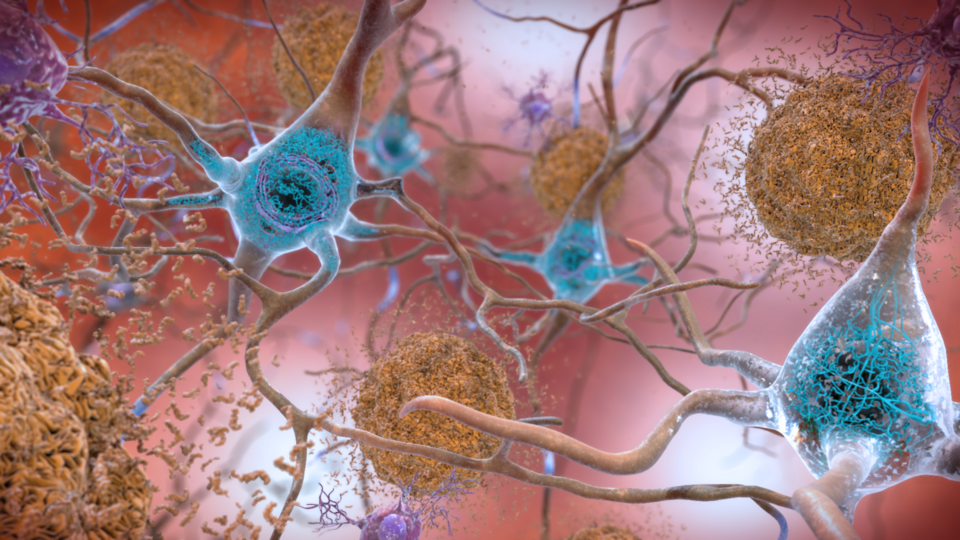
Illustration of pathological features in Alzheimer’s disease: extracellular beta-amyloid plaques and intracellular tau tangles. This supports the point that consolidated, high-quality sleep promotes clearance of beta-amyloid; note that tau tangles are also shown (additional detail beyond the syllabus). Source.
Managing stress
Chronic stress has a damaging effect on the brain, especially the hippocampus. Prolonged exposure to stress hormones, particularly cortisol, can impair memory and learning.
Stress-related memory effects include:
Reduced working memory capacity.
Difficulty focusing or retrieving information.
Heightened risk of depression, which can also impair memory.
Effective stress management techniques:
Mindfulness and meditation: Shown to improve attention and working memory.
Breathing exercises and yoga: Reduce physical and emotional tension.
Social support and therapy: Talking through stressors can alleviate emotional burdens.
Practicing stress-reduction techniques regularly can help preserve memory and promote emotional health.
Role of lifelong learning and stimulation
The concept of cognitive reserve
Cognitive reserve refers to the brain’s ability to adapt and function in the presence of age-related or disease-related changes. People who have built higher cognitive reserve over their lifetimes are better equipped to compensate for damage and maintain function despite aging or pathology.
Factors that contribute to cognitive reserve:
High educational attainment.
Engaging in complex and meaningful work.
Participating in intellectually stimulating activities.
Maintaining strong social networks.
This concept helps explain why some individuals show significant brain changes on scans but no outward symptoms of cognitive decline.
Formal and informal learning
Continued education throughout life significantly supports memory and cognitive functioning.
Formal learning opportunities:
Attending college or university courses.
Enrolling in adult education or community programs.
Online learning platforms like Coursera or Khan Academy.
Informal learning activities:
Reading widely and frequently.
Learning a new language or musical instrument.
Trying new hobbies such as painting, photography, or cooking.
The goal is to stay curious and engaged, as novelty and mental challenge promote cognitive vitality.
Social interaction and mental health
Social interaction is a powerful cognitive stimulant. Conversations require active listening, memory recall, and verbal fluency, all of which exercise different areas of the brain.
Social benefits for memory:
Reduces risk of depression, anxiety, and loneliness, all of which are linked to poorer memory performance.
Encourages participation in group activities like book clubs, discussion groups, and community service.
Isolation, by contrast, is associated with accelerated memory decline and increased risk of cognitive disorders.
Technology and digital engagement
Digital tools can support memory and offer new ways to engage with the world.
Useful applications:
Brain training apps (e.g., Lumosity, Peak) for memory, logic, and attention.
Online forums, digital puzzles, and mobile games that challenge thinking.
Access to virtual learning and global communities.
However, it is essential to engage actively with technology rather than passively consuming content, to ensure the brain is stimulated effectively.
Purpose and motivation in learning
Lifelong learning contributes not only to memory health but also to a sense of identity, purpose, and self-efficacy. Older adults who see themselves as capable learners are more motivated to stay active mentally and socially.
Encouraging a growth mindset—the belief that abilities can improve with effort—is vital for fostering resilience and lifelong curiosity.
The more intellectually, emotionally, and socially engaged a person is, the better their chances of maintaining cognitive function as they age.
FAQ
Yes, older adults can still form new memories, although the process may be slower and more effortful compared to younger individuals. The ability to encode, store, and retrieve new information does not disappear with age, but it may be affected by age-related changes in brain structure and function—particularly in the hippocampus and prefrontal cortex. While episodic memory (memories of events and experiences) often declines, semantic memory (general knowledge and facts) tends to remain stable or even improve over time. Older adults might need more repetition, structure, or external cues to aid the encoding process, but they are still capable of learning new information. Engaging in activities that combine novelty, challenge, and repetition—such as learning a new skill or language—can significantly boost memory formation. Additionally, emotional relevance enhances memory retention, so older adults are more likely to remember events or facts that hold personal significance or emotional weight.
Yes, multitasking tends to become more difficult with age, primarily due to declines in working memory, processing speed, and attentional control. These cognitive functions are essential for managing multiple tasks at once. Older adults may struggle to switch between tasks quickly, keep track of multiple information streams, or prioritize effectively under time constraints. This decline is not necessarily a result of global memory failure, but rather a decreased capacity to divide attention and manage task demands simultaneously. For instance, trying to have a conversation while navigating an unfamiliar environment may become more cognitively demanding. Furthermore, the executive functions housed in the prefrontal cortex, which coordinate task-switching and inhibition, are among the first to decline with age. As a result, multitasking can lead to increased errors or mental fatigue. Reducing multitasking and focusing on one task at a time can significantly improve efficiency and accuracy in older adults.
Bilingualism has been found to have protective effects on memory and cognitive aging. Studies suggest that individuals who are fluent in two or more languages develop enhanced executive control functions, such as attention shifting, inhibition, and working memory. These functions are supported by the prefrontal cortex, which tends to decline with age, making their maintenance critical for healthy cognitive aging. Bilinguals often show greater cognitive reserve, meaning their brains can better compensate for age-related neural decline. This may delay the onset of cognitive symptoms, including those related to memory disorders like dementia. Research indicates that lifelong bilingualism can postpone the clinical symptoms of Alzheimer’s disease by several years compared to monolinguals. The mental juggling required to manage multiple languages appears to exercise the brain regularly, especially in areas involved in memory and attention. Importantly, the protective effect is stronger in individuals who actively use both languages throughout life, rather than those who only learned a second language passively.
Chronic inflammation, often resulting from aging-related conditions such as cardiovascular disease, obesity, or autoimmune disorders, has a significant negative impact on memory and cognitive functioning. Inflammation involves the release of cytokines—chemical messengers that, when persistently elevated, can interfere with the normal functioning of brain cells. Specifically, neuroinflammation affects the hippocampus, the region of the brain most closely associated with memory formation and consolidation. Over time, inflammation can impair synaptic plasticity, which is essential for learning and memory. It also contributes to neuronal degradation and the development of neurodegenerative diseases like Alzheimer’s. Elevated levels of inflammatory markers such as C-reactive protein (CRP) and interleukin-6 (IL-6) have been linked with poorer performance on memory tasks in older adults. Strategies to reduce inflammation—such as engaging in physical activity, following an anti-inflammatory diet, managing stress, and addressing chronic health conditions—can play a protective role in maintaining memory and overall brain health in aging populations.
Yes, specific personality traits have been associated with better memory retention and healthier cognitive aging. High levels of conscientiousness, for example, correlate with more organized, goal-oriented behavior, which often leads to healthier lifestyle choices that protect memory—such as adhering to exercise routines, managing medications effectively, and maintaining social connections. Individuals high in openness to experience tend to engage in intellectually stimulating activities like reading, exploring new interests, or embracing lifelong learning, all of which enhance cognitive reserve. On the other hand, high neuroticism—characterized by chronic anxiety, mood instability, and negative emotionality—has been linked to greater cognitive decline and poorer memory outcomes. Chronic stress and rumination associated with neuroticism elevate cortisol levels, which can damage the hippocampus over time. Traits like extroversion and agreeableness may also indirectly benefit memory by promoting social engagement, which is protective against memory loss. Understanding personality can help tailor cognitive interventions to better suit individual behavioral tendencies in later life.
Practice Questions
Explain one difference between normal cognitive aging and pathological cognitive decline.
Normal cognitive aging involves mild memory lapses, such as forgetting names or misplacing objects, without interfering with daily life. In contrast, pathological cognitive decline, such as that seen in Alzheimer’s disease, involves severe memory loss and cognitive dysfunction that disrupt daily functioning. For example, individuals may forget important personal details, become disoriented, or struggle with language. While normal aging affects processing speed and working memory, pathological decline includes more serious impairments, such as poor judgment and difficulty with familiar tasks. Distinguishing between the two is essential for diagnosis and appropriate intervention strategies in clinical and caregiving contexts.
Describe one strategy to maintain memory health in older adults.
One effective strategy to maintain memory health in older adults is regular physical activity. Aerobic exercise, such as walking or swimming, increases blood flow to the brain and supports the growth of neurons in the hippocampus, which is crucial for memory. Physical activity also reduces the risk of conditions like hypertension and diabetes that negatively affect brain health. In addition, exercise promotes better sleep and reduces stress, both of which enhance cognitive function. Studies show that older adults who engage in regular physical activity demonstrate better memory retention and slower cognitive decline compared to sedentary individuals.