Paper 1 prescribed subject: Military Leaders — Genghis Khan c1200–1227
· Exact syllabus anchor: Paper 1: Military Leaders, Case study 1: Genghis Khan c1200–1227.
· Official IB focus: leadership, campaigns, and impact of Genghis Khan and the early Mongol Empire.
· Main exam expectation: Paper 1 is source-based, so use knowledge to interpret, contextualize, compare and evaluate sources on Genghis Khan’s rise, Mongol military success, and political, economic, social, cultural and religious impact.
· Case-study requirement: the prescribed subject contains two compulsory case studies from different regions: Genghis Khan and Richard I of England. For this subtopic, focus on Genghis Khan, but remember that broader Paper 1 questions may invite comparison with Richard I.
· Named syllabus examples to know: uniting rival tribes, naming as Genghis Khan in 1206, attacks on the Jin dynasty, capture of Beijing in 1215, invasion of Khwarezmia 1219–1221, Yassa, trade routes, population displacement, terror, looting and murdering, destruction of settlements, religious/cultural/technological exchange, and religious freedom under the Mongols.
What this case study is really testing
· This subtopic is not just a biography of Temujin/Genghis Khan. It asks why one leader was able to transform fragmented steppe tribes into a disciplined expansionist empire.
· The central issue is the relationship between leadership and success: how far did Mongol expansion depend on Genghis Khan personally, and how far did it depend on wider Mongol strengths such as mobility, military organization, terror tactics, adaptability, and trade control?
· A strong Paper 1 answer should link methods to impact: for example, the same military methods that helped defeat the Jin and Khwarezmia also caused population displacement, destruction of settlements, and long-term trade and cultural exchange.
Leadership: rise to power and uniting rival tribes
· Rise to power: Genghis Khan’s early achievement was the uniting of rival tribes on the Mongolian steppe. This matters because the IB wants students to explain leadership as a cause of Mongol success, not simply describe conquest.
· 1206 naming as Genghis Khan: the title marked the formal recognition of his authority after he had defeated or absorbed rivals. Use this as evidence for legitimacy, political consolidation, and the creation of a new Mongol identity.
· Merit over aristocratic loyalty: Genghis Khan promoted capable commanders and administrators, helping move Mongol rule towards meritocracy. This is useful for arguing that his leadership weakened older tribal divisions and created a more effective military-state structure.
· Personal reputation: the syllabus emphasizes military prowess and reputation. In Paper 1, this can explain both internal authority and external fear: his reputation helped bind followers while intimidating enemies.
· Analytical judgement: Genghis Khan’s rise mattered because he converted tribal warfare into imperial warfare. Without political unification, Mongol cavalry skill would have remained local; with it, Mongol power became continental.

Portrait of Genghis Khan from a Yuan imperial album, now associated with the National Palace Museum collection. Use it carefully: it is a later court image, so it is most useful for discussing reputation, memory and rulership rather than exact physical appearance. Source
Motives and objectives: what did Genghis Khan want?
· Syllabus focus: motives and objectives and success in achieving those objectives.
· Security objective: uniting the tribes reduced internal rivalry and created a more secure power base. In exams, link this to his ability to mobilize manpower for campaigns outside Mongolia.
· Political objective: conquest increased Genghis Khan’s authority by distributing rewards, tribute and status to followers. This helps explain why expansion was both a military and political strategy.
· Economic objective: control over routes, tribute and resources encouraged expansion into China, Central Asia and Iran. Use this to connect campaigns to the syllabus point on establishment, enhancement and protection of trade routes.
· Revenge and deterrence objective: the invasion of Khwarezmia 1219–1221 can be used to show how diplomacy, retaliation and terror were connected. Mongol violence was not random in exam terms; it often served political intimidation and deterrence.
· Judgement: Genghis Khan was highly successful in military and political objectives by 1227, but the costs were severe: success was achieved through conquest, coercion and destruction as well as organization and innovation.
Campaigns in China: Jin dynasty and Beijing, 1215
· Syllabus example: Mongol invasion of China, including attacks on the Jin dynasty and capture of Beijing in 1215.
· What to know: the Jin campaign shows Mongol adaptation from steppe warfare to attacks on fortified urban states. The Mongols used mobility and siege expertise acquired or adapted from conquered peoples.
· Why it matters: Beijing 1215 demonstrates that Mongol success was not limited to open cavalry warfare. It shows a capacity to learn, absorb technology and apply pressure against major sedentary powers.
· Exam use: use the Jin campaign to support arguments about military technology, organization, strategy, tactics, and the importance of Genghis Khan’s leadership in coordinating multi-stage campaigns.
· Analysis point: the campaign also shows the beginning of major political impact, because Mongol expansion meant the overthrowing of existing ruling systems and the growth of new administrative practices.
Campaigns in Central Asia and Iran: Khwarezmia, 1219–1221
· Syllabus example: Mongol invasion of Central Asia and Iran, especially Khwarezmia 1219–1221.
· What to know: Khwarezmia is the key case for explaining Mongol expansion beyond East Asia into the Islamic world and Central Asia.
· What it demonstrates: Mongol warfare combined speed, intelligence, coordination, psychological warfare, and harsh punishment of resistance.
· Use in an exam answer: Khwarezmia is ideal evidence for questions on terror, looting and murdering, raiding and destruction of settlements, and population displacement.
· Analysis point: Khwarezmia shows the dual nature of Mongol impact: it destroyed some cities and ruling structures, but also extended Mongol control over routes that later enabled wider trade, communication, and exchange.

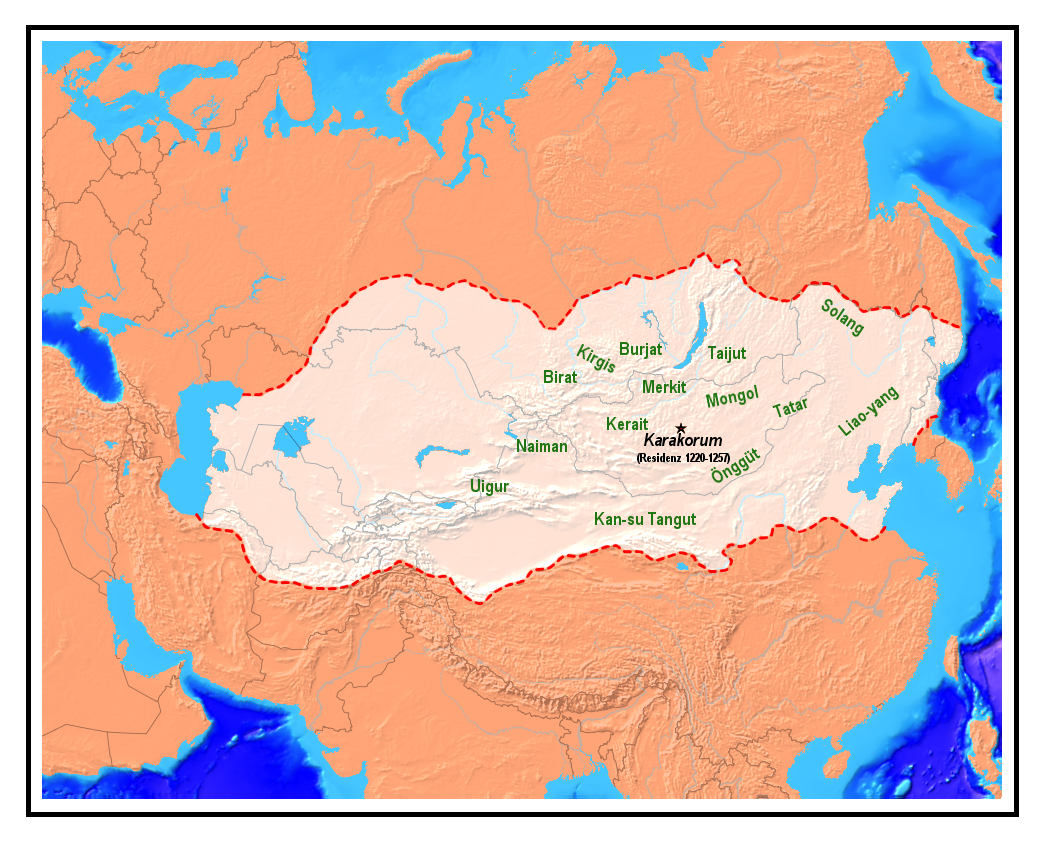
This map shows the expansion of Mongol power under Genghis Khan from 1206 to 1227. It is useful for visualizing why the IB treats the Jin and Khwarezmian campaigns as central evidence for both military leadership and impact. Source
Why Mongol warfare was effective
· Syllabus focus: Mongol military technology, organization, strategy and tactics.
· Organization: decimal military units and disciplined command structures helped Genghis Khan coordinate large forces across vast distances. Use this to show that success was systematic, not only based on bravery.
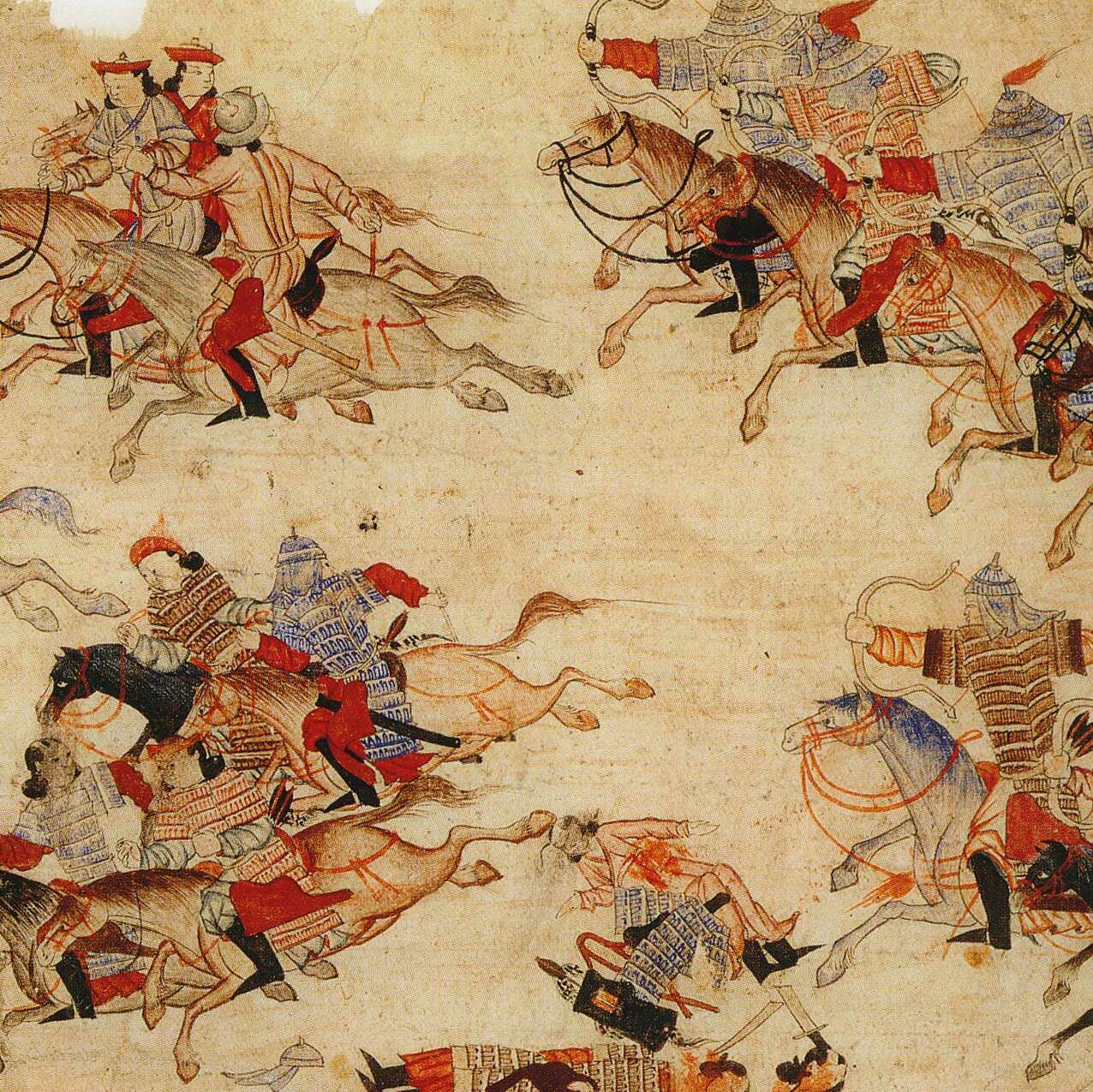
· Mobility: Mongol armies relied on mounted archers, spare horses and rapid movement. This allowed surprise attacks, long-distance campaigning and flexible battlefield responses.
· Tactics: feigned retreat, encirclement and coordinated cavalry attacks helped draw enemies into vulnerable positions. Use these tactics to explain battlefield success against less mobile opponents.
· Technology and adaptation: the Mongols adopted siege methods and technical specialists from conquered peoples, especially in campaigns against fortified cities. This supports the argument that Mongol success came from adaptability.
· Psychological warfare: terror and the threat of destruction encouraged surrender. In evaluation, show that this was militarily effective but socially destructive.
· Judgement: Mongol military success was strongest when leadership, organization, mobility, adaptation, and fear worked together; no single factor explains expansion on its own.
Political impact: administration, law and ruling systems
· Syllabus focus: administration, overthrowing of existing ruling systems, establishment of Mongol law/Yassa, and movement towards meritocracy.
· Overthrowing ruling systems: the Mongols replaced or subordinated existing elites in conquered areas. Use this for questions on the political consequences of conquest.
· Administration: Genghis Khan’s rule depended on organizing conquered territories, tribute and communication. This matters because empire-building required more than victory in battle.
· Yassa: the Yassa represents the syllabus focus on law and order under Mongol rule. Use it as evidence that Genghis Khan tried to impose a shared legal-political framework across diverse peoples.
· Meritocracy: promotion by ability helped strengthen administration and command. This can be contrasted with older tribal or hereditary structures.
· Balanced evaluation: political impact was both destructive and constructive: existing systems were overthrown, but Mongol rule also created new forms of order, administration and elite mobility.
Economic impact: trade routes and imperial security
· Syllabus focus: establishment, enhancement and protection of trade routes.
· Main point: Mongol conquest connected regions of China, Central Asia, Iran and the steppe under one imperial structure, making long-distance exchange easier and safer in some periods.
· Exam use: connect economic impact to both campaigns. The Jin campaign opened access to Chinese wealth and administration; Khwarezmia opened Central Asian and Iranian trade zones.
· Protection of trade routes: Mongol power could protect merchants and communications, encouraging movement of goods, people, technologies and ideas.
· Judgement: economic impact was uneven. Trade benefited from imperial protection, but conquest also caused destruction that damaged some local economies in the short term.
Social, cultural and religious impact: destruction and exchange
· Syllabus focus: population displacement, terror, looting and murdering, raiding and destruction of settlements, religious, cultural and technological exchange, and religious freedom under the Mongols.
· Destructive impact: Mongol campaigns caused severe disruption, especially where cities resisted. Use Khwarezmia 1219–1221 as the strongest example for displacement, terror and destruction.
· Population displacement: conquest moved soldiers, captives, artisans, administrators and communities across regions. This can be used to explain both suffering and the transfer of skills.
· Cultural and technological exchange: Mongol rule connected regions, enabling movement of ideas, crafts, military techniques and administrative practices.
· Religious freedom: the syllabus specifically highlights religious freedom under the Mongols. Use this to avoid one-sided answers: Mongol rule could be brutal militarily but comparatively pragmatic religiously.
· Balanced judgement: the strongest answers show a contradiction: Mongol conquest produced terror and destruction, yet the empire also encouraged exchange and religious tolerance in ways that reshaped Afro-Eurasian connections.
Compact evidence bank: how to use each example
· Uniting rival tribes, c1200–1206 — demonstrates leadership, consolidation, and the transformation of tribal society into an imperial military force; use for questions about the importance of Genghis Khan’s leadership.
· Naming as Genghis Khan, 1206 — demonstrates legitimacy, reputation and political authority; use to show that personal leadership was institutionalized.
· Attacks on the Jin dynasty — demonstrates expansion into a major sedentary state; use for strategy, siege adaptation, and the limits of cavalry-only explanations.
· Capture of Beijing, 1215 — demonstrates Mongol ability to defeat fortified urban power; use for military technology, organization, and psychological impact.
· Khwarezmia, 1219–1221 — demonstrates conquest in Central Asia and Iran; use for terror, retaliation, destruction, population displacement, and long-distance campaigning.
· Yassa — demonstrates law, administration and political control; use for political impact and the movement towards a more unified imperial order.
· Trade routes — demonstrates economic impact; use to argue that Mongol conquest brought both disruption and later commercial integration.
· Religious freedom under the Mongols — demonstrates pragmatic rule over diverse peoples; use to balance claims that Mongol impact was only violent.
Comparison and judgement: leadership versus wider Mongol strengths
· Argument 1 — Genghis Khan was decisive: he unified rival tribes, created loyalty through rewards and merit, and directed campaigns against the Jin and Khwarezmia. This supports answers emphasizing individual leadership.
· Argument 2 — military systems were also decisive: Mongol success depended on organization, mobility, strategy, tactics, and technology, not personality alone.
· Argument 3 — fear multiplied military power: terror tactics reduced resistance and accelerated conquest, but they also created severe social costs.
· Argument 4 — impact was mixed: politically and socially, conquest overthrew ruling systems and caused destruction; economically and culturally, it helped protect routes and encourage exchange.
· Strong judgement: Genghis Khan’s leadership was the catalyst, but Mongol success became sustainable because he built institutions and military practices that outlasted individual battles.
Paper 1 exam-use guidance
· For source comparison: compare how sources present Genghis Khan’s leadership, violence, military skill, or impact. Ask whether a source emphasizes destruction or state-building.
· For origin/purpose/value/limitation: a later court portrait or chronicle may be valuable for reputation but limited for exact events; a hostile source may reveal fear but exaggerate brutality.
· For contextual knowledge: add precise syllabus evidence such as 1206, Beijing 1215, Khwarezmia 1219–1221, Yassa, or trade routes to strengthen source-based answers.
· For judgement questions: avoid saying “Genghis Khan was successful” without defining success. Separate military success, political consolidation, economic integration, and human cost.
· Useful argument pattern: “The source is supported by the Mongol campaign against Khwarezmia 1219–1221, which shows that terror and destruction were used as instruments of conquest; however, this should be balanced against the Mongol protection of trade routes and religious freedom under Mongol rule.”
Checklist: can you do this?
· Explain how Genghis Khan united rival tribes and why 1206 mattered.
· Use Beijing 1215 and Khwarezmia 1219–1221 as precise campaign evidence.
· Link military technology, organization, strategy and tactics to Mongol success.
· Evaluate both destructive and constructive impacts: terror/destruction versus trade/exchange/religious freedom.
· Apply own knowledge to Paper 1 source questions without turning the answer into a narrative.
Exam traps and common mistakes
· Trap 1: writing a biography. Do not narrate Genghis Khan’s life; organize answers around leadership, campaigns, and impact.
· Trap 2: treating Mongol success as only cavalry skill. The syllabus also expects technology, organization, strategy, and tactics.
· Trap 3: ignoring impact. Always prepare both immediate destructive effects and longer-term political/economic/cultural effects.
· Trap 4: overgeneralizing Mongol violence. Use specific examples such as Khwarezmia 1219–1221 and link violence to exam arguments about terror and control.
· Trap 5: forgetting the Paper 1 source skills. Contextual knowledge should support source evaluation, not replace it.
· Trap 6: making one-sided judgements. High-scoring answers balance military prowess and administrative/economic integration against population displacement, looting, and destruction.