IB Syllabus focus: 'Smart power combines hard and soft power depending on aims, including in climate approaches and negotiations.'
Smart power matters because political actors rarely rely on only one form of influence. In practice, they combine pressure and attraction strategically to shape outcomes, especially in climate policy and international negotiations.
Understanding smart power
Smart power is most useful when it is treated as a practical strategy rather than a simple label. It means choosing and combining different tools of influence in ways that fit a political goal, a target audience, and a specific context.
Smart power is the strategic combination of hard power and soft power, used in different proportions depending on political aims and circumstances.
Smart power is therefore not the same as using every available tool at once. It involves judgment. A state, international organization, or other actor must decide when pressure is necessary, when persuasion is more effective, and how the two can reinforce each other.
Why combination matters
In global politics, purely coercive approaches can produce resistance, while purely persuasive approaches may lack urgency or leverage. Smart power tries to avoid both problems by combining:
material pressure, such as sanctions, trade conditions, or legal obligations
persuasion and attraction, such as diplomacy, legitimacy, norms, and reputation
timing and sequencing, so that one tool strengthens another
audience awareness, since domestic and international audiences may respond differently
This makes smart power especially relevant in issue areas where cooperation is necessary but interests still conflict.
Smart power in practice
Smart power in practice is about matching means to ends. Political actors ask what outcome they want, what constraints they face, and what mix of tools is most likely to work.
Selecting the right tools
A smart power strategy usually depends on several questions:
What is the aim: compliance, compromise, leadership, or long-term partnership?
How much leverage does the actor have over others?
Does the issue require rapid behavior change or gradual norm change?
Will coercion damage legitimacy or relationships needed later?
Can soft power make hard measures appear more acceptable or credible?
For example, an actor may use diplomatic engagement and financial support to build trust, while also signaling that failure to cooperate could bring regulatory costs or reduced access to markets. The power lies not only in each tool, but in the relationship between them.
Smart power in climate approaches
Climate politics is a strong example of smart power because it involves both shared global interests and sharp disagreements over responsibility, costs, and development.
No actor can solve climate change through force alone. However, climate policy is also not based only on goodwill. States often combine persuasive and coercive tools in order to shape climate behavior.
Common smart power tools in climate policy
In climate approaches, actors may combine:
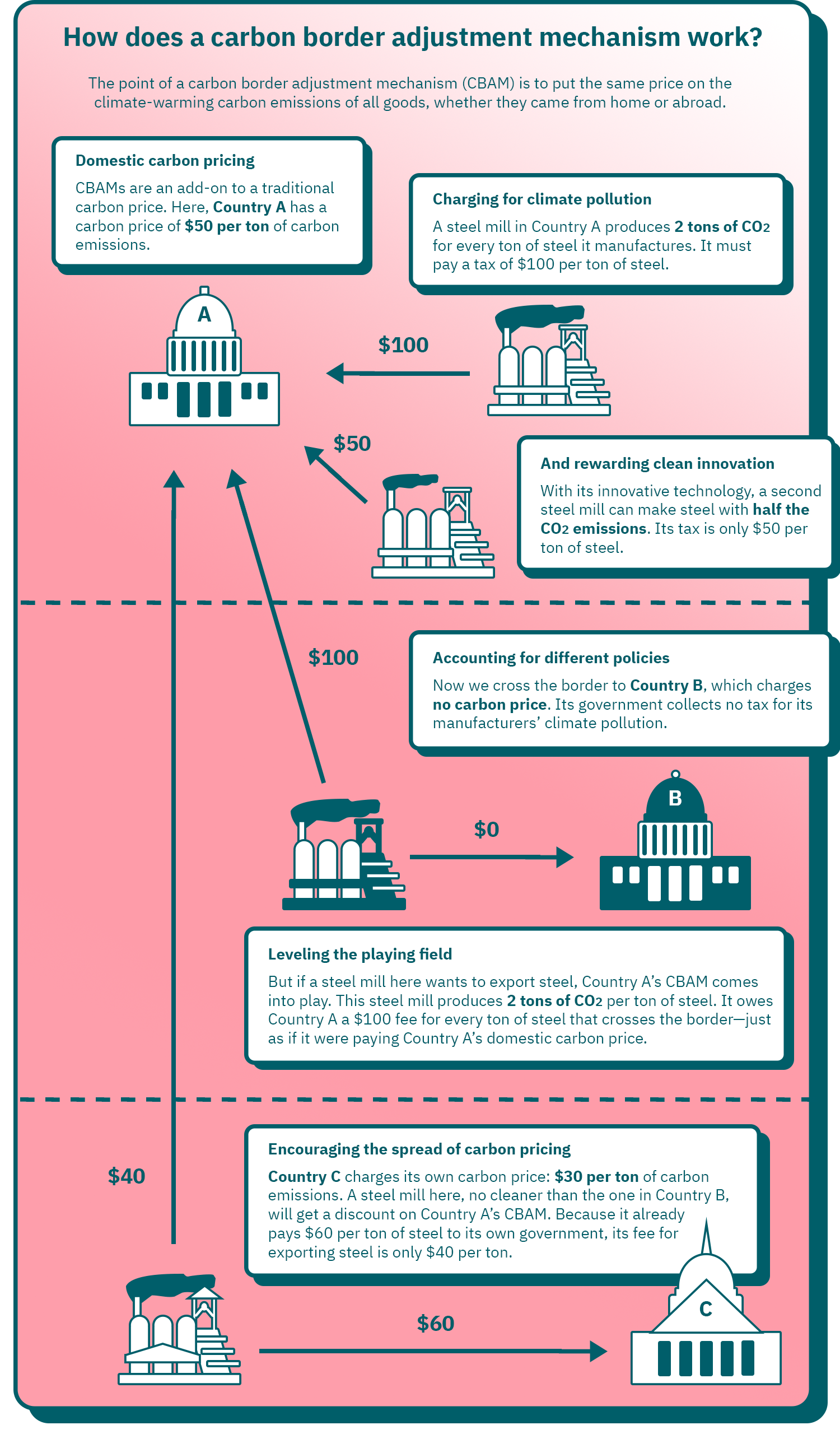
Diagram showing how a carbon border adjustment mechanism (CBAM) aligns the carbon cost of imported goods with the domestic carbon price. It illustrates how the policy both penalizes higher-carbon imports (pressure) and rewards cleaner innovation (incentive), linking climate goals to trade rules in a way that can shape other states’ behavior. Source
climate finance to encourage cooperation from lower-income states
technology transfer and capacity-building to make agreements more attractive
norm-based leadership, presenting ambitious climate policy as morally responsible and modern
trade leverage, such as carbon-related import rules or market access conditions
diplomatic coalition-building, creating pressure through group support
public signaling, using speeches, summits, and international forums to shape expectations
This combination is smart power because it links incentives with pressure.
A state may persuade others that climate action is beneficial, while also making inaction more costly. For instance, climate finance can reward participation, while carbon border measures can penalize failure to adapt production standards.
Climate approaches also show that smart power is often indirect. The aim is not always immediate obedience. Sometimes the goal is to shift long-term preferences, redefine responsible behavior, or make certain policy choices appear unavoidable.
Smart power in negotiations
Negotiations are another clear setting for smart power.
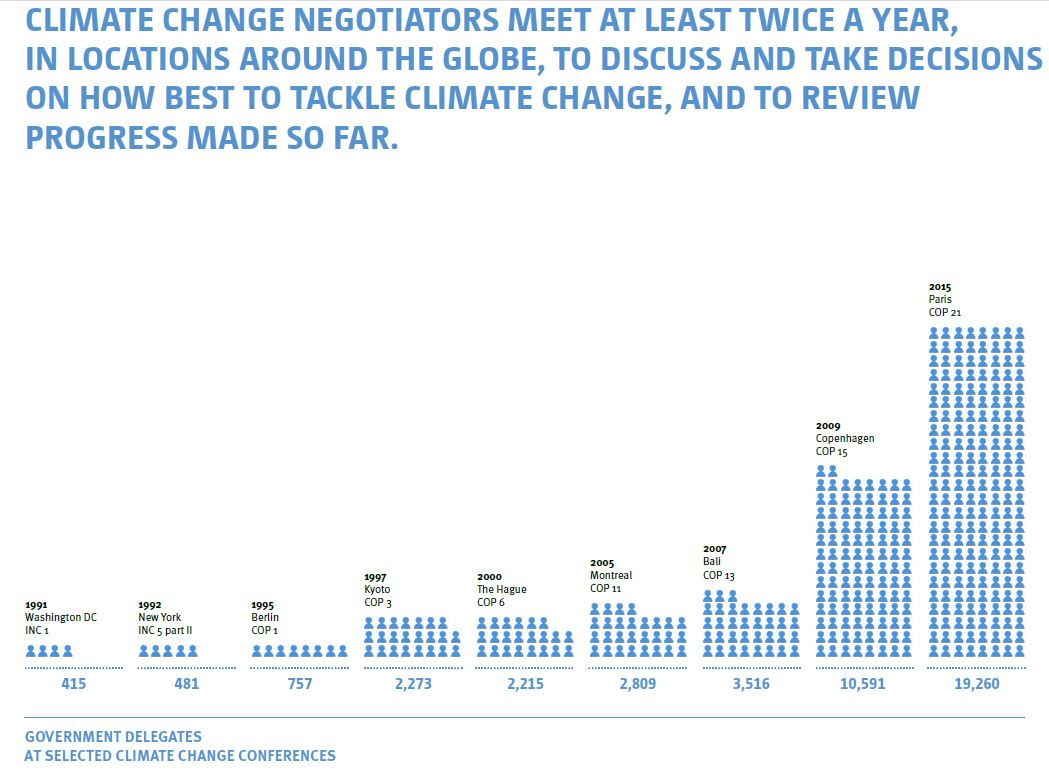
Bar-style pictogram chart showing the growth in government delegates attending major UN climate negotiation meetings over time. By visualizing how participation scales up in multilateral climate diplomacy, it reinforces why negotiation outcomes depend on legitimacy, coalition-building, and consent—not only coercive leverage. Source
Negotiators rarely succeed through pressure alone. Lasting agreements usually require some level of consent, legitimacy, and mutual benefit.
Negotiation dynamics
In negotiations, smart power can appear through:
agenda-setting, where powerful actors shape what is discussed first
issue linkage, connecting one issue to another to widen bargaining options
side payments or aid commitments, making agreement more attractive
reputational pressure, raising the political cost of obstruction
credible threats, showing there may be consequences for non-cooperation
A negotiation strategy becomes “smart” when these tools are used deliberately and in proportion to the political goal. Too much coercion may harden opposition. Too much persuasion without leverage may invite delay. Effective negotiators often move between the two.
In climate negotiations, this may mean combining ambitious rhetoric with offers of funding, technical cooperation, and coalition support, while also signaling that countries refusing to cooperate may face diplomatic isolation or economic disadvantages. The negotiation outcome depends partly on whether this mix is seen as legitimate, credible, and fair.
Strengths and limits of smart power
Smart power is attractive because it recognizes that global politics is complex. It avoids the false choice between force and persuasion and instead treats power as adaptive.
Critical evaluation
Smart power can be effective because it:
increases flexibility
can preserve relationships while still applying pressure
is useful in multilateral settings where legitimacy matters
may produce deeper and more durable cooperation than coercion alone
However, it also has limits:
combining tools badly can create mixed messages
coercive elements can undermine soft power appeal
persuasion without real leverage may appear weak
different audiences may interpret the same strategy differently
climate negotiations involve structural inequalities that smart tactics alone cannot remove
For IB analysis, the key question is not simply whether hard and soft power were both present, but whether they were combined strategically for a specific aim and whether that combination improved bargaining power or policy influence.
Practice Questions
Define smart power in global politics. [2 marks]
1 mark for identifying that smart power combines hard power and soft power.
1 mark for stating that the combination is used strategically depending on aims or context.
Explain how smart power can be used in climate negotiations. [6 marks]
Explains that smart power mixes persuasion with pressure. (1)
Refers to climate-specific persuasive tools, such as climate finance, diplomacy, or technology sharing. (1)
Refers to climate-specific coercive or leverage-based tools, such as trade conditions, regulatory pressure, or reputational costs. (1)
Explains how combining these tools can encourage agreement or compliance. (1)
Shows awareness that the mix depends on political aims, such as leadership, compromise, or implementation. (1)
Includes a developed point about legitimacy, credibility, or fairness affecting effectiveness. (1)
FAQ
Yes, small states can use smart power effectively, especially in climate diplomacy.
They may lack major military or economic leverage, but they can combine:
moral authority
coalition-building
expertise
agenda-setting
partnerships with larger actors
For example, a vulnerable state may use strong diplomatic messaging and scientific credibility to attract support, while working through blocs or institutions to increase pressure on larger emitters.
Climate negotiations require cooperation over a long period, not just a one-time concession.
That makes smart power useful because actors need to:
persuade others that cooperation is legitimate
offer incentives for participation
maintain relationships after the agreement
still retain leverage if promises are not met
This balance is harder in issue areas where interests are zero-sum or immediate force is more central.
Domestic politics can shape both the tools available and the credibility of negotiators.
Leaders must consider:
business interests
public opinion
election timing
energy prices
pressure from activist groups
A state may promise climate finance internationally, for instance, but face domestic resistance to funding it. That can weaken bargaining power because other states may doubt that commitments will actually be delivered.
Yes. Non-state actors often combine attractive influence with forms of pressure.
Examples include:
NGOs using public campaigns plus legal action
corporations offering green investment while lobbying for regulatory standards
city networks sharing best practice while setting competitive expectations
They usually cannot coerce like states can, but they can still shape choices by combining legitimacy, expertise, public visibility, and market influence.
Smart power can backfire when the balance between persuasion and pressure is poorly judged.
Common problems include:
incentives that look like bribery
pressure that seems unfair or hypocritical
threats that are not credible
moral language that clashes with self-interested behavior
In climate negotiations, this often happens when powerful states demand ambitious action from others while failing to meet their own targets or finance pledges. That weakens trust and reduces the persuasive side of their strategy.