
Measurements of business size
· Business size can be measured in different ways; no single method is always best. CIE expects students to judge the appropriateness of different methods in context.
· Number of employees: useful for comparing labour-intensive businesses, but misleading if one business uses automation.
· Revenue / sales turnover: shows value of sales, but does not show profit or efficiency.
· Capital employed: measures long-term finance invested in the business; useful for capital-intensive firms, but less useful for service firms with few physical assets.
· Market share: shows size relative to competitors, but only within one market.
· Profit: useful for judging success, but a large business may have low profit if costs are high.
· Best exam answers compare methods and say “it depends on the industry, business objective and context.”
Significance of small businesses
· A small business is usually independently owned, has a small workforce, limited market share and limited finance.
· Advantages of being small: personal customer service, flexibility, faster decisions, close employee relationships, ability to serve niche markets.
· Disadvantages of being small: limited finance, fewer economies of scale, greater risk of cash-flow problems, dependence on a few customers or suppliers.
· Small businesses are important because they create employment, increase competition, encourage enterprise, serve local communities and often supply larger businesses. The syllabus specifically includes the importance of small businesses and their role in the economy.
· Small businesses can form part of the industrial structure by supplying specialist goods/services to larger firms, e.g. local suppliers, subcontractors, repair firms or technology start-ups.
· Globally, SMEs are widely recognised as important employers; many sources define SMEs using employee or revenue limits, and they outnumber large businesses in most economies.

This infographic shows how small businesses can contribute to employment, sales and local economic activity. Use it to remember that small businesses are not just “smaller versions” of large firms; they often play a distinct role in local economies. Source
Family businesses
· A family business is owned and/or controlled by members of the same family.
· Strengths: high trust, strong commitment, long-term focus, shared values, quick informal communication.
· Weaknesses: family conflict, nepotism, succession problems, resistance to outside managers, difficulty raising finance if ownership is kept within the family.
· Exam skill: always link family ownership to the case, e.g. “because the founder wants to keep control, external growth through takeover may be less suitable.”
Business growth: internal / organic growth
· Internal growth or organic growth happens when a business expands using its own resources. The syllabus requires why and how businesses grow internally.
· Methods: opening new branches, increasing output, launching new products, entering new markets, expanding online sales, investing in new technology or hiring more workers.
· Reasons: increase revenue, spread risk, gain economies of scale, strengthen brand, improve competitiveness.
· Advantages: lower risk than takeover, easier to control culture, growth can be gradual, avoids conflict with another business.
· Disadvantages: slower, may be limited by finance, competitors may grow faster, management may lack experience.
· Strong evaluation: organic growth is safer but slower, so it suits businesses that want control and gradual expansion.
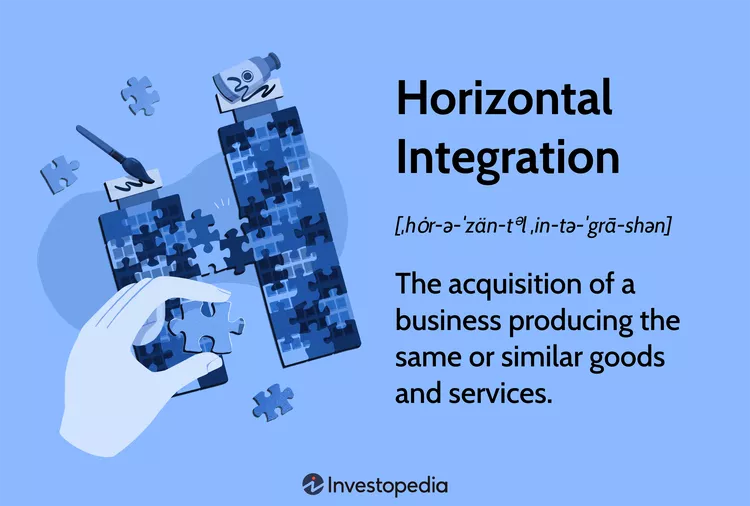
Horizontal integration is one way a business can grow by expanding in the same industry. It can increase market share and reduce competition, but it may also attract regulatory concerns if market power becomes too high. Source
Business growth: external growth
· External growth happens when a business expands by joining with or buying another business.
· Merger = two businesses combine, usually by agreement.
· Takeover / acquisition = one business buys control of another; acquisitions can be friendly or hostile. M&A involves transfer or consolidation of ownership/control, and the distinction between merger and acquisition can sometimes blur in practice. (Wikipedia)
· Horizontal merger/takeover = firms at the same stage of production in the same industry, e.g. two supermarkets. Likely benefits: higher market share, reduced competition, economies of scale.
· Vertical merger/takeover = firms at different stages of production. Backward vertical integration = buying a supplier. Forward vertical integration = buying a distributor/retailer.
· Conglomerate diversification = joining with a business in a different industry to spread risk.
· Strategic alliance = businesses cooperate while remaining separate.
· Joint venture = two or more businesses create a separate project/business together, often to share costs, expertise and risk. The syllabus requires the importance of joint ventures and strategic alliances as external growth methods.
Impact of merger/takeover on stakeholders
· Owners/shareholders: may gain higher profits and business value, but may face risk if integration fails.
· Managers: may gain promotion opportunities, but duplication can cause job losses.
· Employees: may benefit from growth and training, but may fear redundancy or culture change.
· Customers: may benefit from wider product choice and lower prices from economies of scale, but reduced competition may lead to higher prices.
· Suppliers: may gain larger contracts, but may face stronger pressure to cut prices.
· Government/community: may gain tax revenue and jobs, but may worry about monopoly power or local job losses.
· Exam evaluation: judge whether the impact is short-term or long-term, and whether the merger is horizontal, vertical or conglomerate.
Why merger/takeover may or may not achieve objectives
· May achieve objectives if there are synergies, economies of scale, stronger market share, access to new markets, better technology or improved supply chain control.
· May fail due to culture clashes, poor communication, diseconomies of scale, high takeover cost, duplication of roles, loss of key staff or customer resistance.
· Horizontal acquisitions may increase market share and reduce competition, but can also bring integration problems and regulatory scrutiny. (Investopedia)
· Vertical mergers may improve supply chain control, but may also create competition concerns if rivals lose access to suppliers or markets. (Wikipedia)
· Strong judgement phrase: “A merger only creates value if the benefits of integration exceed the financial, cultural and operational costs.”
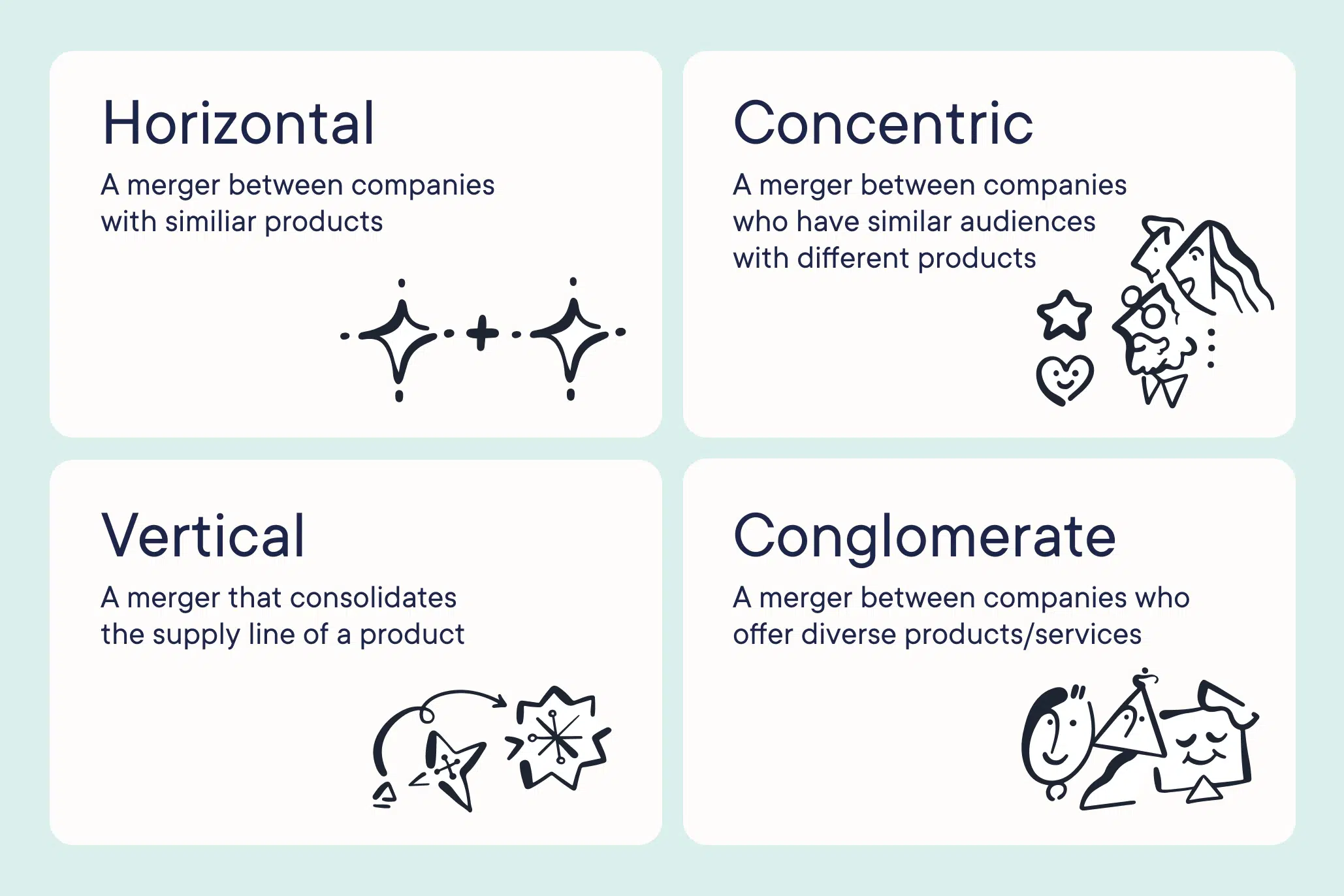
This image is useful for quick revision of external growth categories. Students should use it to connect each merger type to likely objectives, such as market share, supply chain control or risk spreading. Source
Checklist: can you do this?
· Compare methods of measuring business size and explain why each may be suitable or unsuitable in context.
· Explain advantages and disadvantages of small businesses, including family businesses.
· Analyse why small businesses are important to the economy and to industrial structure.
· Distinguish internal growth from external growth, including merger, takeover, joint venture and strategic alliance.
· Evaluate the impact of growth on stakeholders and judge whether growth is likely to achieve business objectives.