
Meaning of Stakeholders
· Stakeholders = individuals or groups with an interest in the activities of a business.
· They may be affected by business decisions or have the ability to influence business decisions.
· Stakeholders are important because business decisions rarely affect only the owners; they can affect employees, customers, suppliers, communities, governments and investors.
· In exams, always link stakeholders to the specific business context, not just generic definitions.
Internal and External Stakeholders
· Internal stakeholders = groups inside the business with a direct relationship to it.
· Examples: owners/shareholders, managers, employees.
· External stakeholders = groups outside the business affected by or able to influence it.
· Examples: customers, suppliers, government, banks/creditors, local community, pressure groups, competitors.
· Internal stakeholders often have more direct influence, but external stakeholders can still strongly affect reputation, sales, costs or legal compliance.
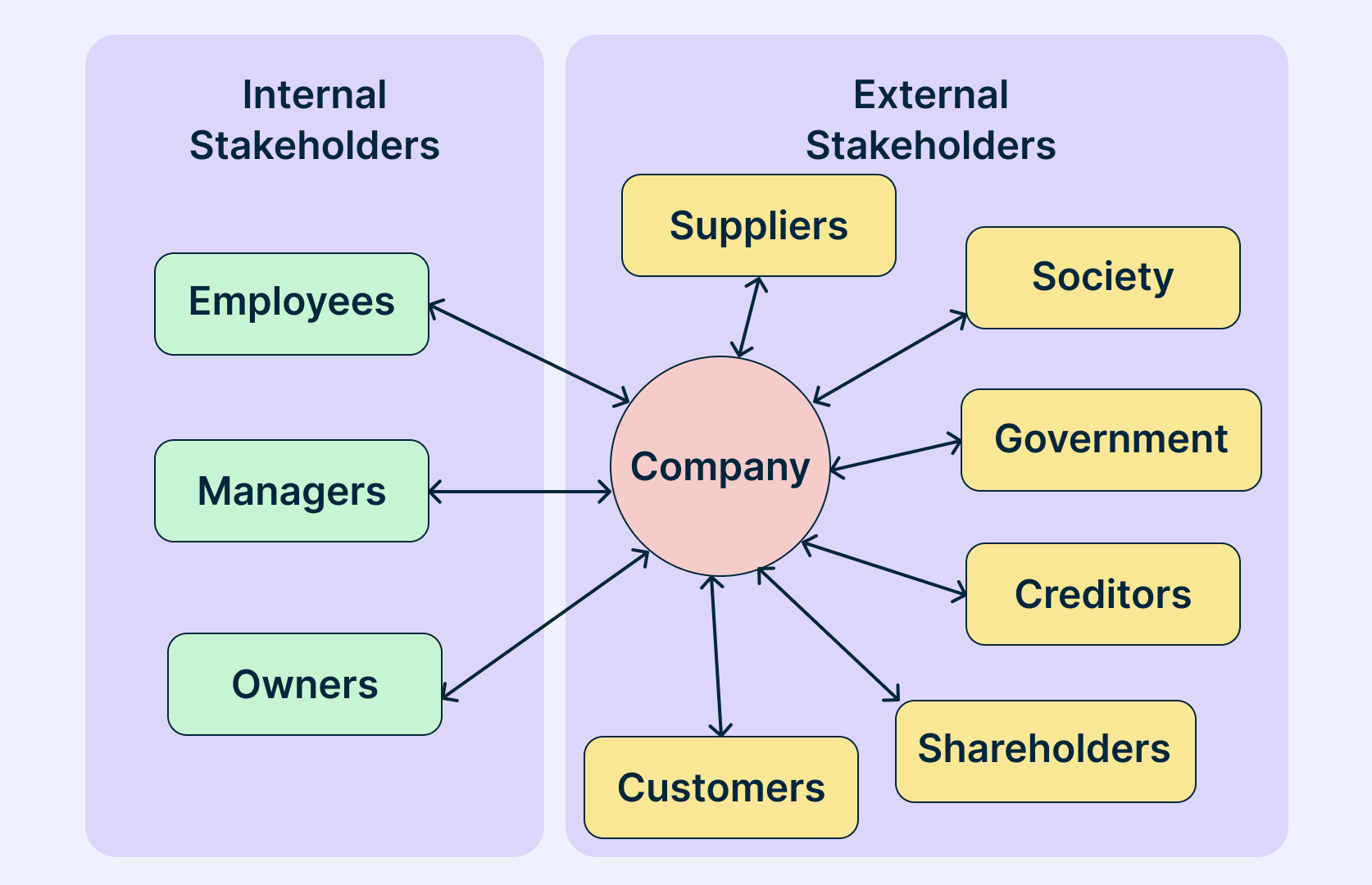
This image shows how a business is connected to both internal stakeholders, such as employees and owners, and external stakeholders, such as customers, suppliers and government. It is useful for remembering that stakeholder influence flows both ways: stakeholders affect the business, and the business affects stakeholders. Source
Roles, Rights and Responsibilities of Key Stakeholders
· Owners/shareholders: invest capital; expect profit, dividends, growth and protection of their investment.
· Managers: make decisions and organise resources; responsible for meeting business objectives.
· Employees: provide labour and skills; expect fair pay, safe working conditions, job security and career development.
· Customers: buy goods/services; expect quality, fair prices, reliability, safety and good service.
· Suppliers: provide inputs; expect regular orders, clear communication and prompt payment.
· Government: sets laws and collects taxes; expects businesses to follow employment law, consumer law, tax rules and environmental regulations.
· Local community: affected by jobs, traffic, pollution and local development; expects responsible behaviour and limited negative external impacts.
Stakeholder Aims
· Different stakeholders usually have different aims.
· Owners/shareholders often aim for higher profits, dividends and business growth.
· Employees often aim for higher wages, better conditions and job security.
· Customers often aim for lower prices, better quality and good service.
· Suppliers often aim for long-term contracts and reliable payment.
· Government often aims for legal compliance, tax revenue, employment and economic development.
· Community/pressure groups often aim for ethical behaviour, sustainability and reduced pollution.
Stakeholder Influence on Business Activities
· Influence = the ability of a stakeholder to affect business decisions or outcomes.
· Stakeholder influence depends on power, urgency, level of interest, legal rights, financial importance and the business context.
· Employees may influence through productivity, motivation, strikes or labour turnover.
· Customers influence through buying behaviour, complaints, reviews and brand loyalty.
· Suppliers influence through prices, quality, delivery reliability and credit terms.
· Shareholders influence through voting rights, pressure on directors and investment decisions.
· Government influences through laws, taxes, subsidies, fines and regulation.
· Pressure groups/community influence through campaigns, petitions, protests and reputational pressure.
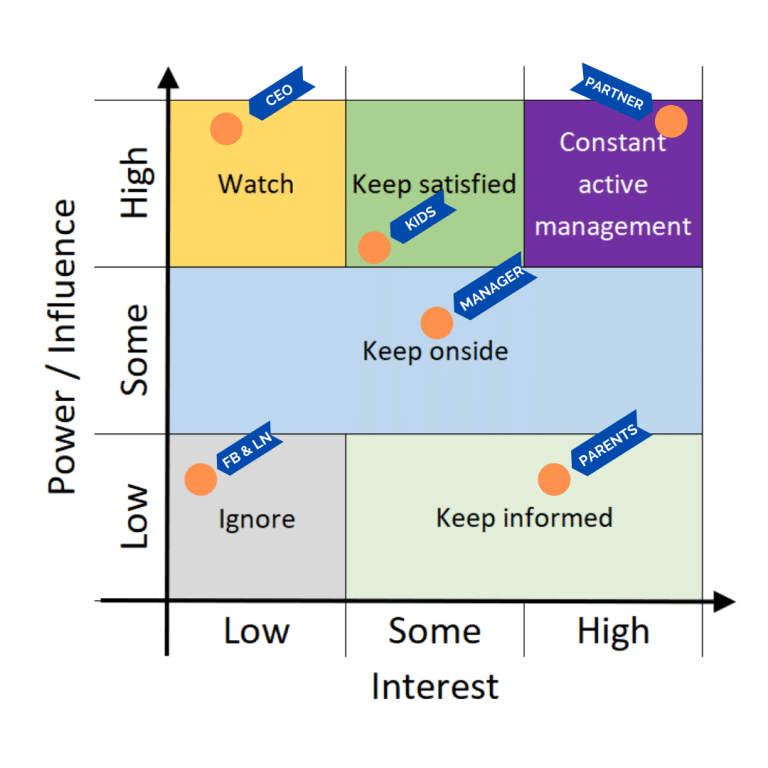
This image helps explain why some stakeholders matter more in certain decisions. A stakeholder with high power and high interest usually needs close attention because they can strongly affect the success of a business decision. Source
Impact of Business Decisions on Stakeholders
· A decision may benefit one stakeholder group while harming another.
· Raising prices may increase profit for owners but reduce customer satisfaction.
· Cutting costs may improve profit but could reduce employee morale or product quality.
· Relocating production may reduce costs but cause job losses and damage the local community.
· Expanding the business may create jobs and higher revenue, but increase traffic, pollution or pressure on suppliers.
· Improving sustainability may please customers and pressure groups but increase short-term costs.
· In exam answers, explain both positive and negative impacts on named stakeholders.
Stakeholder Conflict
· Stakeholder conflict occurs when different stakeholder groups have different aims and objectives.
· Common conflict: shareholders want higher profit, while employees want higher wages.
· Common conflict: customers want lower prices, while owners want higher profit margins.
· Common conflict: local community wants less pollution, while the business wants lower production costs.
· Common conflict: suppliers want higher prices, while the business wants lower input costs.
· Businesses often need to balance stakeholder needs, but cannot satisfy every stakeholder fully.
· Strong answers explain why the conflict exists, who is affected, and how the business might respond.
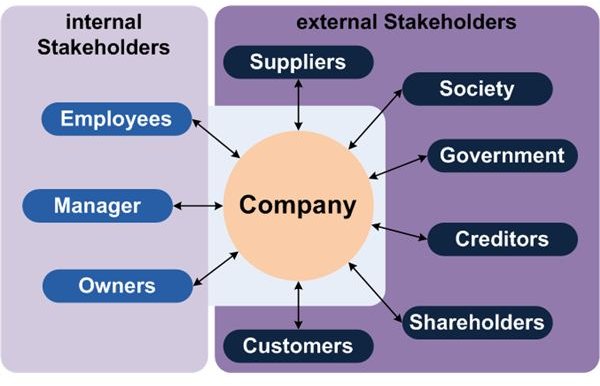
This diagram is useful for visualising how stakeholder groups surround a business and interact with it. It supports exam answers that explain how decisions affect more than one group at the same time. Source
Accountability to Stakeholders
· Accountability = the responsibility of a business to justify its actions and accept the consequences of decisions.
· Businesses need to be accountable because stakeholders provide essential resources such as capital, labour, revenue, supplies, legal permission and community support.
· Accountability may involve financial reports, meetings, customer service, CSR reports, environmental audits, legal compliance and communication with employees.
· Being accountable can improve trust, brand reputation, employee morale, customer loyalty and long-term survival.
· Poor accountability can lead to bad publicity, legal action, pressure group campaigns, loss of customers or lower employee motivation.
Changing Business Objectives and Stakeholders
· If a business changes objectives, stakeholder impacts may also change.
· A shift from survival to growth may create jobs and opportunities but increase pressure on employees and suppliers.
· A shift from profit maximisation to CSR may improve reputation but reduce short-term profit.
· A shift to cost reduction may improve competitiveness but lead to redundancies or lower-quality inputs.
· A shift to market share growth may benefit customers through lower prices, but reduce profit margins for owners.
· The best exam answers explain whether the change is short-term or long-term, and which stakeholders gain or lose.
Exam Application: How to Write About Stakeholders
· Use the structure: decision → stakeholder affected → impact → reaction/influence → final judgement.
· Avoid vague phrases like “stakeholders are affected”; name the stakeholder and explain how.
· Always apply to the case: e.g. “For a manufacturing business, the local community may object to pollution.”
· Compare stakeholder importance using power, interest, urgency and dependence on the business.
· For evaluation, decide which stakeholder is most important in this situation, not in general.
Checklist: can you do this?
· Define stakeholders and distinguish internal from external stakeholders.
· Identify the roles, rights and responsibilities of key stakeholder groups.
· Explain how business decisions affect stakeholders and how stakeholders may react.
· Analyse stakeholder conflict using specific business examples.
· Judge which stakeholders have the greatest importance and influence in a given context.