

OCR Specification focus:
‘Identify CO3^2−, SO4^2− and halides (Cl−, Br−, I−) using standard test-tube procedures.’
These tests for common anions use simple aqueous reactions to give clear, observable changes. They allow reliable identification of carbonates, sulphates, and halides in unknown samples.
Test-tube Procedures for Common Anions
Overview of Qualitative Anion Testing
Qualitative anion analysis relies on distinctive reaction pathways producing observable signs such as gas evolution or precipitate formation. These reactions follow standard conditions suitable for routine laboratory identification. Students must know the specific reagents, expected observations, and ionic species involved.
When an anion is first introduced below, it includes the precise definition used in A-Level chemistry.
Anion: A negatively charged ion formed when an atom or molecule gains one or more electrons.
Identification methods depend on how reliably an anion reacts with a chosen reagent. The tests described here follow the OCR-required procedures.
Identifying Carbonate Ions (CO3^2−)
Principle of the Carbonate Test
Carbonate ions react with acids to produce carbon dioxide gas, giving an easily detectable result. This test distinguishes carbonates effectively from other anions.
Carbonate ion: CO3^2−, a polyatomic anion derived from carbonic acid and commonly found in metal carbonates.
After producing effervescence, the gas is confirmed using limewater.
Test Procedure for Carbonates
Use the following steps to identify carbonates:
Add a few centimetres cubed of dilute nitric acid to the solid or solution being tested.
Observe effervescence as carbon dioxide gas evolves.
Bubble the gas through limewater to confirm CO2.
A normal sentence should appear here to maintain the required structure. Limewater turning milky demonstrates formation of a precipitate of calcium carbonate, proving that CO2 is present.
Key Observation
Effervescence due to CO2 release
Limewater turns milky, indicating CaCO3(s)
This test is highly specific: sulphates and halides do not release CO2 under these conditions.
Identifying Sulphate Ions (SO4^2−)
Principle of the Sulphate Test
Sulphate ions form insoluble barium sulphate when treated with barium ions in acidic conditions. The resulting precipitate is a clear indication of SO4^2−.
Sulphate ion: SO4^2−, a tetrahedral polyatomic ion derived from sulphuric acid and commonly encountered in many inorganic salts.
The acid ensures removal of competing anions that could form other insoluble barium compounds.
Test Procedure for Sulphates
Follow these steps:
Add dilute hydrochloric acid to the sample to remove carbonate interference.
Add barium chloride solution dropwise.
Look for formation of a white precipitate of barium sulphate.
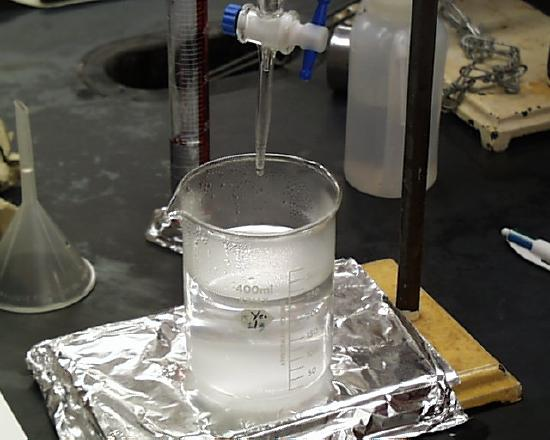
Addition of barium chloride solution to a sulfate-containing sample produces a white precipitate of barium sulfate (BaSO4). The cloudiness indicates formation of an insoluble salt confirming the presence of SO4^2− ions. The buret and heated setup shown are part of a gravimetric context and are not required by the OCR syllabus. Source
A single sentence here is needed to separate definition and equation content. Because barium sulphate is highly insoluble, even low concentrations of sulphate ions produce a visible precipitate.
Key Observation
Formation of a white precipitate (BaSO4(s)) indicating SO4^2−
This precipitate will not dissolve in excess reagent, helping confirm the result.
Identifying Halide Ions (Cl−, Br−, I−)
Principle of the Halide Tests
Halide ions form silver halide precipitates when treated with aqueous silver ions in the presence of nitric acid. Each halide produces a different coloured precipitate.
Halide ion: A monovalent anion formed when a Group 17 element gains one electron, producing Cl−, Br− or I−.
Nitric acid is added first to remove interfering anions such as carbonates.
Test Procedure for Halides
Use these steps when testing for halides:
Add dilute nitric acid to remove contaminants.
Add silver nitrate solution to supply Ag+ ions.
Observe the precipitate that forms.
A normal sentence is required here to maintain structural clarity. The differing solubilities and colours of the silver halides allow clear identification of each halide ion.
Key Observations and Colours
Chloride (Cl−): White precipitate of AgCl
Bromide (Br−): Cream precipitate of AgBr
Iodide (I−): Yellow precipitate of AgI
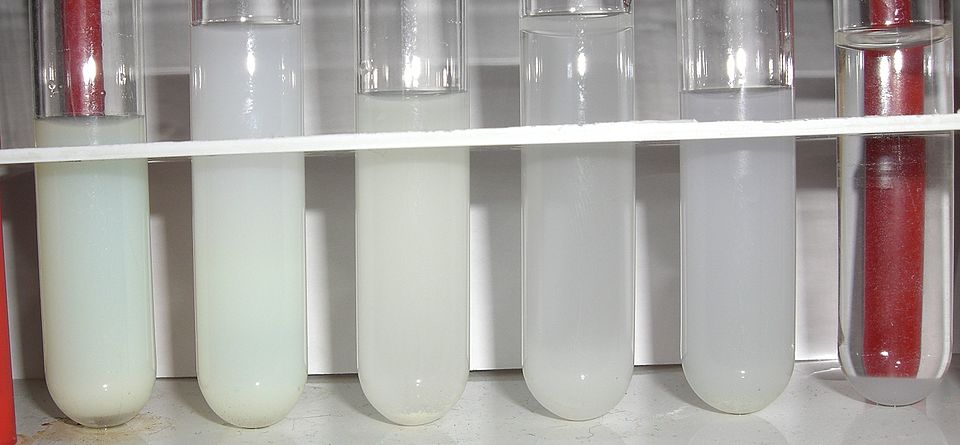
Silver nitrate reacts with halide ions to form insoluble silver halides: AgCl (white), AgBr (cream), and AgI (yellow). The distinct precipitate colours allow clear visual identification of chloride, bromide, and iodide ions. Source
Confirming Halides Using Ammonia
Although not always required for basic identification, solubility in aqueous ammonia provides extra confirmation:
AgCl dissolves in dilute ammonia
AgBr dissolves only in concentrated ammonia
AgI is insoluble in ammonia
A normal sentence ensures proper spacing from further blocks. These solubility differences arise from the varying stability of the silver–halide bonds.
Summary of Required Observations
Bullet-pointed comparisons enhance retention:
Carbonate test: Effervescence, limewater turning milky
Sulphate test: White precipitate of BaSO4
Halide tests:
Cl− → White
Br− → Cream
I− → Yellow
These standard test-tube procedures form essential qualitative tools for analysing unknown inorganic anions within the OCR A-Level Chemistry course.
Practice Questions
A student adds dilute nitric acid followed by silver nitrate solution to an aqueous sample. A cream precipitate forms.
a) Identify the anion present in the sample. (1 mark)
b) State one observation that confirms this anion rather than chloride. (1 mark)
(2 marks)
a) Bromide ion, Br−
Correct identification of bromide gives 1 mark
b) Observation that distinguishes bromide from chloride, such as:
Cream precipitate formed
orPrecipitate darker than white
Any one correct observation gains 1 mark
A student is given an aqueous solution that contains a single anion. They carry out the following tests:
Test 1: Dilute hydrochloric acid is added and no effervescence is observed.
Test 2: Barium chloride solution is added and a white precipitate forms.
a) Identify the anion present in the solution. (1 mark)
b) Describe the purpose of adding dilute hydrochloric acid before the barium chloride solution. (2 marks)
c) State the name of the precipitate formed in Test 2. (1 mark)
d) Give one reason why this test is suitable for identifying this anion. (1 mark)
(5 marks)
a) Sulphate ion, SO4^2−
Correct identification gives 1 mark
b) Purpose of adding dilute hydrochloric acid (2 marks):
To remove carbonate ions or prevent interference (1 mark)
By reacting with carbonates so they do not form a precipitate with barium ions (1 mark)
c) Barium sulphate
Correct name of precipitate gives 1 mark
d) Suitable reason for the test (1 mark), such as:
Barium sulphate is insoluble
A white precipitate forms only if sulphate ions are present
The precipitate does not dissolve in excess reagent
FAQ
Nitric acid is used because it does not introduce any additional halide ions into the solution.
Hydrochloric acid contains chloride ions, which would react with silver nitrate to form silver chloride. This would produce a white precipitate regardless of the original anion present, giving a false positive result.
Nitric acid effectively removes interfering ions such as carbonates without affecting the outcome of the halide test.
The colour differences arise from variations in the lattice structure and light absorption of the silver halides.
Silver chloride reflects more light, appearing white
Silver bromide absorbs more light, giving a cream colour
Silver iodide absorbs even more light, appearing yellow
These colour differences allow visual identification of halide ions without further testing.
Barium sulphate has very low solubility due to strong ionic bonding between Ba^2+ and SO4^2− ions.
Once formed, adding more barium chloride or acid does not break these interactions. This stability makes the sulphate test highly reliable, as the white precipitate persists and does not dissolve under normal test conditions.
Limewater contains calcium hydroxide, which reacts specifically with carbon dioxide.
When CO2 is bubbled through limewater, calcium carbonate forms, producing a milky appearance. This secondary confirmation is useful because effervescence alone could also result from other gas-producing reactions.
The limewater test therefore confirms that the gas released is carbon dioxide.
Carbonate ions can interfere by forming precipitates with barium or silver ions.
Carbonates form white precipitates with barium ions
Carbonates also react with silver ions, obscuring halide results
Acidifying the solution first removes carbonates as carbon dioxide, ensuring that any precipitate observed is due solely to sulphate or halide ions.

