AP Syllabus focus:
‘Immigration policies are a type of population policy that can influence population growth and alter population composition.’
Immigration Policies and Demographic Change
Immigration policies shape who can enter, stay, or settle in a country, and these rules significantly influence population size, labor supply, age structure, and long-term demographic patterns across regions.
Understanding Immigration Policies
Immigration policies are government rules that regulate the movement of people across borders. These policies determine who is allowed to enter, how long they can stay, and under what conditions they may work or become citizens. By shaping migration flows, such policies directly influence demographic outcomes, including the rate of population growth and the composition of age, sex, and skill groups within a society.
Immigration Policy: Government rules that regulate the entry, residency, and naturalization of foreign-born individuals.
Immigration policies vary widely across countries, reflecting political priorities, economic needs, social values, and security concerns. Because migration accounts for significant portions of population change in many developed states, these policies are a central tool for managing demographic trends.
How Immigration Policies Influence Population Growth
Immigration policies can expand or restrict population size by altering inflows of migrants.
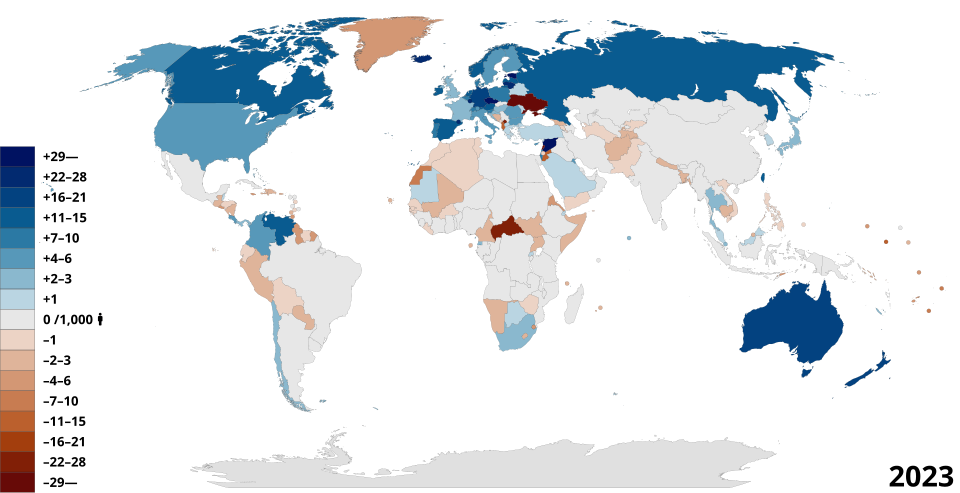
This choropleth map shows each country’s current net migration rate, measured in persons per thousand population. Darker shades indicate higher net immigration, while lighter shades show net emigration. The map includes numeric detail beyond syllabus requirements, so students should focus mainly on identifying global patterns of migration flows. Source.
Countries frequently design immigration rules to meet specific economic or demographic goals. For example, when a country faces a declining birth rate and shrinking workforce, leaders may adopt more open immigration channels to offset labor shortages. In contrast, nations seeking to reduce population pressures or address political concerns may implement restrictive quotas, strict enforcement, or temporary entry programs instead of pathways to permanent settlement.
Impacts on Population Composition
Immigration policies also shape population composition, or the characteristics of a population such as age, sex ratio, and skill levels. Because migrants tend to be young adults, migration can rebalance an aging population by adding workers within prime working ages.
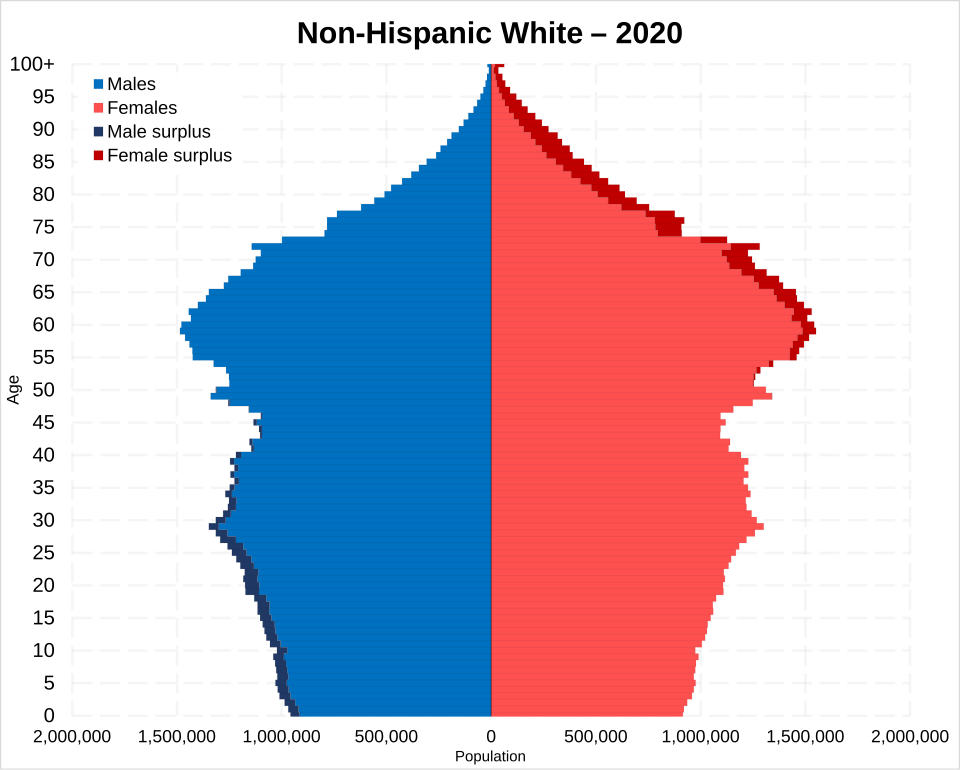
This population pyramid displays the distribution of males and females by five-year age groups. The broad upper bars illustrate an older age structure, highlighting how immigration of younger adults can reshape demographic profiles. Although based on a specific U.S. subgroup, it serves as a clear example of how age structure is evaluated in population analysis. Source.
Policies that target certain skill groups—such as engineers, health workers, or agricultural laborers—alter the occupational and educational profile of incoming migrants. Likewise, policies that favor family reunification may increase the number of children and nonworking dependents entering a country. Each policy pathway results in different long-term demographic consequences.
Dependency Ratio: A measure comparing the number of dependents (young and elderly) to the working-age population.
Because the dependency ratio is sensitive to migration flows, immigration policies play a major role in shaping the balance between workers and dependents.
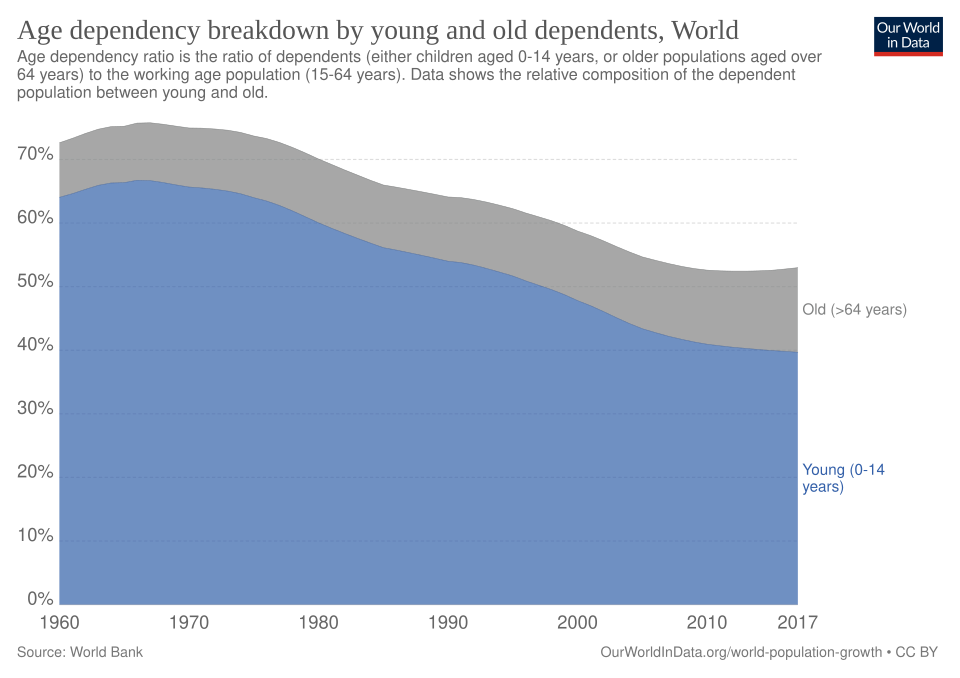
This chart shows how the total dependency ratio divides into young and old dependents over time. It illustrates why increases in the working-age population—often through immigration—can lower the burden on dependents. The time-series data extend beyond syllabus scope, but the conceptual distinction between dependent groups is directly relevant. Source.
A larger working-age migrant population can reduce strain on social welfare systems, support tax bases, and increase economic productivity.
Categories of Immigration Policies and Their Demographic Effects
Countries adopt a range of immigration policies, each producing distinct demographic outcomes. Key types include:
Open or Expansionary Policies
Encourage immigration to boost population size.
Increase the working-age population and slow demographic aging.
Often used when native fertility rates fall below replacement level.
Restrictive Policies
Limit immigration through quotas, strict documentation requirements, or enforcement measures.
Reduce population growth and leave age structures more heavily weighted toward older cohorts.
May be driven by political concerns, cultural preservation, or economic protectionism.
Selective or Skills-Based Policies
Attract migrants with specific qualifications or economic value.
Alter the skill composition of the labor force.
Influence long-term economic development and educational patterns.
Temporary or Guest Worker Policies
Allow migrants to work for limited periods without granting long-term residency.
Increase labor supply without significantly affecting long-term population composition.
Can create demographic instability if temporary workers cycle in and out frequently.
Between these categories, countries often use hybrid policies combining economic, social, and security goals. Such policies may intentionally or unintentionally produce demographic shifts that extend far beyond short-term political cycles.
Immigration Policies and Migration Streams
Immigration rules influence who migrates and from where, shaping the cultural and geographic origins of a population. Policies that prioritize particular regions, languages, or diaspora ties can concentrate migration flows from specific source countries. This process can diversify or homogenize cultural landscapes depending on policy design.
Chain migration, facilitated when immigrants sponsor relatives, often amplifies the demographic impact of immigration policies. When residency pathways allow migrants to bring family members, population growth accelerates through both direct immigration and higher birth rates among immigrant communities.
Because policies determine legal pathways, they can also shape the balance between voluntary and forced migration. For instance, asylum procedures influence the number of refugees who gain legal entry, while humanitarian corridors can significantly alter demographic composition by admitting populations fleeing conflict or environmental crises.
Long-Term Demographic Implications
Immigration policies have enduring consequences because migrants and their descendants contribute to future population trends. Migration affects fertility patterns, alters age structures, and reshapes social dynamics. Over time, the demographic effects of immigration policies can redefine national identities, economic structures, and political debates about inclusion and citizenship.
Practice Questions
(1–3 marks)
Explain one way in which immigration policies can influence a country’s population composition.
(1–3 marks)
• 1 mark for identifying a valid influence (e.g., selecting for young workers).
• 1 mark for describing how this policy affects composition (e.g., increases share of working-age adults).
• 1 mark for clear geographic relevance or demographic explanation (e.g., reduces dependency ratio or changes sex balance).
(4–6 marks)
Assess how different types of immigration policies (such as restrictive, expansionary, or skills-based policies) can shape both population growth and the age structure of a country. Use geographic reasoning in your answer.
(4–6 marks)
• 1 mark for identifying at least two types of immigration policies.
• 1–2 marks for explaining how these policies influence population growth (e.g., expansionary policies increase inflows, restrictive policies reduce growth).
• 1–2 marks for explaining impacts on age structure (e.g., younger migrants shift median age downward; restrictive systems exacerbate ageing).
• 1 mark for geographic reasoning or linkage to demographic processes (e.g., workforce supply, dependency ratios, labour market demands).
FAQ
Immigration policies often respond to labour shortages by creating targeted entry pathways for specific sectors such as healthcare, agriculture, and engineering. Governments may adjust quotas or streamline visa processing to attract workers whose skills are in short supply.
Some countries also use temporary worker schemes to fill seasonal or cyclical labour gaps without permanently altering population size. These approaches influence both economic productivity and the demographic profile of the working-age population.
Family reunification policies emphasise social stability, integration, and long-term settlement. Allowing migrants to bring close relatives can support emotional wellbeing and increase the likelihood of successful integration.
These policies also shape demographic composition by increasing the number of dependants, such as children and older family members, which influences both population growth and demand for social services.
Some immigration programmes direct newcomers to specific regions facing population decline or labour shortages. This approach aims to balance uneven population distribution and stimulate local economies.
• Regional settlement incentives
• Requirements to live in designated areas
• Work permits tied to specific local employers
These tools can help revitalise rural regions or smaller cities while easing pressure on major metropolitan areas.
Humanitarian admissions, such as refugee resettlement or asylum grants, often include individuals from diverse age groups and backgrounds. Unlike economic immigration, humanitarian flows are less selective and can diversify population composition more rapidly.
Their demographic impact depends on the scale of arrivals, the countries of origin, and settlement policies that determine long-term residency and family reunification opportunities.
Immigration policies shape cultural diversity by determining which groups enter and settle. When policies favour particular countries or regions, they can produce concentrated cultural communities that influence language use, food landscapes, and social practices.
Policies that encourage permanent residency also promote cultural integration over time, contributing to hybrid cultural identities and reshaping local and national cultural patterns.