

CIE Syllabus focus:
'Candidates should understand ordinary shares, bonus issues, rights issues, debentures, dividends, capital reserves and revenue reserves.'
Limited companies use a mix of ownership capital, loan capital, and reserves. Understanding how each item works is essential for interpreting who finances the business and how profits are retained or distributed.
Ordinary shares
Ordinary shares are the main form of ownership capital in a limited company.
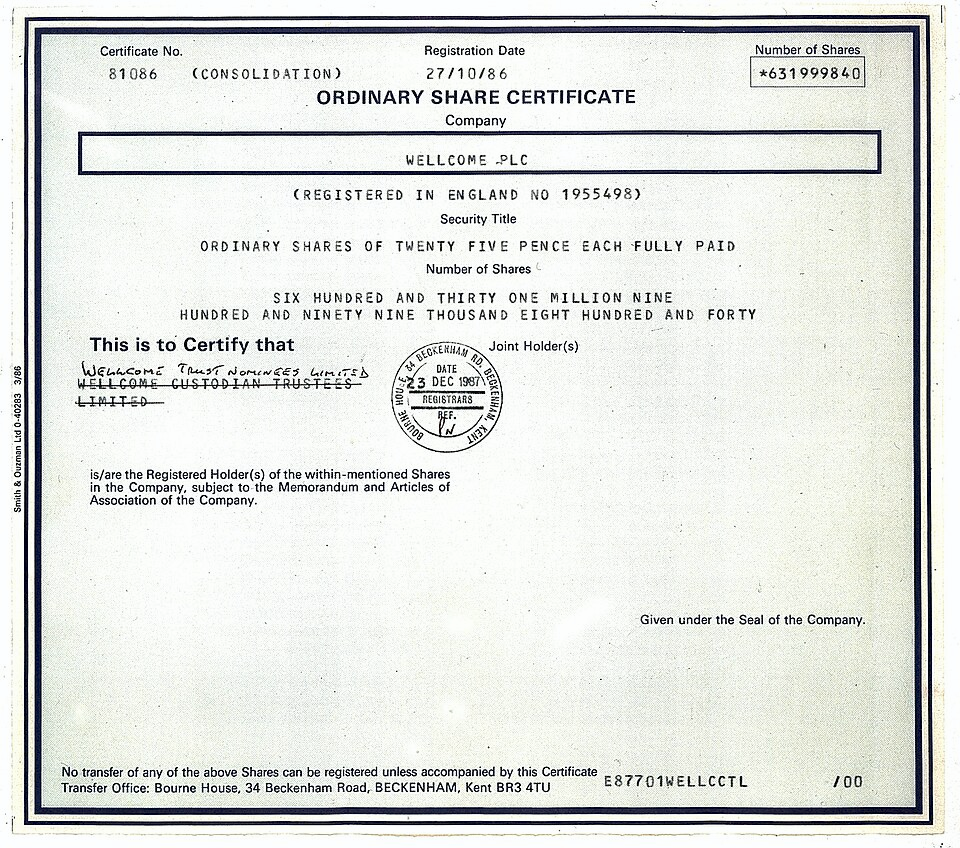
An ordinary share certificate is a legal document evidencing ownership of a stated number of ordinary shares in a company. Using a real certificate helps distinguish shareholders (owners with residual claims) from lenders, who hold debt instruments instead. Source
People who buy them become ordinary shareholders, who are the owners of the company and usually have the right to vote on important matters.
Ordinary shares: Units of ownership in a company that usually carry voting rights and entitle holders to a share of profits through dividends.
Ordinary shareholders accept the main business risk. If the company performs well, they may receive higher dividends and benefit from a rising share value. If the company performs poorly, dividends may be reduced or omitted.
Key features of ordinary shares include:
they form part of the company’s share capital
shareholders are owners, not lenders
dividends are not fixed
ordinary shareholders usually control the company through voting rights
Because ordinary shareholders are the residual owners, they are paid after other claims have been met. This makes ordinary shares potentially rewarding, but also more risky than loan capital.
Bonus issues and rights issues
A company may change its share capital by making a bonus issue or a rights issue. These are different in purpose and effect.
Bonus issues
A bonus issue means existing shareholders receive additional ordinary shares free of charge, usually in proportion to their current holdings. The company does not receive new cash. Instead, part of the company’s reserves is converted into issued share capital.
A bonus issue is important because:
it increases the number of shares in issue
it reduces reserves by the amount capitalized
it does not change total equity overall
existing shareholders keep the same proportional ownership if all shares are issued proportionately
A company may use a bonus issue to make shares more marketable or to present a stronger issued share capital base. However, it does not provide fresh funds for expansion or debt repayment.
Rights issues
A rights issue offers existing shareholders the right to buy additional shares, usually in proportion to their present shareholding. Unlike a bonus issue, shareholders must pay for these new shares, so the company receives new capital.
A rights issue is often used when a company wants to raise finance while giving existing shareholders the first opportunity to maintain their ownership percentage. It can therefore be attractive when the company wants to expand without increasing loan finance.
The key contrast is:
bonus issue: no cash received; shares issued free; reserves reduced
rights issue: cash received; shareholders pay for new shares; issued share capital increases through new investment
Debentures
Companies do not rely only on share capital.
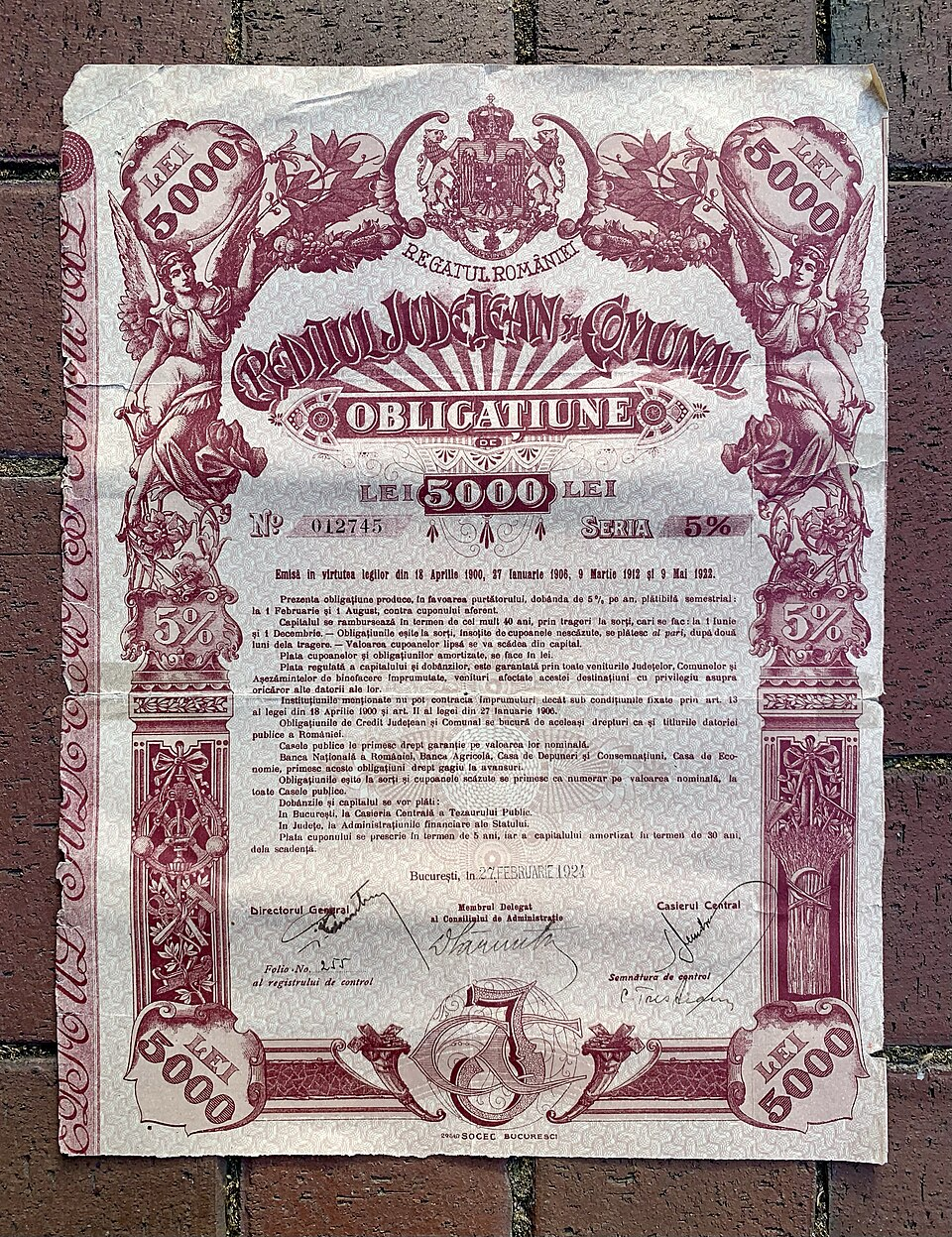
A debenture is a formal debt instrument issued to raise long-term finance, documenting the borrower–lender relationship. Showing a debenture certificate helps students remember that debenture holders are creditors entitled to interest and repayment under the loan terms, rather than owners entitled to dividends. Source
They may also raise long-term finance through debentures, which are a form of loan capital.
Debentures: Long-term loans to a company, usually carrying a fixed rate of interest and repayable at a future date.
Debenture holders are lenders, not owners. They do not usually have voting rights. In return for lending money, they receive interest, which is based on the terms of the debenture and is normally fixed. This creates a regular finance cost for the company.
Important features of debentures are:
debenture holders rank ahead of shareholders for repayment
interest is payable according to the loan terms
debenture holders do not share in the company’s profits as owners
debentures increase the company’s long-term liabilities
This means debentures are generally less risky for investors than ordinary shares, but they do not offer ownership or control.
Dividends
A dividend is the return paid to shareholders out of profits available for distribution.
Dividend: A distribution of profit made by a company to its shareholders.
For ordinary shareholders, dividends are not guaranteed. The amount paid depends on the company’s profitability, dividend policy, and the level of distributable reserves. A company may decide to retain part of its profit instead of paying it all out.
Useful points about dividends include:
they are paid to shareholders, not debenture holders
they reward ownership, not lending
they may vary from year to year
they are paid from profits available for distribution
This makes dividends different from debenture interest, which is based on a loan agreement rather than on ownership.
Capital reserves and revenue reserves
Companies also accumulate reserves, which are amounts kept within the business rather than distributed immediately.
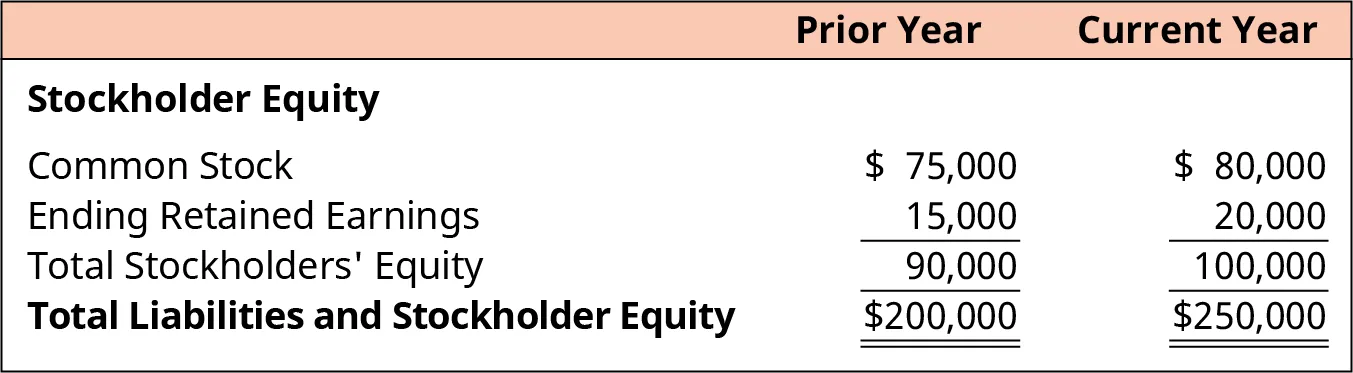
This figure illustrates how the equity section separates contributed capital (e.g., common stock/share capital) from accumulated profits retained in the business (retained earnings). It supports the idea that dividends are paid from distributable profits, while share capital represents owners’ invested funds. Source
Reserve: An amount within equity set aside or retained in the business rather than paid out to shareholders.
Capital reserves arise from capital profits rather than normal trading profits. They are usually not available for ordinary dividend payments. They are often created by events such as gains on revaluation or amounts arising from share capital transactions.
Revenue reserves arise from retained trading profits. These are profits earned from the company’s normal operations and kept in the business instead of being distributed as dividends.
The distinction matters because:
capital reserves come from capital gains or capital transactions
revenue reserves come from operating profits
revenue reserves are generally the source used for dividends
capital reserves are usually subject to greater restrictions in use
Reserves are important because they strengthen the company’s financial position, support future growth, and provide flexibility in profit retention and capital structure decisions.
Key distinctions to remember
Ordinary shares represent ownership; debentures represent borrowing.
Dividends are a reward to owners; interest is a payment to lenders.
A bonus issue rearranges existing equity; a rights issue raises new funds.
Capital reserves usually arise from non-trading sources; revenue reserves arise from retained operating profits.
Only understanding the source and purpose of each item allows you to classify company capital and reserves correctly.
Practice Questions
State two differences between a bonus issue and a rights issue. [2]
1 mark for stating that a bonus issue gives shares free to existing shareholders / does not raise new cash.
1 mark for stating that a rights issue requires payment by shareholders / raises new capital for the company.
Explain four differences between ordinary shares and debentures. Also distinguish between capital reserves and revenue reserves. [6]
Up to 4 marks for any four valid differences between ordinary shares and debentures:
ordinary shareholders are owners; debenture holders are lenders
ordinary shares usually carry voting rights; debentures usually do not
dividends on ordinary shares are not fixed; debenture interest is usually fixed
dividends depend on profits and policy; debenture interest is payable according to loan terms
ordinary shareholders rank after debenture holders for repayment
Up to 2 marks for reserves:
capital reserves arise from capital profits / non-trading sources and are not normally available for ordinary dividends
revenue reserves arise from retained trading profits and are generally available for dividend distribution
FAQ
A rights issue lets existing shareholders buy the new shares first, which can help preserve the current pattern of control.
It may also be easier politically within the company, because long-term shareholders are given priority rather than seeing their ownership diluted immediately by new investors.
If the shareholder does nothing, their percentage ownership may fall because more shares will be in issue after the offer.
In practice, this can reduce voting influence and future entitlement to dividends as a proportion of the whole company, even though the shareholder still owns the same number of shares.
It can signal that the company has built up sufficient reserves and is confident enough in its financial position to capitalize part of them.
Some investors also see it as a sign of maturity or stability, especially if management wants a broader share base or a lower market price per share.
The company still has to meet the interest obligation under the debenture terms, even when profits are weak.
That means pressure on cash flow can rise quickly in a downturn, and heavy debenture finance can make the business less flexible than equity finance.
Some shareholders prefer immediate returns through dividends, especially if they rely on regular income.
Others may support retention if the reserves are being used for expansion, risk protection, or future investment. The disagreement usually centers on whether management is using retained profits effectively.


_(01).jpg)