IB Syllabus focus: 'Students should engage critically with varied definitions and approaches to the concept of power throughout the course.'
Power sits at the center of global politics, but it is not a single, fixed idea. IB students need to compare definitions, question assumptions, and judge which approach best explains political reality.
Why defining power matters
Global politics is partly about who can shape decisions, rules, behavior, and outcomes. However, people do not always mean the same thing when they use the word power. Some definitions focus on visible control in decision-making. Others focus on deeper social forces that shape what people believe, expect, or accept. Strong political analysis begins by asking what definition of power is being used and why.
Power: In global politics, the capacity to shape outcomes, influence actors, or structure what is possible in political life.
This broad definition is useful because it includes states, international organizations, corporations, social movements, and individuals without reducing power to just one tool or one arena.
Because scholars disagree about its meaning, power is often treated as a debated idea rather than a settled fact.
Contested concept: An idea whose meaning is debated because different approaches emphasize different features, assumptions, and values.
This matters for IB Global Politics because definitions are not neutral.
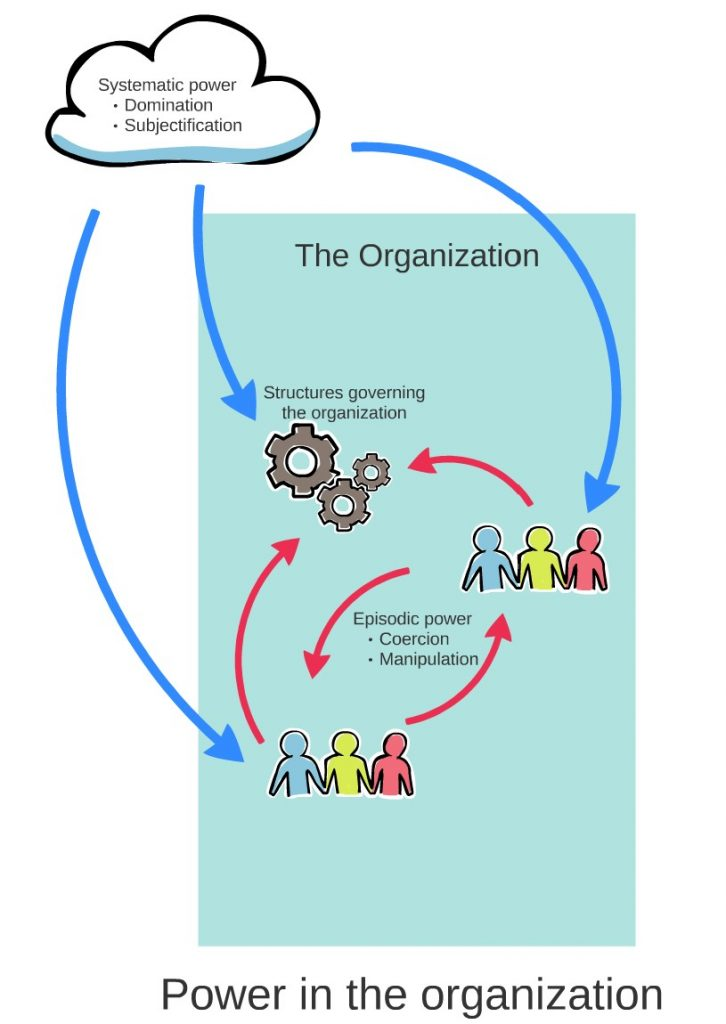
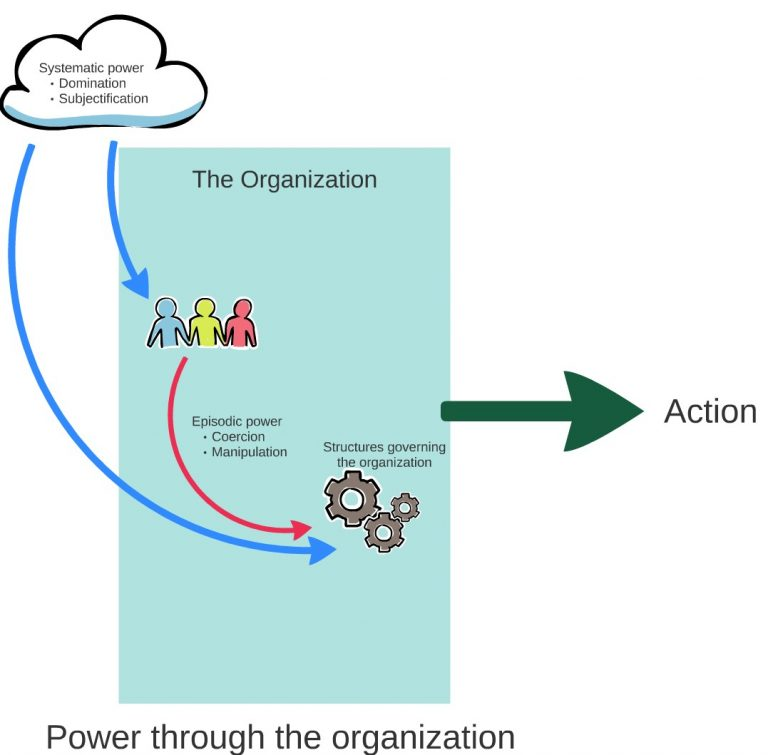
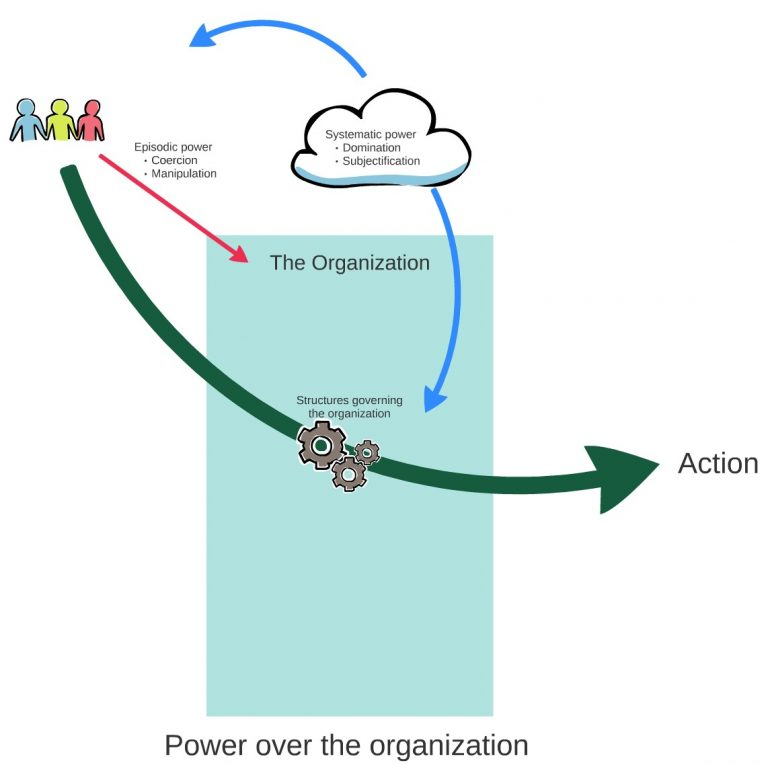
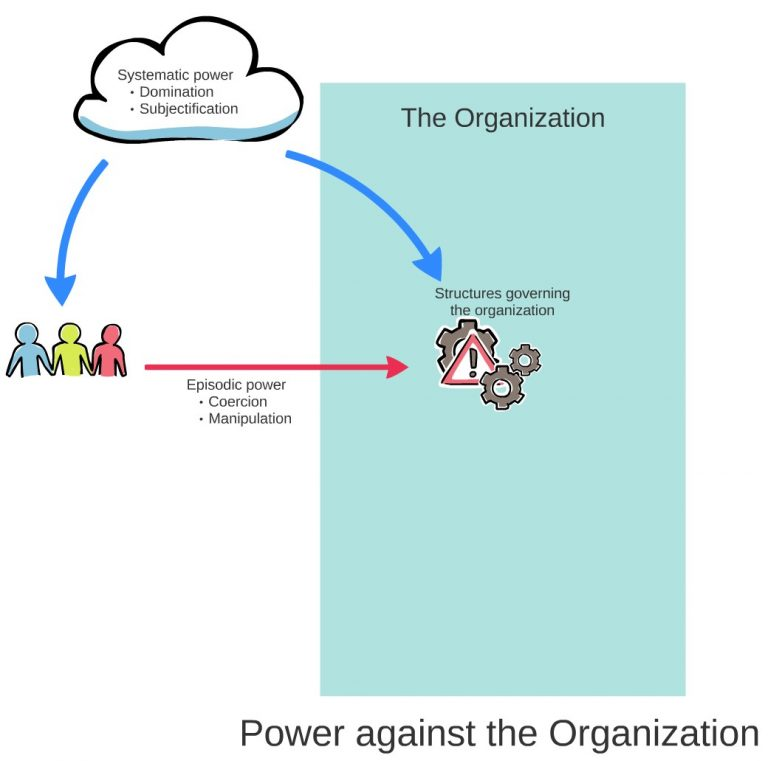
These diagrams contrast how power can be exercised in, through, over, and against an organization, highlighting both direct actions and the shaping role of structures. They help students connect visible decision-making to deeper institutional and systemic forces. In IB terms, the figures reinforce why different definitions of power foreground different political realities. Source
Each definition highlights some political realities while downplaying others. A narrow definition may be easier to measure, but it may miss deeper influences. A broad definition may capture more complexity, but it can become vague.
Main approaches to defining power
Power as capacity
One common approach defines power as the ability to achieve goals. In this view, an actor is powerful if it can produce desired outcomes. This definition is attractive because it links power to results rather than reputation alone. It also reflects everyday political language: powerful actors are those able to make things happen.
This approach is useful, but it also raises questions. If an actor achieves an outcome because others voluntarily agree, is that still power? If success depends on luck, timing, or external conditions, should that count as power? Capacity-based definitions are valuable, but they can make power seem too broad if every successful outcome is labeled power.
Power as influence in relationships
Another approach defines power as a relationship in which one actor affects another actor’s choices or behavior.
Here, power is not just something an actor possesses; it exists through interaction. This makes power easier to observe in bargaining, negotiations, diplomacy, and conflict.
This approach is helpful because it asks precise questions:
Who is influencing whom?
What change in behavior occurred?
Was the change intentional?
What means were used?
A relational definition gives power clear direction and focus. However, it may miss situations where people follow rules, expectations, or social norms without obvious pressure from a visible opponent.
Power as control over agendas
A wider definition treats power as the ability to shape the political agenda. Actors exercise power not only when they win open disputes, but also when they influence what gets discussed, who gets included, and which choices seem realistic. In global politics, many issues never reach formal decision-making at all.
This approach is important because it shows that power can operate before any public decision is made. Exclusion, silence, and procedural control may be politically significant even when no direct confrontation is visible.
Power as shaping beliefs and assumptions
Some approaches go further and argue that power also works by shaping how people understand the world. If actors influence beliefs, values, identities, or assumptions, they may shape what others see as normal, legitimate, or possible. Under this definition, people may accept political arrangements not because they are openly forced, but because those arrangements appear natural or inevitable.
This approach helps students see subtle forms of power. It also reminds us that power is not always dramatic or visible. Sometimes it operates through habits, language, institutions, or accepted “common sense.”
Key distinctions when defining power
Power is not the same as resources
Wealth, military strength, population size, technological skill, and institutional position can all support power, but they are not identical to power. These are often better understood as potential sources of power. An actor may hold major resources and still fail to shape outcomes.
For IB analysis, this distinction prevents simplistic claims such as “more resources always mean more power.” Resources matter, but power must be demonstrated, not merely assumed.
Power depends on context
No single definition works equally well in every case. Power may appear differently depending on:
the issue area
the actors involved
the scale of politics
the time frame being studied
An actor may seem powerful in one setting and much less influential in another. This is why defining power always involves judgment about context.
How to engage critically with definitions
The syllabus asks students to engage critically, not just memorize terms. This means testing definitions against political reality and asking what each one reveals or hides.
Useful critical questions include:
Does this definition focus on outcomes, relationships, agendas, or ideas?
What kinds of actors become visible under this definition?
What kinds of power might it ignore?
Does it confuse resources with actual influence?
Is it precise enough to analyze real political cases clearly?
Strong IB responses compare definitions rather than assuming one is automatically correct. A good definition of power should sharpen analysis, explain evidence clearly, and remain open to the fact that power can be direct, indirect, visible, or deeply embedded in political life.
Practice Questions
Define power in global politics.
1 mark for identifying power as the ability or capacity to influence others or shape outcomes.
1 mark for recognizing that power can operate through actors, relationships, institutions, or ideas, not only through direct commands.
Explain why power is a contested concept in global politics.
1–2 marks for explaining that different definitions emphasize different aspects of power, such as outcomes, influence, agenda-setting, or belief-shaping.
1–2 marks for explaining that some forms of power are visible and direct, while others are indirect or less obvious.
1–2 marks for explaining that context affects how power appears, so no single definition works equally well in every political situation.
FAQ
Power is the ability to shape outcomes or influence behavior. Authority is the recognized right to make decisions.
An actor can have authority but limited power if others ignore its decisions. An actor can also have power without much authority if it influences outcomes without broad legitimacy. In practice, the two often overlap, but they are not the same.
Rankings usually reduce power to a few measurable indicators, such as military spending, GDP, or population.
That can be useful for quick comparisons, but it misses issue-specific influence, diplomatic credibility, agenda-setting ability, and the power of norms or reputation. Rankings are best treated as a starting point for analysis, not as a full definition of power.
Yes. Small states can be influential when they have a strategic location, strong expertise, trusted diplomacy, or leadership on a narrow issue.
They may also gain power through:
coalition-building
mediation
institutional skill
control over important resources or routes
Their power is often specialized rather than universal.
Media narratives help shape who appears strong, weak, rising, or declining. Repetition can turn an image of power into a political fact if other actors start responding to it.
For example, if governments, investors, or publics believe an actor is powerful, they may change behavior in ways that reinforce that perception. This means perceived power and actual power can interact.
Crises test different qualities than stable periods do. Speed, coordination, credibility, information, and public trust may matter more than raw size.
As a result, actors that seemed dominant before a crisis may struggle, while previously overlooked actors gain influence. Crises reveal that power is partly situational: it depends on which capabilities matter most at a specific moment.