IB Syllabus focus: 'Economic, political, social and cultural power should be used to analyse real-world political examples and cases.'
Power in global politics is not only about governments or force. It also operates through wealth, institutions, social organization, and culture, shaping outcomes across states, markets, and communities.
Understanding forms of power
Power appears in different parts of society, so analysis should ask not only who is influential but also how that influence works. The same case may involve several forms of power at once.
Economic power
Economic power: The ability to influence outcomes through control of money, investment, trade, production, labor, technology, or natural resources.
Economic power comes from control over money, investment, production, trade, labor, technology, and natural resources. It may be held by states, banks, donors, lenders, or multinational corporations.
In real-world politics, economic power can shape what governments believe is possible. Dependence on exports, debt, aid, or jobs can narrow policy choices even without open pressure.
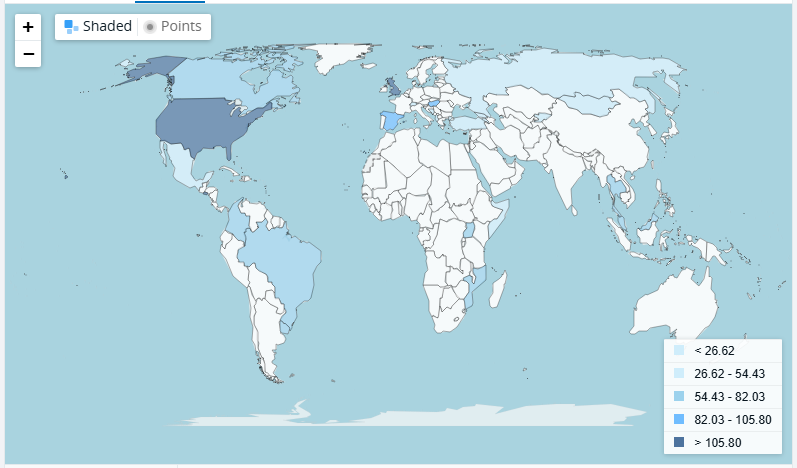
This World Bank indicator chart tracks central government debt as a percentage of GDP over time for a selected country. It provides a straightforward way to discuss how debt levels can translate into economic leverage for lenders and shape governments’ feasible policy choices. Source
Examples include countries using sovereign wealth, corporations threatening relocation, or lenders attaching conditions to loans. Economic inequality within a society also affects whose voices are heard most easily.
Political power
Political power: The ability to make, enforce, and interpret binding decisions through formal institutions and authority.
Political power is located in governments, legislatures, courts, bureaucracies, parties, and international organizations. It matters because political actors decide which demands become law or policy.
Elections, constitutions, veto points, and state capacity all shape how effectively political power is exercised.
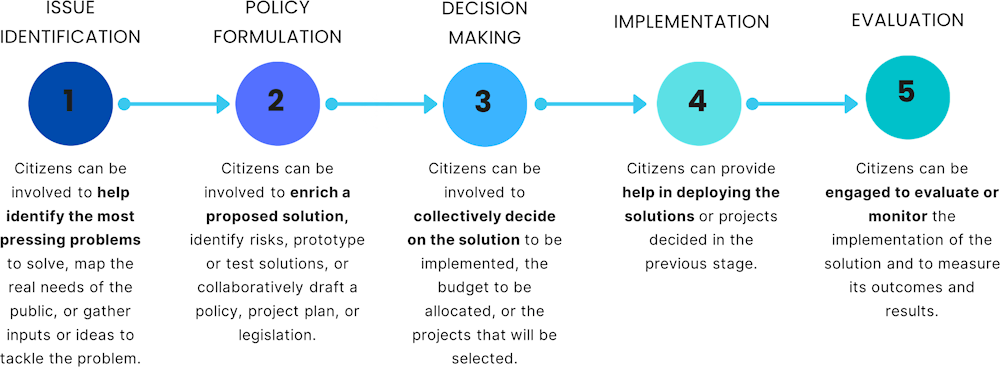
OECD’s figure maps the main stages of the policy (decision-making) cycle and shows where citizens can participate across those stages. It helps explain why political power is not only about formal authority, but also about institutional processes that structure when and how influence is exercised. Source
A government may have formal authority but still struggle to implement decisions if institutions are weak, corrupt, or contested.
Political power therefore involves both legal authority and practical control. When analyzing a case, it is important to distinguish between holding office and actually being able to govern.
Social power
Social power: The ability to influence outcomes through organization, networks, identity, status, and collective mobilization.
Social power grows from organization, networks, status, identity, and the ability to mobilize people. It may be held by unions, religious groups, activist coalitions, professional associations, or online communities.
Social power often shapes agendas before laws change. Protests, strikes, petitions, and campaigns can make an issue impossible for elites to ignore.
Its strength depends not only on numbers but also on coordination, leadership, credibility, and persistence. A relatively small group may influence politics if it is well organized and seen as legitimate.
Cultural power
Cultural power: The ability to shape meanings, values, identities, and what people see as normal, legitimate, or desirable.
Cultural power works through media, education, language, religion, symbols, and historical narratives.
It influences how people interpret events and which solutions appear acceptable.
School curricula, film, news framing, and public commemorations can all affect political behavior. These are political because they shape public understanding, not just private opinion.
When certain ideas become accepted as “common sense,” resistance becomes harder. Cultural power can therefore support political institutions and economic inequality, or challenge them by changing public beliefs.
Using forms of power in case analysis
Identifying the main source of influence
When analyzing a case, ask:
Who controls resources?
Who makes binding decisions?
Who can mobilize people?
Who shapes beliefs and norms?
These questions help separate forms of power that often overlap. A government may hold political power, a corporation may hold economic power, a movement may hold social power, and media actors may shape cultural power.
How forms of power interact
In practice, forms of power rarely act alone.
Economic power can fund lobbying, campaigns, or media ownership.
Political power can protect property, regulate business, or redistribute resources.
Social power can pressure leaders through collective action.
Cultural power can frame what the public sees as moral, modern, or patriotic.
Because of this overlap, the most visible actor is not always the most influential. A group with little formal authority may still matter greatly if it has strong social legitimacy or cultural reach.
Applying the framework to real-world examples
A strong IB response should apply these categories to a concrete case rather than simply list them. In disputes over oil, mining, or land use:
firms may use economic power through investment and employment
governments use political power through regulation and licensing
local communities use social power through protest and coalition-building
competing stories about development, rights, and identity show cultural power
Education policy can also be analyzed this way. Governments hold political power through curricula and budgets. Parents' groups or teachers' unions may use social power to resist reforms. Cultural power appears in debates over language, religion, or national history. Economic power matters when private providers or unequal income shape access.
Evaluating significance
Not every form matters equally in every case. Strong analysis should judge:
which form is most decisive
whether power is concentrated or dispersed
whether it is formal or informal
whether it leads to policy change, exclusion, or consent
A case may look mainly political because state institutions are visible, while deeper causes are economic inequality or cultural domination. Likewise, policy change may result less from elite choice than from sustained social pressure.
Common analytical mistakes
Reducing all power to wealth.
Assuming formal office automatically means control.
Ignoring non-state actors.
Describing a case without explaining how power produced the outcome.
Forgetting that power can shift over time as conditions and public attitudes change.
Practice Questions
[3 marks] Identify one feature of economic power and explain how it can influence a political outcome.
1 mark for identifying a valid feature of economic power, such as control of investment, trade, jobs, debt, or natural resources.
1 mark for explaining how that feature can shape political behavior or decision-making.
1 mark for linking the explanation to a political outcome, such as policy change, government dependence, or unequal influence.
[6 marks] Using one real-world example, explain how two forms of power across society interact to shape a political outcome.
1 mark for identifying a relevant real-world example.
1 mark for accurately identifying the first form of power.
1 mark for accurately identifying the second form of power.
1 mark for explaining how the first form affected the case.
1 mark for explaining how the second form affected the case.
1 mark for explaining the interaction between the two forms and how this shaped the final political outcome.
FAQ
Yes. In some issue areas, non-state actors may be more influential than governments.
For example:
major firms can shape investment and employment decisions
media companies can shape public narratives
religious organizations can influence values and turnout
social movements can force issues onto the political agenda
This does not mean states become irrelevant. It means power is distributed across society, and formal sovereignty does not always equal real influence.
Actors often convert power from one form into another over time.
Examples include:
using economic power to fund political campaigns or media outlets
using political power to protect business interests
using cultural power to build legitimacy for policy goals
using social power to gain representation in formal institutions
This conversion matters because it helps explain why some actors remain influential even when they lose strength in one area.
Cultural power is difficult to measure because it works through beliefs, symbols, and assumptions rather than easily counted resources.
Economic power can often be tracked through:
wealth
trade volume
ownership
investment flows
Cultural power is less visible. Analysts may need to look at media reach, school content, language dominance, public narratives, or opinion trends. Even then, it can be hard to prove direct causation.
Yes, but usually under specific conditions.
They are more likely to succeed when they:
build broad coalitions
gain public sympathy
frame the issue effectively
exploit divisions among elites
sustain pressure over time
This is important in case analysis because outcomes are not determined only by who starts with the most resources.
Crises can rapidly change which form of power matters most.
For example:
during financial crises, economic power may dominate
during constitutional conflict, political power may become central
during mass protest, social power may rise sharply
during identity-based conflict, cultural power may shape public reactions
A good analysis should therefore be sensitive to timing. Power is not static; its importance can shift depending on context.