IB Syllabus focus: 'Institutions include formal organizations and social structures of rules and norms that shape and constrain individual and collective behaviour.'
Political life is structured not only by visible organizations, but also by durable rules, routines, and expectations. Understanding institutions helps explain why actors behave differently across political contexts and why some patterns persist.
What institutions are
An institution is more than a building, office, or group of officials. It is a stable pattern that organizes political behavior over time. Some institutions are clearly visible, such as parliaments or courts. Others are less visible, such as customs of consultation, patronage, or deference to senior leaders. The key idea is durability: institutions outlast particular individuals and continue shaping choices.
Institution: An enduring set of rules, practices, or organizations that structures political behavior.
Institutions matter because they reduce uncertainty. Political actors learn what is expected, what procedures exist, and what consequences may follow from breaking accepted rules. This can make politics more predictable, but it can also lock in unequal power relations.
Formal and informal institutions
Formal institutions
Formal institutions are written, codified, and usually officially enforced. They include constitutions, electoral systems, legislatures, courts, civil services, and intergovernmental bodies with stated mandates.
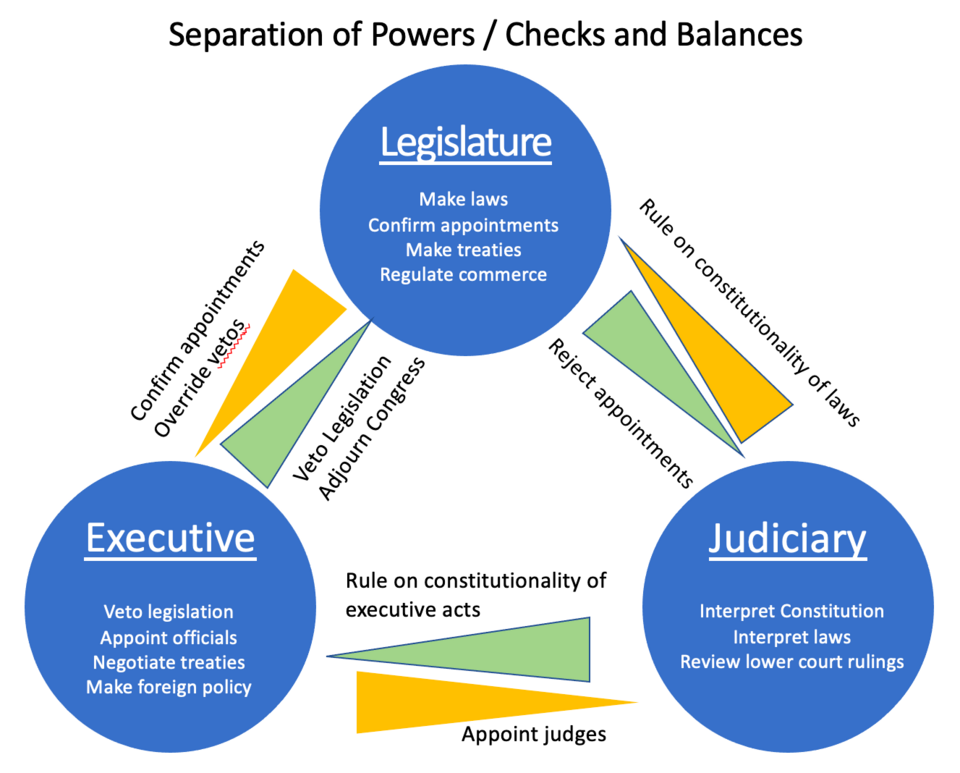
Diagram of the U.S. separation of powers showing how authority is distributed across the legislative, executive, and judicial branches, with checks (e.g., vetoes, confirmations, judicial review) limiting unilateral action. It provides a concrete example of how formal rules create veto points and oversight mechanisms that constrain political actors while also structuring legitimate decision-making. Source
They often specify who can make decisions, how authority is distributed, and what procedures must be followed.
Formal institution: An official, codified structure or rule that is recognized and enforced through established political authority.
Because they are codified, formal institutions can often be mapped through laws, charters, regulations, or official procedures. However, the existence of a formal rule does not guarantee that it will operate as intended in practice.
Informal institutions
Informal institutions are unwritten but widely understood rules and practices.

Table contrasting formal institutions (codified, officially enforced rules and procedures) with informal institutions (socially enforced norms and practices). Used alongside your definitions, it helps students quickly see differences in enforcement, visibility, and how each type shapes compliance in real political contexts. Source
They may be enforced through social pressure, reputation, tradition, or expectations within elites and communities. Informal institutions can be as politically significant as formal ones, especially where official rules are weak, unclear, or inconsistently applied.
Informal institution: An unwritten but socially accepted rule, norm, or practice that influences political behavior.
Informal institutions include political conventions, clientelism, patronage networks, norms of consensus, and customary authority. They are not necessarily illegitimate or illegal; some support stability and cooperation, while others reinforce exclusion or corruption.
How institutions shape behavior
Institutions shape behavior by structuring incentives and setting boundaries. They tell actors what is permitted, expected, rewarded, or punished. This applies to individual behavior, such as how leaders negotiate, and to collective behavior, such as how parties form coalitions or how groups organize demands.
Common ways institutions shape behavior include:
Assigning roles and authority: offices, jurisdictions, and procedures define who has power to act.
Creating incentives: rules can reward cooperation, compromise, loyalty, or competition.
Producing legitimacy: actors often gain acceptance by following institutional rules, even when those rules are contested.
Stabilizing expectations: repeated practices make political interactions more predictable.
When institutions are widely accepted, actors may follow them even without direct coercion. This shows that institutional power often works through habit and legitimacy, not only through force.
How institutions constrain behavior
Institutions also constrain behavior by limiting what actors can realistically do. A politician may personally prefer one course of action but be restricted by constitutional procedures, party rules, coalition norms, or the expectations of influential networks.
Constraints operate in several ways:
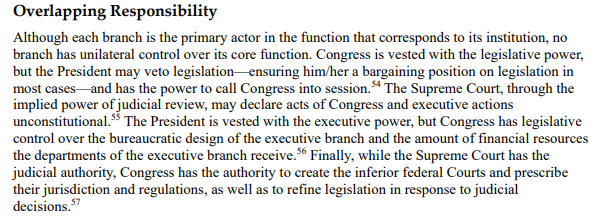
Congressional Research Service overview explaining how separation of powers diffuses authority and creates overlapping powers (e.g., vetoes, judicial review, legislative oversight). This source is useful for anchoring the idea that formal institutional design constrains behavior through procedures and checks, not only through force. Source
Legal constraints through written rules and formal oversight.
Procedural constraints through fixed timelines, veto points, and approval requirements.
Social constraints through reputation, loyalty, and fear of exclusion.
Cognitive constraints through taken-for-granted assumptions about what is “normal” or “acceptable.”
This means institutions do not just block action; they channel action into certain routes and make some strategies seem more realistic than others.
Interaction between formal and informal structures
Formal and informal institutions rarely operate separately. In many political systems, they overlap and interact. Sometimes informal institutions complement formal rules by helping them work smoothly. For example, norms of restraint or consultation can support official procedures.
In other cases, informal institutions substitute for weak formal ones. Where courts, parties, or bureaucracies are ineffective, personal networks may become the real channels of influence. Informal institutions can also undermine formal structures when unofficial practices override written rules.
This interaction helps explain why similar constitutions or organizations can function very differently across contexts. Looking only at formal design may miss the social rules that shape how power is actually exercised.
Why institutional analysis matters
Institutional analysis encourages students to ask deeper questions about power. Instead of asking only who has power, it asks how power is organized, normalized, and limited. Institutions shape access to decision-making, define acceptable political behavior, and influence whether change happens gradually or through conflict.
This perspective is especially useful because institutions can advantage some actors while marginalizing others. A political system may appear open on paper, but informal expectations or entrenched routines may keep certain groups outside meaningful influence.
Institutional continuity and change
Institutions are often durable because people adapt to them, invest in them, and benefit from them. Change can therefore be slow and contested. Formal reform may alter written rules, but informal practices may persist and limit the impact of reform.
Institutional change can occur through:
deliberate redesign by political leaders
pressure from social groups
crises that disrupt existing routines
gradual reinterpretation of established rules
A constitution, law, or agency may change quickly on paper, while the habits surrounding it change much more slowly.
Practice Questions
(2 marks): State one difference between a formal institution and an informal institution.
Mark scheme:
1 mark for identifying a feature of a formal institution, such as being written, codified, or officially enforced.
1 mark for identifying a contrasting feature of an informal institution, such as being unwritten, socially enforced, or based on accepted practice.
(6 marks): With reference to one political context, explain how formal and informal institutions together shape political behavior.
1 mark for naming or clearly identifying a relevant political context.
1 mark for accurately describing one formal institution in that context.
1 mark for accurately describing one informal institution in that context.
1 mark for explaining how the two interact.
1 mark for explaining how they shape or constrain individual behavior.
1 mark for explaining how they shape or constrain collective behavior or political outcomes.
FAQ
Path dependence means early institutional choices can shape later options, even when the original choice is no longer ideal.
Once rules, careers, funding systems, and political expectations are built around an institution, changing it becomes costly. People who benefit from the existing arrangement may resist reform, while others may struggle to imagine alternatives.
Yes. Informal institutions are not always harmful.
They can strengthen accountability when they create strong expectations of:
public consultation
restraint in the use of power
resignation after misconduct
transparency beyond legal minimums
In some systems, these unwritten expectations pressure leaders to act responsibly even when formal enforcement is weak.
Formal design does not operate in a vacuum. A constitution, court, or agency may look similar across countries, but its real effect depends on local political culture, elite behavior, and existing social hierarchies.
Informal institutions can either support the imported model or hollow it out. As a result, the same formal arrangement may produce very different outcomes in different settings.
This usually happens when a repeated practice gains broad acceptance and is later written into official rules.
Common pathways include:
political conventions becoming legal requirements
customary authority being recognized by the state
informal procedures being codified after a crisis
elite bargains being turned into constitutional rules
Formalization can increase clarity, but it can also change how the practice works.
Researchers usually rely on indirect evidence rather than official documents alone.
Useful methods include:
interviews with political insiders
observation of repeated behavior
comparing formal rules with actual outcomes
analyzing patterns of appointments, alliances, or decision-making
Because informal institutions are often hidden, researchers look for consistency: if the same unwritten pattern keeps shaping behavior, it is likely institutional rather than accidental.