IB Syllabus focus: 'Soft power should be addressed as persuasion, including examples such as cultural influence, ideology and economic aid.'
Soft power explains how actors win support by attraction rather than fear.
In global politics, persuasion matters because legitimacy, image, and values can shape outcomes across borders.
Understanding soft power
Soft power concerns influence achieved when others want what an actor wants, or at least see that actor positively. States often seek it, but organizations, movements, cities, universities, and public figures can also exercise it.
Soft power: The ability of a political actor to shape the preferences, behavior, or perceptions of others through attraction and persuasion rather than force.
Soft power works through persuasion and attraction. It is strongest when audiences believe an actor is legitimate, competent, and consistent.
Persuasion: The process of influencing how others think or act by making values, ideas, or policies appear legitimate, desirable, or beneficial.
Persuasion does not mean simple advertising. Audiences interpret messages through history, identity, media, and lived experience. As a result, soft power depends on how influence is received, not only how it is projected.
Sources of soft power
Cultural influence
Culture can generate admiration and familiarity. Music, film, sports, fashion, language, education, and lifestyle may make an actor appear innovative, modern, tolerant, or prestigious. Cultural influence can open political space by creating goodwill before diplomatic disagreements arise.
Popular culture can normalize particular values.
International students may carry positive impressions home.
Major cultural events can raise visibility and status.
However, culture does not automatically persuade. A film industry may be admired while a government is distrusted. Cultural soft power is therefore indirect and uneven.
Ideology
Ideology matters when a political actor's ideas seem attractive or legitimate to others. Principles such as democracy, anti-colonialism, human rights, social justice, religious identity, or economic liberalism can shape how audiences judge global issues. If people see an ideology as morally persuasive, they may support a state's leadership or policies.
Ideological soft power often spreads through speeches, education, media narratives, international institutions, and activist networks. It is especially important when actors frame their goals as universal rather than narrowly self-interested.
A persuasive ideology offers meaning and legitimacy.
It can build long-term loyalty, not just short-term approval.
Contradictions between rhetoric and practice weaken it.
Economic aid
Economic aid can be a source of soft power when it creates goodwill, trust, and a sense of partnership.
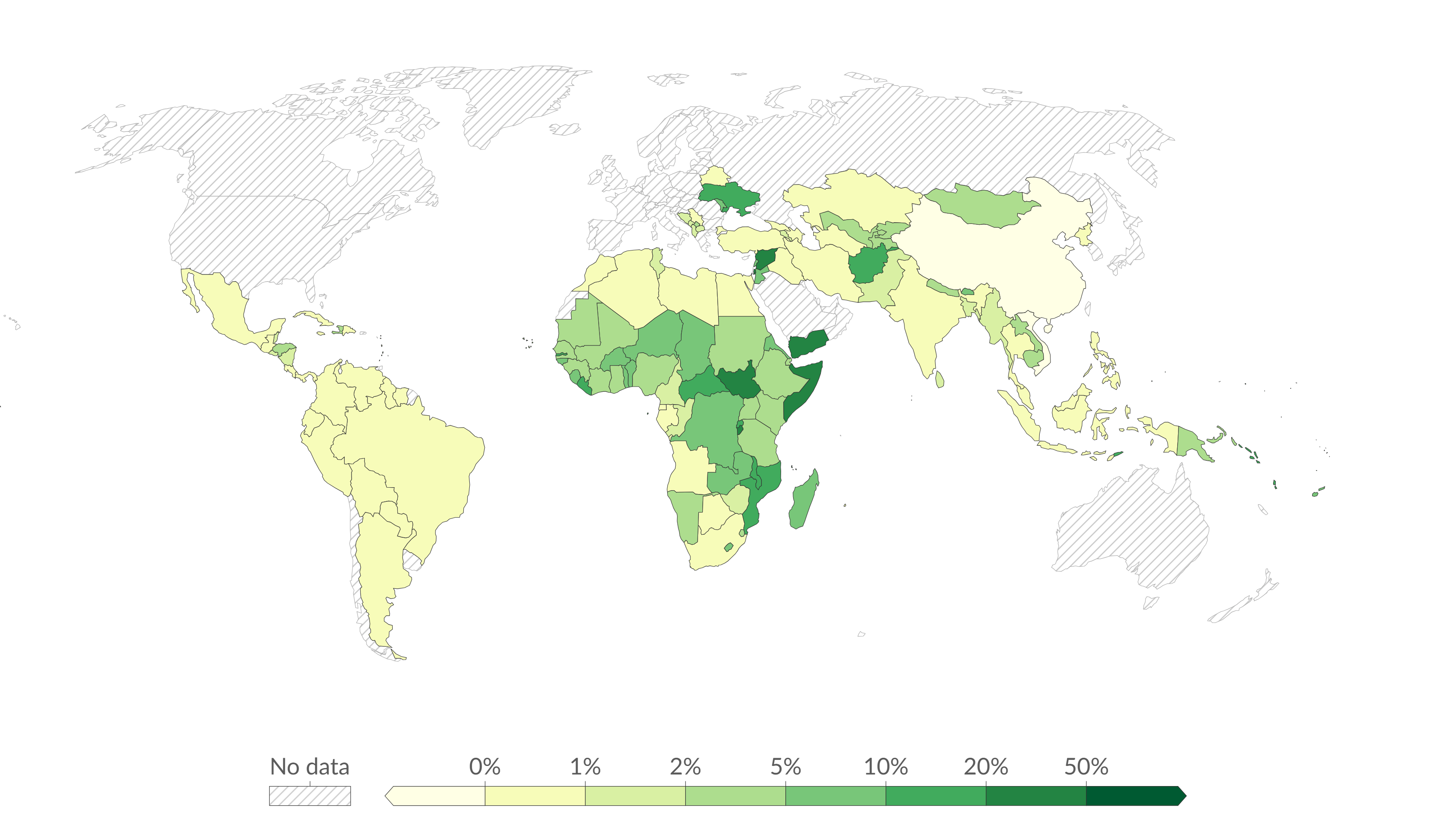
This world map shows net foreign aid received as a share of a country’s national income (GNI), highlighting where development assistance is most economically significant. It provides an empirical starting point for discussing how aid can translate into perceived partnership (soft power) or, alternatively, fears of dependency and conditionality. Source
Aid may include development finance, humanitarian relief, scholarships, technical expertise, public health support, or infrastructure funding. It becomes persuasive when recipients view it as helpful, respectful, and aligned with local needs.
Aid can improve an actor's reputation in several ways:
showing solidarity during crises
building long-term relationships with elites and communities
associating the donor with development and opportunity
Yet aid is not always soft power. If it is seen as manipulative, self-serving, or tied to hidden conditions, attraction declines. The same policy can therefore produce admiration in one context and suspicion in another.
How persuasion operates
Soft power is relational: it depends on an audience. Leaders must ask not only, “What message are we sending?” but also, “Why would others find it convincing?” Persuasion usually works through a combination of credibility, visibility, and relevance.
Credibility means the actor appears trustworthy.
Visibility means audiences actually encounter the message.
Relevance means the message connects to local concerns and identities.
Because of this, non-state actors often matter. Journalists, artists, universities, diaspora communities, charities, and influencers may strengthen or damage a country's image. Soft power is therefore difficult to control fully.
Limits and criticisms
Soft power has clear limits. Attraction does not guarantee obedience, and positive images may not survive major conflicts or hypocrisy. Domestic repression, corruption, disinformation, or policy failure can quickly undermine years of reputation-building.
Critics also argue that soft power can be vague and hard to measure. It is often easier to observe outputs, such as media reach or aid spending, than outcomes, such as changed preferences. In addition, different audiences respond differently:
elites and publics may react in opposite ways
short-term media attention may not create lasting influence
persuasive values in one society may be rejected in another
When analyzing cases, focus less on slogans and more on whether attraction changes willingness to cooperate, identify, or align.
Practice Questions
Define soft power in global politics.
1 mark for identifying that soft power is influence based on attraction or persuasion.
1 mark for stating that it shapes another actor's preferences, perceptions, or behavior without force.
Explain how economic aid can function as soft power for a state.
1-2 marks: Identifies economic aid as a persuasive tool and gives a relevant feature, such as development assistance, humanitarian relief, or scholarships.
3-4 marks: Explains how aid can build goodwill, trust, legitimacy, or a positive image.
5-6 marks: Develops the explanation by linking goodwill to political effects such as cooperation or support, and notes that success depends on how recipients perceive the aid.
FAQ
They usually rely on indirect indicators rather than one perfect measure.
Common indicators include:
international opinion polling
cultural reach abroad
student exchange numbers
tourism appeal
diplomatic presence
These measures should be treated cautiously. Visibility is easier to count than actual persuasion, and a country may look influential in rankings while failing to change opinions in a specific case.
Yes. Small states can be highly persuasive if they build a reputation that others trust.
They often do this through:
respected diplomacy
climate leadership
strong education systems
peace mediation
cultural branding
A small state does not need military or economic dominance. It needs a clear image that audiences see as credible, useful, and distinctive.
Social media allows political actors to reach foreign audiences quickly and cheaply.
It can help by:
spreading cultural content rapidly
bypassing traditional media gatekeepers
using influencers, embassies, or public figures to amplify messages
But it also creates risks. Messages can be challenged, mocked, or reframed immediately, so online soft power is fast-moving and hard to control.
Yes. Sports can generate emotional connection, prestige, and global attention in ways formal diplomacy often cannot.
Possible sources include:
successful national teams
famous athletes
hosting major events
sportsmanship and inclusivity narratives
However, sports soft power is unstable. Doping scandals, corruption, crowd violence, or accusations of image management can quickly damage the positive effect.
Public diplomacy is a set of tools used to communicate with foreign publics. Soft power is the influence that may result if those efforts create attraction and trust.
Public diplomacy can include:
embassy outreach
broadcasting
cultural institutes
exchange programs
Not all public diplomacy produces soft power. If communication feels propagandistic or insincere, it may fail or even create backlash.