IB Syllabus focus: 'Structural power should be examined through examples such as United Nations Security Council membership and heads of state.'
Structural power helps explain why some actors shape global politics not simply through personal skill, but because institutions and official positions give them durable advantages over others.
Understanding structural power
Structural power in global politics comes from the way political systems are organized, not just from immediate decisions or personal qualities.
Structural power: Power that comes from positions, rules, and institutional arrangements that shape what actors can do and how political outcomes are organized.
Because it works through routine arrangements, actors affected by it may accept the system as given, even when it distributes influence unequally.
Unlike power that depends mainly on a single decision or leader, structural power is embedded in offices, legal rules, and accepted procedures. It affects whose voices are heard first, which options seem realistic, and who can slow, block, or authorize action.
Key features of structural power
It is built into institutions rather than created from scratch in each situation.
It is often durable, lasting beyond the individual who temporarily occupies an office.
It shapes agendas, meaning some issues receive attention while others remain marginal.
It creates unequal access to information, meetings, recognition, and decision-making.
It may appear normal or legitimate, making it less visible than more direct forms of control.
Institutions as sources of structural power
An institution is a major source of structural power in global politics.
Institution: A set of formal rules, roles, and procedures that organizes political behavior and allocates authority.
Institutions distribute authority by deciding who belongs, who votes, who leads, and which procedures must be followed. This means power is not only about resources; it is also about being located in the right part of the political system. Formal institutions such as the United Nations matter, but so do constitutional offices inside states.
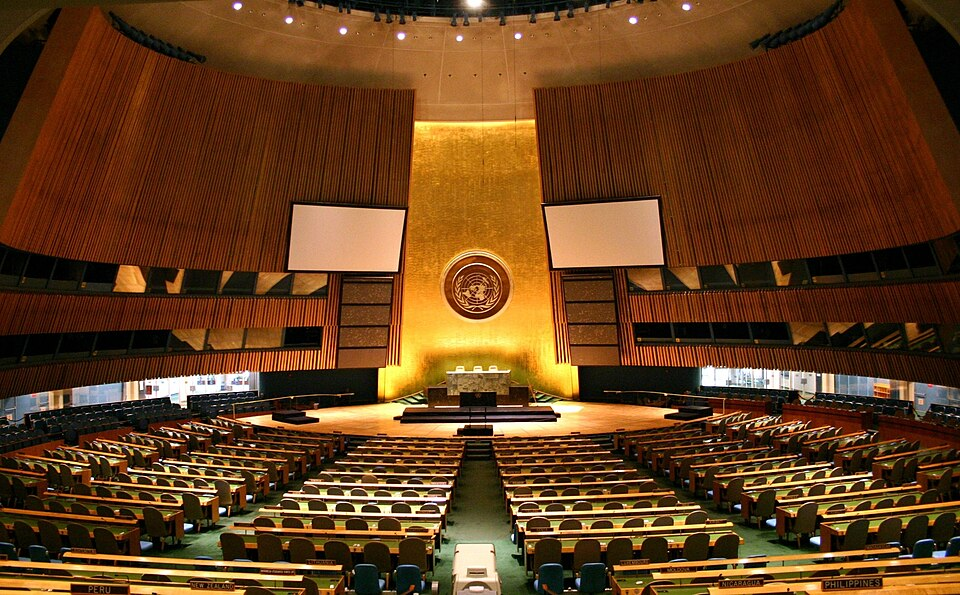
This image shows the UN General Assembly hall, the main plenary space where all member states participate. In study notes on structural power, it works well as a comparison image: unlike the Security Council’s restricted membership and veto structure, the Assembly’s universal membership highlights how institutional design shapes access and influence. Source
Institutions also classify actors. They separate members from nonmembers, permanent from temporary participants, and officeholders from ordinary citizens. These distinctions can determine who receives documents, speaks first, or is consulted during crises.
How institutions create advantages
Decision rules can give some actors stronger influence than others.
Membership status can open or close access to elite forums.
Legal authority can allow an actor to approve, delay, or reject outcomes.
Legitimacy can make an actor’s preferences appear more acceptable or binding.
Continuity means the advantage remains even when leaders change.
When analyzing structural power, ask whether an advantage belongs to the individual or to the position they occupy. If the benefit continues when the person leaves, the source of power is probably structural.
United Nations Security Council membership
Membership in the United Nations Security Council is a clear example of structural power.
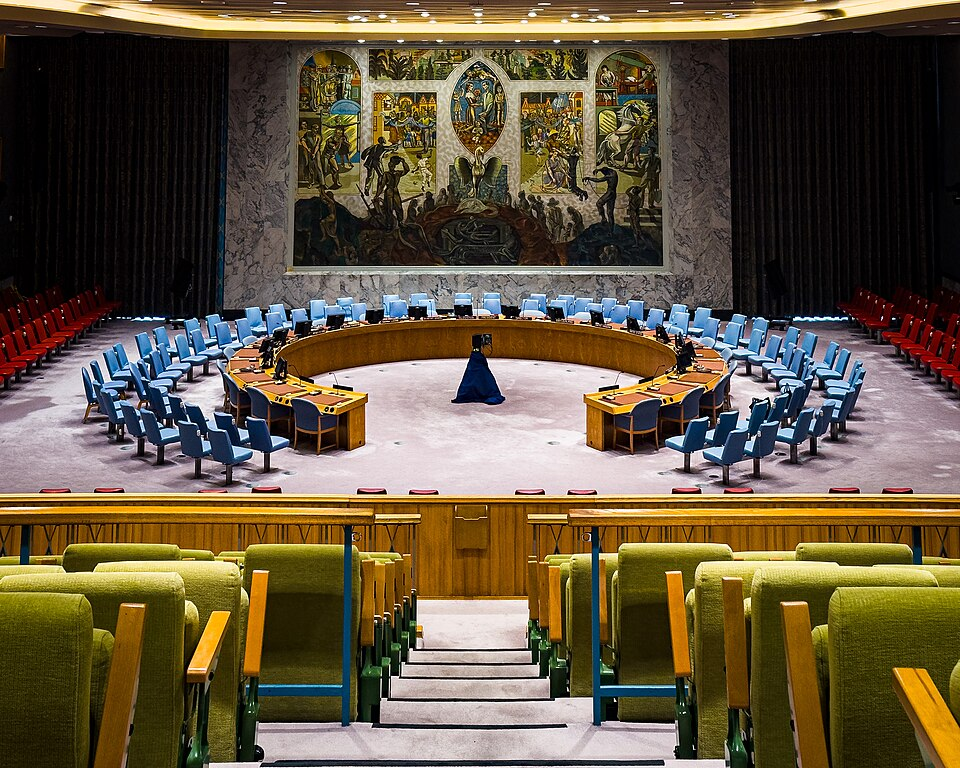
This photograph shows the United Nations Security Council chamber at UN Headquarters in New York. Using the chamber as a visual reference helps explain how structural power is tied to formal membership and the institutional venue where agenda-setting, negotiation, and authorization take place. Source
The Council is central to international peace and security, so being inside it gives states privileged access to highly consequential decisions. However, not all members are equal.
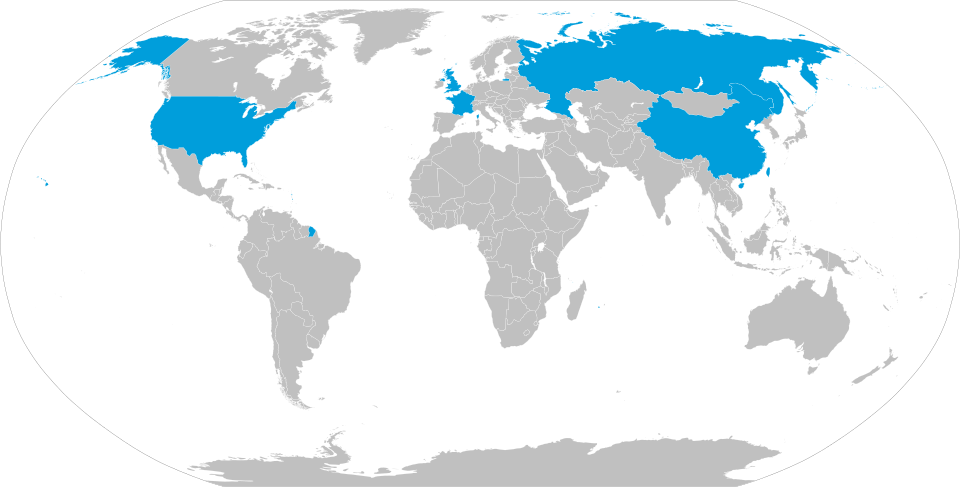
This world map highlights the five permanent members (P5) of the UN Security Council: China, France, Russia, the United Kingdom, and the United States. It is useful for linking the concept of structural power to the Council’s design—where a specific membership category carries durable procedural privileges. Source
The five permanent members hold a particularly strong structural position because institutional rules give them enduring privileges within the Council.
Even elected members gain temporary structural power because a Council seat places them inside a forum that many states can only influence from outside.
This power is structural because it comes from the Council’s design, not from the personality of any one diplomat. Permanent members can influence what is discussed, how resolutions are negotiated, and whether collective action can move forward. Their position also gives them visibility and recognition as major powers in world politics.
Why Security Council membership matters
It provides direct participation in high-level decisions on peace and security.
It gives members agenda access, allowing them to shape which crises gain priority.
Permanent membership provides special procedural weight, making some states harder to bypass.
It reinforces a broader hierarchy in global politics by signaling which states are treated as especially important.
A useful analytical point is that structural power here affects both outcomes and expectations. Other states may adjust their diplomacy in advance because they know some actors hold institutional advantages inside the Council.
Heads of state as institutional positions
Heads of state are another important example. Their structural power comes from the office they hold, which is recognized domestically and internationally. Even before they speak, the position gives them status, access, and authority. They may represent the state at summits, receive foreign leaders, communicate national positions during crises, and symbolize political unity or sovereignty.
International protocol, summit invitations, and formal recognition can amplify the office by treating its holder as the authorized face of the state.
The exact strength of this structural power varies across political systems. In some states, heads of state exercise major executive authority. In others, they are more ceremonial. Even so, the office usually carries institutional recognition that ordinary political actors do not possess. That recognition can shape negotiations, media attention, diplomatic protocol, and the seriousness with which statements are received.
Limits and variation
Structural power is real, but it is not unlimited.
Constitutional rules may restrict what a head of state can actually decide.
Legislatures, courts, cabinets, and elections may constrain the office.
International law and diplomatic pressure can narrow available options.
Personal skill still matters, but it works within an existing structure.
This is why strong analysis should avoid assuming that every head of state has the same influence. The key issue is how the office is embedded in a particular institutional system.
Applying the concept in case studies
In case studies, structural power should be identified through rules, roles, and institutional design. Good analysis focuses on how institutions allocate advantages before any individual acts.
Examiners reward answers that trace power to institutional design rather than treating influence as merely personal prestige.
Questions to ask include:
Which office, membership, or rule creates the advantage?
Who is included, and who is excluded?
What procedures make some actors more influential?
How does the institution shape legitimacy and recognition?
Does the power survive a change of leadership?
These questions help show that structural power is about the architecture of politics. Institutions do not just host political action; they organize it in ways that systematically benefit some actors more than others.
Practice Questions
Define structural power in global politics and give one example of an institution or office that produces it.
1 mark for stating that structural power comes from positions, rules, or institutional arrangements.
1 mark for stating that it shapes access, options, or outcomes beyond individual personality.
1 mark for one relevant example, such as United Nations Security Council membership or a head of state.
Explain how institutions create structural power, using the United Nations Security Council and heads of state as examples.
structural power comes from institutional design, roles, or rules
it is attached to offices or membership, not only to individual skill
Security Council membership gives privileged access to peace and security decision-making
permanent members have special procedural influence that can shape or block outcomes
heads of state gain authority, recognition, and access from their office
the strength of a head of state’s structural power depends on constitutional rules and institutional constraints
FAQ
Any major reform usually requires an amendment to the UN Charter.
That means:
approval by two-thirds of the General Assembly
ratification by two-thirds of UN member states
ratification by all five permanent members
Because the actors with the greatest structural power must approve changes, the institution tends to protect its existing hierarchy.
Yes. Formal rules matter, but informal practices can deepen inequality.
Examples include:
who drafts the first resolution text
who convenes closed consultations
which delegations are treated as indispensable brokers
who has the strongest staff capacity for rapid negotiation
These routines may not be written into the Charter, yet they can strongly influence whose preferences shape final decisions.
Yes, especially when legitimacy and continuity are at stake.
A ceremonial head of state may:
reassure foreign governments that constitutional order still exists
appoint or recognize an interim government where the constitution allows it
signal whether a transfer of power is lawful
serve as a stable contact point for diplomacy
Their importance comes less from daily policy control and more from the institutional credibility of the office.
Structural power can weaken quickly if recognition becomes contested.
Foreign states and international organizations may ask:
who can sign treaties
who can appoint ambassadors
whose representatives should occupy the state’s seat in international bodies
If recognition is divided, the office still exists, but its authority becomes less predictable and less effective in practice.
Yes, but usually through limited windows of opportunity.
They can matter by:
holding the rotating Council presidency
building coalitions around specific drafts
drawing attention to neglected crises
coordinating closely with regional groups
using expertise on a particular issue
However, their influence is usually shorter-term and more conditional than that of permanent members, because the institutional structure does not give them the same enduring privileges.