IB Syllabus focus: 'Relational power should be examined through alliances, collective civil movements and relationships between political actors.'
Relational power helps explain why influence in global politics often comes less from what an actor possesses and more from whom it can persuade, coordinate with, pressure, or mobilize.
Understanding relational power
In global politics, actors rarely act alone. States, international organizations, NGOs, parties, leaders, and social movements gain influence through the relationships they build and the dependencies they create. This means power is often produced through interaction rather than simply held as a fixed asset.
Relational power: Power that exists through relationships between actors and is expressed in the ability of one actor to shape another actor's choices, behavior, or opportunities.
Relational power is therefore dynamic. An actor may be influential in one relationship and weak in another, depending on trust, access, legitimacy, shared interests, and the willingness of others to cooperate. It can grow when networks expand and decline when relationships break down.
Key characteristics
It is context-dependent: power changes across issues, settings, and actors.
It is often mutual but unequal: both sides affect each other, but not equally.
It depends on communication, credibility, trust, and dependency.
It can be exercised by state and non-state actors, not only governments.
It is especially visible when actors bargain, coordinate, or try to mobilize support.
A strong analysis of relational power asks not only who has resources, but also who needs whom, who can influence whom, and how those relationships are maintained.
Alliances and relational leverage
An alliance can increase power because it links actors together and turns separate capacities into coordinated influence.
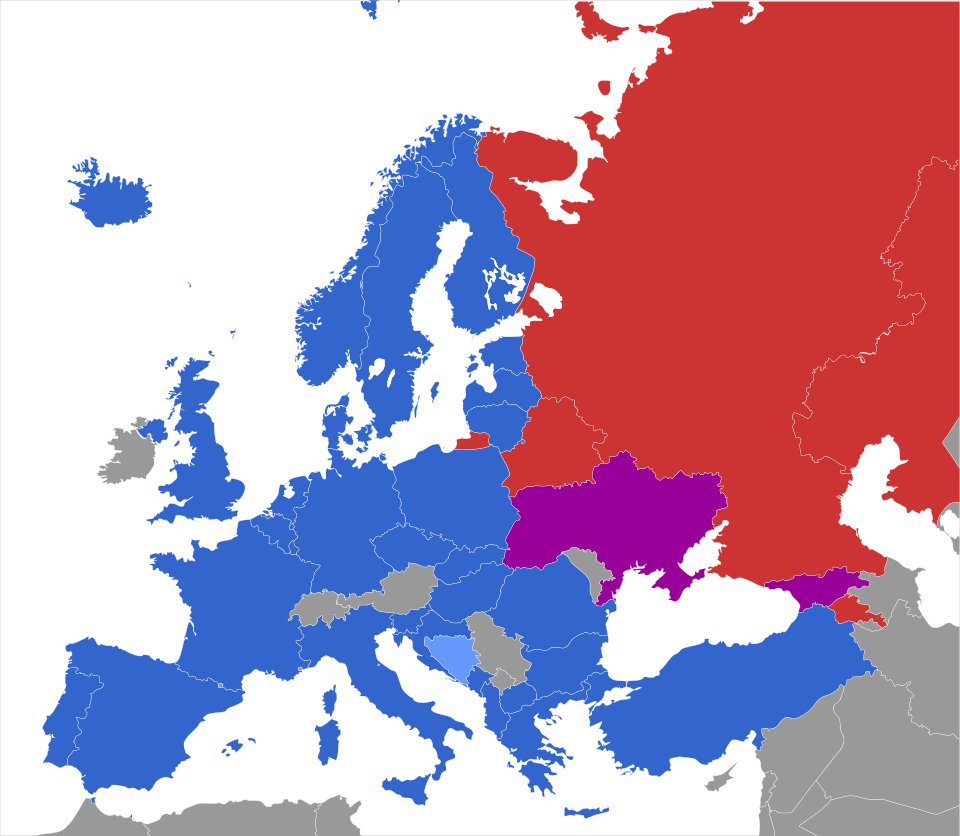
This map depicts NATO’s member states, visually illustrating how a formal alliance links geographically dispersed countries into a coordinated security arrangement. In relational-power terms, the map helps you see how credibility, deterrence, and bargaining strength can emerge from networked commitments rather than any single state’s resources alone. Source
Alliance: A formal or informal relationship in which political actors cooperate in pursuit of shared goals, security, influence, or strategic advantage.
Alliances matter because they can strengthen bargaining positions, deter opponents, and make a policy seem more legitimate by showing that it is backed by many actors rather than one. Their power does not come only from size. It also comes from unity, commitment, and credibility: others must believe that members will actually support one another.
How alliances generate power
Pooling resources allows actors to combine military, diplomatic, economic, or informational strengths.
Increasing credibility makes threats, promises, and negotiated positions more believable.
Improving coordination helps actors act with one voice in international forums.
Amplifying smaller actors gives them more leverage than they would have alone.
Raising costs for opponents can change what rival actors think is possible or worthwhile.
For example, a small state may have limited influence by itself, but gain significant bargaining power when negotiating as part of a regional bloc or coordinated coalition.
Why alliance power can weaken
Alliance power is relational, so it depends on the quality of the relationships inside the alliance. Members may disagree over priorities, burdens, or risks. Some alliances appear strong on paper but are weakened by mistrust, poor communication, or unequal commitment. Others become durable because members develop habits of consultation and predictable support.
A key question is not simply whether an alliance exists, but whether it changes what other actors believe, fear, expect, or are willing to concede.
Collective civil movements
Collective civil movements can also alter political outcomes by linking many individuals and groups around a shared claim, identity, or demand.
Collective civil movement: Organized collective action by citizens or civil society groups seeking political or social change through mobilization, advocacy, protest, or pressure.
These movements exercise relational power when they reshape the relationship between citizens, media, parties, and governments.
Their influence comes from numbers, visibility, moral pressure, and coordinated action. Even actors with little individual influence can become powerful when they act together.
How movements create relational power
Mobilization turns private frustration into public political pressure.
Solidarity helps individuals act collectively rather than separately.
Narrative control can force leaders to respond to an issue they would prefer to ignore.
Coalition-building links students, unions, faith groups, community organizations, and activists.
Transnational networking spreads tactics and increases external attention.
Movements do not need formal office to matter.
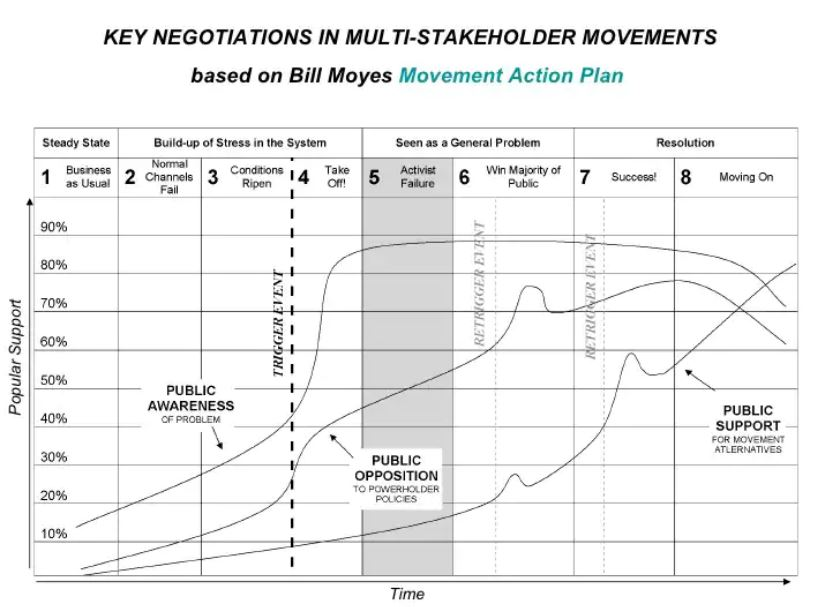
This figure graphs the stages of a social movement against changing public response (awareness, opposition, and support), making the “pressure mechanism” of collective action visually explicit. It is useful for explaining how movements convert coordination and visibility into relational influence over parties, leaders, and policy agendas as public opinion shifts across stages. Source
They can influence political actors by changing reputational costs, shaping public debate, and making inaction politically risky.
Relationships between political actors
Relational power is especially useful when analyzing how political actors negotiate, cooperate, and compete over time. A leader may influence another through repeated contact and trust. An NGO may shape policy because it has insider access to decision-makers. A regional organization may pressure a member because the benefits of membership are valuable. In each case, power comes from a relationship that alters choices.
These relationships are rarely neutral. They may involve dependence, reciprocity, hierarchy, personal ties, or shared norms. Political actors therefore manage not only resources, but also reputation, access, and communication channels. If a relationship weakens, influence can collapse quickly even when formal status remains unchanged.
Using relational power in analysis
Ask who is connected to whom and through what channels.
Identify what each actor wants from the relationship.
Consider asymmetries: who can walk away more easily?
Examine whether the relationship produces cooperation, pressure, or collective action.
Evaluate whether influence is durable or depends on a temporary coalition, moment, or leader.
Practice Questions
Define relational power in global politics. [2]
[1] States that power is exercised through relationships or interactions between actors.
[1] Explains that one actor can shape another actor's choices, behavior, or opportunities because of that relationship.
Explain two ways alliances can strengthen the relational power of political actors. [6]
[1] Identifies a relevant way alliances strengthen power.
[1] Explains how the alliance changes the relationship between actors.
[1] Develops the explanation by showing a political effect such as stronger bargaining leverage, deterrence, greater credibility, agenda-setting influence, or amplified power for smaller actors.
Possible answers include:
Pooling resources
Signaling unity
Increasing credibility
Improving coordination
Raising costs for opponents
Giving smaller actors collective leverage
FAQ
Yes. Relational power does not require friendship or cooperation. Rival actors can shape each other's choices through deterrence, dependency, repeated bargaining, or the threat of escalation.
For example, two hostile states may still influence one another if each must consider the other's likely response before acting. Conflict itself can create a powerful relationship.
Brokers connect actors who do not trust each other or do not communicate directly. This gives them influence beyond their own size or material capacity.
They can:
pass messages
reduce misunderstanding
control access
frame proposals
decide which actors are included or excluded
Because they sit between others, brokers often gain leverage from their position in the network.
A change of forum can alter who is present, what rules apply, and which relationships matter most. An actor that is weak in bilateral talks may be stronger in a regional body or international organization.
This happens because support networks, voting rules, and norms differ across venues. Changing the setting can therefore change the balance of influence without changing the actors themselves.
Diaspora communities can provide money, media visibility, lobbying access, and international connections. They may also help a movement survive if activists at home face repression.
Their support can expand a movement's reach beyond national borders. However, diaspora priorities do not always match local priorities, which can create tension over strategy and representation.
Digital platforms can spread messages quickly, but visibility is not the same as durable relational power. Online support may be broad but shallow.
Lasting influence usually requires:
leadership or coordination
offline organization
negotiation channels
sustained participation
clear political targets
Without those links, online momentum can fade before it changes relationships with decision-makers.