

IB Syllabus focus: 'The respiratory system enables gas exchange between the external environment and the body to facilitate cellular respiration. Breathing mechanics support gaseous exchange for health and performance.'
These notes explain how the respiratory system moves air, where oxygen and carbon dioxide are exchanged, and why efficient ventilation matters for both normal function and athletic performance.
The role of the respiratory system
The respiratory system links the outside environment to the body’s internal tissues. Its main functions in this subsubtopic are to bring air into the lungs, remove air from the lungs, and allow oxygen to enter the blood while carbon dioxide leaves it. This supports cellular respiration, because body cells need oxygen for aerobic energy release.
Air follows a pathway through the:
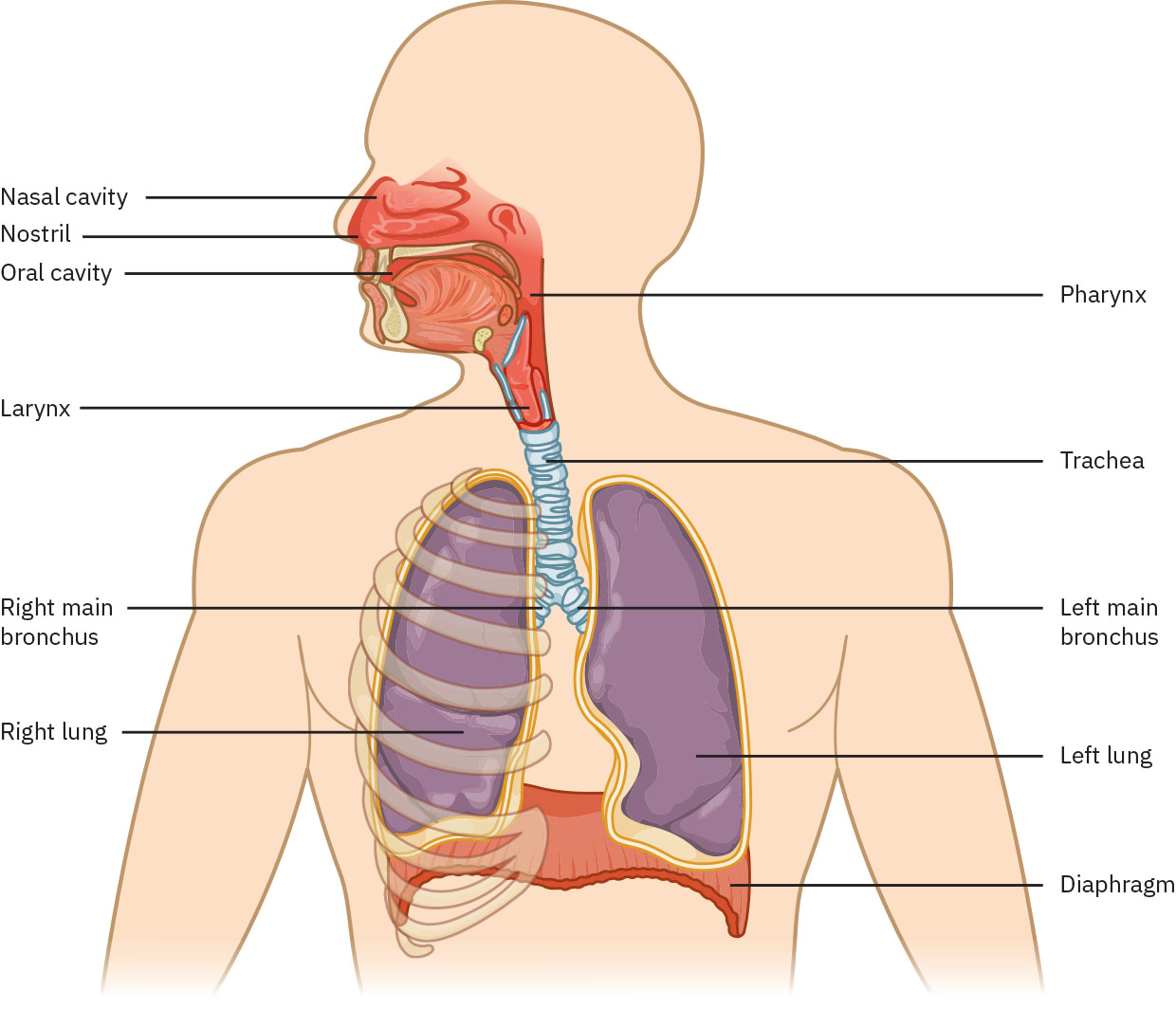
A labeled overview of the respiratory tract helps connect the ‘conducting’ structures (that move air) to the lung regions where gas exchange ultimately occurs. Using a single schematic, students can trace the route of inspired air from the upper airway to the lungs and relate later concepts (alveoli, diffusion, ventilation mechanics) to specific structures. Source
nose or mouth
pharynx
larynx
trachea
bronchi
bronchioles
alveoli
When air reaches the alveoli, it is close enough to the blood for gases to move by diffusion.
Ventilation: The mechanical movement of air into and out of the lungs.
Ventilation does not itself exchange gases; it creates the conditions that make exchange possible.
Gas exchange: The diffusion of oxygen and carbon dioxide between the alveoli and the blood.
Breathing mechanics
Inspiration
Inspiration is breathing air into the lungs. At rest, it is an active process because muscles must contract.
During inspiration:
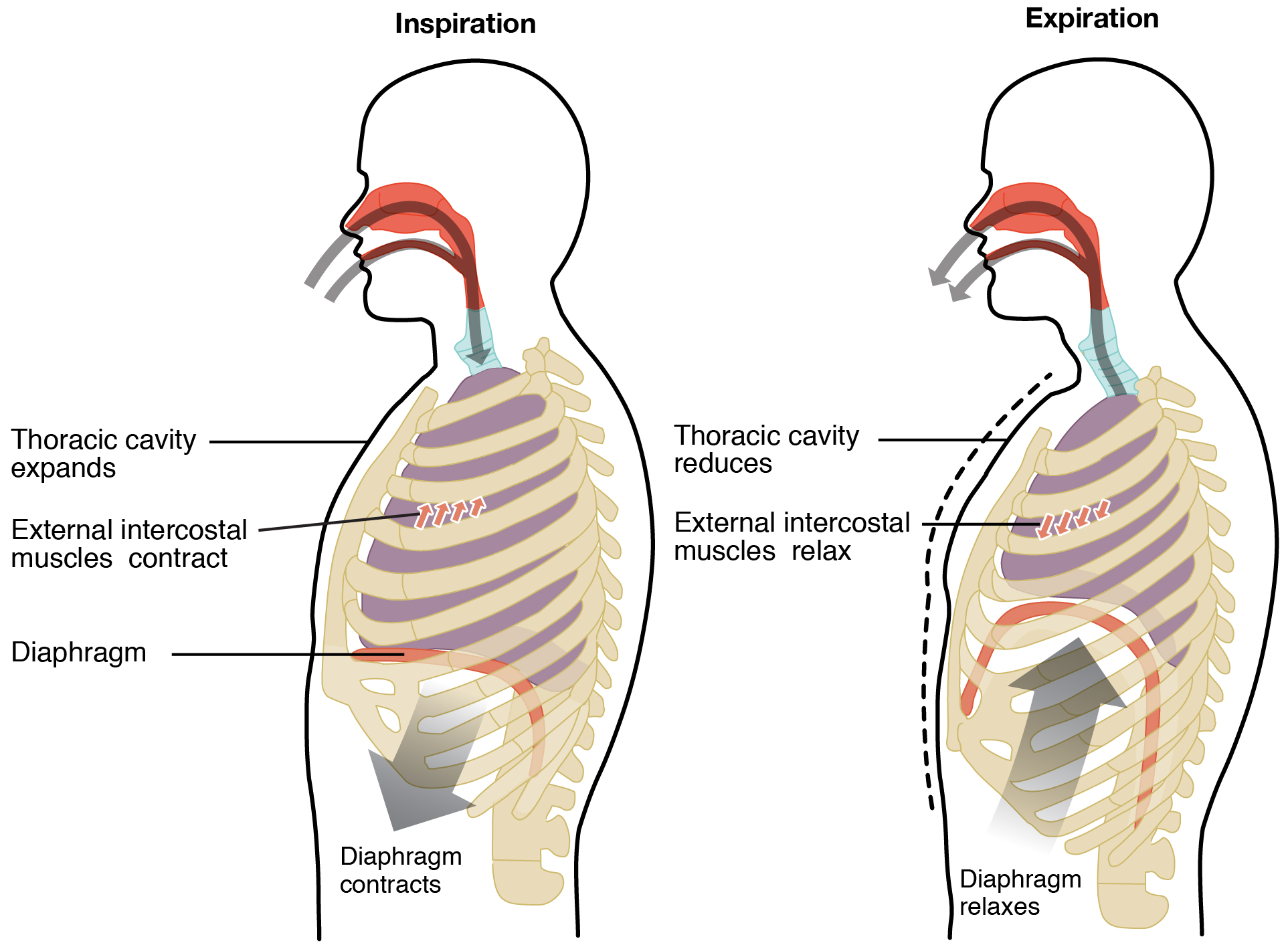
Inspiration and expiration are contrasted side-by-side, highlighting how diaphragm contraction flattens the muscle and expands thoracic volume, while relaxation reverses these changes. The labels also connect rib movement (up/out vs. down/in) to airflow direction, reinforcing that ventilation is driven by pressure gradients created by volume changes. Source
the diaphragm contracts and flattens
the external intercostal muscles contract
the ribs move upward and outward
the volume of the thoracic cavity increases
the lungs expand with the thorax
pressure inside the lungs falls below atmospheric pressure
air moves into the lungs down the pressure gradient
The key idea is that an increase in thoracic volume causes a decrease in lung pressure, so air flows inward. This fresh incoming air raises the oxygen content of the alveoli and supports continued diffusion into the blood.
Expiration
Expiration is breathing air out of the lungs. At rest, it is mainly a passive process.
During quiet expiration:
the diaphragm relaxes and returns to its dome shape
the external intercostal muscles relax
the ribs move downward and inward
thoracic volume decreases
elastic recoil of the lungs helps push air out
pressure inside the lungs rises above atmospheric pressure
air leaves the lungs
During more forceful breathing, such as intense exercise, expiration becomes more active. In this case:
the internal intercostal muscles help pull the ribs downward
the abdominal muscles contract and push the diaphragm upward more forcefully
air can be expelled faster and more completely
This is important in performance because faster removal of carbon dioxide allows the next breath to bring in more fresh air for exchange.
Gas exchange in the lungs
Alveoli and diffusion
The alveoli are tiny air sacs at the ends of the bronchioles. They are the main sites of gas exchange. Each alveolus is surrounded by a dense network of capillaries, which keeps blood very close to the air inside the sac.
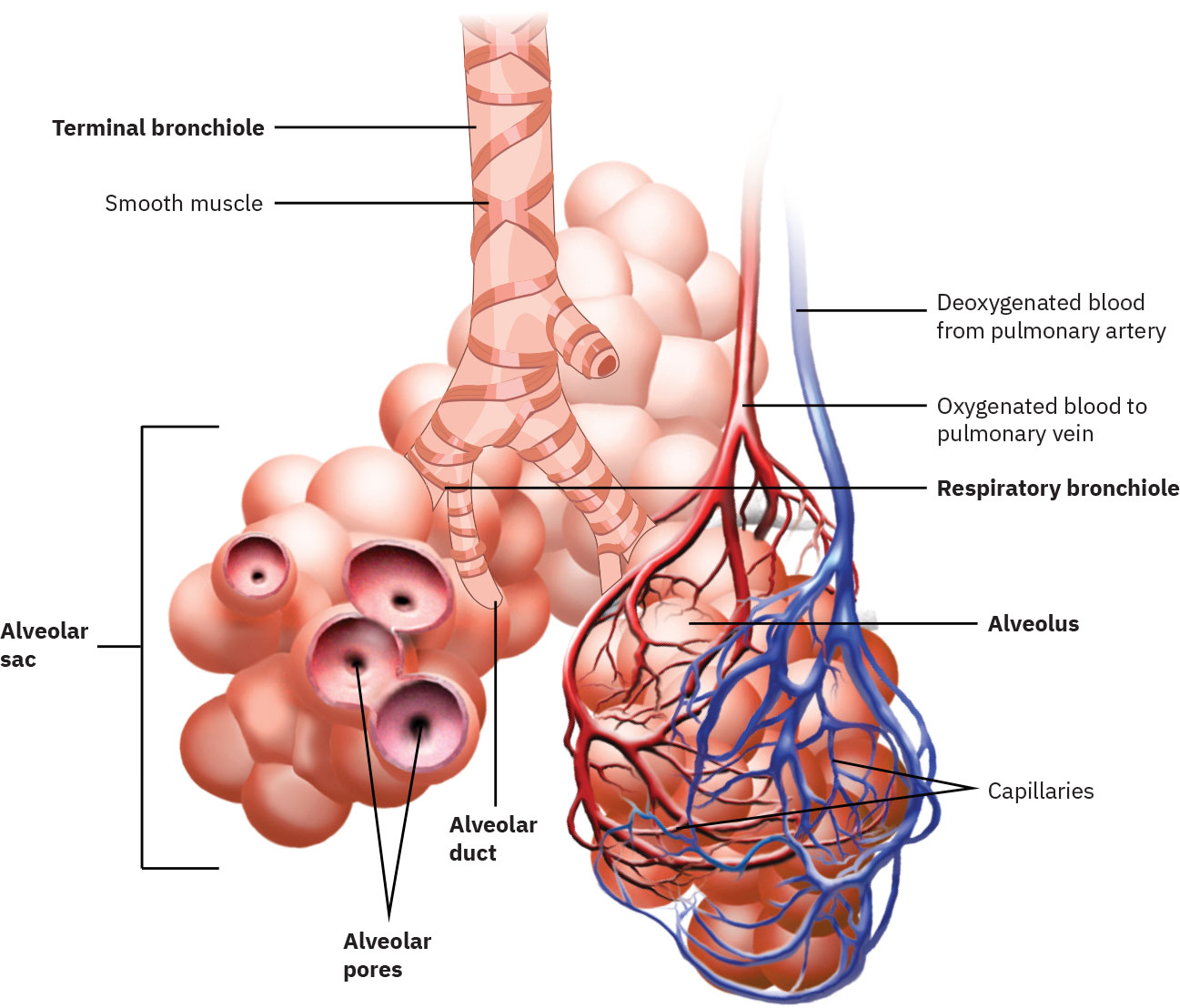
This diagram traces airflow from terminal bronchioles into alveolar ducts and alveoli while simultaneously showing pulmonary capillaries where blood becomes oxygenated. It visualizes the structural basis for rapid diffusion by placing alveolar air spaces immediately next to the capillary network—the key anatomical setup underlying alveolar gas exchange. Source
Gas exchange occurs by diffusion, meaning gases move from an area of higher partial pressure to an area of lower partial pressure. In the lungs:
alveolar air has a higher oxygen partial pressure than the blood arriving at the lungs, so oxygen diffuses into the blood
the blood arriving at the lungs has a higher carbon dioxide partial pressure than the alveolar air, so carbon dioxide diffuses into the alveoli
Several structural features make the alveoli highly effective for this process:
large surface area because there are millions of alveoli
thin walls, only one cell thick
thin capillary walls, also one cell thick
a short diffusion distance between air and blood
a moist lining, which helps gases dissolve before diffusing
a rich blood supply, which helps maintain diffusion gradients
Efficient gas exchange depends on both ventilation and blood flow. If fresh air is not regularly brought to the alveoli, or if blood is not passing the alveoli effectively, the diffusion gradient becomes smaller and exchange is reduced.
Ventilation and gaseous exchange are linked
Breathing mechanics directly support gaseous exchange. Inspiration continually replaces alveolar air with air that contains more oxygen. Expiration removes air with a higher carbon dioxide content. Together, these processes help maintain the differences in gas concentration needed for diffusion.
If breathing is too shallow, obstructed, or mechanically inefficient, less fresh air reaches the alveoli. This reduces the effectiveness of gas exchange. In contrast, efficient breathing allows the body to take in more oxygen and remove carbon dioxide more effectively.
Health and performance relevance
For health, effective ventilation ensures a constant oxygen supply to tissues and helps remove waste carbon dioxide. The brain, heart, and working muscles all depend on this continuous exchange.
For performance, efficient breathing mechanics are important because:
active muscles require more oxygen during sustained exercise
carbon dioxide must be removed continuously as metabolic activity increases
well-ventilated alveoli help maintain diffusion gradients
reduced respiratory efficiency can contribute to earlier fatigue and greater breathlessness
Anything that reduces alveolar surface area, increases diffusion distance, or limits airflow will lower gaseous exchange efficiency. Healthy airways, elastic lungs, and coordinated breathing mechanics therefore support both everyday function and athletic output.
Practice Questions
State two structural features of the alveoli that make gas exchange efficient. [2]
1 mark for each correct feature, up to 2 marks.
Accept any two of:
large surface area
walls are one cell thick
rich capillary network / good blood supply
moist lining
short diffusion distance
Explain how inspiration and expiration support gaseous exchange during physical activity. [6]
Award 1 mark for each valid point, up to 6 marks.
Possible points include:
diaphragm contracts and flattens during inspiration
external intercostals contract and lift the ribs
thoracic cavity volume increases
pressure inside the lungs falls below atmospheric pressure
air moves into the lungs
during expiration, thoracic volume decreases
elastic recoil and/or internal intercostals and abdominal muscles help force air out during harder breathing
pressure inside the lungs rises above atmospheric pressure
carbon dioxide-rich air is expelled
fresh air entering the alveoli helps maintain the diffusion gradient for oxygen into the blood
FAQ
Surfactant is a substance that lines the alveoli and reduces surface tension.
This matters because it helps prevent the alveoli from collapsing after exhalation, makes them easier to inflate on the next breath, and lowers the effort needed for breathing. Without enough surfactant, ventilation becomes much harder and gas exchange becomes less efficient.
Dead space is the volume of air that is breathed in but does not take part in gas exchange.
This includes air in the conducting airways, such as the trachea and bronchi. It matters because not every breath reaches the alveoli. Deeper breaths usually deliver a greater proportion of air to the gas-exchange surfaces than very shallow breaths.
The nose warms, humidifies, and filters incoming air, which is useful for protecting the respiratory system.
However, the nasal passages create more resistance to airflow than the mouth. During harder exercise, many people switch to mouth breathing because it allows a greater volume of air to move with less resistance, even though the air is less filtered and conditioned.
Posture can change how freely the diaphragm and rib cage move.
An upright posture usually allows better chest expansion and easier diaphragm descent. In contrast, a slouched position can compress the thoracic cavity and make breathing feel less efficient. This is one reason technique and body position can influence comfort during exercise.
The left lung is smaller because space on the left side of the chest is occupied by the heart.
As a result, the left lung usually has two lobes, while the right lung has three. In a healthy person, this size difference does not normally limit gas exchange enough to affect daily function or athletic performance.
