

IB Syllabus focus: 'Dehydration, hypernatremia and hyponatremia can occur when water and electrolyte balance is not maintained. These states affect both health and sporting performance.'
Maintaining fluid and electrolyte balance is essential in sport because even small disturbances can disrupt normal physiology, reduce exercise capacity, and in severe cases create dangerous medical problems.
Disturbances in water and electrolyte balance
Body fluids must stay within a narrow range so that cells can function normally. In exercise, this balance is challenged by sweating, breathing, illness, and poor drinking choices. The most important electrolyte in this subtopic is sodium, because it strongly influences the movement of water between body compartments and helps normal nerve and muscle function.
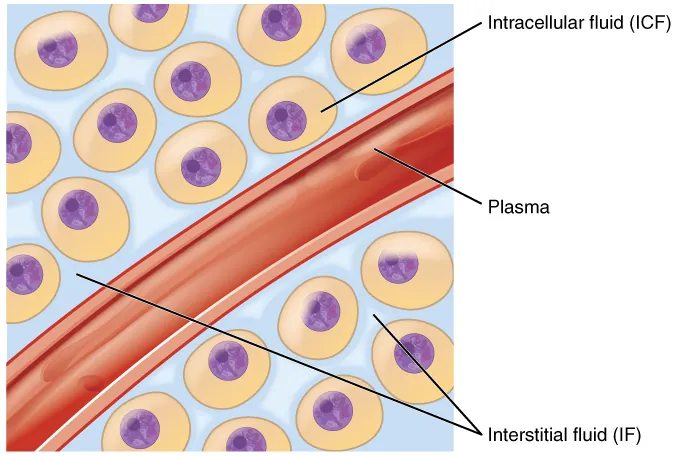
Diagram of the body’s major fluid compartments at the tissue level: intracellular fluid (ICF) inside cells, interstitial fluid (IF) between cells, and plasma within blood vessels. This helps link sodium’s primarily extracellular location to its outsized effect on extracellular tonicity and, therefore, net water movement between compartments. Source
Electrolytes are charged minerals dissolved in body fluids and are central to normal cell function.
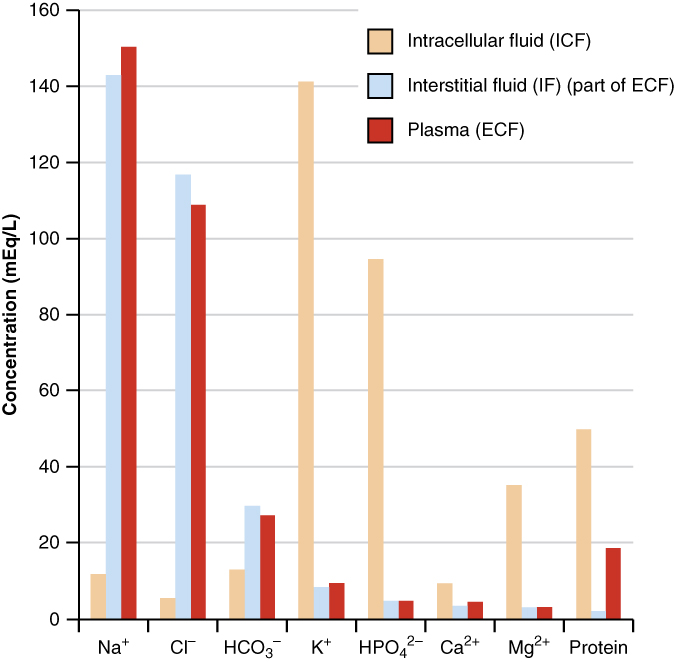
Bar graph comparing the concentrations of major ions and proteins in intracellular fluid (ICF), interstitial fluid (IF), and plasma. The figure highlights that and are concentrated in extracellular fluid, while is concentrated inside cells—an essential foundation for understanding dilutional hyponatremia and hypertonic states. Source
Electrolyte: A mineral that carries an electric charge in solution and helps regulate fluid balance, nerve impulses, and muscle function.
When balance is lost, the problem may involve too little body water, too much sodium relative to water, or too little sodium relative to water.
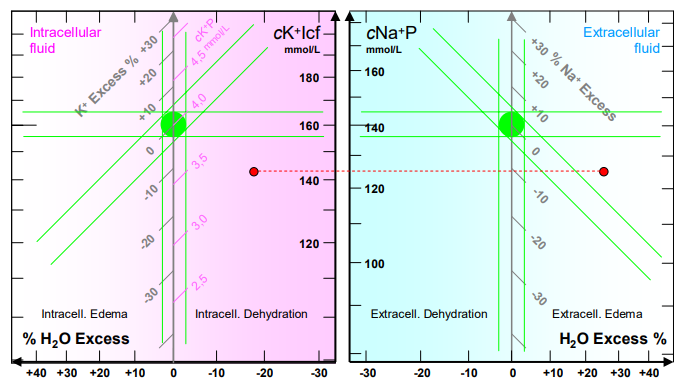
Volume–tonicity chart showing how plasma sodium concentration varies with relative water excess or water deficit, linking “hypernatremia” to hypertonicity (water deficit relative to sodium) and “hyponatremia” to hypotonicity (water excess relative to sodium). As a teaching diagram, it makes clear that similar-looking fatigue symptoms can come from very different underlying fluid–electrolyte states. Source
These are not identical conditions, although they can produce some similar symptoms during exercise.
Dehydration
Dehydration develops when total body water falls because fluid losses are greater than fluid intake.
Dehydration: A state in which body water loss exceeds water intake, leading to a reduction in total body water.
In sport, dehydration most commonly results from sweating during training or competition. It may also occur with vomiting, diarrhea, fever, or simply not drinking enough before or during exercise. As body water falls, blood volume decreases, circulation becomes less efficient, and temperature control becomes more difficult. This increases physiological strain, especially in hot environments.
Common signs include:
thirst
dry mouth
fatigue
dizziness
headache
reduced concentration
As dehydration becomes more severe, the risk of heat illness, collapse, and medical emergency rises.
Hypernatremia
Hypernatremia occurs when the sodium concentration in the blood becomes too high, usually because water loss is greater than sodium loss.
Hypernatremia: An abnormally high sodium concentration in the blood, usually caused by a deficit of water relative to sodium.
This state is most likely when an athlete loses a large amount of fluid and does not replace enough water. It can also occur if fluid intake is very limited during long exercise bouts or after dehydration caused by illness. Hypernatremia often accompanies dehydration, but the key issue is the high concentration of sodium in the blood, not simply fluid loss by itself.
Possible effects include:
intense thirst
weakness
irritability
confusion
reduced coordination
In severe cases, cells lose water and shrink, including brain cells. This can lead to serious neurological problems. For performance, hypernatremia impairs decision-making, skill execution, and the ability to sustain effort.
Hyponatremia
Hyponatremia occurs when the sodium concentration in the blood becomes too low, usually because fluid intake is excessive relative to sodium.
Hyponatremia: An abnormally low sodium concentration in the blood, usually caused by an excess of water relative to sodium.
In sport, this is often linked to overdrinking, especially during prolonged endurance events. An athlete may replace sweat losses with large volumes of plain water, or may drink more fluid than is actually being lost. Sodium is then diluted in the blood. Sweating also removes some sodium, which can make the dilution problem worse. In most exercise settings, hyponatremia is mainly a dilution problem, not just a lack of salt in the diet.
Symptoms may include:
bloating
nausea
headache
confusion
unusual fatigue
Hyponatremia can be especially dangerous because it may be mistaken for normal exhaustion or dehydration. However, treating it by giving even more water can worsen the problem. In severe cases, water moves into cells, including brain cells, which may cause swelling, seizures, coma, and death.
Effects on health and sporting performance
All three states disturb stable internal conditions and make exercise less safe and less effective. Health effects occur because water and electrolyte balance influence circulation, cellular function, and the nervous system. Once this balance is disturbed, both physical and mental performance can fall.
For sporting performance, likely consequences include:
reduced endurance capacity
earlier onset of fatigue
slower reaction time
poorer concentration
reduced tactical judgment
less precise motor control
Dehydration and hypernatremia are especially linked with reduced blood volume and greater thermal strain. Hyponatremia is especially associated with neurological symptoms because low sodium changes the movement of water into cells. This means performance may decline not only from fatigue, but also from impaired coordination and thinking.
The seriousness of the condition depends on:
how large the imbalance is
how quickly it develops
the environmental conditions
the duration and intensity of exercise
the athlete’s drinking behavior and sweat losses
Common sporting risk situations
Some athletes face a higher risk of imbalance than others. Risk is increased during prolonged exercise, in hot conditions, and when athletes follow inappropriate hydration practices. For example, an athlete who drinks too little may progress toward dehydration or hypernatremia, while an athlete who drinks excessively may progress toward hyponatremia.
Sporting situations linked with greater risk include:
endurance races lasting several hours
training camps with repeated daily sessions
competitions in heat
events with easy access to fluid, encouraging overdrinking
illness before competition
A major practical point is that not all exercise-related illness is caused by dehydration. Assuming that every tired athlete needs more water can be dangerous.
Reducing the risk
Prevention depends on maintaining a more appropriate balance between fluid intake, fluid loss, and electrolyte replacement. Athletes should avoid both underdrinking and overdrinking. During long events or heavy sweating, replacing some sodium as well as water may help reduce the risk of imbalance. Education is important so that athletes, coaches, and support staff recognize that dehydration, hypernatremia, and hyponatremia are distinct conditions with different causes and risks.
Practice Questions
[2 marks] State one likely cause of hypernatremia and one likely cause of hyponatremia during exercise.
1 mark for stating that hypernatremia can result from water loss greater than water replacement / too little water relative to sodium.
1 mark for stating that hyponatremia can result from excessive fluid intake / overdrinking / too much water relative to sodium / dilution of blood sodium.
[5 marks] Explain how dehydration and hyponatremia can each affect health and sporting performance during prolonged exercise.
Mark scheme: Award up to 5 marks for explained points. Accept any of the following:
Dehydration occurs when water loss exceeds intake.
Dehydration reduces total body water and blood volume.
Reduced blood volume increases physiological strain and makes temperature regulation harder.
Performance effects of dehydration include earlier fatigue, reduced endurance, poorer concentration, and slower decision-making.
Hyponatremia occurs when excess water dilutes blood sodium.
Low sodium disrupts normal cellular and nervous system function.
Hyponatremia can cause headache, nausea, confusion, and reduced coordination.
Performance effects include impaired skill execution, poorer judgment, and reduced ability to exercise safely.
Severe hyponatremia may lead to seizures, coma, or death.
Credit clear links to both health and sporting performance.
FAQ
They are exposed to drinking opportunities for a longer time, so total fluid intake may become very high.
They may also exercise at a lower intensity, which can mean fluid intake exceeds sweat loss more easily. Smaller body mass can increase the effect of overdrinking because a given fluid volume causes a larger dilution effect.
No. Sports drinks can help by providing some sodium, but they do not fully prevent hyponatremia if an athlete drinks far more fluid than they lose.
Most sports drinks contain less sodium than blood plasma, so excessive intake can still dilute blood sodium. The overall volume consumed matters as much as the drink type.
Sweat sodium loss varies because of:
genetics
heat acclimatization
sweat rate
exercise intensity
clothing and environment
diet and recent intake
This means two athletes in the same event can have very different electrolyte needs, even if they appear to sweat similar amounts.
Yes. An athlete can lose both water and sodium through sweat, become somewhat dehydrated, and still have a low blood sodium concentration if they replace losses with too much plain water.
This is one reason symptoms can be confusing. A person may look exhausted and unwell, but giving more water is not always the correct response.
Usually no. Routine use is not appropriate for everyone and may cause stomach upset, nausea, or unnecessary sodium intake.
Salt tablets may be considered in specific situations, such as very long events with heavy sweat sodium loss, but they should be part of an individualized plan rather than a universal strategy.
