

IB Syllabus focus: 'Water and electrolyte balance is necessary for effective body function and is influenced by the environment. Intake occurs via the large intestine, while loss occurs through evaporation, respiration and excretion.'
Water and electrolyte balance supports circulation, temperature control, and normal cellular activity. In sport and everyday life, the body must continually replace fluid and dissolved minerals lost to the external environment.
Why water and electrolyte balance matters
Water is the main component of blood plasma and intracellular fluid. It acts as a transport medium for nutrients, gases, and waste products, helps regulate body temperature, and supports chemical reactions. Electrolytes are dissolved minerals that carry an electrical charge and are essential for fluid distribution, nerve signaling, and muscle action.
Electrolytes: Minerals that dissociate into charged particles in body fluids and help regulate fluid balance, nerve transmission, and muscle contraction.
Because water and electrolytes move together, a change in one often affects the other. If losses are not replaced, body processes become less efficient and normal function is harder to maintain.
Water and electrolyte balance: The state in which water and dissolved ions entering the body are matched closely enough to losses to support normal function.
Intake of water and electrolytes
Water and electrolytes enter the body through food and drink. Within this syllabus, intake is described through absorption via the large intestine, where remaining water and some electrolytes are taken up from digestive contents.
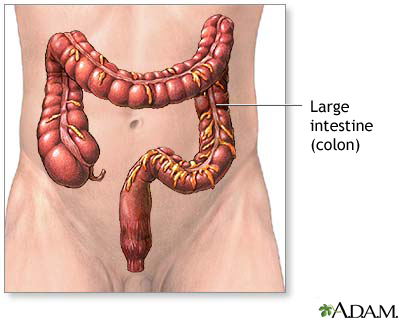
Labeled anatomy diagram of the large intestine (colon), helping you locate the structure responsible for absorbing remaining water and some electrolytes from digestive contents. Use it to connect the syllabus wording about “intake via the large intestine” to a clear anatomical reference. Source
This absorbed fluid contributes to overall body fluid volume.
Common intake sources include:
plain water and other beverages
foods with a high water content, such as fruit, vegetables, soups, and milk
foods that provide electrolytes, especially sodium, potassium, and chloride
Intake needs are not fixed. They depend partly on the environment because external conditions change how much water and electrolyte the body loses.
Routes of water and electrolyte loss
The specification highlights three routes of loss: evaporation, respiration, and excretion.
Evaporation
Evaporation refers mainly to water lost from the skin as sweat evaporates.
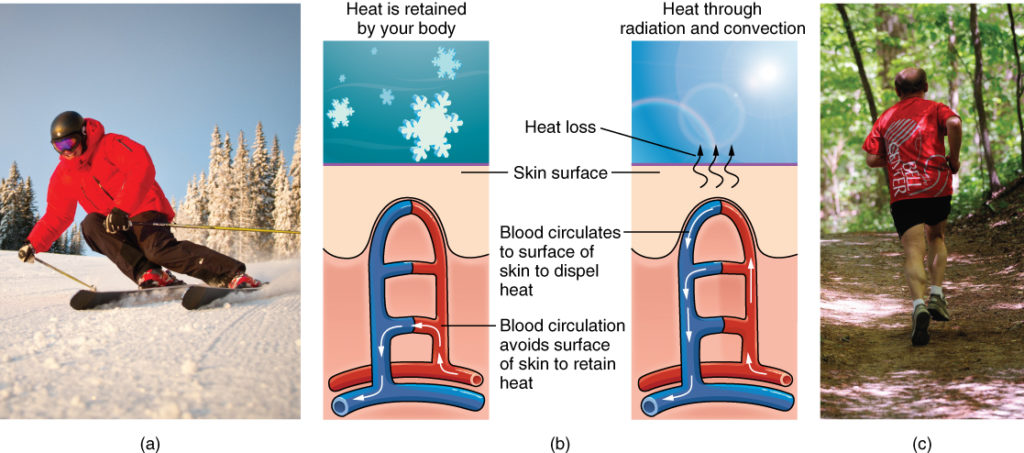
Comparative thermoregulation diagram showing how skin blood flow and heat loss pathways change in cold versus hot conditions. It supports the idea that when heat stress increases, the body relies more on sweating and evaporation at the skin surface to dissipate heat—at the cost of fluid (and electrolyte) loss. Source
This is especially important when body temperature rises. Sweat helps cool the body, but it also removes fluid and electrolytes, particularly sodium and chloride. In hotter settings, sweat losses usually rise.
Respiration
Some water is lost every time air is exhaled. The air leaving the lungs is humidified, so breathing continually removes small amounts of water from the body. Respiratory loss may become more noticeable in cold or dry air because inhaled air needs to be warmed and moistened.
Excretion
Excretion includes water and electrolyte loss through urine and feces. The amount lost varies with recent intake and environmental demands. Urinary losses are a normal part of maintaining fluid balance, while fecal losses are usually smaller but still contribute to total daily water and electrolyte loss.
Environmental influences
The environment has a direct effect on balance because it changes the rate and route of fluid loss.
Hot environments
In the heat, the body relies more on sweating for cooling. This increases evaporative water loss. Since sweat also contains electrolytes, prolonged exposure to heat can increase both water loss and electrolyte loss.
Humid environments
In humid conditions, sweat does not evaporate as easily. The body may continue producing sweat, but cooling is less effective. As a result, total fluid loss can still be high even when sweat remains on the skin or clothing.
Cold or dry environments
Cold conditions may reduce the urge to drink, yet water loss still continues. Dry air can increase respiratory water loss, and heavy clothing may also promote sweating. This means water balance can be challenged even when the environment does not feel hot.
Regulation as balance between intake and loss
At this level, regulation can be understood as the ongoing maintenance of water and electrolyte balance by matching intake to losses. The key principle is simple: the body functions best when fluid and dissolved mineral intake are sufficient for the conditions being experienced.
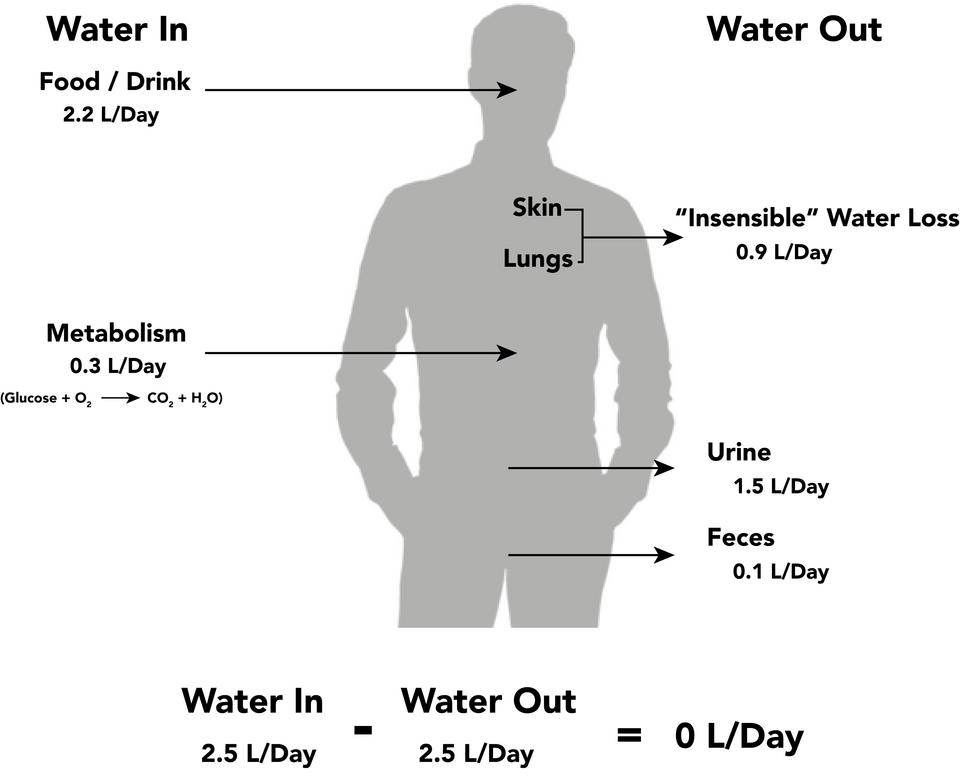
Schematic of whole-body water balance showing the main routes of water gain (drinks, food, and metabolic water) and water loss (skin/evaporation, lungs during breathing, urine, and feces). This is a helpful “big-picture” organizer for understanding regulation as matching intake to losses across the day. Source
For athletes and active people, this means:
replacing fluids regularly rather than waiting for very large losses to occur
recognizing that sweating usually involves electrolyte loss as well as water loss
adjusting intake when the environment becomes hotter, more humid, colder, or drier
remembering that daily foods as well as drinks contribute to total intake
Water and electrolyte balance is therefore dynamic, not static. It changes from hour to hour depending on environmental exposure and the body’s ongoing losses through evaporation, respiration, and excretion.
Practice Questions
State two routes by which water is lost from the body. [2]
1 mark for each correct route, up to 2 marks:
evaporation
respiration
excretion
Explain how environmental conditions can influence water and electrolyte balance in an athlete during exercise. [6]
Hot conditions increase sweating or evaporative water loss. [1]
Sweat contains water and electrolytes. [1]
Sodium and chloride are common electrolytes lost in sweat. [1]
Humid conditions reduce evaporation, making cooling less effective. [1]
Cold or dry air can increase respiratory water loss. [1]
If intake does not match these losses, effective body function is harder to maintain. [1]
FAQ
Sweat tastes salty because it contains dissolved electrolytes, mainly sodium and chloride.
Sweat is formed from body fluid, so some ions move into the sweat with water. As sweat travels through sweat gland ducts, some sodium is reabsorbed, but not all of it returns to the body. The amount left in the sweat affects how salty it tastes.
Fluid loss is highly individual.
Important factors include:
body size
exercise intensity
genetics
fitness level
heat acclimatization
clothing and equipment
how much each person naturally sweats
So even in the same weather, one athlete may finish only slightly sweaty while another loses a large amount of fluid.
Yes. After repeated exposure to hot conditions, the body usually becomes better at conserving some electrolytes during sweating.
Common adaptations include:
earlier onset of sweating
a higher sweat rate
lower sodium concentration in sweat
This means the body can cool itself more effectively while reducing the electrolyte cost of sweating. However, total electrolyte loss can still be substantial if exercise is long or sweat volume is high.
This topic emphasizes the role of the large intestine in reclaiming remaining water and some electrolytes from digestive contents.
That final absorption is important because it reduces the amount of water lost in feces and helps support total body fluid balance. In syllabus terms, it highlights that intake is not only about what is swallowed, but also about what is actually absorbed into the body.
No. Different routes of loss remove different electrolytes in different amounts.
For example:
sweat usually contains more sodium and chloride than potassium
urine composition changes depending on intake and the body’s needs
fecal losses are usually smaller, but can still matter
So “electrolyte loss” is not one single thing. The pattern depends on how the fluid was lost and the conditions at the time.
