Question 1
A student observes a small metal needle resting on the surface of water. The photograph below shows that the surface of the water is pulled downward under the needle but does not break.
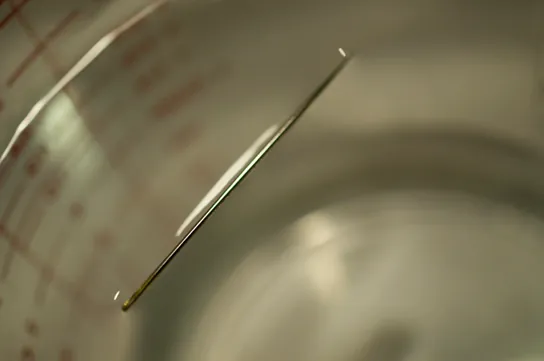
Describe the property of water shown in the photograph below.
Explain how hydrogen bonding between water molecules contributes to the observation shown.
Predict the effect of adding a substance that disrupts hydrogen bonding between water molecules.
Question 2
A narrow glass tube is placed in a beaker of water. The diagram below shows that the water level inside the tube is higher than the water level in the surrounding beaker.
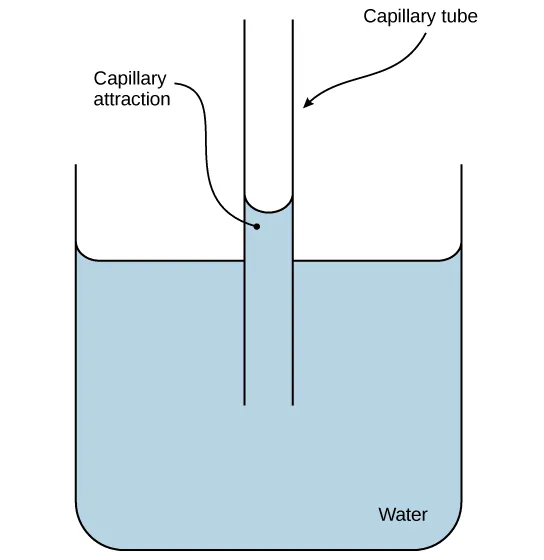
Identify the water property that causes water to climb the inside of the tube.
Explain why water rises higher along the inside surface of the tube than in the middle.
Justify the claim that the same properties of water are important for biological systems.
Question 3
In an investigation of water’s surface tension, students placed drops of different water-based solutions onto a penny until the liquid spilled over the edge. The results are shown in the bar chart below.
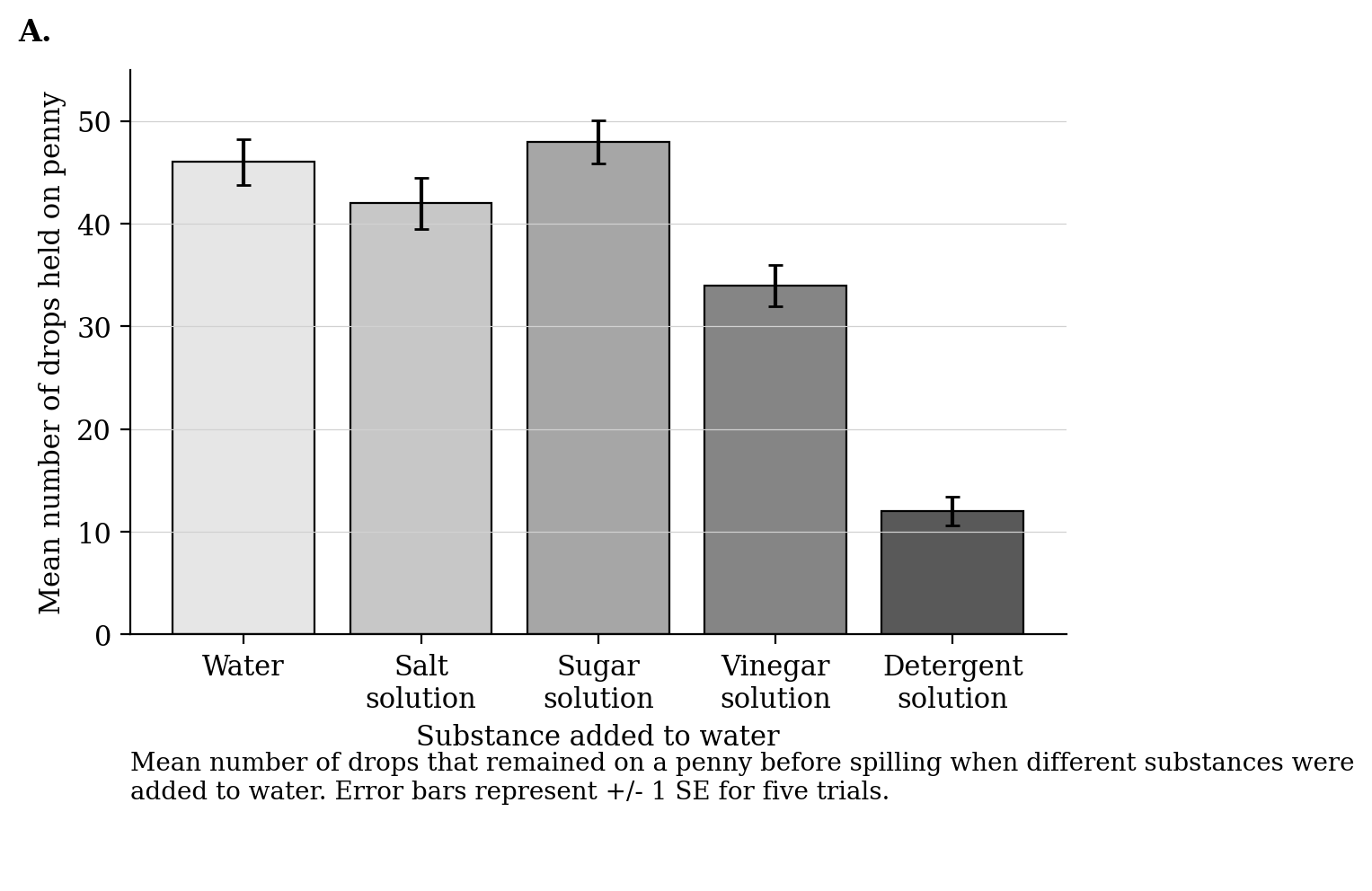
Identify the solution that produced the lowest mean number of drops held on the penny.
Describe the effect of detergent solution on the number of drops held on the penny compared with water alone.
Explain how hydrogen bonding between water molecules contributes to the result for water alone.
Justify the use of multiple trials and error bars in this investigation.
Question 4
Scientists compared the temperature change of equal-volume samples given the same heat input. One sample was water, and the other was a nonpolar lipid mixture. The results are shown in the graph below.
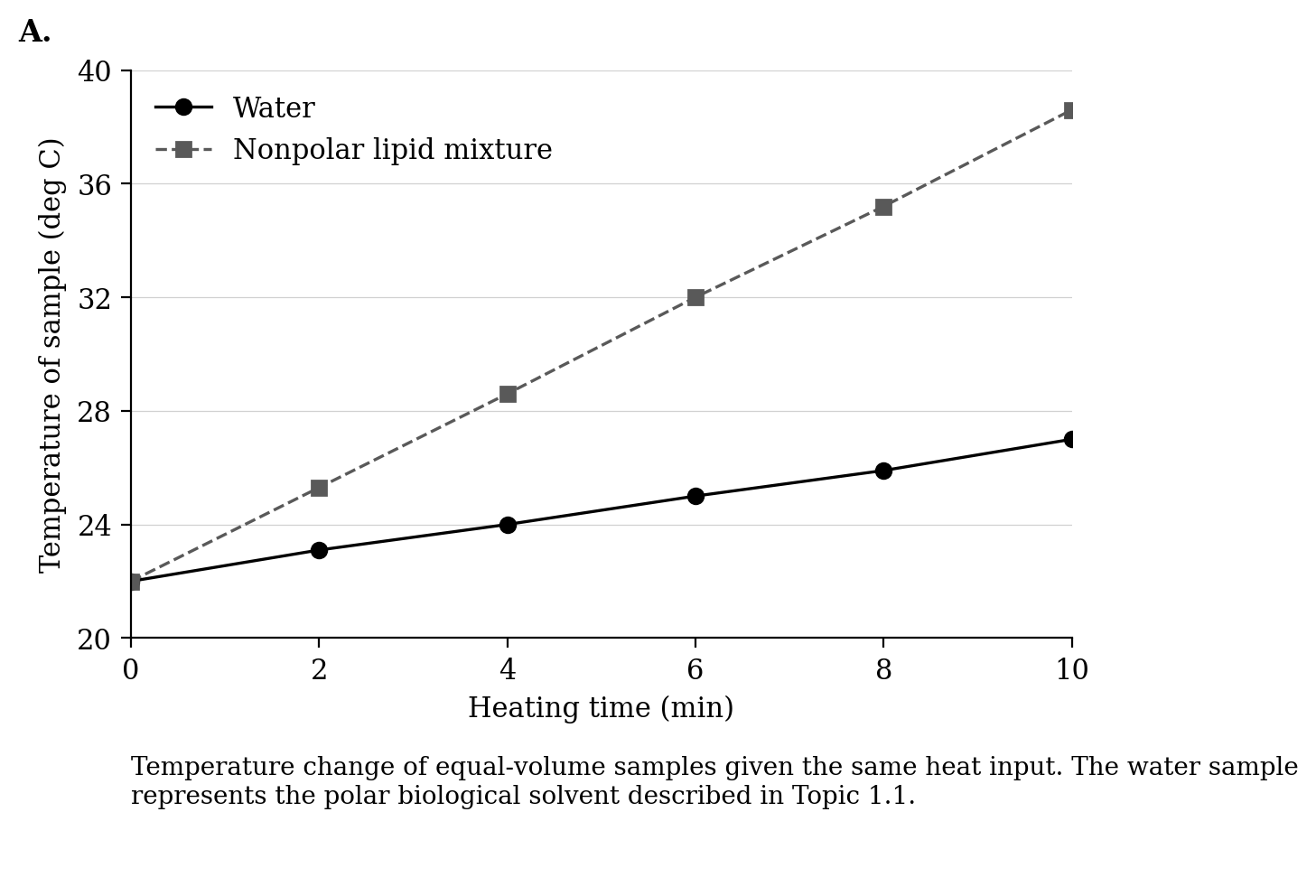
Calculate the temperature increase of the water sample from 0 minutes to 10 minutes.
Determine which sample had the greater temperature increase after 10 minutes.
Explain how the results support the claim that water has a high specific heat capacity.
Predict how water’s specific heat capacity helps living organisms maintain homeostatic body temperature.
Question 5
Question 6
Question 7
Question 8
Question 9
Question 10