

AP Syllabus focus:
‘Identify marine biomes (oceans, coral reefs, marshland, and estuaries) and explain how marine algae produce oxygen and absorb atmospheric carbon dioxide.’
Marine biomes cover most of Earth’s surface and underpin major life-support functions. AP Environmental Science emphasizes recognising key marine habitat types and understanding how marine algae drive global oxygen production and carbon dioxide removal.
Marine biomes to identify
Marine systems include open-ocean waters and highly productive coastal zones. Although boundaries can be gradual, each biome has typical communities and ecosystem services.
Marine biome: A large aquatic region defined by saltwater conditions and characteristic communities shaped by water chemistry, light availability, and circulation.
Oceans (open ocean)
The open ocean is the largest marine biome by area.
Dominated by plankton (especially microscopic algae) and widely distributed consumers (fish, squid, marine mammals).
Much primary production occurs in the sunlit photic zone, even when nutrients are low.
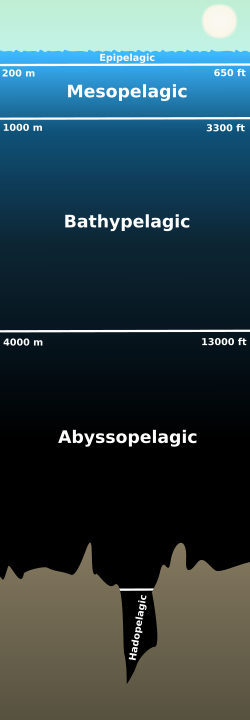
Labeled cross-section of the pelagic ocean showing major depth/light zones (including the sunlit photic/euphotic region where photosynthesis is possible). This reinforces why phytoplankton-driven primary production is concentrated near the surface and declines with depth as light becomes limiting. Source
Global services include climate regulation (heat storage and transport) and major support for food webs.
Coral reefs
Coral reefs are biologically rich coastal ecosystems built by reef-forming corals.
High biodiversity and complex habitat structure.
Strong dependence on clear, shallow, well-lit water because reef communities rely on photosynthesis (often via symbiotic algae living in coral tissues).
Key services: nursery habitat for fisheries, shoreline buffering, and tourism value.
Marshland (salt marshes)
Coastal marshlands (commonly salt marshes) occur where land meets seawater in sheltered shorelines.
Dominated by salt-tolerant plants and algae-based food webs.
High productivity and important habitat for juvenile fish and migratory birds.
Provide coastal protection by reducing wave energy and stabilising sediments.
Estuaries
Estuaries form where rivers meet the sea, creating brackish (mixed-salinity) water and strong nutrient inputs.
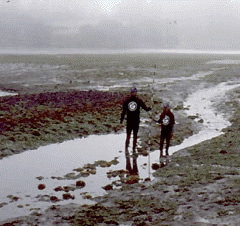
Photo series from NOAA showing strong tidal changes in a real estuary (Elkhorn Slough), emphasizing that estuaries are highly dynamic and strongly shaped by daily tides. This visual pairs well with the definition of estuaries as river–ocean transition zones where physical mixing and tidal circulation influence nutrients and habitats. Source
Estuary: A coastal water body where freshwater from rivers mixes with seawater, typically producing high nutrient availability and high biological productivity.
Estuaries are often among the most productive marine biomes.
Serve as nursery grounds for many fish and shellfish species.
Filter pollutants and trap sediments, improving downstream water quality.
Marine algae and global services (oxygen and carbon dioxide)
Marine algae include microscopic phytoplankton and larger seaweeds; they are foundational primary producers in marine food webs.
Phytoplankton: Microscopic, free-floating photosynthetic organisms (mostly algae and cyanobacteria) that form the base of many marine food webs.
Oxygen production through photosynthesis
Marine algae produce oxygen as a product of photosynthesis, using sunlight to convert carbon dioxide and water into organic matter.
= Carbon dioxide (source of carbon for biomass)
= Water (source of electrons and hydrogen)
= Oxygen released to seawater and then the atmosphere
A substantial fraction of atmospheric O₂ originates from marine photosynthesis, especially by phytoplankton in surface waters.
Absorbing atmospheric carbon dioxide
Marine algae reduce atmospheric CO₂ in two linked ways:
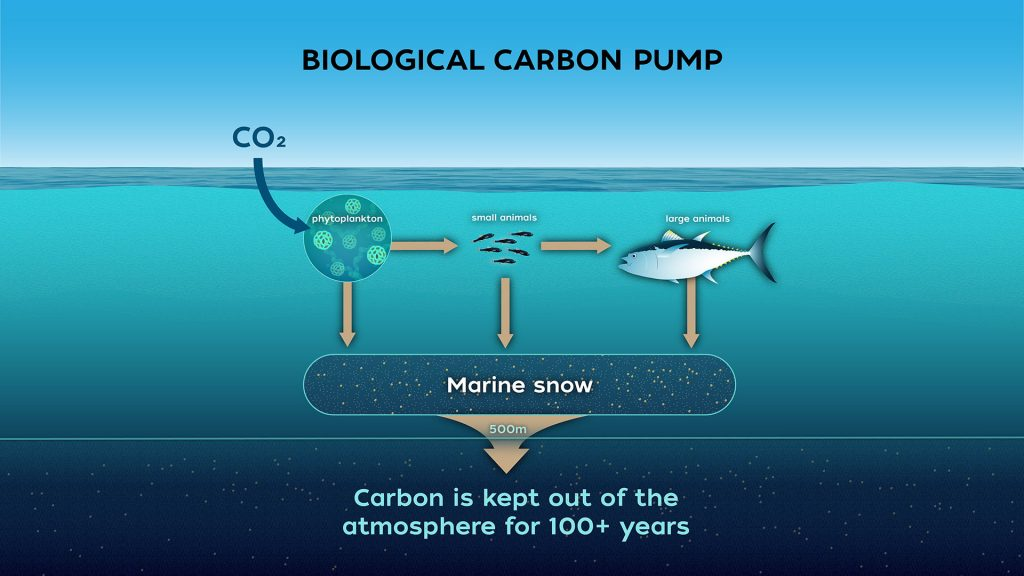
Diagram of the ocean’s biological carbon pump showing surface phytoplankton photosynthesis (carbon uptake) and the export of organic carbon to deeper waters via sinking particles (“marine snow”). It highlights why surface CO₂ drawdown can translate into longer-term carbon storage when carbon is transported below the mixed layer and into the deep ocean. Source
Direct uptake: CO₂ dissolves into seawater and is incorporated into algal biomass during photosynthesis.
Carbon export and storage: when algae die or are consumed, some organic carbon sinks as particles or is transported to deeper waters, reducing short-term return of CO₂ to the atmosphere.
This biological drawdown of CO₂ is a major regulating service that helps moderate global climate by lowering greenhouse gas concentrations relative to what they would otherwise be.
Biome-specific links to global services
Different marine biomes contribute to oxygen and carbon services in complementary ways:
Oceans: vast area means phytoplankton collectively drive enormous global primary production, producing oxygen and taking up CO₂.
Coral reefs: intense local productivity and tight nutrient cycling; photosynthesis by reef-associated algae supports food webs and influences local carbon chemistry.
Marshland: high plant/algal productivity in shallow coastal zones supports carbon storage in waterlogged sediments and sustains coastal food chains.
Estuaries: high nutrient inputs fuel algal growth and food webs; their mixing zones can enhance carbon processing and support productive fisheries.
Practice Questions
State two marine biomes and identify one global service provided by marine algae. (2 marks)
Any two correct marine biomes: oceans/coral reefs/marshland/estuaries (1 mark)
One correct service linked to marine algae: produce oxygen and/or absorb atmospheric carbon dioxide (1 mark)
Explain how marine algae contribute to global oxygen levels and reduce atmospheric carbon dioxide. In your answer, refer to photosynthesis and at least one pathway by which carbon can be stored away from the atmosphere. (5 marks)
Marine algae perform photosynthesis (1 mark)
Photosynthesis releases (1 mark)
Photosynthesis uses as a reactant / incorporates carbon into biomass (1 mark)
CO₂ is absorbed from the atmosphere via dissolution into seawater (1 mark)
Some carbon is exported/stored (e.g., sinking organic matter to deeper water/sediments), slowing return of CO₂ to the atmosphere (1 mark)
FAQ
No. Oxygen production varies with algal growth, which depends on light and nutrient supply.
Seasonal blooms and upwelling zones can contribute disproportionately compared with low-productivity regions.
They combine ship-based sampling with satellite measurements of ocean colour.
Ocean colour helps infer chlorophyll concentration
Models convert chlorophyll and light data into productivity estimates
Changes in seawater chemistry can alter growth rates and species composition.
Some algae may photosynthesise effectively with higher dissolved $CO_2$, while calcifying organisms can be stressed as carbonate availability declines.
They provide sheltered, food-rich habitats with abundant detritus and plankton.
Many juvenile fish and invertebrates experience higher survival there before moving to the open coast.
Blue carbon refers to carbon stored in coastal vegetated ecosystems and their sediments.
Salt marshes store carbon in waterlogged soils for long periods
Some estuarine wetlands also contribute via sediment burial

