AP Syllabus focus:
‘Geographers use the concepts of space and place to describe locations, their meanings, and how people experience them.’
Space and place are foundational geographic concepts that explain not only where phenomena occur but also how humans interpret, experience, and assign meaning to locations across Earth's surface.
Understanding Space
Space in geography refers to the physical distance and arrangement of phenomena, emphasizing patterns, distributions, and relationships that can be observed or measured. Space is often treated as objective and quantifiable, providing a framework for analyzing how people and environments interact over the Earth's surface.
Space: The abstract, measurable area between and around locations, highlighting patterns, distributions, and spatial relationships.
Geographers study spatial patterns—the arrangement of objects or phenomena—and spatial processes—the movements or interactions that shape those patterns. Understanding space helps identify how proximity, distance, and arrangement influence human behavior, environmental conditions, and the connections between places.
Key Dimensions of Space
Location: Where something exists on Earth, measured in absolute or relative terms.
Distance: How far apart objects or places are, influencing movement and interaction.
Direction: The orientation between places, affecting flows and navigation.
Distribution: The way phenomena are spread across space, described through patterns such as clustering or dispersion.
Scale: The level at which spatial relationships are examined—local, regional, national, or global.
Spatial thinking allows geographers to visualize and interpret how physical and human phenomena are arranged, identifying underlying processes that shape daily life.
Understanding Place
While space emphasizes measurable patterns, place emphasizes meaning, experience, and identity. A place is a location that carries emotional, cultural, or personal significance. Geographers study how places develop symbolic value and how people form attachments to the environments they inhabit.
Place: A specific location infused with meaning, emotion, or cultural significance, shaped by human experiences and perceptions.
Unlike space, which is often treated as abstract, place is deeply human-centered and subjective. A place becomes meaningful because of the social interactions, memories, and cultural practices associated with it.
Components of Place
Physical Characteristics: Natural features like climate, landforms, vegetation, and water bodies.
Human Characteristics: Cultural traits, language, architecture, economic activities, and social institutions.
Sense of Place: The emotional and psychological attachment individuals or groups feel toward a location.
A strong sense of place usually involves the physical setting, the activities that occur there, and the emotions and meanings people attach to it.
Perception of Place: How people understand or imagine a location, shaped by media, stories, and cultural narratives.
These components interact to form a unique identity for each place, influencing how individuals behave and how groups define themselves.
How Space and Place Interact
Space and place are interconnected rather than separate concepts. Spatial patterns help explain why certain places develop particular meanings, while the meaning people attach to a place can influence spatial decisions such as settlement, migration, and land use.
How Space Influences Place
Spatial proximity to resources can shape economic or cultural identity.
Distances between communities affect the development of regional ties and social networks.
Spatial patterns of migration influence the cultural diversity of a place.
How Place Influences Space
A place with strong cultural or economic significance may attract flows of people, goods, or ideas.
Places with symbolic importance, such as capitals or religious sites, create spatial hierarchies and patterns of interaction.
Local identity shapes land-use patterns, architectural styles, and community planning.
Between them lies placemaking, the process by which individuals and groups shape the physical and social characteristics of their surroundings to create meaningful spaces.
Placemaking: The collective process of shaping public spaces to reflect community values, promote social interaction, and enhance quality of life.
Communities engage in placemaking through design, cultural events, public art, and planning decisions that reflect shared identities.
The Human Experience of Space and Place
Human geography emphasizes that spaces become places through experience. What may begin as an undifferentiated location gains meaning as people interact with it, transforming physical settings into lived environments.
Factors Shaping Experience
Cultural Background: Different groups perceive and value places in unique ways.
Social Interactions: Relationships and community life contribute to the sense of belonging.
Historical Context: Past events shape how places are remembered and understood.
Environmental Qualities: Climate, landscape, and design affect comfort, attachment, and use.
These experiential layers reveal how geography is deeply tied to identity, memory, and daily life.
Geographers often study how people construct mental maps of space to understand how they perceive distance, direction, and the importance of particular locations.
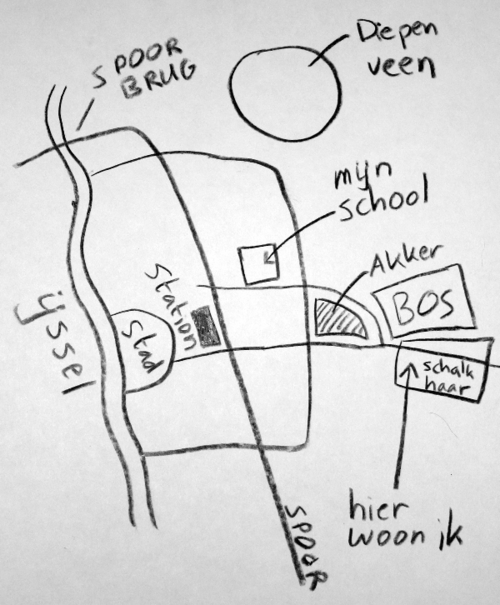
This diagram represents a mental map, a network-like sketch of how a person organizes ideas or locations in their mind. In human geography, similar internal maps help explain how individuals navigate space, recall routes, and prioritize certain locations. The labels on the diagram exceed syllabus requirements, but the visual structure accurately conveys the concept. Source.
A city plaza, a neighborhood park, or a family kitchen are common examples of place: each has a location but also specific memories, social activities, and meanings.
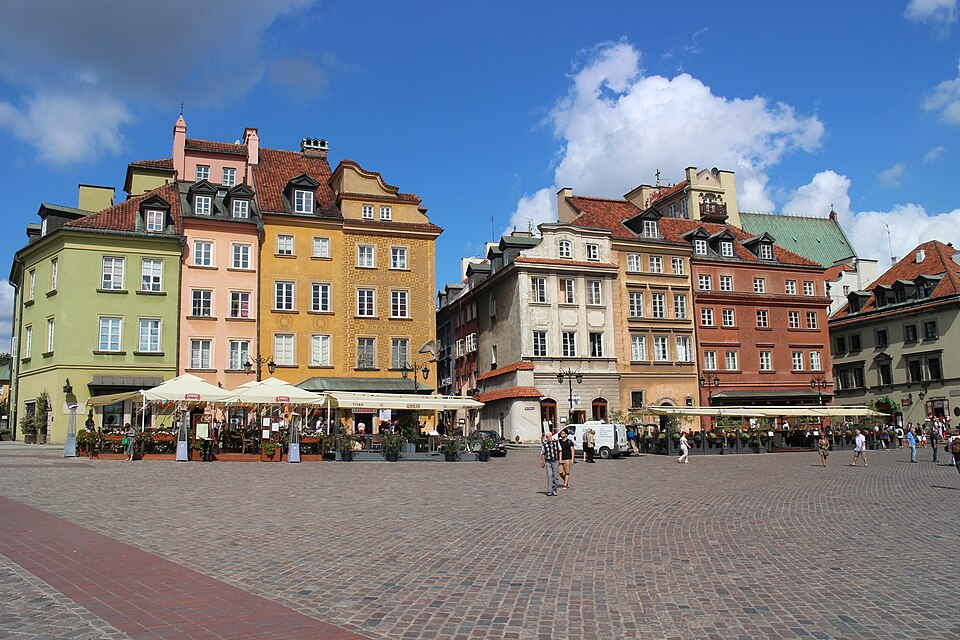
This photograph shows Old Town Market Square in Warsaw filled with people, historic architecture, and outdoor activity, illustrating how a location becomes a place through cultural expression and everyday use. The scene highlights the combination of physical setting and human interaction that forms a strong sense of place. Although the specific history of this square exceeds syllabus needs, it effectively demonstrates place as a lived environment. Source.
Geographic Analysis Using Space and Place
Geographers apply both concepts to analyze issues such as urban development, regional identity, environmental management, and cultural landscapes. Spatial analysis helps locate patterns and relationships, while place-based analysis reveals meaning, symbolism, and human experiences.
Integrating Methods
Use reference and thematic maps to interpret spatial patterns.
Combine geospatial technologies with qualitative sources to understand place meaning.
Apply scale to examine how place identity changes from local to global contexts.
Together, space and place form a powerful framework for understanding how geography shapes human life and how humans shape the world around them.
Practice Questions
Question 1 (1–3 marks)
Explain the difference between the geographic concepts of space and place.
Question 1
• 1 mark for a basic distinction (e.g., space as physical arrangement; place as meaningful location).
• 2 marks for elaboration showing understanding of both concepts (e.g., space is abstract/measurable; place is shaped by human experience).
• 3 marks for a clear, accurate explanation of the conceptual difference with reference to meaning, perception, or human attachment.
Question 2 (4–6 marks)
Using examples, analyse how sense of place can influence human behaviour and decision-making within a specific location.
Question 2
• 1–2 marks for describing sense of place or giving an appropriate example.
• 3–4 marks for explaining how sense of place shapes behaviour (e.g., community attachment, patterns of use, cultural practices).
• 5–6 marks for a developed analysis linking sense of place to decision-making (e.g., planning choices, migration decisions, preservation efforts) with clear, relevant examples and accurate geographic reasoning.
FAQ
A strong sense of place appears when people feel deep emotional, cultural, or historical ties to a location, leading to shared community identity and consistent patterns of use.
A weak sense of place typically occurs in locations that feel generic or lack distinctive cultural or physical characteristics, such as uniform suburban developments or transitional spaces like airports.
Geographers may look for indicators such as local narratives, community participation, symbolic landmarks, and continuity of social activities to assess strength of place attachment.
Architecture contributes to place identity by creating visual cues and cultural reference points linked to local history, climate, and social values.
Distinctive architectural styles can reinforce cultural identity, support tourism, or foster community pride. For example, traditional building materials or region-specific designs can help residents recognise and value local heritage.
Modern developments can either strengthen identity through thoughtful design or weaken it if they introduce generic, placeless forms.
Globalisation can blur local distinctiveness by introducing similar brands, buildings, and cultural practices across multiple locations, making places feel more alike.
However, globalisation can also heighten community efforts to protect local identity, leading to cultural festivals, heritage conservation, or locally branded initiatives.
Perceptions shift as people navigate between global influences and local meanings, shaping how they value or reinterpret their surroundings.
Virtual spaces develop place-like qualities when they foster social interaction, shared identity, and emotional investment.
Key factors include:
• Community norms and repeated interaction
• Visual design and spatial layout
• Shared events or collaborative activity
• Personalisation or user-created elements
Digital environments demonstrate that place does not require physical landscape; it emerges from meaning, experience, and connection.
Early experiences shape sensory and emotional memories, making childhood environments especially powerful sources of place attachment.
Play spaces, family routines, and community interactions embed meaning that influences how individuals evaluate comfort, safety, and belonging later in life.
These attachments may guide future decisions, such as returning to a hometown, seeking similar environments, or valuing specific landscapes or cultural settings.