AP Syllabus focus:
‘Voluntary migrations include transnational, transhumance, internal, chain, step, guest worker, and rural-to-urban migration.’
Voluntary migration occurs when individuals or groups choose to move based on perceived opportunities, shaping global, regional, and local population patterns through diverse forms of human mobility.
Voluntary Migration Types
Voluntary migration encompasses several distinct forms, each reflecting different motivations, spatial patterns, and social connections that help geographers analyze how and why people move. These migration types illustrate the complexity of human decision-making and highlight how economic opportunity, cultural ties, land use, and labor demands influence mobility across varying scales.
Transnational Migration
Transnational migration refers to movement in which migrants maintain active connections across national borders. These ties may include cultural practices, economic remittances, political involvement, or social networks that extend between the origin and destination.
Transnational Migration: A form of migration in which individuals live across international borders, sustaining social, economic, or political relationships in multiple countries.
Transnational migrants often build dual identities, contribute to remittance flows, and participate in cross-border networks, all of which influence demographic and economic dynamics in both sending and receiving states.
Key features of transnational migration include:
Circular mobility, where migrants periodically return to the origin.
Economic integration, shown through remittances and investments.
Cultural exchange, which may strengthen diaspora communities.
Transhumance
Transhumance is a specialized type of seasonal migration practiced primarily by pastoralists who move livestock between ecological zones to access fresh grazing areas.
Transhumance: Seasonal movement of pastoralists and their livestock between lowland and highland pastures for resource access.
This form of migration illustrates how environmental rhythms shape human mobility. It provides a sustainable method of land use in regions with variable climate conditions and contributes to cultural landscapes built around pastoral traditions. Transhumance differs from nomadism because it follows predictable, cyclical routes rather than continual wandering.
Transhumance migration is the seasonal movement of people and their livestock between lowland and highland pastures.
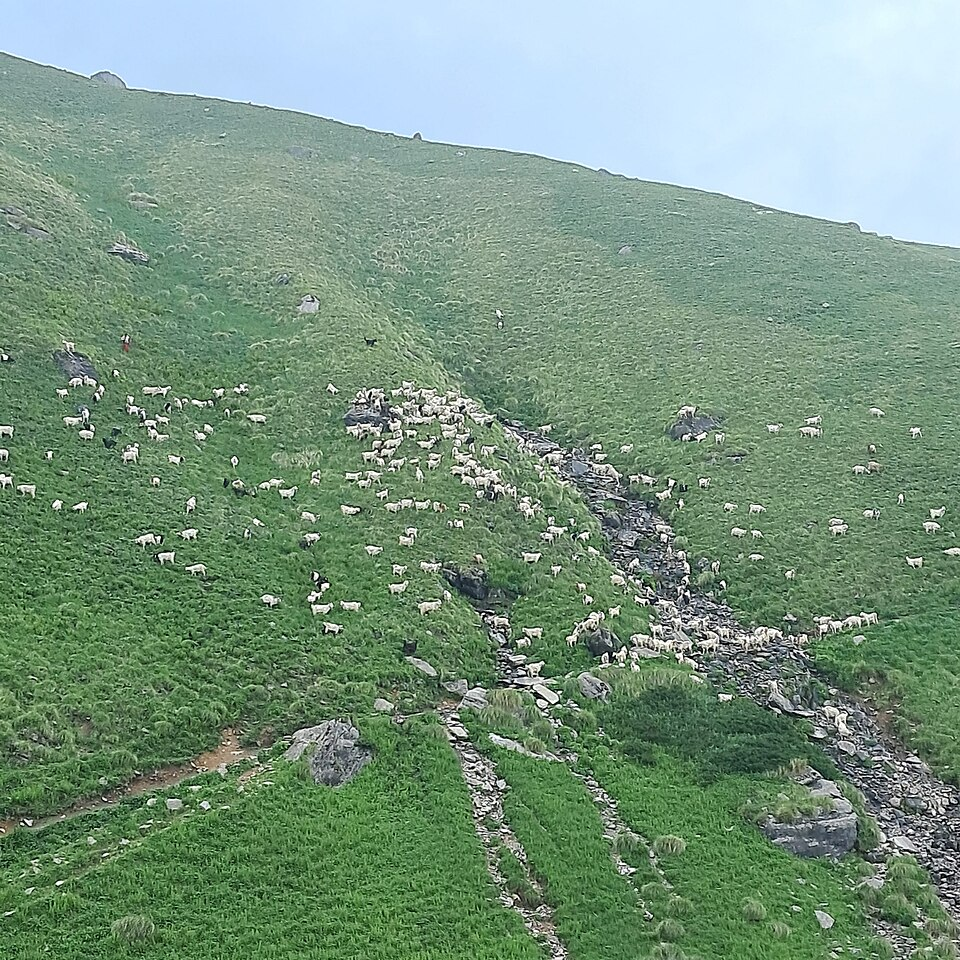
Pastoralists in the western Himalayas move their goats through highland terrain as part of a seasonal transhumance cycle. This image illustrates how people and livestock migrate together between pastures, matching the definition of transhumance used in human geography. The specific Himalayan setting is just one example; similar seasonal pastoral movements occur in many mountain regions worldwide. Source.
Internal Migration
Internal migration occurs within a country’s borders and is often the most common form of voluntary migration. It reflects national economic patterns, transportation networks, and internal political or cultural processes.
Internal Migration: Movement of people within the same country, such as between cities, regions, or rural and urban areas.
Common internal migration pathways include:
Rural to urban movement, spurred by job opportunities.
Urban to suburban relocation, often linked to housing preferences.
Interregional migration, influenced by economic restructuring or resource development.
Chain Migration
Chain migration describes how migrants follow family or community members to a destination, relying on social ties to ease the transition and reduce risks.
Chain Migration: Migration in which people relocate to an area where others from their family or community have previously settled.
Social networks function as important support systems by:
Providing information on employment or housing.
Reducing economic and psychological uncertainty.
Helping form ethnic enclaves, which maintain cultural cohesion.
Chain migration reinforces patterns of cultural diffusion and contributes to the growth of migrant communities across urban and rural landscapes.
Step Migration
Step migration involves a series of smaller, progressive moves toward a final destination rather than one direct relocation.
Step Migration: Migration that occurs through multiple stages, such as moving from a village to a town, then to a city, and finally to a major urban center.
This migration type demonstrates how mobility is shaped by financial limitations, job opportunities, and familiarity with increasingly larger settlements. Important characteristics include:
Incremental spatial movement, often linked to economic advancement.
Adjustment periods that allow migrants to adapt to new environments gradually.
Guest Worker Migration
Guest worker migration consists of individuals who temporarily relocate for work, usually through government-regulated labor programs.
Guest Worker: A migrant allowed to enter a country temporarily for employment, often filling labor shortages in specific industries.
Guest worker systems connect labor demand in destination countries with supply in origin countries. Such migrants play key roles in construction, agriculture, caregiving, and manufacturing. Although often temporary, some guest workers establish long-term residence, influencing demographic and cultural patterns.
Guest worker migration involves people who migrate temporarily to work in another country, often filling specific labor shortages in agriculture, construction, or service industries.
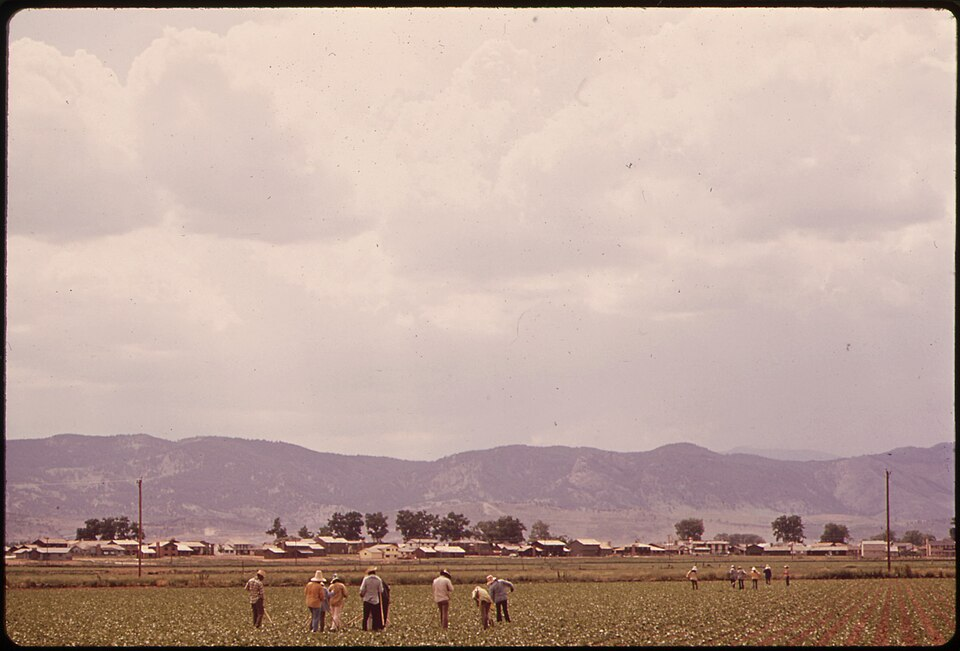
This photograph shows migrant field workers harvesting crops near Fort Collins, Colorado, illustrating labor-driven migration for seasonal agricultural work. It aligns with the concept of guest worker migration, where migrants move temporarily to fill labor needs in sectors like agriculture. The historical U.S. context extends beyond the AP syllabus but provides a clear real-world example of economic migration. Source.
Rural-to-Urban Migration
Rural-to-urban migration is one of the most widespread forms of voluntary migration, driven largely by economic transformation and industrialization.
Rural-to-Urban Migration: Movement from agricultural or sparsely populated rural areas to cities in search of employment and improved services.
This migration type reflects the global process of urbanization, shaped by:
Economic pull factors, including manufacturing and service jobs.
Social pull factors, such as access to education and healthcare.
Agricultural push factors, including mechanization reducing rural labor needs.
Rural-to-urban migration significantly reshapes population distribution, alters labor markets, and contributes to the expansion of metropolitan areas.
Practice Questions
Question 1 (1–3 marks)
Explain what is meant by chain migration and describe one way it can influence the formation of migrant communities.
Mark scheme:
1 mark for a clear definition of chain migration (e.g., migrants follow family or community members to a destination).
1 mark for identifying an influence (e.g., development of social networks, support systems, or ethnic enclaves).
1 mark for explaining how this influence occurs (e.g., established migrants provide information, reduce risk, or attract further migrants).
Question 2 (4–6 marks)
Using examples, analyse how economic factors shape different types of voluntary migration, such as guest worker migration, rural-to-urban migration, and step migration.
Mark scheme:
1 mark for explaining how economic opportunities act as pull factors in voluntary migration.
1 mark for describing economic motivations in guest worker migration (e.g., filling labour shortages, temporary employment).
1 mark for describing economic motivations in rural-to-urban migration (e.g., access to industrial or service-sector jobs).
1 mark for describing economic motivations in step migration (e.g., gradual movement toward more prosperous areas).
1 mark for at least one relevant example illustrating economic influence.
1 mark for analysis showing how these economic drivers shape the patterns, direction, or scale of movement.
FAQ
Voluntary migration tends to show more predictable patterns because decisions are shaped by identifiable economic, social, or cultural factors. Migrants often plan movements in advance, resulting in more stable pathways and repeating flows.
Forced migration, by contrast, is triggered by sudden crises such as conflict or environmental disasters, creating irregular and less predictable patterns of displacement.
Social networks reduce the risks and costs of moving abroad by offering information, financial help, and emotional support. These connections make it easier for future migrants to follow similar paths.
Over time, this can create transnational corridors linking specific origin and destination communities, strengthening long-term ties and sustaining migration across generations.
Step migration is more prevalent where financial constraints limit the ability to move directly to major cities. Migrants gradually move toward larger settlements as they accumulate resources or skills.
It also occurs where transport links are fragmented, making multi-stage movement more practical. Each step allows migrants to adjust socially and economically before progressing further.
Governments shape guest worker flows through labour agreements, recruitment policies, and sector-specific quotas. These determine which industries receive migrant labour and under what conditions.
Some states also regulate migrants’ mobility, housing, or contract length, influencing both the scale and stability of guest worker programmes.
Rapid urban job growth in manufacturing and services acts as a strong pull factor, especially when rural incomes stagnate. Cities also offer education, healthcare, and modern infrastructure.
In many industrialising regions, agricultural mechanisation reduces labour demand, creating push factors that intensify the rural-to-urban flow.