AP Syllabus focus:
‘Geographers describe types of forced and voluntary migration to explain why people move and how much choice they have.’
Human migration varies in the degree of choice individuals possess. Understanding forced and voluntary migration helps geographers analyze why people move, how decisions occur, and the consequences that follow.
Forced and Voluntary Migration: Core Distinctions
Forced and voluntary migration represent two fundamental categories used by geographers to explain human movement patterns. The distinction centers on the level of personal choice, a critical concept for interpreting global population flows. Forced migration occurs when individuals have little to no ability to remain in their place of origin, while voluntary migration involves a deliberate decision to relocate based on perceived opportunities or improved living conditions. These categories help illustrate how broader political, environmental, and social circumstances shape mobility.
Degree of Choice as the Key Criterion
The defining difference between forced and voluntary migration is the presence or absence of choice, which influences motivations, experiences, and long-term outcomes.
Choice in Migration: The degree of personal agency an individual possesses when deciding whether to remain in or leave their place of origin.
Between these categories, geographers also note a spectrum known as "mixed migration," in which both pressures and opportunities influence the decision to move. However, AP Human Geography emphasizes the two primary classifications for clarity and analytical consistency.
A normal sentence placed here to maintain proper spacing and avoid consecutive definition blocks.
Forced Migration
Forced migration involves the movement of people who are compelled to leave due to circumstances beyond their control. These conditions often threaten safety, survival, or basic human rights. Because forced migrants cannot choose to remain safely in place, this type of migration is closely tied to external forces operating at political, environmental, and social scales.
Characteristics of Forced Migration
Forced migration typically includes:
Lack of agency, meaning individuals cannot choose to stay.
External pressures, often sudden or severe.
Displacement, frequently over long distances or across borders.
High vulnerability, including social, economic, and legal challenges.
Common Drivers of Forced Migration
Although detailed categories such as refugees or internally displaced persons fall under other subsubtopics, this subsubtopic emphasizes the general causes of forced movement:
Political pressures, including warfare, persecution, or state-led displacement.
Environmental hazards, such as natural disasters, climate-related events, or resource collapse.
Social instability, including ethnic violence or systemic discrimination.
Economic collapse, when survival is impossible without relocation.
Forced Migration: Movement in which individuals have no realistic ability to remain in their place of origin due to overwhelming pressures or threats.
Forced migration affects population distribution by creating sudden shifts, influencing settlement patterns, and reshaping regional demographics.
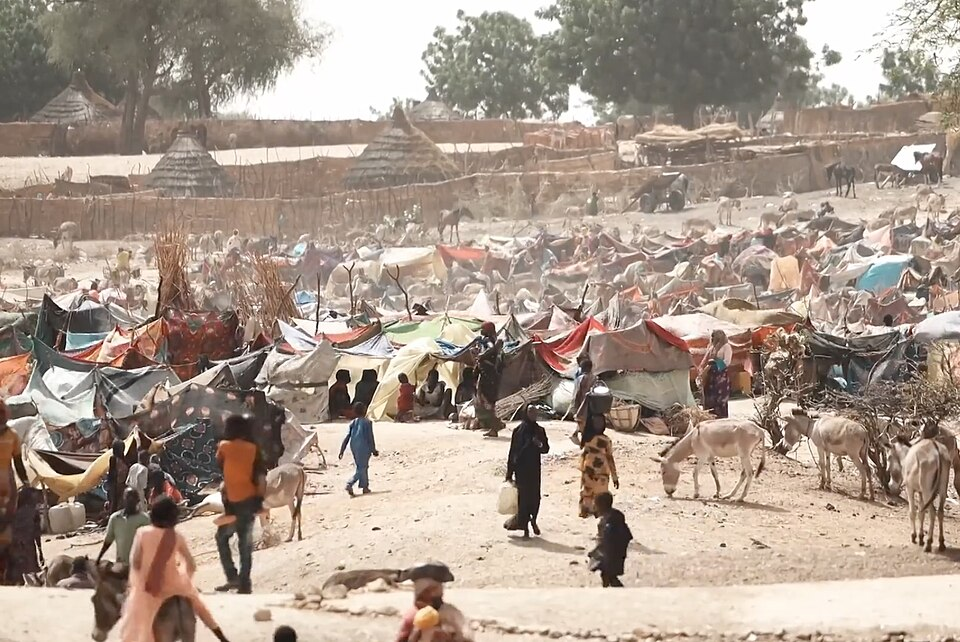
This photograph shows a refugee camp in Chad established for people forcibly displaced by conflict in Sudan. It exemplifies forced migration, where households move because staying in their place of origin is unsafe rather than by personal choice. The specific context (Sudan–Chad in 2023) is additional detail beyond the AP syllabus but provides a contemporary illustration of how conflict can rapidly redistribute populations. Source.
A normal sentence placed here to adhere to required formatting rules.
Voluntary Migration
Voluntary migration occurs when individuals or groups choose to move based on perceived benefits. This form of migration reflects personal decisions influenced by economic prospects, social connections, and expectations of improved well-being.
Characteristics of Voluntary Migration
Key traits of voluntary migration include:
Presence of choice, even if influenced by external circumstances.
Consideration of alternatives, where migrants evaluate staying versus leaving.
Goal-oriented movement, often tied to work, education, or lifestyle preferences.
Greater planning, since moves are less urgent than forced displacement.
Motivations Behind Voluntary Migration
Voluntary migration decisions are often shaped by:
Economic opportunities, such as employment or higher wages.
Educational access, including enrollment in schools or universities.
Cultural or social preferences, including joining family or communities.
Political stability, appealing to those seeking predictable governance.
Environmental amenities, such as favorable climates or landscapes.
Voluntary Migration: Movement in which individuals choose to relocate after evaluating perceived opportunities or benefits compared with staying in their place of origin.
Voluntary migration typically produces more predictable spatial patterns and may support the economic growth of destination regions while reducing labor supply in origin areas.
A normal sentence placed here to maintain appropriate spacing between definition elements.
Migration as a Spectrum
Although AP Human Geography categorizes migration as either forced or voluntary for instructional clarity, geographers recognize that many real-world movements fall between the two. People may face strong pressures—such as unemployment or environmental stress—yet still exercise some decision-making power.
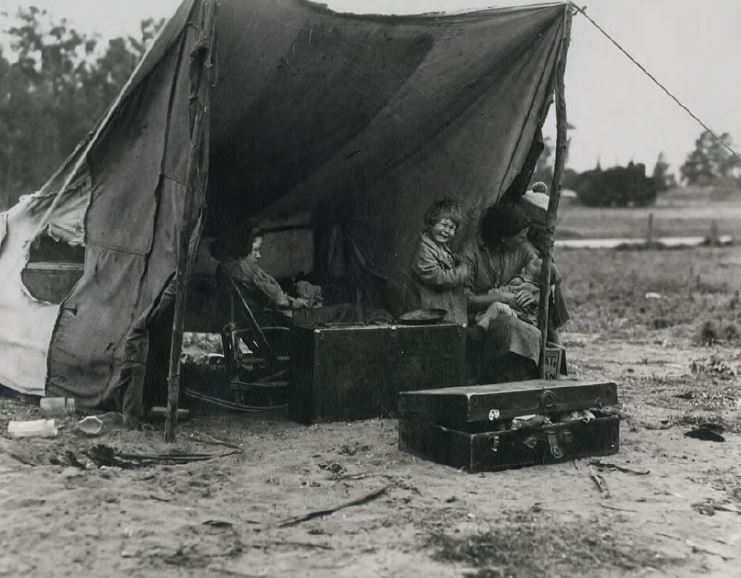
This photograph shows a family of agricultural workers living in a temporary tent at a pea-pickers’ camp in California during the Great Depression. Their move illustrates how economic hardship and social vulnerability can push people to migrate even when they retain some element of choice, fitting the idea of migration along a continuum between forced and voluntary. The specific historical case of U.S. farmworkers in the 1930s goes beyond the AP syllabus examples but deepens understanding of how structural pressures shape migration decisions. Source.
Key Factors Shaping Levels of Choice
These factors determine how much agency migrants possess:
Severity of push factors, with stronger pressures reducing choice.
Availability of pull factors, offering attractive alternatives.
Legal and political constraints, which may restrict or compel movement.
Cultural ties, influencing willingness or reluctance to move.
Economic conditions, shaping both feasibility and necessity.
By distinguishing forced and voluntary migration, geographers can better interpret how human populations respond to global changes, how movement patterns evolve, and how societies manage the consequences of migration flows.
Practice Questions
Question 1 (1–3 marks)
Define the difference between forced and voluntary migration, and briefly explain why geographers distinguish between these two categories.
Mark scheme (3 marks total)
1 mark for identifying that forced migration involves little or no choice, while voluntary migration involves a decision to move.
1 mark for explaining that forced migration is driven by pressures such as conflict, persecution, or environmental hazards.
1 mark for stating why geographers distinguish them (e.g., to analyse motivations, impacts, and patterns of movement).
Question 2 (4–6 marks)
Using examples, explain how the degree of personal choice influences whether migration is classified as forced or voluntary, and describe how this affects the experiences of migrants.
Mark scheme (6 marks total)
1 mark for explaining that choice is the key criterion geographers use to classify migration.
1 mark for stating that forced migration occurs when individuals cannot remain safely in place.
1 mark for stating that voluntary migration occurs when individuals evaluate opportunities and choose to relocate.
1 mark for providing a valid example of forced migration (e.g., refugees fleeing conflict).
1 mark for providing a valid example of voluntary migration (e.g., workers moving for employment).
1 mark for describing how the degree of choice affects migrant experiences (e.g., forced migrants face greater vulnerability, sudden displacement, or legal barriers; voluntary migrants may have more resources or planning time).
FAQ
Geographers look for evidence of the migrant’s level of agency. This includes whether remaining in place posed a threat to life, safety, or basic rights.
They also assess the pace of migration. Forced movements are often rapid and unplanned, while voluntary moves typically involve preparation.
Additional indicators may include:
Legal documentation or refugee status processes
Whether migrants had the ability to refuse relocation
The role of external authorities or coercive forces
Choice is unevenly distributed. Marginalised groups often face structural pressures that limit their ability to stay or leave.
For instance, poorer households may have fewer resources for voluntary relocation, making them more vulnerable to environmental or economic pressures that feel coercive.
Conversely, wealthier individuals may experience greater mobility, expanding their range of voluntary migration options.
Environmental triggers often combine with social, political, or economic stresses.
Sudden disasters like floods or volcanic eruptions can create unambiguous forced migration. However, gradual environmental change typically interacts with:
Food insecurity
Livelihood impacts
Weak governance
Poverty
This combination makes it difficult to isolate environmental factors as the sole cause.
Migration decisions frequently result from intertwined pressures. People may feel compelled to move for economic survival but still retain some decision-making power.
These situations occur when:
Staying is difficult but not immediately life-threatening
Migrants can choose between several destinations
Household strategies blend necessity with opportunity
This complexity leads geographers to describe migration as a spectrum rather than a strict binary.
Classification shapes access to legal protections and humanitarian support. Forced migrants, such as refugees or those fleeing conflict, may receive international aid and asylum rights.
Voluntary migrants usually do not qualify for the same protections, even when moving under extreme economic stress.
This distinction influences:
Border policies
Resettlement programmes
Funding for relief efforts
Long-term integration support