AP Syllabus focus: ‘In a command economy, institutions and central decision-makers coordinate how scarce resources are allocated and output is distributed.’
A command economy allocates scarce resources through central planning rather than decentralized market choices. Understanding who makes production and distribution decisions, and how incentives operate, helps explain typical outcomes like shortages, surpluses, and uneven quality.
Core Idea: Central Planning Replaces Markets
In a command economy, the government (or ruling authority) plays the dominant role in answering allocation and distribution decisions. Instead of prices and profit guiding choices, plans, directives, and administrative orders determine what gets produced, how resources are used, and who receives goods and services.
Command economy: An economic system in which a central authority directs resource allocation and output distribution through planning and administrative decision-making rather than markets.
Key Decision-Makers and Institutions
Resource allocation is coordinated by central decision-makers operating through institutions such as:
Planning ministries/agencies that set production targets
State-owned enterprises (SOEs) that carry out directives
Regulatory bodies that control inputs, wages, and prices
Distribution agencies that allocate final goods to consumers, regions, or firms
A command system typically relies on state ownership or strong state control of major industries, allowing planners to redirect land, labor, and capital toward targeted outputs.
How Scarce Resources Are Allocated
Central authorities coordinate scarcity-driven choices by replacing market signals with administrative mechanisms.
Planning Targets and Output Quotas
Planners commonly set:
Output quotas (required quantities of goods/services)
Input allocations (how much labor, raw materials, and machinery each producer receives)
Priority sectors (e.g., heavy industry, defense, infrastructure)
Because resources are scarce, these targets embed trade-offs: prioritizing one sector usually means fewer resources for others, especially consumer goods.
Administered Prices and Price Controls
In many command systems, prices are administered (set by the state) rather than determined by supply and demand. This can include:
Price ceilings to keep necessities “affordable”
Fixed wages or wage scales by occupation
Controlled exchange rates or limited legal markets
When official prices are not aligned with scarcity, the economy can experience persistent shortages or surpluses, requiring further non-price allocation methods.
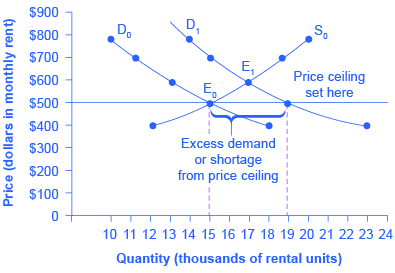
A standard supply-and-demand graph illustrating a binding price ceiling set below equilibrium. The horizontal ceiling prevents price from rising to clear the market, so quantity demanded exceeds quantity supplied, creating a measurable shortage (). This visual ties price controls to rationing/queues as the market’s non-price adjustment mechanism. Source
Non-Price Allocation: Rationing and Queues
When demand exceeds supply at controlled prices, planners may allocate goods using:
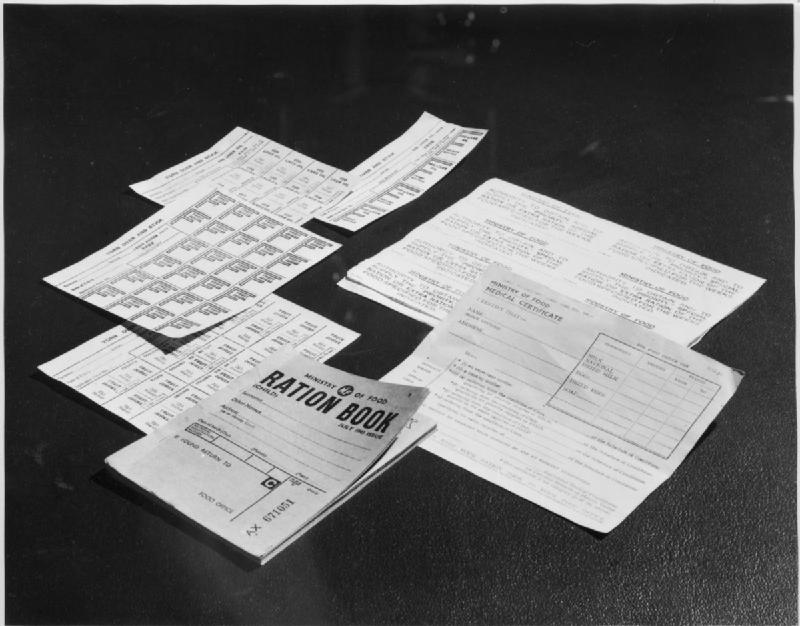
A historical photo of ration books and coupons used to limit how much of certain goods households could obtain. It provides a concrete example of rationing as an administrative allocation rule when prices are not allowed to equilibrate. The image helps connect the abstract idea of “non-price allocation” to a real mechanism households faced. Source
Rationing (limits per person/household)
Priority lists (favored groups, essential workers, politically important regions)
Queuing (time becomes the “price” paid)
Rationing: A non-price method of allocating scarce goods by limiting how much each person or group may obtain.
How Output Is Distributed
The specification emphasizes not only allocation of inputs, but also how output is distributed. In command economies, distribution is often determined by policy goals rather than willingness and ability to pay.
Distribution Channels
Common distribution mechanisms include:
State retail systems with controlled availability
Workplace-based distribution (benefits tied to employment or status)
Regional allocation based on political or strategic priorities
Public provision of services (housing, healthcare, education) determined administratively
Distribution outcomes depend heavily on planner priorities and administrative capacity, not consumer demand patterns.
Incentives and Efficiency in a Command Economy
Because firms are evaluated by meeting plan targets rather than earning profits, incentives differ from market systems.
Incentives Facing Producers and Workers
Typical incentive features include:
Target-driven production: meeting quotas may matter more than quality or variety
Soft budget constraints: loss-making SOEs may be subsidized, weakening cost discipline
Limited competition: fewer pressures to innovate or reduce costs
Material and non-material rewards: bonuses, promotion, housing access, or political status
Information and Coordination Problems
Central coordination must solve a major information problem: accurately measuring local conditions, preferences, and resource availability across many goods and regions. Without flexible price signals, misallocation can occur, contributing to:
Chronic shortages of some items and wasteful overproduction of others
Lower responsiveness to changing consumer preferences
Slower innovation where experimentation is risky or unrewarded
Practice Questions
Explain one way a command economy can distribute scarce consumer goods when prices are fixed by the state. (2 marks)
Identifies a valid non-price distribution method (e.g., rationing, priority lists, queuing) (1)
Explains how it allocates limited goods among consumers when prices do not clear the market (1)
Describe how central decision-makers in a command economy coordinate the allocation of scarce resources, and analyse two likely consequences for shortages/surpluses and product quality. (6 marks)
Describes use of plans/targets/quotas or state input allocation to direct land, labour, and capital (1–2)
Describes administered prices/price controls as part of coordination (1)
Analyses consequence 1: explains why fixed prices and misread scarcity can create shortages or surpluses (1–2)
Analyses consequence 2: explains why quota/target incentives can reduce quality/variety (e.g., focus on quantity, weak competition) (1–2) (Max 6)
FAQ
Priorities are usually set through political and strategic objectives (e.g., defence, energy security, rapid industrialisation).
Common tools include:
mandated investment shares for chosen sectors
guaranteed access to scarce inputs (steel, fuel, skilled labour)
preferential transport and infrastructure capacity
Administratively set prices may not rise when goods become scarcer, so demand is not reduced and supply is not encouraged in the same way.
Shortages can persist because changing plans, reallocating inputs, and expanding capacity often require bureaucratic approval and time.
Hidden inflation refers to reduced real purchasing power without official price rises. It can appear as:
worsening quality
smaller package sizes
forced substitution (only unwanted goods available)
time costs from queues replacing money prices
When official channels do not provide enough goods at fixed prices, informal markets may emerge to reallocate goods using market-like prices.
This can reduce some shortages for participants but can also worsen inequality, undermine official distribution goals, and encourage corruption.
Yes, but incentives are typically administrative rather than competitive. Approaches include:
bonuses for meeting or exceeding targets
penalties for missing quotas
promotions and access to scarce perks (housing, better shops)
Effectiveness depends on accurate measurement and whether targets reward quality, not just quantity.