AP Syllabus focus: ‘A well-defined system of property rights supports markets. Consumers respond to incentives but also face constraints such as income, time, and legal or regulatory rules.’
Consumers decide what to buy by weighing benefits against costs. Their demand reflects incentives (rewards and penalties) and constraints (limits on choice). Well-defined property rights make these choices actionable through buying, selling, and enforcing agreements.
Incentives and Consumer Choice
In markets, consumers compare the expected benefits of consuming a good with the opportunity cost of spending money and time elsewhere. Incentives shape that comparison by changing perceived costs or benefits.
Types of incentives that affect demand decisions
Price-related incentives: lower effective cost increases willingness to buy; higher effective cost reduces it.
Non-price incentives: convenience, quality guarantees, loyalty rewards, or penalties for late return can change the attractiveness of purchasing.
Information incentives: credible information (ratings, warranties, disclosures) can raise willingness to buy by reducing uncertainty.
Social incentives: status, norms, or peer effects can increase or decrease willingness to purchase, especially for visible goods.
Incentives matter because demand is grounded in marginal thinking: consumers typically buy additional units only if the marginal benefit is at least as large as the marginal cost (including non-money costs like time).
Constraints on Demand
Even if a consumer strongly wants a product, constraints can limit what they can buy. The syllabus emphasises income, time, and legal or regulatory rules as key constraints.
Income and purchasing power
Income limits consumption because spending on one good reduces the ability to purchase other goods. This is often represented by a budget constraint (the combinations of goods a consumer can afford given income and prices).
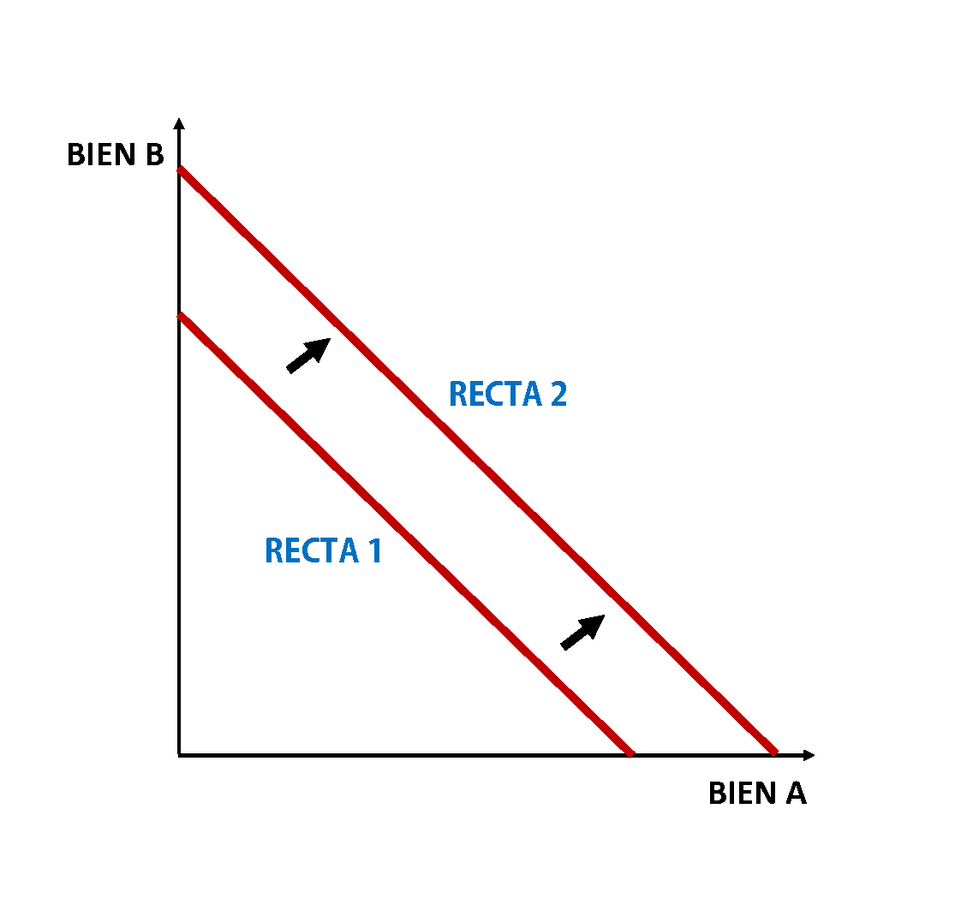
A two-good budget constraint diagram showing how the budget line shifts outward when income increases (prices held constant). The intercepts illustrate maximum affordable quantities of each good, and the parallel shift highlights that higher income expands the feasible set without changing relative prices. Source
When income is tight, consumers are more likely to substitute toward cheaper options, smaller quantities, or forego purchases entirely.
Time and non-monetary costs
Time is scarce, so demand depends on the “full price” of consumption:
Search time: finding the product or comparing alternatives
Travel and waiting time: getting to the seller or waiting for service
Usage time: time needed to benefit from the product (e.g., cooking vs. prepared meals)
When time costs rise, some consumers demand less even if the sticker price is unchanged, because the effective cost of consuming the good is higher.
Legal and regulatory rules
Rules can restrict who can buy, how they can buy, or what conditions must be met. Examples of constraints include:
Age restrictions (e.g., alcohol, tobacco)
Licensing requirements (e.g., certain services)
Purchase limits (e.g., rationing during emergencies)
Safety or compliance rules that require additional steps (reducing convenience)
These rules change feasible choices and can reduce demand by making purchase impossible for some buyers or more costly (in time or compliance) for others.
Property Rights and Why They Support Markets
A market requires buyers and sellers to confidently exchange goods, services, or assets. That confidence depends on property rights being clearly defined and enforced.
Property rights: The legally enforced rights to own, use, exclude others from, and transfer (sell) an asset or good.
How property rights affect demand
Well-defined property rights support demand by making ownership meaningful and exchange reliable:
Right to use: consumers value goods more when they can legally use them as intended.
Right to exclude: a buyer is willing to pay more if others can’t freely take or use the item.
Right to transfer: resale, gifting, or returning increases value by adding flexibility and reducing risk.
Enforcement and dispute resolution: contracts, refunds, and warranties are more credible when courts or regulators can enforce them.
What happens when property rights are weak or unclear
When enforcement is uncertain, consumers may be less willing to buy because:
ownership can be contested (risk of loss)
quality claims may be unverifiable (risk of fraud)
after-sale service and refunds may be unreliable
transaction costs (time, monitoring, legal risk) rise
In short, a well-defined system of property rights supports markets by lowering risk and transaction costs, enabling consumers to act on their preferences through voluntary exchange.
Practice Questions
(2 marks) Explain two constraints (other than price) that can limit a consumer’s demand for a good.
1 mark: Correctly identifies one relevant constraint (e.g., income, time, legal/regulatory rule).
1 mark: Correctly explains how it limits the consumer’s ability or willingness to purchase.
(5 marks) A city introduces strict ID checks for purchasing a regulated product and increases penalties for illegal sales. Using incentives, constraints, and property rights, explain how this policy can affect consumer purchasing behaviour and market participation.
1 mark: Explains the policy as a legal/regulatory constraint that restricts feasible purchases for some consumers.
1 mark: Explains penalties as changing incentives (higher expected cost/risk) for attempting illegal purchase.
1 mark: Links enforcement to property rights/contract enforcement (market transactions become more/less reliable depending on compliance).
1 mark: Notes increased non-monetary costs (time/inconvenience of checks) affecting willingness to buy.
1 mark: Explains likely reduction in participation in the legal market by constrained consumers (must clearly connect to constraints/incentives).
FAQ
They increase excludability (legal right to exclude copying), which can raise sellers’ ability to charge and can raise buyers’ confidence in quality/authenticity.
Weak enforcement can increase piracy, reducing willingness to pay in legal markets.
Clear ownership and enforceable contracts reduce:
search and verification costs
risk of fraud
costs of resolving disputes
Lower transaction costs make purchasing more attractive at any given money price.
Time has different opportunity costs across people (e.g., varying wages, schedules, commuting distances).
A purchase that is “cheap” in money terms can be “expensive” in time terms for some consumers.
The relevant right is often a contractually defined right to use for a period, plus enforcement of service terms (access, uptime, refunds).
Demand depends on how credible and enforceable those contractual rights are.
If titles/ownership histories are uncertain, buyers face higher risk of repossession or hidden liens.
That risk lowers willingness to pay and can shrink the number of buyers willing to participate.