AP Syllabus focus:
‘Roosevelt’s New Deal used federal power to provide relief, stimulate recovery, and reform the economy in response to the Great Depression.’
The New Deal marked a decisive expansion of federal authority as policymakers confronted unprecedented economic collapse, unemployment, and social instability, reshaping expectations of government responsibility.
Relief, Recovery, and Reform: The Framework of the New Deal
Franklin D. Roosevelt’s administration responded to the Great Depression through a three-part strategy that aimed to stabilize society while restoring confidence in democratic capitalism. Known as relief, recovery, and reform, this structure guided the creation of numerous programs designed to deliver immediate support, stimulate economic activity, and prevent future crises.
The Need for Federal Relief
By 1933, widespread unemployment and collapsing wages left millions of Americans without basic necessities. Roosevelt argued that only the federal government possessed the capacity to deliver coordinated assistance. Relief programs were built to provide direct aid, wage support, and emergency services.
Welfare state: A government system in which the state assumes primary responsibility for social protections such as income support and basic welfare.
Relief efforts took several forms:
Direct assistance, such as payments or access to essential goods, reaching impoverished families through federally funded programs.
Work-relief initiatives that provided jobs rather than cash alone to preserve dignity and stimulate local economies.
Emergency interventions to stabilize collapsing state and municipal systems unable to manage the scale of need.
Major Relief Programs
The Federal Emergency Relief Administration (FERA) distributed funds to states to support emergency aid and public works efforts. The Civilian Conservation Corps (CCC) targeted unemployed young men, offering paid labor on conservation projects, reforestation, and park development.
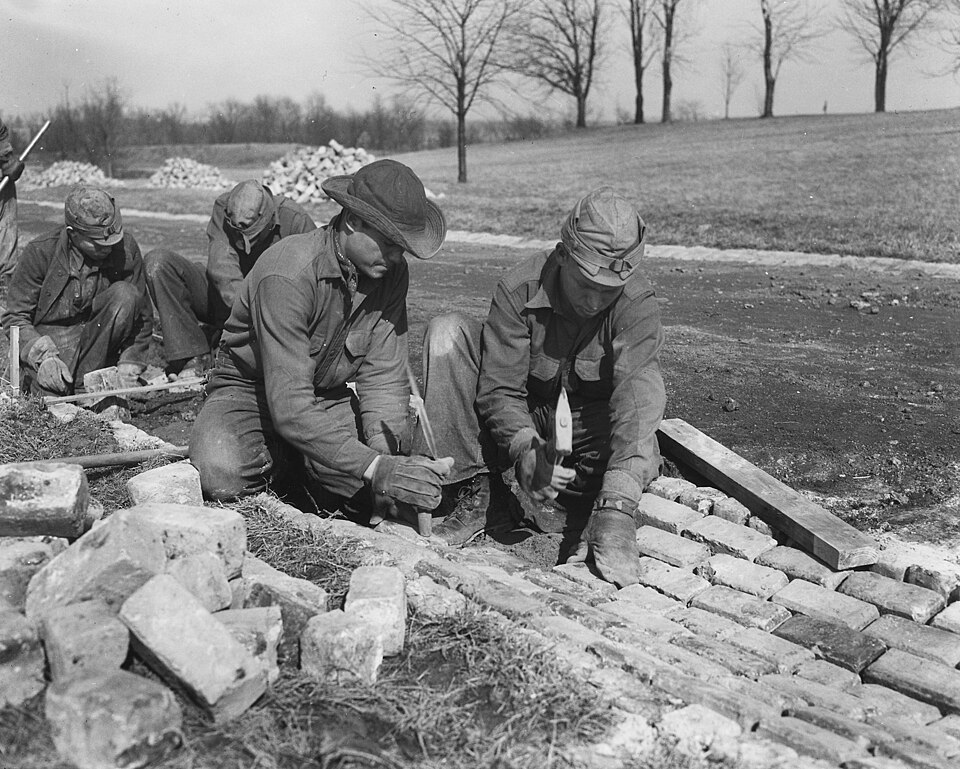
Civilian Conservation Corps enrollees pose during the early 1930s as part of a New Deal work-relief program. The CCC provided wages, food, and housing to unemployed young men while they worked on conservation, reforestation, and park projects. The image includes more detail about specific workers and uniforms than the syllabus requires, but it clearly illustrates how relief programs combined employment with public works. Source.
The Civil Works Administration (CWA) and later the Works Progress Administration (WPA) expanded job creation, employing millions in construction, arts, writing, and infrastructure projects. These programs aimed not only to alleviate hardship but also to restore morale and strengthen communities.
Recovery: Reviving Business, Agriculture, and Industry
Economic recovery programs sought to restart production, stabilize prices, and rebuild purchasing power. Policymakers believed that structural adjustments and regulated cooperation among producers could revive markets shattered by deflation and overproduction.
Industrial Recovery Initiatives
The National Industrial Recovery Act (NIRA) attempted to stimulate industrial growth by encouraging businesses to adopt codes of fair competition, set minimum wages, and establish maximum hours. Although the Supreme Court later struck down the NIRA, it represented a major effort to balance government oversight with private-sector collaboration.
Agricultural Recovery Efforts
Farmers were disproportionately devastated by falling prices and ecological disaster. The Agricultural Adjustment Administration (AAA) sought to raise agricultural prices by reducing production. Payments incentivized farmers to leave some land unplanted, aiming to correct long-term imbalances that depressed rural incomes. These efforts were controversial, especially when reductions displaced tenant farmers and sharecroppers.
Reform: Preventing Future Economic Catastrophe
Roosevelt’s reform programs reshaped the long-term relationship between citizens, markets, and the federal government. Reform measures sought to address the systemic flaws that had enabled the Depression and rebuild trust in institutions.
Financial Reforms and Regulation
One major goal was to stabilize the banking system and financial markets. The Emergency Banking Act reopened solvent banks under federal supervision and renewed public confidence. The Glass-Steagall Act separated commercial and investment banking to reduce speculative risk and created the Federal Deposit Insurance Corporation (FDIC) to insure individual deposits.
Securities regulation: Government oversight of financial markets intended to ensure transparency, prevent fraud, and limit destabilizing speculation.
A sentence here ensures separation between definition blocks.
The Securities and Exchange Commission (SEC) further strengthened federal regulation by monitoring stock markets, enforcing disclosure requirements, and preventing manipulative practices.
Social Reform and the Emerging Welfare State
Longer-term reforms also addressed social instability revealed by mass unemployment. The Social Security Act of 1935 established systems of old-age pensions, unemployment insurance, and support for vulnerable groups, laying the foundation for a modern welfare state. Federal labor policy shifted as well: the Wagner Act (National Labor Relations Act) guaranteed workers the right to unionize and bargain collectively, strengthening labor protections and expanding democratic participation in the workplace.
Reforming Infrastructure and Regional Development
Programs such as the Tennessee Valley Authority (TVA) combined economic recovery with reform goals by modernizing underdeveloped regions, constructing dams, generating hydroelectric power, and improving flood control.
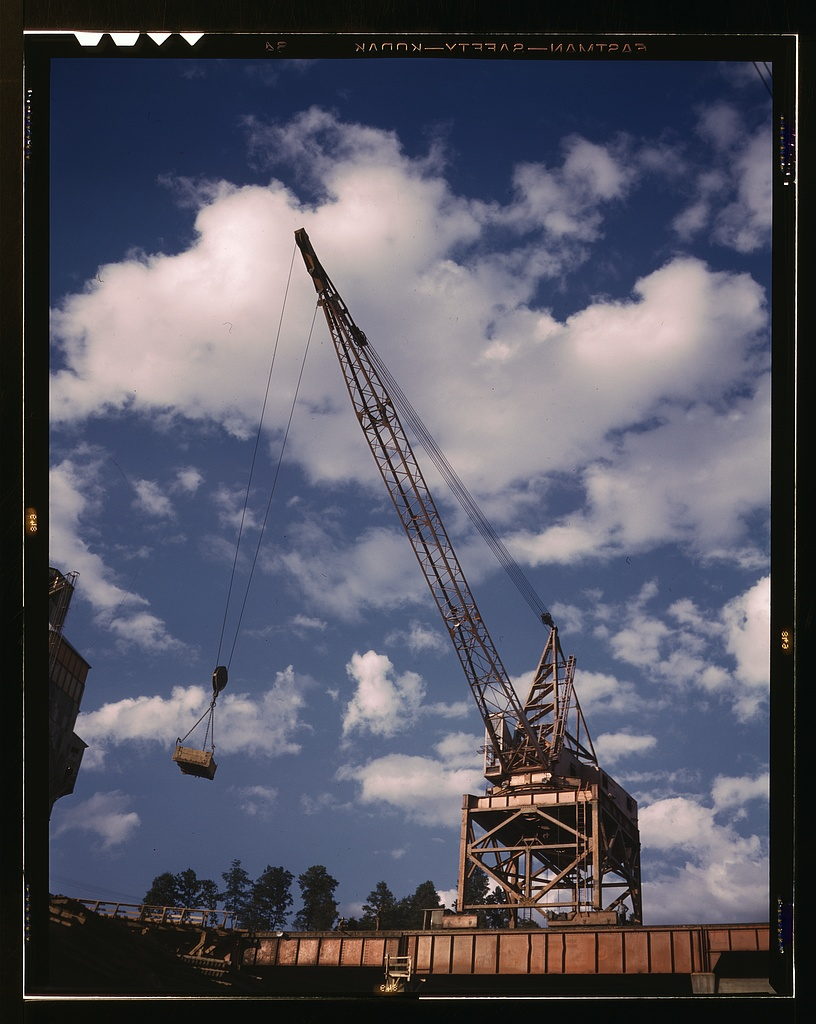
Construction of Douglas Dam for the Tennessee Valley Authority in 1942 demonstrates how New Deal regional planning merged job creation with long-term infrastructure development. By building hydroelectric dams, TVA expanded access to electricity, supported industrial growth, and improved flood control in the Tennessee Valley. The photograph includes additional engineering and construction details beyond the syllabus, but these features help visualize the scale of federal intervention in the economy. Source.
The Broader Impact of Relief, Recovery, and Reform
Together, these initiatives fundamentally reoriented government–citizen relationships. Americans increasingly expected federal intervention during economic crises, while political debates intensified over the proper scope of government. The New Deal did not fully cure the Depression, but its relief, recovery, and reform measures reshaped American political culture, expanded federal capacity, and established regulatory structures that persisted long after the 1930s.
Practice Questions
(1–3 marks)
Identify one specific New Deal relief programme and explain how it sought to address the problems created by mass unemployment during the Great Depression.
Question 1 (1–3 marks)
• 1 mark for correctly identifying a New Deal relief programme (e.g., CCC, FERA, CWA, WPA).
• 1 mark for describing how the programme operated (e.g., work relief, direct payments, employment creation).
• 1 mark for explaining how the programme addressed unemployment or economic hardship.
(4–6 marks)
Explain how the New Deal’s recovery and reform measures attempted to stabilise the American economy. In your answer, refer to both industrial and financial reforms and evaluate how these measures altered the role of the federal government.
Question 2 (4–6 marks)
• 1 mark for describing at least one recovery measure (e.g., NIRA, AAA).
• 1 mark for describing at least one reform measure (e.g., Glass-Steagall Act, SEC, Social Security Act).
• 1 mark for explaining how these measures aimed to stabilise the economy (e.g., regulating competition, stabilising prices, restoring confidence in banks).
• 1 mark for discussing the increased role of the federal government in the economy.
• Up to 2 additional marks for well-developed analysis, such as linking reforms to long-term structural change, recognising limitations, or explaining how these measures reshaped expectations of federal responsibility.
FAQ
Roosevelt’s willingness to experiment shaped the early New Deal. His team often tested programmes quickly, revising or replacing them if they proved ineffective.
He favoured a pragmatic approach, empowering advisers with diverse ideological views, which led to broad and sometimes contradictory policies united by the aim of stabilising the nation.
Many business leaders believed federal coordination of wages, hours, and production undermined free-market principles.
They opposed what they viewed as excessive governmental intrusion and feared that labour protections would increase costs.
Some also argued that the NIRA privileged large firms, disadvantaging smaller businesses.
For many workers and families, direct federal assistance was unprecedented. It established the idea that the national government should intervene during crises.
Programmes delivering wages, food, or services helped normalise a safety net, influencing later public support for long-term welfare structures.
The Tennessee Valley’s limited infrastructure made it a priority for federal planners.
The TVA introduced modern technologies and engineering practices, which:
Brought electricity to isolated communities
Reduced chronic flooding
Encouraged industrial investment
The programme revealed how uneven development across regions shaped New Deal decision-making.
Conservative critics argued that banking and securities regulation threatened economic freedom.
Some politicians claimed reforms discouraged investment by tightening oversight of financial markets.
Others feared centralisation of power in Washington, warning that a permanent regulatory state would erode states’ rights and individual enterprise.