

AP Syllabus focus: ‘Hinduism, Islam, and Buddhism and their core beliefs and practices continued to shape societies in South and Southeast Asia.’
Religious traditions in South and Southeast Asia (c. 1200–1450) structured daily life, justified political authority, and organised communities. Hinduism and Buddhism remained deeply rooted, while Islam expanded, creating plural societies shaped by belief, ritual, and law.
Religious Landscape in South and Southeast Asia (c. 1200–1450)
States and trading cities contained overlapping religious communities, so religion was both a personal identity and a public institution.
Rulers drew legitimacy from association with sacred traditions, holy sites, and religious specialists.
Religious institutions (temples, monasteries, mosques) acted as hubs for education, charity, dispute resolution, and the circulation of wealth.
Hinduism: Beliefs and Social Structure
Core concepts shaping society
Hindu belief emphasised moral order, rebirth, and the pursuit of liberation, supporting stable social expectations.
Dharma: the moral and social duties expected of an individual based on role, stage of life, and community, understood as sustaining cosmic and social order.
Dharma worked with karma (actions shaping future rebirth) to reinforce ideas of responsibility and hierarchy.
Varna/jati (broad social categories and local birth groups) helped structure marriage patterns, occupations, and community status.
Household rituals, life-cycle ceremonies, and pilgrimage reinforced community ties and the authority of religious tradition.
Temples, elites, and political authority
Hindu temples were major social institutions, not only religious sites.
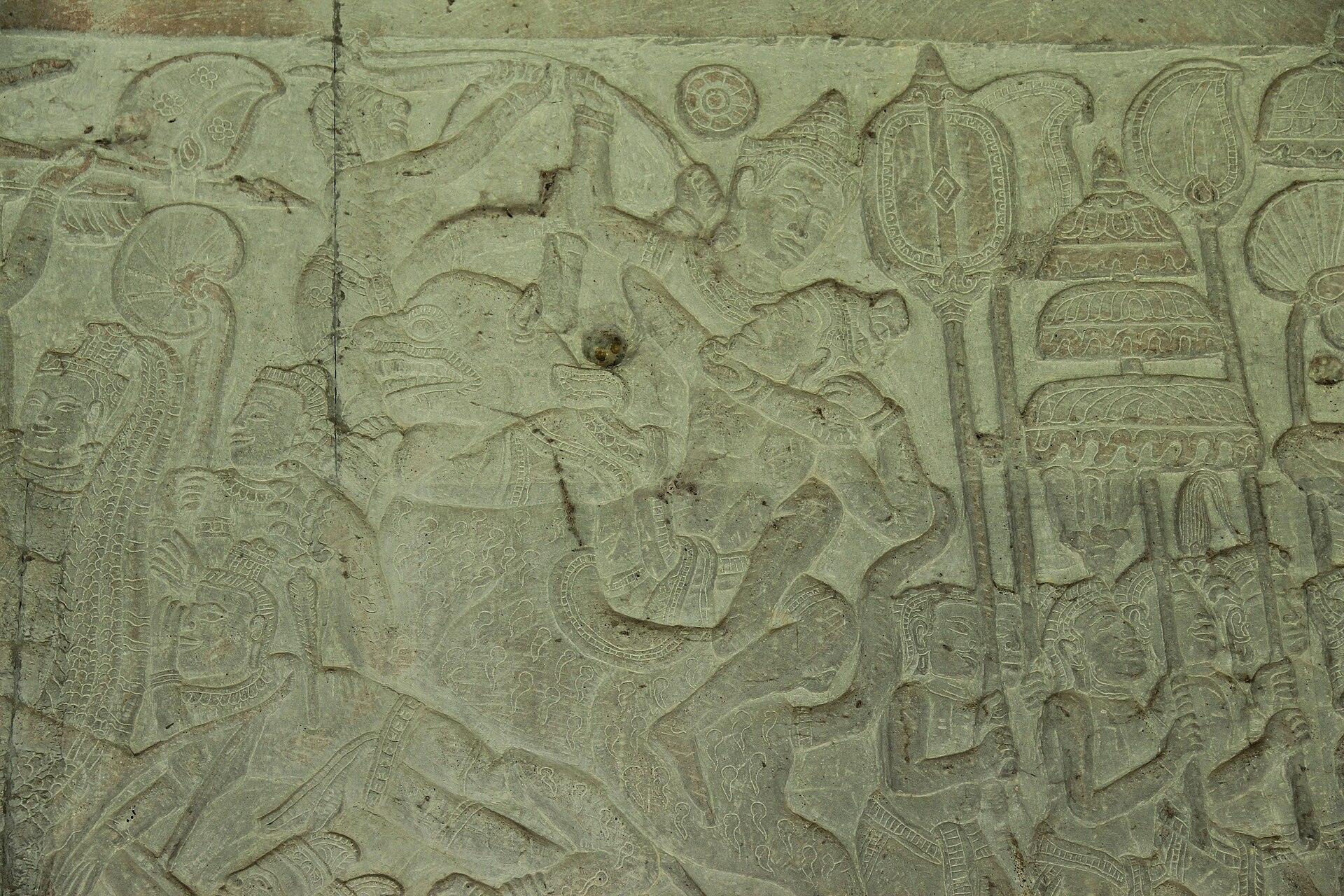
Stone bas-reliefs from Angkor Wat’s temple galleries (Khmer Empire, 12th century) show how religious narratives were embedded into public architecture. Such temple imagery helped make sacred stories visible to worshippers and visitors while also associating rulers and elites with divine order and prestige. The scale and permanence of the carving underscores how temples could function as both spiritual centers and instruments of political authority. Source
Temples accumulated land and donations, redistributing resources through festivals, feeding, and patronage of artisans.
Kings and local elites sponsored temples to display piety and strengthen claims to rule, linking political power to sacred merit.
Priests and scholars preserved sacred learning and advised elites, shaping norms around purity, family obligations, and social rank.
Buddhism: Ethics, Community, and Monastic Life
Teachings and everyday practice
Buddhism focused on reducing suffering through ethical conduct, meditation, and wisdom, influencing both laypeople and political culture.
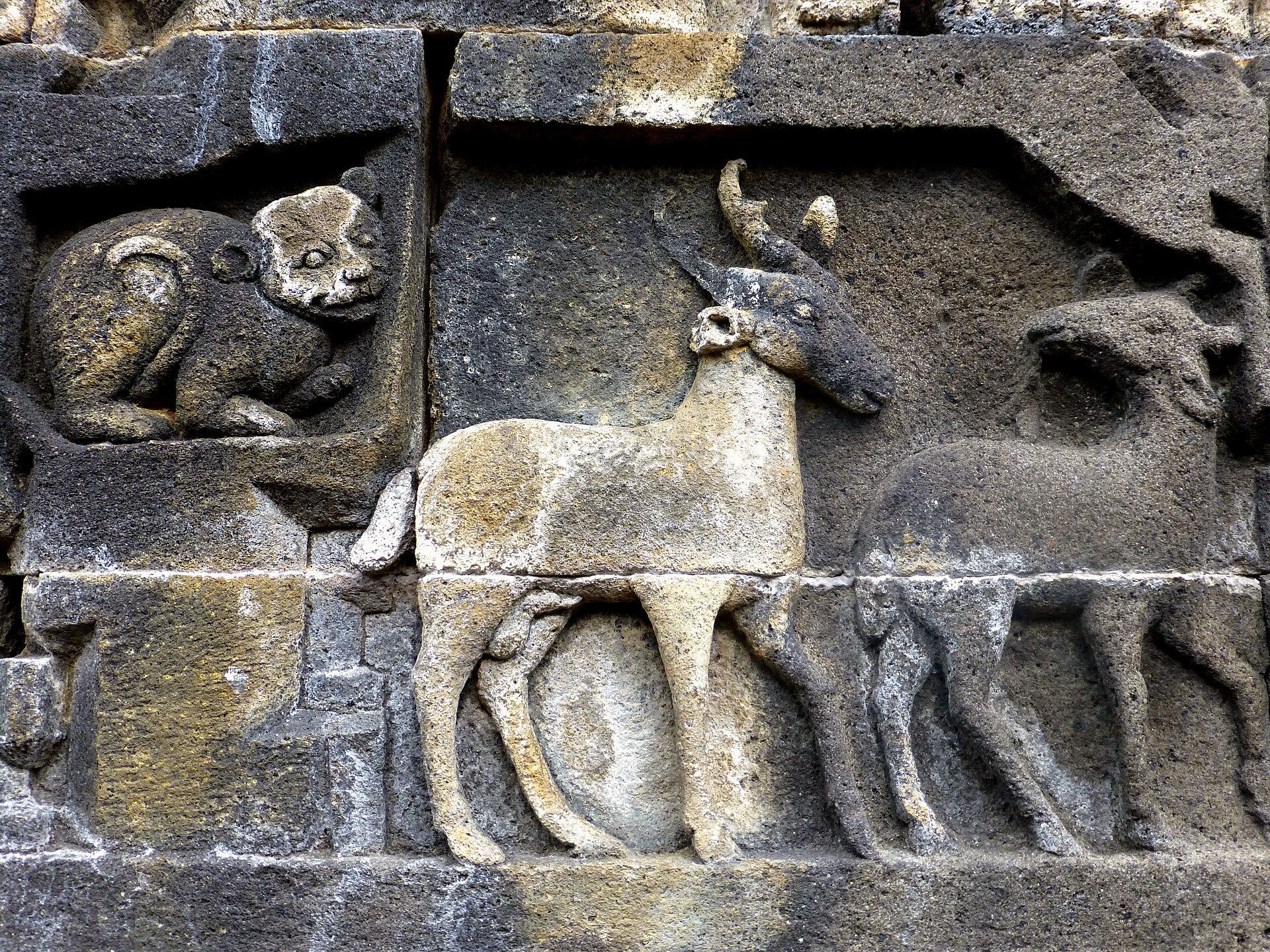
This Borobudur relief panel depicts King Bimbisara venerating the Bodhisattva, illustrating Buddhist devotion in narrative art. Reliefs like these taught ethics and sacred stories visually, helping transmit Buddhist values to lay audiences in pilgrimage settings. The scene also highlights reciprocal relationships between rulers, religious patronage, and the broader Buddhist community. Source
Sangha: the Buddhist monastic community, whose monks and nuns follow disciplinary rules and serve as teachers and recipients of lay support.
Buddhist practice created reciprocal relationships between monks and lay society.
Lay followers gained merit through donations, supporting monasteries that offered teaching, literacy, and moral guidance.
Monasteries often functioned as centers of learning and manuscript preservation, shaping cultural life and education.
Social effects and governance
Buddhist ethics encouraged ideals of compassion and restraint that could reinforce social harmony.
Rulers sometimes associated themselves with Buddhist moral authority, supporting monasteries to project righteous kingship.
In parts of Southeast Asia where Buddhism was prominent, monastic networks helped knit together dispersed communities through shared ritual calendars and teachings.
Islam: Belief, Law, and Community
Core beliefs and institutions
Islam shaped social life through shared worship practices and legal-ethical expectations, especially in commercial and coastal regions.
The Five Pillars (faith, prayer, almsgiving, fasting, pilgrimage) encouraged visible communal identity and regular religious discipline.
Mosques served as worship spaces and community centers, reinforcing collective norms and leadership.
Sharia: Islamic law and moral guidance derived from the Qur’an and prophetic tradition, providing standards for worship, family life, and social obligations.
Sharia influenced social relations by defining obligations and permissible conduct.
Norms around marriage, inheritance, contracts, and charity shaped family structures and economic behavior.
The ideal of the ummah (global community of believers) could connect local Muslims to wider networks of learning, trade, and shared identity.
Coexistence and Interaction in Plural Societies
South and Southeast Asia frequently contained multiple religious communities whose practices shaped public life side by side.
Port cities and inland trade centers hosted Hindu, Buddhist, and Muslim merchants, making religious identity important for trust, charity, and community support.
Rulers often governed diverse populations pragmatically, supporting different institutions to maintain order and revenue.
Shared participation in markets, festivals, and local customs sometimes produced syncretic social practices while preserving distinct religious commitments.
Practice Questions
(2 marks) Describe two ways religious institutions shaped society in South or Southeast Asia between c. 1200 and 1450.
1 mark for each valid way described (e.g., temples redistributing wealth; monasteries providing education; mosques organising communal worship/charity).
(5 marks) Explain how one of the following religions shaped social organisation in South or Southeast Asia between c. 1200 and 1450: Hinduism, Buddhism, or Islam.
1 mark: Identifies a specific religion and a clear line of argument about social organisation.
2 marks: Uses accurate religious beliefs/practices (e.g., dharma/karma; sangha/merit; Five Pillars/sharia) to explain social effects.
1 mark: Links religion to a concrete social structure or institution (e.g., varna/jati; monastic–lay relations; family law/charity).
1 mark: Provides accurate contextual detail from the period/region (e.g., temple patronage by elites; monastery roles; urban/coastal Muslim communities).
FAQ
Temples could hold land and receive donations, then spend on festivals, construction, and food distribution. This sustained artisan work, reinforced elite status, and tied local economies to religious calendars.
Giving to monks and monasteries was widely seen as generating merit. Support also secured access to teaching, rituals, and community services that monasteries provided.
Regular almsgiving encouraged norms of public welfare. It could strengthen communal solidarity by institutionalising support for the poor and travellers through community-led giving.
Not always. In some places, new Muslim communities maintained local customs in dress, foodways, or celebrations, while adopting core Islamic worship and communal obligations.
Family practices were often shaped by a mix of sacred texts, local tradition, and community enforcement. Over time, this produced regionally distinctive ways of applying ideals about marriage, duty, and inheritance.

.jpg)
_(11249460956).jpg)