AP Syllabus focus: ‘In the Americas, state systems demonstrated continuity, innovation, and diversity and expanded in scope and reach over time.’
From 1200–1450, American societies built powerful states suited to varied environments. Their political forms ranged from city-based rule to large territorial empires, using shared strategies to expand authority and integrate diverse peoples.
What “state development” looked like in the Americas (c. 1200–1450)
American state systems were not uniform; they reflect continuity, innovation, and diversity while expanding in scope and reach.
Continuity: long-standing traditions of urban ceremonial centers, ranked social hierarchies, and leaders claiming sacred legitimacy
Innovation: new tools for governing larger populations, including more systematic tax/tribute collection, administrative oversight, and infrastructure to bind regions together
Diversity: different political structures shaped by geography (highlands, valleys, coasts, forests) and local resource bases
Core political forms
States in the Americas commonly developed along a spectrum from local to regional rule.
City-state: An independent political unit centered on a city and its surrounding territory, governed by local elites and often competing or allying with neighboring city-states.
Even when multiple cities existed, authority could be organized as:
City-state networks: shifting alliances, rivalries, and warfare that redistributed power between cities
Confederations/tributary systems: multiple communities tied together through negotiated obligations or imposed payments
Empires: broader regional dominance with stronger expectations of obedience and resource extraction
Expanding “scope and reach”: how states grew
Expansion occurred through combinations of military force, diplomacy, and economic attraction, often reinforced by ideology.
Warfare and coercion
Military campaigns brought territory, captives, labor, and resources
Victory could strengthen rulers’ legitimacy and deter rebellion
Fortifications and strategic settlements helped control frontiers and trade corridors
Diplomacy, alliances, and marriage politics
Alliances reduced the costs of direct conquest
Elite marriages and patronage networks linked ruling families across regions
States often absorbed local elites rather than eliminating them, trading autonomy for loyalty
Economic integration
Incorporating productive lands (farms, terraces, irrigated fields) increased state revenue
Control over trade routes or marketplaces enhanced state influence, even without direct annexation
States frequently standardized obligations (goods, labor, military service) to make expansion sustainable
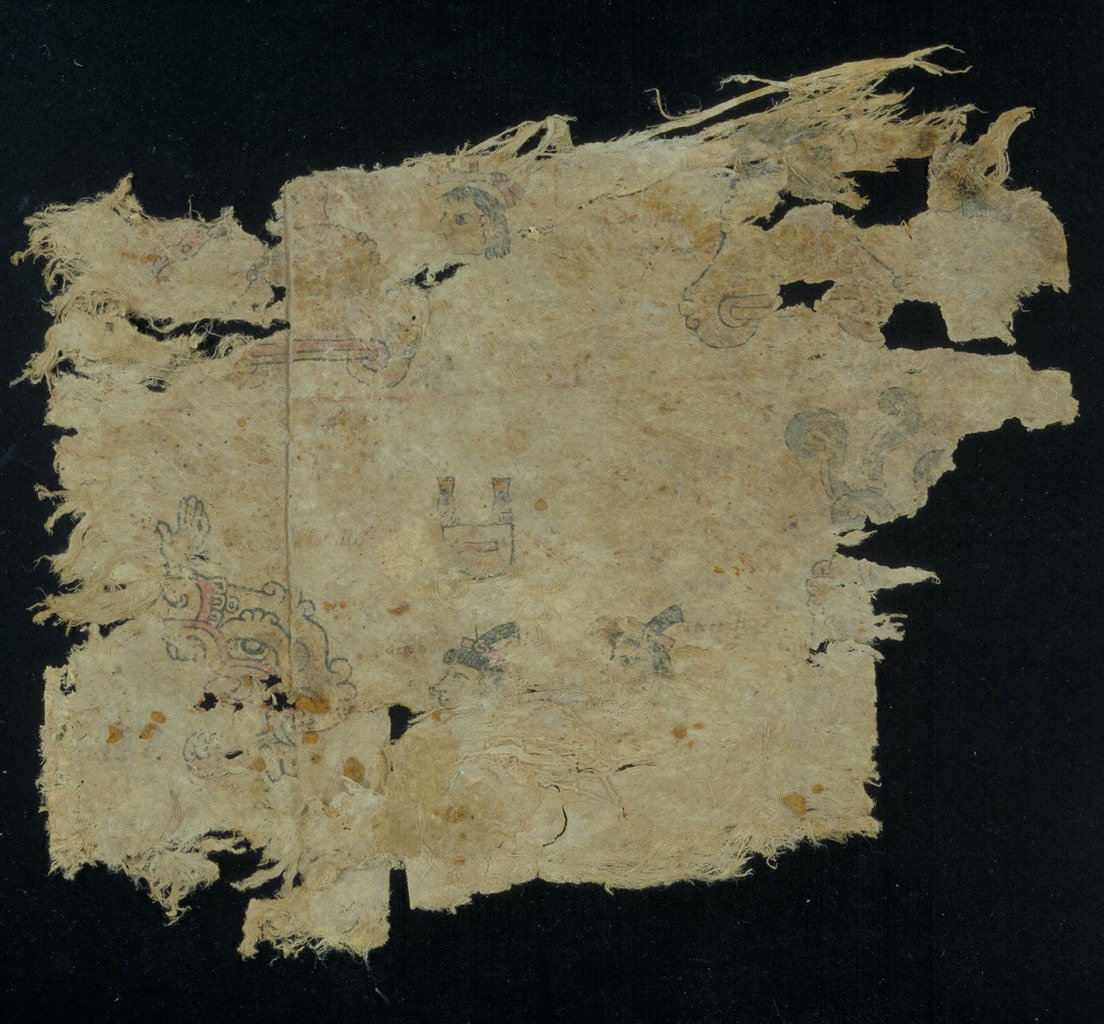
A page from the Matrícula de tributos (“Tribute Roll”), a pictographic register associated with the Aztec tribute empire that visually lists towns (via place glyphs) alongside specified tribute goods and quantities. It illustrates how empires could translate political domination into routinized material extraction, turning diverse regions into predictable streams of payments. Source
Governing diverse peoples: integration strategies
As states incorporated different languages, customs, and local identities, they used layered governance to hold territories together.
Administration and local intermediaries
Rulers relied on provincial officials or trusted nobles to supervise distant communities
Local leaders often remained in place as intermediaries, expected to deliver taxes/tribute and maintain order
Authority was strengthened by regular inspections, censuses-like counting, or recordkeeping traditions (varied by region)
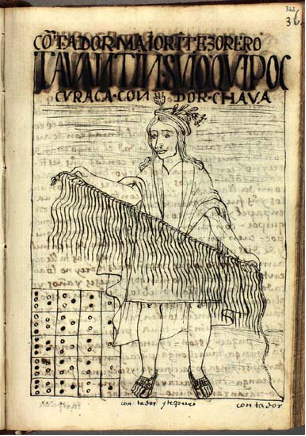
Felipe Guaman Poma de Ayala’s early-17th-century illustration of an Inca administrator using a quipu (khipu), emphasizing recordkeeping as an instrument of state power. The image helps students connect abstract ideas like “administrative oversight” to concrete practices used to manage labor, storehouses, and tribute-like obligations. Source
Tribute: Payments (goods, labor, or services) required by a state from subject communities to support elites, officials, armies, and public projects.
Infrastructure as state power
Building projects were practical and symbolic demonstrations of control.
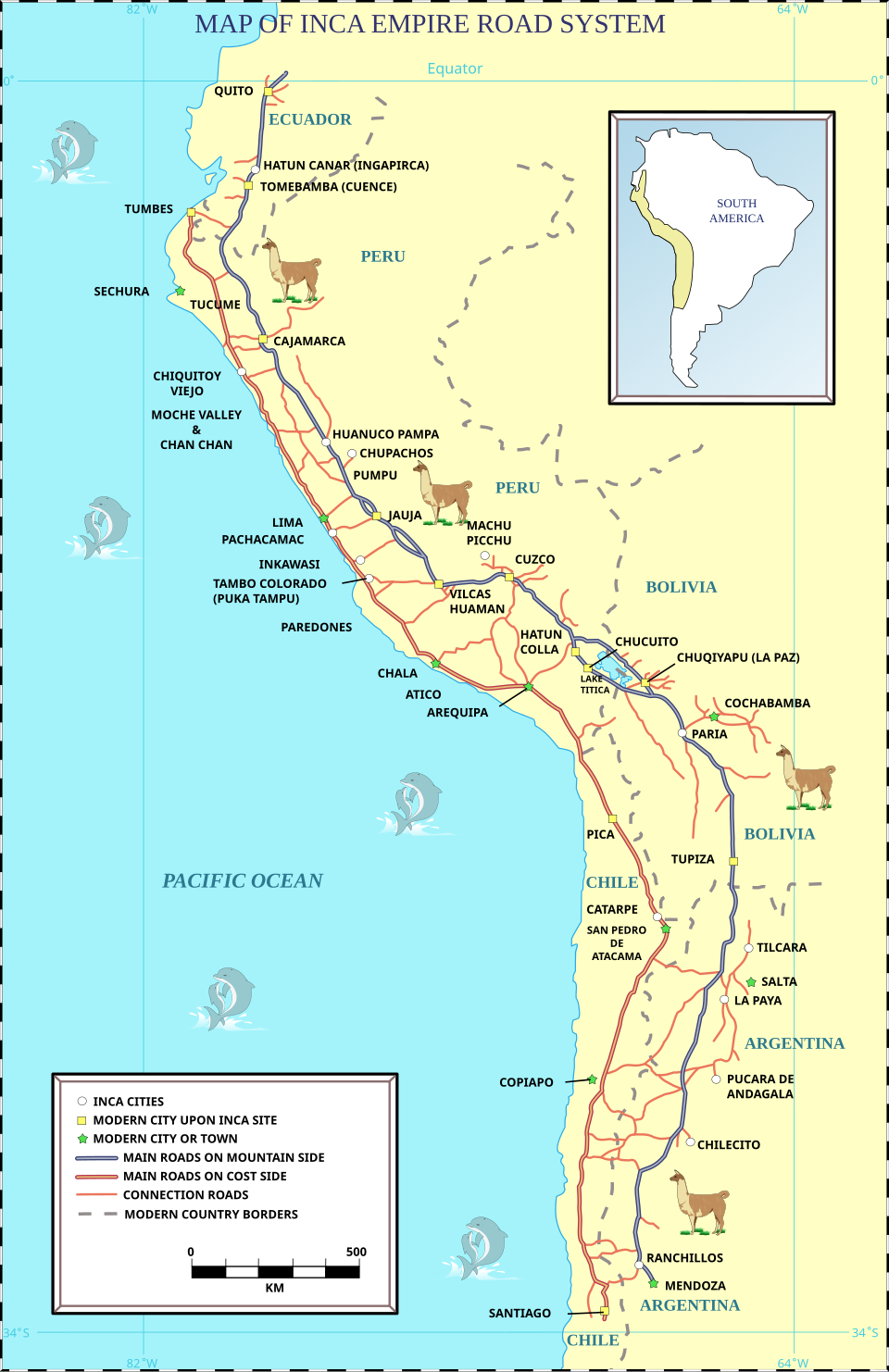
Map of the Inca road system, showing the two main north–south trunks (coastal and highland) and connecting routes across the Andes. This visual reinforces how infrastructure functioned as administrative “glue,” making long-distance governance, provisioning, and military mobility more feasible in a mountainous empire. Source
Roads and bridges increased speed of troop movement and administrative communication
Storage facilities and distribution systems supported armies and mitigated shortages
Monumental architecture signaled permanence and sacred authority, binding people to state centers through ritual
Law, punishment, and predictability
States promoted order through codes of conduct (formal or customary)
Public punishments, military garrisons, and hostages could deter resistance
Predictable obligations (what, when, and how much to pay) reduced bargaining and strengthened central authority
Legitimacy: why people accepted rule
American states typically justified power through combinations of religion, tradition, and performance.
Sacred and ceremonial authority
Rulers presented themselves as chosen by gods or ancestors
Calendrical rituals, festivals, and sacrifices (in some regions) reinforced cosmic order tied to state leadership
Priests and temples often worked alongside political elites, making governance a moral as well as coercive project
Social hierarchy and elite culture
Distinct elite markers (dress, housing, burial practices) separated rulers from commoners
Patronage redistributed prestige goods to reward loyalty
Military success and ritual sponsorship demonstrated a ruler’s capacity to maintain prosperity and stability
Environment and economy: adapting state power to geography
State development was constrained and enabled by environment, encouraging varied solutions while still driving expansion.
Intensifying agriculture to support larger states
Irrigation, terracing, raised fields, and water management increased yields in challenging landscapes
States coordinated labor for planting, harvesting, and maintaining infrastructure
Food surpluses supported cities, specialists, soldiers, and administrators
Managing risk and resilience
Droughts, floods, and soil limits shaped where power could concentrate
Diversified production across ecological zones reduced vulnerability
Storage and redistribution strengthened rulers’ claims that the state could provide security
Practice Questions
Explain one way American states expanded their “scope and reach” in the period c. 1200–1450. (2 marks)
1 mark: Identifies a valid method of expansion (e.g., warfare, alliances, tribute demands, infrastructure, administrative control).
1 mark: Explains how that method increased territorial control or strengthened authority over more people.
Compare two strategies used by states in the Americas (c. 1200–1450) to govern diverse populations as they expanded. (5 marks)
1 mark: Identifies one valid integration strategy (e.g., tribute systems, use of local intermediaries, infrastructure, ritual legitimacy).
1 mark: Explains how the first strategy promoted control over conquered or incorporated peoples.
1 mark: Identifies a second, different integration strategy.
1 mark: Explains how the second strategy promoted control.
1 mark: Provides a comparative point (similarity or difference) showing how/why the strategies worked in different contexts.
FAQ
They look for recurring evidence of centralised authority, such as:
consistent taxation/tribute obligations
administrative layers beyond kinship leadership
enforced laws/punishments across multiple communities
large-scale public works coordinated by rulers
Because sources are uneven, classification is sometimes debated.
Common indicators include:
standardised architecture or planned administrative centres
road networks linking provinces to a core
storage facilities implying collection and redistribution
weaponry/fortifications suggesting sustained coercion
elite goods distributed widely, implying political networks
Interpretations vary by region and site preservation.
Climate stress could slow expansion by reducing surpluses needed for armies and building projects.
It could also accelerate consolidation, as communities sought protection through stronger rulers who controlled stored food, water systems, or redistributive networks.
In some societies, elite women could wield influence through dynastic marriage, property, or religious offices.
Evidence often appears indirectly (burials, iconography, lineage claims), so historians debate how formal versus informal that authority was.
Key factors include:
geography (mountains/valleys vs open corridors)
transport costs and communications
density and distribution of arable land
ability to store and move surplus
competition among neighbouring polities
These conditions shaped whether power concentrated locally or scaled outward.