

AP Syllabus focus: ‘African state systems included Ethiopia, reflecting continuity and adaptation in governance across the period.’
Ethiopia from c. 1200 to c. 1450 demonstrates how an African state could endure by blending long-standing Christian institutions with flexible political practices that responded to shifting internal rivalries, regional trade, and military pressures.
Context and Historical Continuity
A durable highland kingdom
Ethiopia’s core strength lay in its highland geography, which supported defensible settlement patterns and relatively stable agriculture.
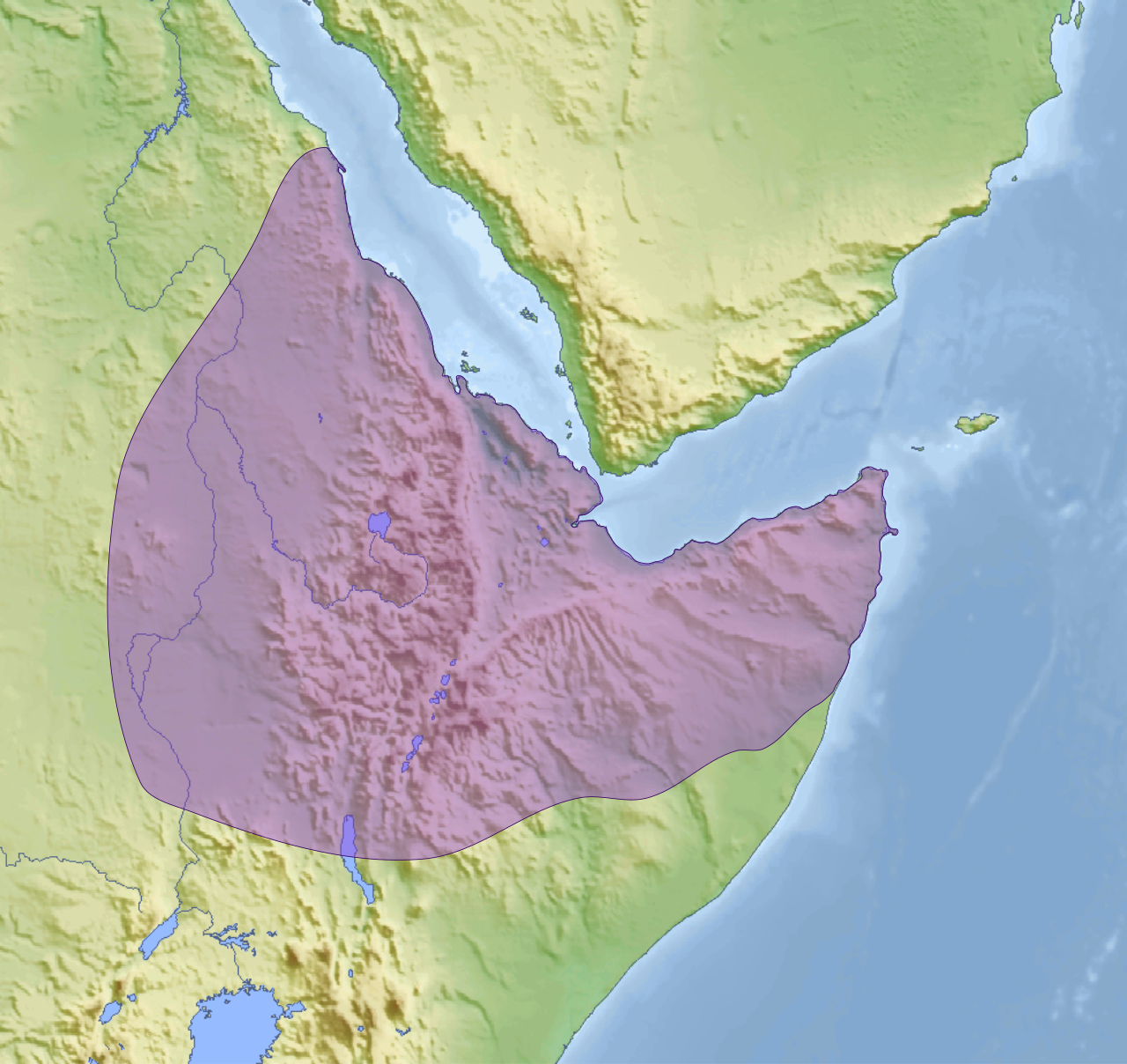
Historical map of “medieval Ethiopia” showing the highland heartland in relation to surrounding regions and routes. This kind of spatial overview helps explain why highland geography supported defensible settlement patterns and why frontier zones were persistent sites of contestation and negotiation. Source
Rulers claimed continuity with the older Aksumite Christian tradition, using it to frame legitimate kingship even as dynasties changed.
The state’s identity was closely tied to Ethiopian Christianity, with churches and monasteries serving as cultural anchors and sources of political authority.
Dynastic change without state collapse
Ethiopia saw important transitions (including the rise of the Solomonic line in the late 1200s), but governance persisted through:
accepted models of sacral kingship
cooperation and tension with regional elites
the legitimising role of clergy, texts, and ritual
Political Authority and Governance
Kingship, legitimacy, and ideology
Ethiopian rulers presented themselves as divinely sanctioned defenders of the faith and order.
Solomonic Dynasty: A royal line (from 1270) that claimed descent from King Solomon and the Queen of Sheba, using this genealogy to legitimise rule over Christian Ethiopia.
This legitimacy narrative strengthened continuity by tying political authority to a sacred past, even when rulers faced rebellions or contested successions.
Imperial structure and local power
Ethiopian governance balanced central authority with local autonomy.
The emperor relied on regional nobles and governors to administer provinces, raise troops, and collect tribute.
Royal power was reinforced through land grants and patronage, linking local elites’ status to loyalty.
Governance adapted by negotiating with powerful households and shifting administrative emphases as frontier regions changed.
Negusa Nagast: “King of Kings,” the Ethiopian imperial title signalling supremacy over subordinate rulers and regional lords.
The title reflected a layered political reality: authority was imperial in ideology but often federative in practice, with multiple ranks of local leadership.
Religion as State Infrastructure
Church institutions and governance
Religion functioned as more than belief; it helped run society.
Clergy and monastic communities preserved learning, legitimised coronations, and promoted obedience through moral teaching.
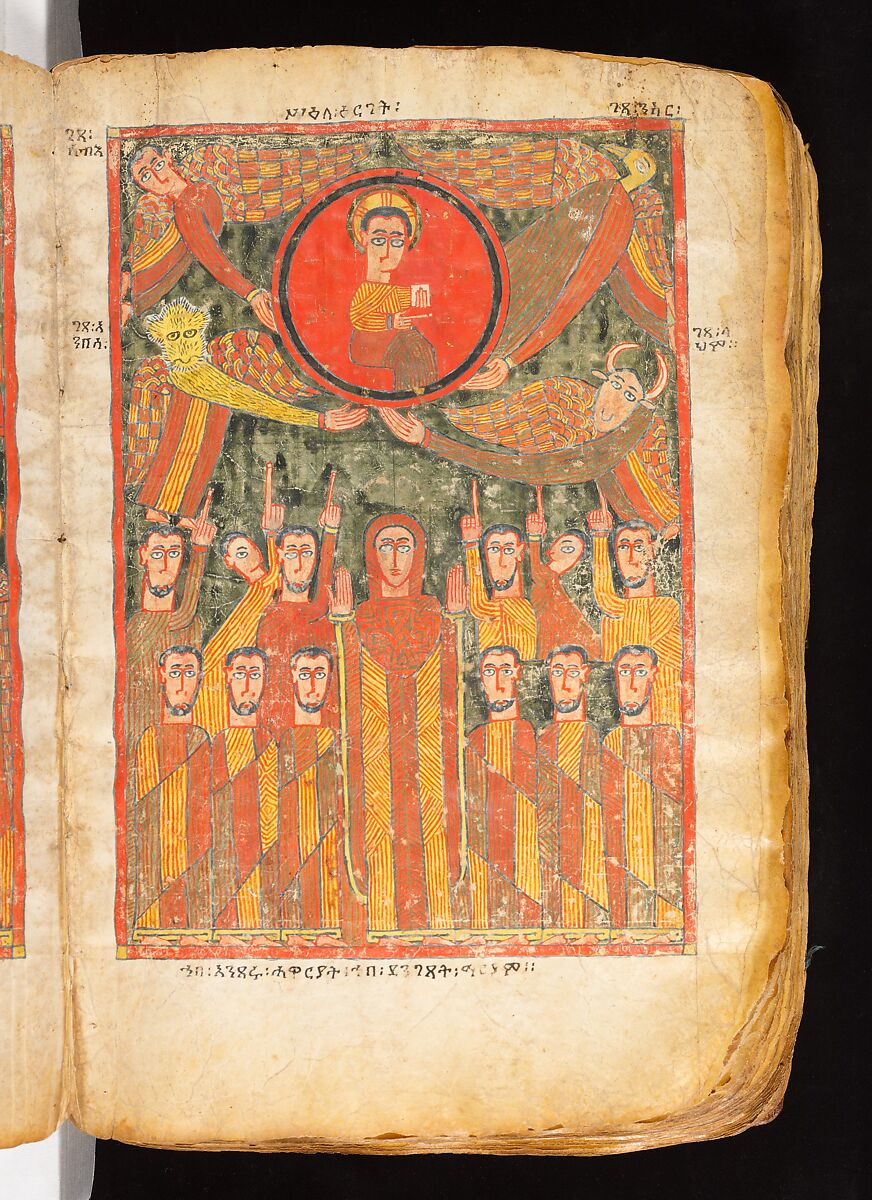
An illuminated Gospel manuscript from northern Ethiopia (late 14th–early 15th century), showing how Christian institutions preserved learning through book production and monastic scholarship. Such manuscripts also helped standardize religious culture and support the ideological foundations of sacral kingship. Source
Churches acted as institutional hubs that connected rural communities to the wider state.

Interior view of Bet Maryam (Biete Maryam) at Lalibela, illustrating how Ethiopian Christian churches functioned as more than worship spaces: they were monumental community centers that concentrated art, ritual, and institutional authority. The carved and painted interior also reflects how sacred architecture reinforced a shared religious identity across regions. Source
Religious patronage (building and endowing churches) publicly displayed royal piety and reinforced loyalty networks.
Continuity with selective adaptation
Ethiopia maintained distinctive Christian practices (including liturgy and sacred art forms) that differentiated it from neighbouring Muslim polities.
At the same time, rulers adapted religious administration to political needs, using appointments, endowments, and alliances with church leaders to stabilise rule.
Military Pressures, Diplomacy, and Adaptation
Frontier politics and conflict
Ethiopia’s longevity required constant management of security.
The state mobilised forces through noble retinues and tribute obligations, aiming to protect core highland regions.
Borderlands were contested spaces where rulers extended influence, faced resistance, and adjusted strategies to local conditions.
External connections
Ethiopia was not isolated; it engaged regional networks that shaped governance choices.
Links to Red Sea trade routes connected Ethiopia indirectly to wider Afro-Eurasian exchange, encouraging diplomacy and strategic alliances.
Interaction with neighbouring Muslim communities and states required pragmatic decision-making, including periods of confrontation and accommodation.
Why Ethiopia Illustrates “Continuity and Adaptation”
Continuity
Persistent Christian political ideology and sacral kingship
Long-lived institutions (churches, monastic networks, elite hierarchies)
Recurrent use of tribute, land control, and patronage to organise power
Adaptation
Flexible management of provincial elites and contested frontiers
Shifts in royal strategies to maintain authority amid dynastic change
Pragmatic responses to regional military and economic conditions
Practice Questions
Describe one way Ethiopia maintained political continuity from c. 1200 to c. 1450. (2 marks)
1 mark: Identifies a continuity (e.g., Christian legitimacy, imperial ideology, church institutions, tribute/land patronage).
1 mark: Provides a correct supporting detail explaining how it supported rule.
Explain how Ethiopia’s governance from c. 1200 to c. 1450 combined continuity and adaptation. Use specific evidence. (5 marks)
1 mark: States a defensible claim about continuity (e.g., sacral kingship tied to Christianity).
1 mark: Supports continuity with specific evidence (e.g., church patronage, Solomonic legitimacy narrative).
1 mark: States a defensible claim about adaptation (e.g., negotiating with regional elites, frontier management).
1 mark: Supports adaptation with specific evidence (e.g., layered rule implied by Negusa Nagast, use of governors/land grants).
1 mark: Explains the relationship between continuity and adaptation (how both together sustained the state).
FAQ
Key evidence includes royal chronicles, religious texts, land grant records, and inscriptions.
Material culture also matters: church architecture, manuscript traditions, and settlement patterns illuminate how authority was displayed and organised.
Monasteries could act as regional power-brokers by controlling land, mediating disputes, and educating elites.
Their moral authority sometimes strengthened rulers, but prominent monasteries could also resist or criticise royal policies.
Rulers often relied on itinerant courts, delegating authority to local lords who could mobilise resources quickly.
Control worked through personal ties, tribute expectations, and strategic placement of religious foundations rather than uniform bureaucracy.
The use of Ge’ez in liturgy and elite written culture provided continuity in administration and religious life.
Shared textual traditions helped standardise legitimacy claims and connect distant communities to central ideology.
Ties with the Coptic ecclesiastical hierarchy shaped clerical appointments and reinforced Ethiopia’s place in a broader Christian world.
Such connections could bolster legitimacy at home while also creating dependence on external religious approval.


.jpg)