AP Syllabus focus: ‘In Africa, state systems demonstrated continuity, innovation, and diversity and expanded in scope and reach over time.’
African states between 1200 and 1450 developed along multiple pathways shaped by local environments, long-distance trade, and cultural traditions. Across the continent, rulers and communities adapted older institutions while experimenting with new tools of governance and expansion.
Big Idea: Patterns of African State Development (c. 1200–1450)
African political systems in this period are best understood through four linked themes embedded in the syllabus focus: continuity, innovation, diversity, and expansion in scope and reach. “State” could mean anything from highly centralized monarchies to loosely connected city networks, each reflecting different solutions to governing people, land, and resources.
Continuity: Enduring foundations of authority
Many African states built on long-standing sources of political order:
Kinship and lineage ties that organized communities and structured obligations
Sacred kingship traditions that linked rulers to spiritual power and communal well-being
Tribute and redistribution practices that converted agricultural surplus, livestock, or trade goods into political loyalty
Clientage and patronage relationships that bound elites, warriors, and local leaders to a central authority
Tributary system: A political-economic arrangement in which subordinate communities deliver regular tribute (goods, labor, or payments) to a dominant ruler in exchange for protection, recognition, or access to trade.
Continuity also appeared in the importance of control over land and labor: whoever organized production and extracted surplus could fund armies, diplomacy, ritual display, and administration.
Innovation: New strategies for building and maintaining power
States also adopted or intensified innovations suited to changing conditions:
Stronger taxation and customs collection on trade routes, marketplaces, and ports
More formal administrative hierarchies, including delegated authority to provincial or local officials
Expanded use of written recordkeeping in regions connected to literate religious or commercial traditions
Greater emphasis on urban governance, where cities functioned as administrative, commercial, and cultural hubs
Diplomatic strategies, including marriage alliances, hostage exchanges, and negotiated vassalage to secure borders and trade corridors
Innovation did not replace continuity; it often refined older mechanisms (for example, tribute obligations could be standardized, and kin-based authority could be reinforced through new titles or offices).
Diversity: Many political forms across one continent
African political development was not uniform. Different regions produced distinct governing models:
Centralized kingdoms/empires with rulers claiming broad territorial authority
City-states and city networks oriented toward commerce and coastal or riverine exchange
Confederations linking multiple communities under shared leadership during war or trade competition
Acephalous (stateless) societies relying on councils, age grades, or lineage heads rather than kings
Acephalous society: A society “without a head,” meaning it lacks a single centralized ruler; authority is exercised through councils, lineage elders, or other communal institutions.
This diversity mattered for AP World History comparisons: African state capacity ranged from direct territorial rule to indirect influence through alliances and trade dominance.
Drivers of Expansion in Scope and Reach
Expansion did not always mean conquering vast land empires; it could also involve extending influence over people, production, or exchange.
Trade and economic integration
Growing participation in regional and interregional trade helped states expand:
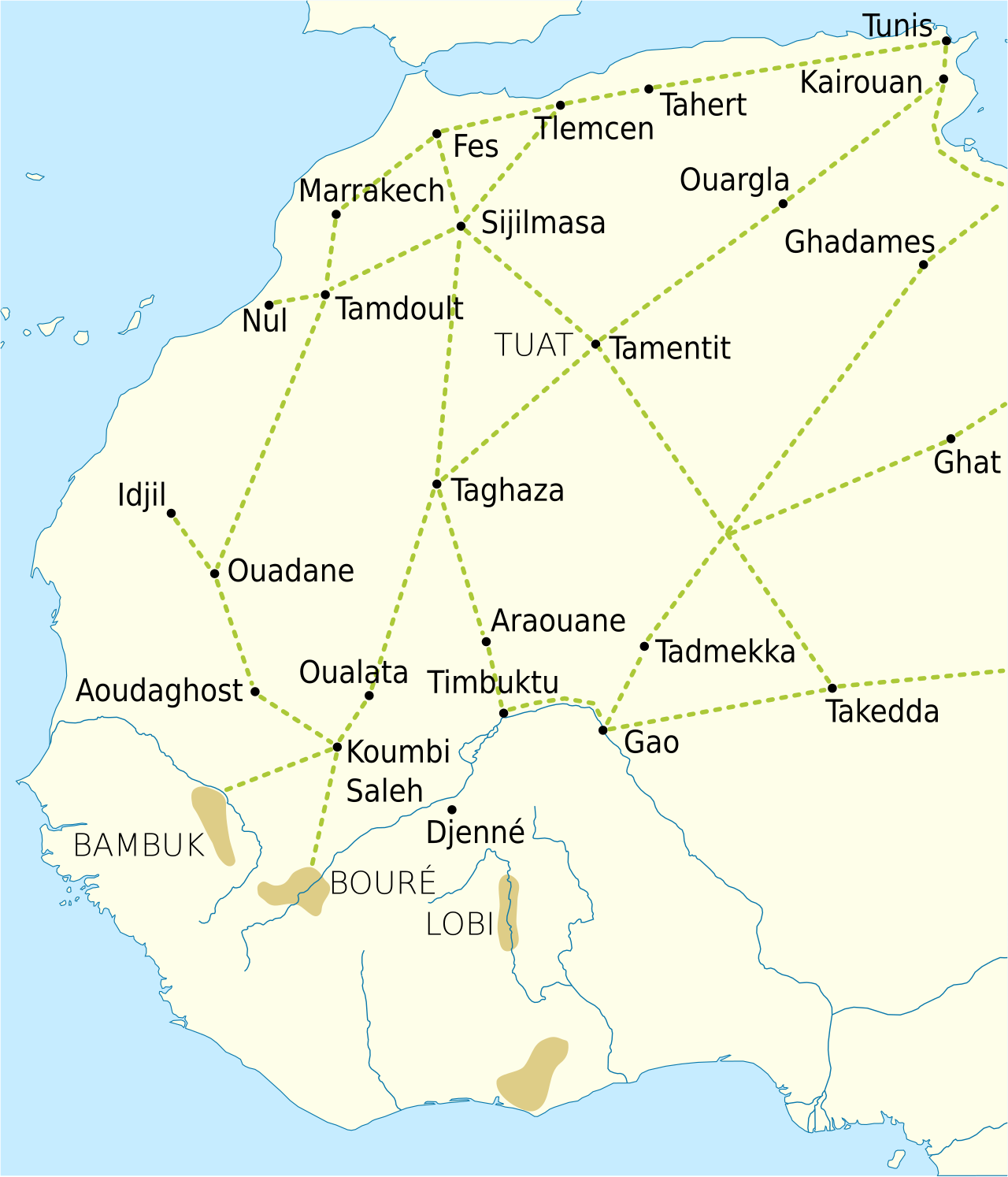
This map plots major trans-Saharan trade routes in the Western Sahara (c. 1000–1500) and highlights gold-producing regions. It helps explain how control of caravan corridors and commodity flows (especially gold) could translate into state revenue, diplomacy, and wider political influence. Source
States sought control of trade chokepoints (river crossings, caravan junctions, ports, and market towns).
Rulers used monopolies or regulated commerce through licenses, tolls, and weights/measures.
Trade wealth enabled standing forces, prestige goods distribution, and monumental building that signaled authority.
Integration of hinterlands increased access to gold, salt, copper, iron goods, textiles, and agricultural surplus, tying distant producers to state centers.
Military organisation and frontier control
Military capacity supported expansion and consolidation:
Professional warrior elites or mobilized levies enforced tribute and deterred rivals.
Fortified settlements and controlled corridors helped manage frontiers and limit raiding.
Expansion often proceeded through layered sovereignty: newly incorporated communities kept local leaders but acknowledged the superior ruler through tribute, soldiers, or ceremonial submission.
Administration, law, and dispute resolution
As states expanded, governance had to scale:
Delegation to local authorities reduced the costs of ruling diverse populations.
Courts or ritual processes for settling disputes strengthened the sense of a shared political order.
Standardized tribute expectations and predictable enforcement increased state reliability, encouraging trade and migration into state-protected zones.
Sources of Legitimacy and Social Order
States maintained cohesion by linking political power to widely accepted cultural frameworks.
Religion and sacral authority
Religion frequently legitimized rule:
Rulers portrayed themselves as guarantors of fertility, rainfall, justice, and communal harmony.
In regions influenced by Islam, rulers and merchants could draw on shared legal-ethical ideas and broader diplomatic-commercial networks, strengthening legitimacy and access to literate administration.
Indigenous spiritual systems remained central in many areas, shaping enthronement rituals, taboos, and the moral limits of kingship.
Kinship, identity, and social hierarchy
Expansion required managing difference:
States incorporated varied ethnic and linguistic communities through marriage ties, adoption into lineages, or negotiated “insider/outsider” statuses.
Elites often used prestige goods and controlled redistribution to bind followers.
Social hierarchies could include nobles, commoners, craft specialists, soldiers, and enslaved people; these hierarchies underpinned taxation, labor demands, and military recruitment.
What “Expanded Scope and Reach” Looked Like in Practice
Indicators that a state was expanding included:
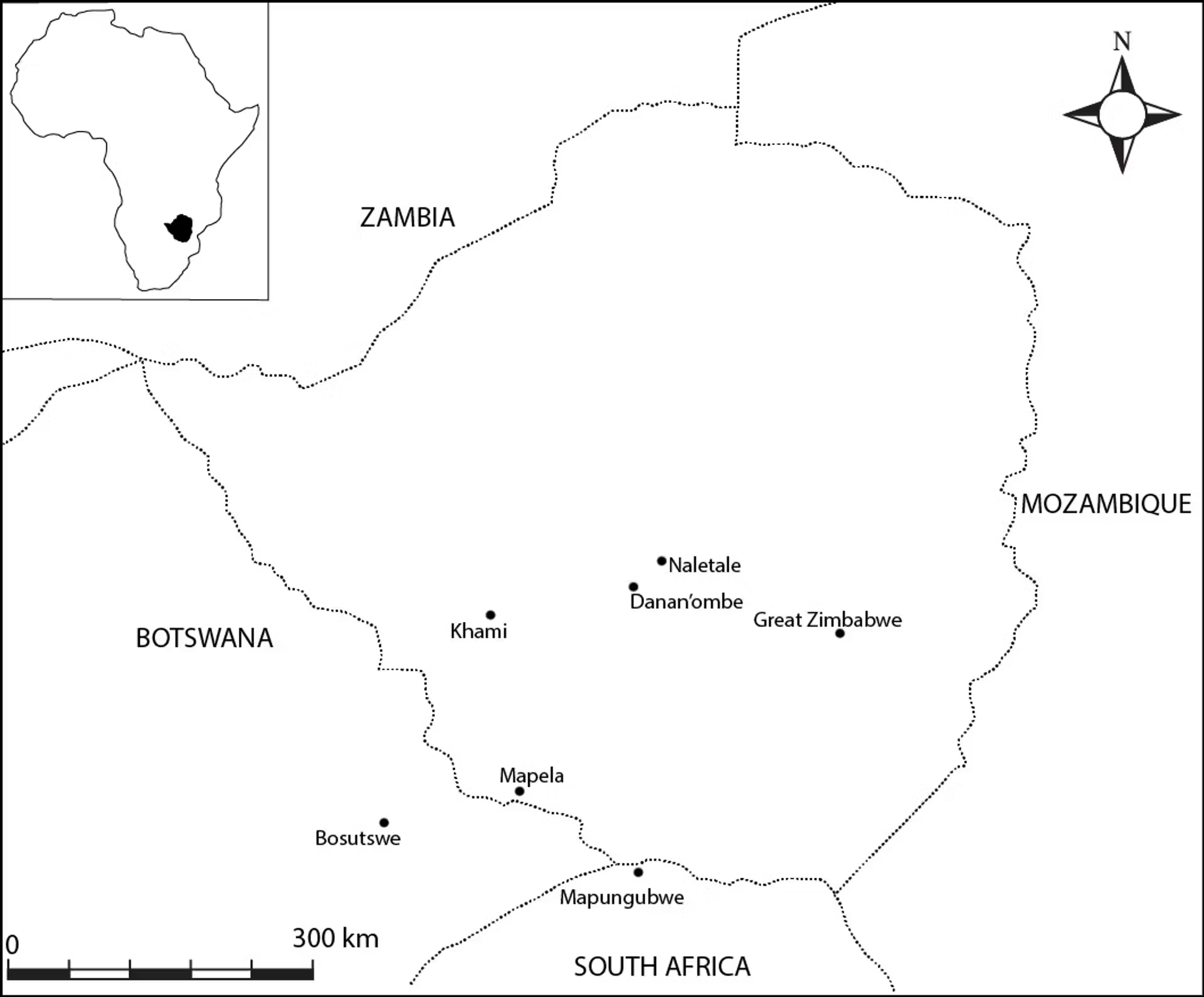
This Met essay includes a labeled map locating Great Zimbabwe and describing its three principal architectural areas: the Hill Complex, Great Enclosure, and Valley Enclosures. The site’s monumental stone construction and organized enclosure spaces provide concrete material evidence for how authority, ritual life, and administration could be concentrated in an expanding political center. Source
Larger or more permanent capitals and administrative centers
More regular tribute/tax collection across wider territories
Increased infrastructure supporting rule and exchange (roads, river transport control, market regulation)
Broader diplomatic influence over neighboring communities through vassalage, alliances, or trade dependence
Greater ability to mobilize labor for construction, agriculture, or defense across multiple regions
Practice Questions
Give one way African states expanded their scope or reach between c. 1200 and 1450, and briefly explain how it strengthened state power. (2 marks)
1 mark: Identifies a valid method of expansion (e.g., controlling trade routes/markets; imposing tribute; military conquest; alliance/vassalage; administrative delegation).
1 mark: Explains how it strengthened power (e.g., increased revenue; financed armies; secured borders; improved compliance; deepened economic dependence).
Using historical reasoning, explain how African state systems from c. 1200 to 1450 could show both continuity and innovation while also remaining diverse. Support your answer with two distinct pieces of evidence or reasoning. (6 marks)
1 mark: Describes continuity (e.g., kinship/lineage authority; sacred kingship; tribute/redistribution).
1 mark: Explains continuity’s role in maintaining rule.
1 mark: Describes innovation (e.g., expanded taxation/customs; more formal administration; written recordkeeping in some regions; intensified urban governance).
1 mark: Explains innovation’s role in expanding or consolidating power.
1 mark: Demonstrates diversity by distinguishing at least two political forms (e.g., centralized kingdoms vs city-states vs acephalous societies vs confederations).
1 mark: Uses a second piece of supporting reasoning/evidence tied to expansion in scope/reach (e.g., trade integration, frontier control, layered sovereignty).
FAQ
Ecology affected transport, farming reliability, and military logistics.
Areas with predictable agriculture could support denser populations and surplus. Disease environments (for example, regions affected by tsetse fly) could limit horse or cattle use, shaping warfare and state reach.
Specialists could be politically important because states depended on them for prestige and capacity.
Metallurgy supported tools and weapons
Luxury production enabled diplomatic gifting
Monumental building signalled permanence and legitimacy
Oral specialists (such as court historians) could legitimise rulers by preserving sanctioned narratives of origins, conquest, and rightful succession.
These traditions helped integrate diverse peoples by explaining why different communities owed allegiance, tribute, or service to a central authority.
Local conditions could make decentralisation effective: smaller settlements, emphasis on lineage autonomy, and conflict-resolution through councils.
Acephalous systems could still coordinate defence or trade through temporary coalitions without permanent royal institutions.
In many places, land was managed through communal or lineage claims rather than fully individual ownership.
Control over allocation (who could farm, settle, or graze) could become a key political lever, allowing authorities to reward loyalty, attract migrants, or punish rivals.