AP Syllabus focus: ‘African state systems included the Hausa kingdoms, demonstrating diverse political forms and expanding regional influence.’
The Hausa kingdoms emerged as a cluster of powerful, commercially connected city-states in the western Sudan. Their political diversity and growing influence (c. 1200–1450) were rooted in trade, urban production, and adaptable forms of rule.
Where the Hausa Kingdoms Developed
Environment and location
The Hausa-speaking region lay in the savanna south of the Sahara, positioned between desert trade routes and the forest zones to the south. This geography encouraged:
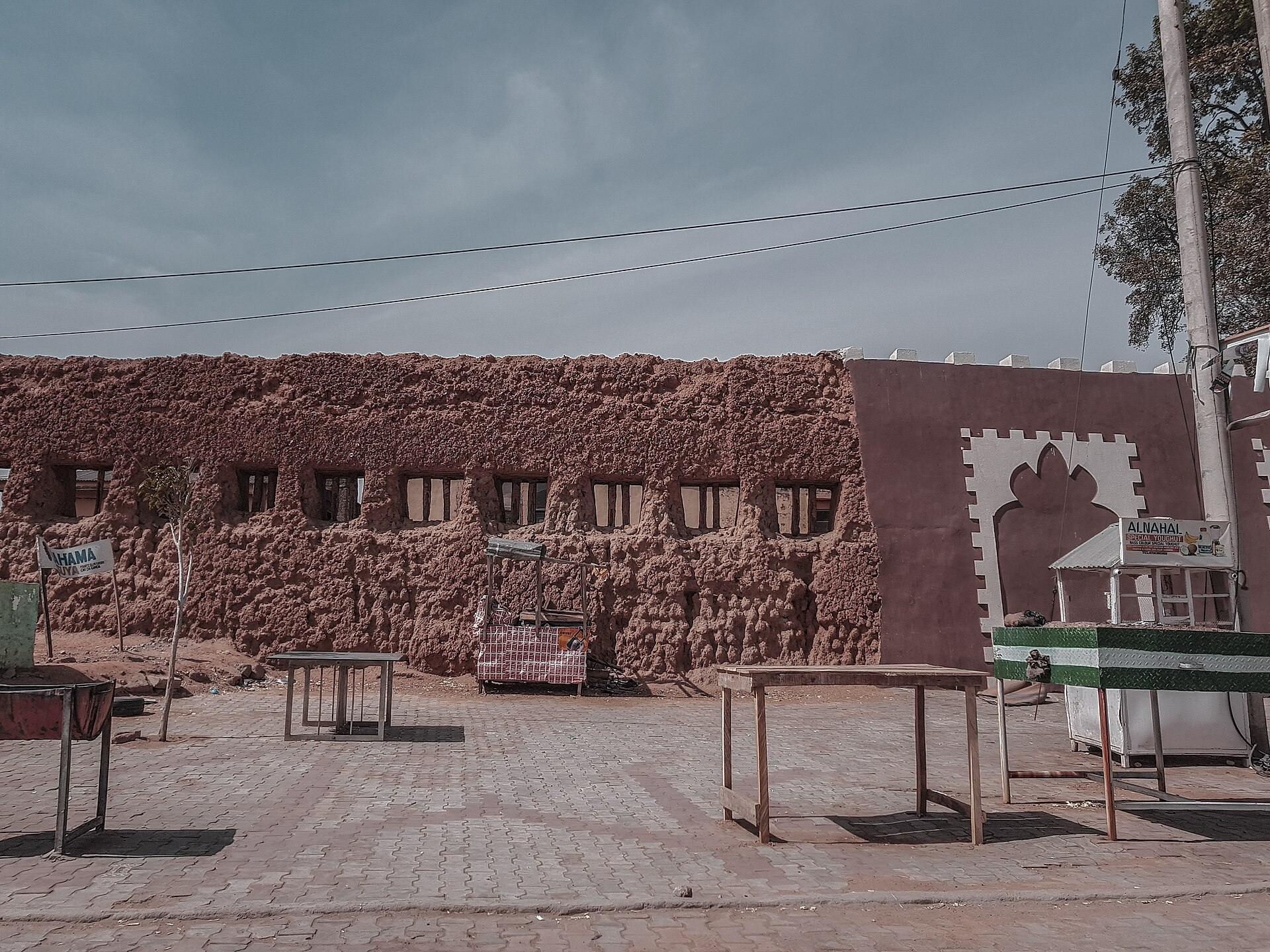
Photograph of a surviving section of the Kano city wall, a material reminder that many Hausa cities were fortified urban centers. The wall helps students connect political authority and market regulation to the built environment—controlling entry, providing security, and signaling state capacity. Source
Urban nodes (walled towns) serving as markets and administrative centers
Mixed livelihoods: farming, pastoralism, and craft production supporting city growth
Overland connections linking North Africa, the Niger region, and interior West Africa
Political Organisation: Networks of City-States
City-state pattern and political diversity
The Hausa were not typically unified as a single empire in this period; instead, they formed networks of city-states (often competing, sometimes cooperating) such as Kano, Katsina, and Zaria/Zazzau. Their political systems demonstrated diverse political forms, including variations in:
The authority of rulers (from strongly centralised kingship to more negotiated rule)
The role of elite councils, titled officials, and palace households
Military organisation and degrees of territorial control outside the city walls
City-state: A self-governing urban center that controls surrounding farmland and trade routes, operating as an independent political unit.
Rulers, administration, and legitimacy
Hausa rulers (often called sarki, “king”) drew power from multiple sources:
Control of taxation and markets
Patronage over officials, warriors, and craft guilds
Ritual and religious legitimacy (increasingly tied to Islamic learning in some cities)
Because each city-state balanced these tools differently, Hausa governance highlights how African state systems could be simultaneously urban, commercial, and politically varied.
Economic Foundations: Trade, Taxation, and Production
Trade as the engine of growth
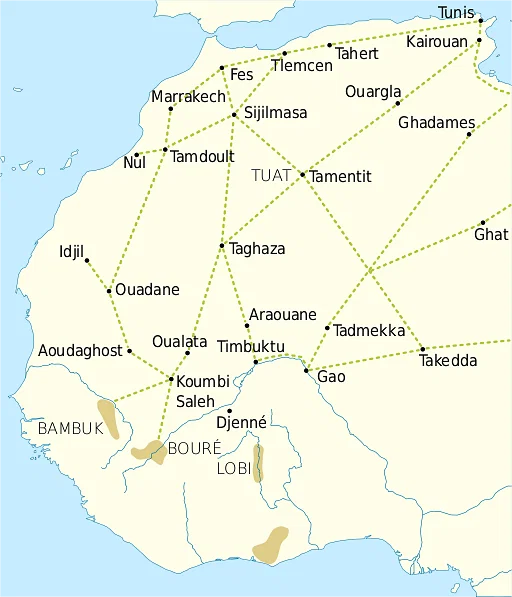
Map of major trans-Saharan trade routes across West Africa (c. 1100–1500), showing the corridors that connected Saharan crossings to Sahelian market cities. This visual helps explain why Hausa urban centers could grow wealthy by taxing caravans and positioning themselves as intermediaries in regional exchange. Source
Their markets linked:
Northbound routes (to Saharan crossings and North African merchants)
Southbound exchanges (to forest products and internal West African commerce) Key goods included:
Leather goods, textiles, and metalwork produced in towns
Agricultural staples (grain) supporting dense urban populations
High-value exchange goods moving through the region (including salt and gold in wider circuits)
Market regulation and revenue
Urban authorities strengthened state capacity by:
Levies on caravan traffic and market transactions
Standardising measures, enforcing market rules, and protecting merchants
Investing in fortifications and roads that made particular cities safer and more attractive for trade
These economic policies helped individual city-states project influence beyond their immediate hinterlands, even without forming a single unified empire.
Culture and Religion: Islam and Local Traditions
Islam in commercial and scholarly life
From c. 1200 to c. 1450, Islam spread unevenly across Hausa cities, often concentrated among:
Merchant communities connected to long-distance trade
Scholars and judges who offered literacy and legal expertise Where adopted, Islamic institutions could reinforce state authority through:
Mosques as community and educational centers
Qadis (judges) advising on disputes and contracts, especially in commercial settings
At the same time, many communities blended Islamic practice with established local customs, producing cultural variation between city-states.
Social Structure and Power
Urban society and specialised labour
Hausa urban life depended on skilled producers and organised labour:
Craft specialists (leatherworkers, weavers, metalworkers) supplying regional markets
Merchant groups coordinating long-distance exchange
Rural farmers providing food surpluses that sustained cities and political elites
Control over labour, trade, and taxation underpinned the Hausa kingdoms’ ability to compete with rivals and shape regional commerce.
Expanding Regional Influence (c. 1200–1450)
How influence expanded without a single empire
The Hausa kingdoms’ influence grew through a recognizable pattern:
Cities competed to become dominant market hubs
Rulers sought revenue by attracting merchants and securing routes
Successful cities extended control into surrounding countryside and satellite settlements
Diplomatic ties and commercial partnerships linked Hausa states into wider West African systems
This is why the Hausa kingdoms are used in AP World History as evidence that African state systems could feature networks of city-states, political diversity, and expanding regional influence during the period.
Practice Questions
Identify ONE characteristic of the Hausa kingdoms’ political organisation c.1200–1450. (2 marks)
1 mark: Identifies a valid characteristic (e.g. network of city-states; independent walled urban centres; varied forms of kingship).
1 mark: Gives a brief accurate description linked to governance (e.g. cities ruled by a sarki with differing degrees of centralisation or council influence).
Explain how trade helped Hausa city-states expand their regional influence c.1200–1450. (6 marks)
1–2 marks: Explains that market hubs and caravan trade increased wealth and strategic importance.
1–2 marks: Links trade revenue to state power (e.g. taxation/market regulation funding administration, armies, fortifications).
1–2 marks: Shows how attracting merchants and securing routes extended influence into hinterlands or created wider commercial/diplomatic connections.
FAQ
Key texts include local chronicles (such as the Kano Chronicle tradition) and external references from Muslim scholars and travellers.
These sources require careful use because they often mix genealogy, oral tradition, and later political agendas.
Archaeologists look for:
City walls and gate systems
Craft-working remains (kilns, slag, tanning areas)
Long-distance goods (beads, metals) indicating trade links
Dating layers helps track growth across centuries.
Its spread was encouraged by repeated market interactions, migrant merchants, and the usefulness of a shared language for pricing, contracts, and caravan coordination.
Over time, Hausa functioned as a regional lingua franca beyond ethnic boundaries.
In savanna warfare and policing, cavalry could provide speed and shock power.
Because horses were costly to maintain, cavalry forces often reflected strong revenue systems and elite status.
Specialisation emerged through dense markets, apprenticeship, and reliable demand from caravans.
Some towns gained reputations for particular goods (notably dyed cloth and leatherwork), reinforcing their commercial pull.