

CIE Syllabus focus:
'Candidates should understand sources of finance for business entities, including loans, bank overdrafts, instalment payments, rental or leasing, trade credit and company finance.'
Businesses need finance to start, operate, and grow. The source chosen affects liquidity, cost, flexibility, and ownership, so it must match the purpose and time period of the funding need.
Understanding sources of finance
A source of finance is the way a business obtains funds for use in the business.
Source of finance: A method used by a business to obtain money or credit for buying assets, paying expenses, or supporting expansion.
Finance may be needed for different purposes:
Long-term needs, such as buying non-current assets or expanding operations
Short-term needs, such as paying suppliers or covering temporary cash shortages
The most suitable source depends on:
how much money is required
how quickly it is needed
how long it is needed for
whether regular repayments can be afforded
whether owners want to keep control of the business
Loans
A loan is a fixed amount borrowed, usually from a bank or other lender, for an agreed period. It is commonly used for long-term finance.
Loans are suitable when a business:
needs a large sum at once
wants certainty over the repayment period
is financing an asset that will be used for several years
Key features of loans include:
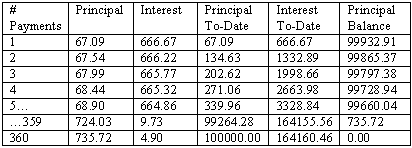
Example amortization schedule showing how each regular loan installment is allocated between interest and principal. It also tracks the running totals and the declining outstanding principal balance, reinforcing why loans create a predictable repayment commitment. Source
interest is normally charged
repayments may be made in regular installments
the lender may require security
the business knows in advance the amount and timing of repayments
Loans can help a business purchase equipment, vehicles, or premises without using all available cash. However, the business must still meet repayments even if trading is difficult, so a loan creates a fixed financial commitment.
Bank overdrafts
A bank overdraft is a short-term arrangement that allows a business to withdraw more money from its bank account than it currently has.
Bank overdraft: Permission from a bank to have a negative bank balance up to an agreed limit.
An overdraft is usually used for temporary finance, not permanent financing. It is helpful when cash inflows and cash outflows do not happen at the same time.
Advantages of an overdraft include:
flexibility, because the business borrows only when needed
interest is usually charged only on the amount overdrawn
it can help manage short-term working capital problems
Limitations include:
the amount available is often smaller than a loan
the bank can review or reduce the limit
interest rates may be relatively high
Because of this, overdrafts are best for short-term cash flow gaps rather than major long-term investment.
Installment payments
With installment payments, a business obtains an asset immediately and pays for it over time in regular amounts. This helps spread the cost of expensive items.
This source is useful when a business needs an asset now but does not want to make one large payment at the start. It can support cash flow because payments are divided across future periods.
Important points include:
the asset is acquired at once
payments are made over an agreed period
total cost may be higher than paying immediately because charges may be added
Installment payments are often suitable for assets that will generate revenue over the period in which they are being paid for.
Rental or leasing
Instead of buying an asset, a business may choose rental or leasing. In both cases, the business pays to use an asset rather than owning it outright.
Leasing is especially useful when:
the asset is expensive
technology changes quickly
the business wants to avoid a large initial outlay
maintenance or replacement arrangements are included in the agreement
Rental or leasing can improve liquidity because cash is not tied up in ownership. It may also make budgeting easier if payments are regular. However, the business may pay more over time than if it had purchased the asset, and it will not usually benefit from any increase in the asset’s value.
This source is common for vehicles, machinery, and office equipment.
Trade credit
A widely used short-term source is trade credit.
Trade credit: A period of time allowed by a supplier before payment for goods or services must be made.
Trade credit arises when a supplier allows a business to buy now and pay later.
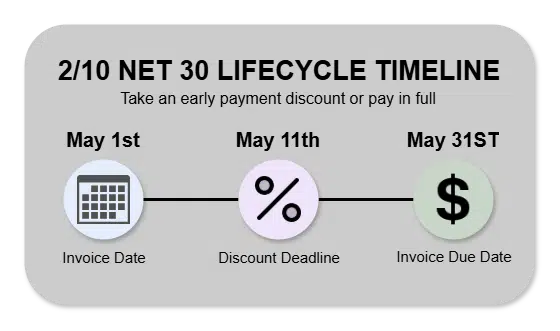
Timeline illustration of typical trade credit payment terms (e.g., net 30), marking the invoice date, any early-payment discount deadline, and the final due date. This helps students visualize how trade credit improves short-term liquidity while still creating a fixed payment deadline. Source
It is particularly important for day-to-day trading because it supports purchases of inventory without immediate cash payment.
Its main benefits are:
no immediate cash outflow
simple access if a business has a good payment record
improved short-term liquidity
Its risks are:
payment must still be made by the due date
late payment may damage supplier relationships
discounts for prompt payment may be lost
Trade credit is therefore a useful routine source of short-term finance, but only if it is carefully managed.
Company finance
Company finance refers to sources available because the business is organized as a company. The main forms are usually the issue of shares and debentures.
If a company issues shares:
it receives capital from shareholders
no repayment is required in the normal way
ownership is shared more widely
existing owners may lose some control
If a company issues debentures:
it borrows long-term finance
interest must be paid
the amount borrowed must eventually be repaid
Company finance may allow a larger amount of capital to be raised than is possible for a sole trader or partnership. It is often used for expansion and major investment. The choice between share finance and borrowed company finance depends on whether the business wants to avoid fixed interest commitments or avoid dilution of ownership.
Matching the source to the need
A business should not choose finance only because it is available. It should match the source to the purpose.
In general:
loans suit planned long-term investment
bank overdrafts suit temporary cash shortages
installment payments suit assets needed immediately but paid for over time
rental or leasing suit expensive assets where ownership is not essential
trade credit suits regular short-term purchases
company finance suits companies needing larger-scale capital
A sound choice of finance helps a business remain solvent, manage risk, and support growth without creating unnecessary pressure on cash flow.
Practice Questions
State two features of trade credit as a source of finance. (2 marks)
Supplier allows the business time to pay / buy now and pay later. (1)
It is a short-term source of finance / delays cash outflow / supports working capital. (1)
A public limited company needs finance for three separate purposes:
to cover a temporary cash shortage for one month
to obtain inventory from a supplier without immediate payment
to raise permanent capital from investors without a normal repayment date
Name the most suitable source of finance for each purpose and explain one reason for each choice. (6 marks)
Temporary cash shortage: bank overdraft. (1)
Reason: flexible short-term finance / helps with timing differences in cash flow / interest usually charged only on amount used. (1)
Inventory without immediate payment: trade credit. (1)
Reason: supplier allows payment later / no immediate cash outflow / common for routine purchases. (1)
Permanent capital from investors: company finance through issue of shares. (1)
Reason: capital does not have to be repaid in the normal way / raises funds from shareholders / suitable for a company. (1)
FAQ
Security reduces the lender’s risk.
If the business cannot repay, the bank may have a legal claim over the asset offered as security. This gives the lender more confidence and may make approval more likely.
For the business, strong security can sometimes lead to:
a larger loan
a longer repayment period
a lower interest rate
Suppliers often look at whether a business has paid past invoices on time.
A strong payment record may lead to:
longer credit periods
higher credit limits
better supplier relationships
A poor record may result in:
shorter credit periods
reduced limits
refusal of further credit
demands for cash before delivery
A lease should be examined carefully before signing.
Important points include:
total cost over the full lease term
who pays for repairs, servicing, and insurance
penalties for ending the lease early
whether the asset can be upgraded
any limits on usage
what happens when the lease ends
These details affect the real cost and flexibility of the finance.
Seasonal businesses may have uneven cash inflows during the year.
For example, a business might receive most of its revenue in one season but still have to pay wages, rent, and suppliers throughout the year. An overdraft can bridge that temporary gap.
This makes overdrafts useful where:
cash shortages are predictable
the shortage is short term
the business expects receipts later in the year
Investors and lenders will consider the company’s financial strength and reputation.
Finance is usually easier to raise when the company has:
strong profits
stable cash flows
a good record of paying dividends or interest
low existing debt
positive market confidence
It may be harder when the company is risky, highly geared, or operating in poor market conditions.

.gif)