IB Syllabus focus: 'States, subnational and local governments, and political leaders should be considered as key actors in global political issues.'
Global politics is shaped not only by broad systems and ideas, but by public authorities that can make binding decisions. These actors operate at different levels, yet each can strongly affect political outcomes.
Why government actors matter
A state is often the starting point for analysis because it claims authority over a territory and population, controls major institutions, and speaks in the name of a political community.
State: A political entity with a defined territory, a permanent population, institutions of government, and recognized authority to make and enforce binding decisions.
States are key actors because they can turn preferences into policy. They make laws, collect taxes, control public spending, regulate borders, and authorize the use of state power. In global political issues, this means states can shape both domestic responses and international behavior. They can support cooperation, resist outside pressure, or redefine an issue according to national priorities.
Government actors matter because they possess formal authority. Unlike many other stakeholders, they can often make decisions that are legally binding on large populations. They also usually have greater access to resources, data, administrative capacity, and coercive power than most other actors.
States as actors in global political issues
Core functions of states
States influence global issues through several core functions:

A policy-cycle diagram that summarizes policymaking as an iterative process (from agenda setting through implementation and evaluation, returning to revision). It complements your notes by showing how state capacity and leadership choices can matter at different stages, not only at the moment of a headline decision. Source
Policy making: setting national responses to issues such as migration, security, development, and environmental change
Representation: speaking for the country in diplomatic meetings and negotiations
Resource allocation: deciding budgets, aid, military spending, or emergency responses
Regulation: controlling trade, investment, travel, public health measures, and border management
Because states can combine law, finance, and enforcement, they often have the broadest range of tools. A state may choose to cooperate with others, act unilaterally, or remain inactive. Each option can affect global outcomes.
State power is uneven
Not all states have equal influence. Some have large economies, military strength, diplomatic reach, or strategic importance. Others have fewer resources and less capacity to project influence. This means that the category state includes both powerful agenda-setters and states that are more reactive to pressures from stronger actors.
State influence also depends on internal capacity. A government may formally control territory but struggle to implement policy effectively. In IB analysis, it is important to distinguish between legal authority and practical capacity. A state may have the right to act, but not always the means to do so.
Subnational and local governments
A global issue is often experienced locally, so actors below the national level can be politically important. A subnational government includes provinces, regions, states within a federation, and municipalities.
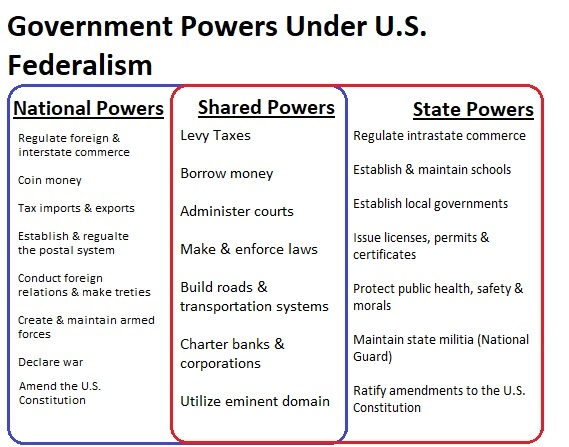
A Venn diagram illustrating federalism as a division of powers between a national (federal) government and subnational (state) governments, including areas of concurrent/shared authority. It helps you see why subnational actors can be decisive in global issues when implementation and regulation fall partly (or primarily) within their jurisdiction. Source
Subnational government: A level of government below the national government, such as a province, region, state, or municipality, with authority over specific policy areas.
Subnational and local governments are key actors because they frequently implement policy where people actually live. They may manage transport, policing, housing, schools, sanitation, emergency services, or local environmental policy. When a global issue affects daily life, these institutions can become central political actors.
Why local levels matter
Subnational and local governments can:
adapt national policy to local conditions
innovate through pilot programs or new regulations
respond faster to local crises
represent specific regional interests
cooperate across borders on practical issues such as infrastructure or environmental management
Their influence can be especially visible in large federal or decentralized states, where regional authorities may hold substantial powers. However, even in more centralized systems, local governments often shape implementation, public acceptance, and policy effectiveness.
This matters because political outcomes are not produced only at the national capital. A national government may announce a policy, but its success can depend on whether governors, mayors, and local officials support, interpret, or resist it.
Political leaders as actors
Institutions matter, but individuals within them also shape politics. A political leader can influence priorities, timing, and strategy in ways that institutions alone cannot explain.
Political leader: An individual with formal governmental authority who can shape policy priorities, decisions, and public communication.
Political leaders include presidents, prime ministers, cabinet ministers, governors, and mayors. Their importance lies partly in office, but also in their ability to persuade, negotiate, and frame issues. Leadership can affect how a problem is described, which solutions are treated as acceptable, and how urgently action is pursued.
How leaders exercise influence
Political leaders can shape global issues by:
setting agendas and prioritizing some issues over others
making executive decisions during crises
negotiating directly with other leaders
mobilizing public support or nationalist sentiment
signaling continuity or change in state policy
Leaders can therefore personalize political outcomes. Two states with similar resources may behave differently because their leaders interpret risks and interests differently. Leadership style, ideology, and political skill can all matter.
At the same time, leaders are not all-powerful.
Their influence is usually constrained by constitutions, bureaucracies, parties, elections, and domestic opposition. Strong leadership does not remove the importance of institutions; instead, it shows how individuals operate within them.
Analyzing these actors in IB Global Politics
When studying a global political issue, ask the following:
Which level of government has the authority to decide?
Which actor has the capacity to implement policy?
Are national and local actors working together or in conflict?
How much of the outcome depends on institutional power, and how much on individual leadership?
Does the actor merely respond to events, or actively shape the issue?
This approach helps show why states, subnational and local governments, and political leaders should all be treated as key actors rather than as a single undifferentiated category.
Practice Questions
Identify three ways a state can act as a key actor in a global political issue.
1 mark for each valid way identified, up to 3 marks.
Valid answers may include:
making national policy
representing the country diplomatically
regulating borders or trade
allocating public resources
enforcing laws or security measures
Using one global political issue, explain how political leaders and subnational or local governments can both influence outcomes.
1 mark for identifying a relevant global political issue
Up to 2 marks for explaining how political leaders influence the issue
Up to 2 marks for explaining how subnational or local governments influence the issue
Up to 1 mark for showing a clear connection between these two levels of action and the overall outcome
FAQ
In a federal system, regional units usually have constitutionally protected powers. This can give governors, state legislatures, or provincial authorities more room to shape policy linked to global issues.
They may control areas such as education, policing, transport, or environmental regulation, which can make them more visible internationally than subnational actors in centralized states.
Paradiplomacy is when subnational governments conduct their own international activity, usually to advance practical local interests.
This can include:
trade promotion
climate partnerships
cultural exchanges
cross-border cooperation
It does not usually replace national foreign policy, but it can complicate it if local priorities differ from those of the central government.
Top leaders often control appointments, diplomatic tone, and immediate executive priorities. Even when long-term institutions stay the same, a new leader can quickly alter:
alliances and rhetoric
negotiation strategy
crisis response
budget priorities
Rapid change is most likely when the leader has a strong electoral mandate or broad executive powers.
Yes. They can shape what national negotiators consider politically realistic.
They may do this by:
lobbying central governments
forming coalitions with other local leaders
demonstrating successful policy models
creating implementation pressure from below
Their leverage is strongest when national governments need local cooperation to make agreements work in practice.
No. Importance depends on office, institutional authority, timing, and political context.
A mayor of a global city may have more practical influence on some issues than a national minister from a smaller state. Likewise, a leader in wartime or crisis may matter more than the same officeholder in calmer periods.
So, leadership importance should be judged by actual influence, not title alone.