

IB Syllabus focus: 'Epinephrine and norepinephrine affect blood pressure, heart rate and blood sugar levels. Insulin and glucagon regulate blood sugar concentration, while antidiuretic hormone regulates water retention in the kidney.'
During exercise, several hormones change rapidly to support circulation, fuel supply, and fluid balance. Understanding their actions helps explain how the body maintains performance and protects internal conditions.
Core idea
Exercise places immediate demands on the body. Working muscles need a continuous supply of oxygen, glucose, and blood flow, while sweating increases the risk of fluid loss. The hormones in this syllabus point help regulate these demands by changing:
heart rate
blood pressure
blood sugar concentration
water retention
These hormonal responses are especially important because exercise can quickly disturb the body’s normal internal conditions. The body therefore uses specific hormones to keep vital variables within a safe and useful range.
Epinephrine and norepinephrine
Epinephrine and norepinephrine are key exercise-related hormones. Their release increases as exercise intensity rises, helping the body respond to physical stress.
Effect on heart rate
Both hormones increase heart rate. This allows the heart to pump blood more frequently, helping deliver more oxygen and nutrients to active tissues. A higher heart rate is useful during exercise because demand for circulation increases rapidly.
Epinephrine is often associated with a strong stimulatory effect on the heart. Norepinephrine also contributes to this response, especially as part of the body’s broader stress reaction.
Effect on blood pressure
Epinephrine and norepinephrine also affect blood pressure. They help maintain or raise blood pressure during exercise so that blood can continue to move effectively through the circulatory system.
They do this by increasing cardiac activity and influencing the diameter of blood vessels. In particular, norepinephrine is strongly linked to vasoconstriction in some blood vessels, which helps support arterial pressure. This is important because blood pressure must remain high enough to ensure effective perfusion of tissues during activity.
Effect on blood sugar levels
These hormones also increase blood sugar levels when needed. During exercise, muscles use glucose at a faster rate, so the body must avoid a dangerous drop in blood glucose.
Epinephrine and norepinephrine help by promoting the release of glucose into the bloodstream, especially from stored carbohydrate sources. This helps ensure that:
active muscles continue receiving fuel
the brain still has access to glucose
exercise can continue without early fatigue caused by falling blood sugar
This makes them important hormones for both cardiovascular support and energy regulation during activity.
Insulin and glucagon
Insulin and glucagon work together to regulate blood sugar concentration.
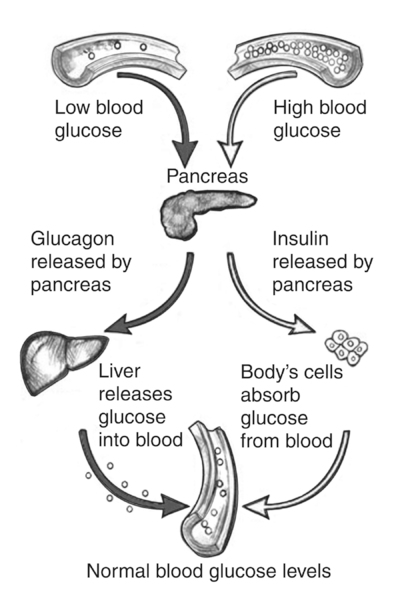
This diagram summarizes how the pancreas responds to rising versus falling blood glucose by releasing insulin or glucagon. It visually reinforces the idea of negative feedback control and the hormones’ opposing actions to keep blood glucose within a stable range. Source
They have opposite effects, which helps keep blood glucose within an appropriate range.
Insulin
Insulin lowers blood glucose concentration. It does this by promoting the movement of glucose out of the blood and into cells, where it can be used or stored.
In practical terms, insulin supports the removal of excess glucose from the bloodstream. This is important because blood sugar that is too high can disrupt normal body function.
For exercise, insulin remains important because blood glucose must be controlled carefully. Even though muscles need glucose, the body still needs regulation so that blood sugar does not become excessively high or unstable.
Key effects of insulin include:
reducing blood glucose concentration
promoting glucose uptake by cells
supporting storage of glucose for later use
Glucagon
Glucagon raises blood glucose concentration. Its role is especially important when blood sugar begins to fall.
It acts mainly by encouraging the release of glucose into the bloodstream from stored sources. This helps maintain an adequate blood glucose concentration during periods when energy demand is high or when dietary glucose is not immediately available.
During exercise, this matters because muscles continuously remove glucose from the blood. Glucagon helps prevent blood sugar from dropping too far by increasing glucose availability.
Key effects of glucagon include:
increasing blood glucose concentration
promoting glucose release into the blood
helping maintain fuel availability during activity
Together, insulin and glucagon provide balance.
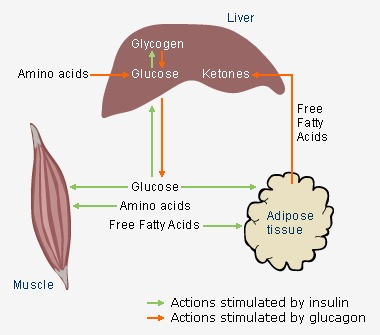
This figure contrasts the major target tissues of insulin and glucagon (especially liver, muscle, and adipose tissue) and summarizes their opposing metabolic effects. It helps link the concept of “balance” in blood glucose regulation to specific organs that store or release fuels. Source
Insulin moves blood glucose down when it is too high, while glucagon moves it up when it is too low.
Antidiuretic hormone
Antidiuretic hormone (ADH) regulates water retention in the kidney.
This becomes especially important during exercise because sweating causes water loss.
When the body loses water, plasma volume can fall. If too much fluid is lost, this can reduce circulatory efficiency and place extra strain on the cardiovascular system. ADH helps limit this problem by increasing the amount of water reabsorbed by the kidneys.
As a result:
less water is lost in urine
more water is retained in the body
blood volume is better maintained
This supports exercise performance because maintaining blood volume helps preserve circulation and reduces the effects of dehydration.
ADH therefore plays an important role in fluid balance during exercise. While epinephrine, norepinephrine, insulin, and glucagon are strongly linked to circulation and energy supply, ADH is more focused on conserving water so the internal environment remains stable.
Coordinated hormonal regulation during exercise
These hormones should not be viewed in isolation. During exercise, the body uses them in a coordinated way:
epinephrine and norepinephrine help raise heart rate, support blood pressure, and increase blood sugar levels
insulin and glucagon regulate blood sugar concentration
ADH increases water retention in the kidney
Together, they help the body meet three major exercise demands:
maintaining effective circulation
maintaining fuel supply
maintaining hydration status
This coordination is essential for sustaining exercise safely and effectively.
Practice Questions
Identify two effects of epinephrine during exercise. [2]
1 mark for stating that epinephrine increases heart rate.
1 mark for stating that epinephrine increases blood pressure.
1 mark for stating that epinephrine increases blood sugar levels.
Award a maximum of 2 marks.
Explain how insulin, glucagon, and antidiuretic hormone help regulate the body during exercise. [6]
1 mark for stating that insulin lowers blood glucose concentration.
1 mark for explaining that insulin promotes movement of glucose from the blood into cells and/or storage.
1 mark for stating that glucagon raises blood glucose concentration.
1 mark for explaining that glucagon promotes release of glucose into the bloodstream from stores.
1 mark for stating that antidiuretic hormone increases water retention in the kidney.
1 mark for explaining that this helps maintain body water and/or blood volume during exercise.
FAQ
They are grouped together because they have closely related actions and are both part of the body’s rapid stress response.
Both hormones:
support cardiovascular activity
help raise blood glucose availability
become more important as exercise intensity increases
They are not identical, but in IB SEHS they are commonly studied together because their overall effects overlap strongly during exercise.
Fat can supply a lot of energy, but glucose is still critical because it can be used quickly and is especially important at higher exercise intensities.
Glucose is also important for:
the brain
the nervous system
working muscle during rapid energy demand
If blood glucose falls too much, performance can decline and symptoms such as dizziness, weakness, or poor concentration may appear.
No. ADH reduces urine output, but it does not normally stop it completely.
Its main effect is to increase water reabsorption in the kidneys so that less water is lost. This helps conserve fluid when sweating is high.
The size of the ADH response depends on factors such as:
exercise duration
sweat loss
fluid intake
environmental conditions
Hormone responses can vary because the body reacts to relative stress, not just the absolute workload.
Differences may come from:
fitness level
training background
heat exposure
hydration status
pre-exercise meal timing
emotional stress
So even if two athletes perform the same session, one may show a larger rise in catecholamines or ADH if the workout is more demanding for them personally.
If regulation is poor, blood glucose may become either too low or too high.
If it becomes too low, likely effects include:
fatigue
shakiness
confusion
reduced performance
If it becomes too high, normal metabolic control is disturbed and exercise may feel harder than expected.
This is why coordinated action by insulin, glucagon, epinephrine, and norepinephrine is so important during prolonged or intense activity.
