

IB Syllabus focus: 'Reproductive hormones influence health and athletic performance. Progesterone affects thermoregulation, sleep quality and fuel availability; oestrogen affects glycogen sparing and joint stiffness; testosterone affects bone formation, protein synthesis and erythropoietin.'
Reproductive hormones do more than regulate reproduction. In sport and exercise, changes in progesterone, estrogen, and testosterone can alter temperature control, energy use, recovery, tissue health, and training responses.
Why reproductive hormones matter
Reproductive hormones influence more than reproduction. They affect metabolism, temperature regulation, tissue remodeling, and recovery, so they can change both health and athletic performance. Their effects are important in training, competition, and long-term adaptation.
In female athletes, hormone levels change across the menstrual cycle, so the size and type of response may vary over time.
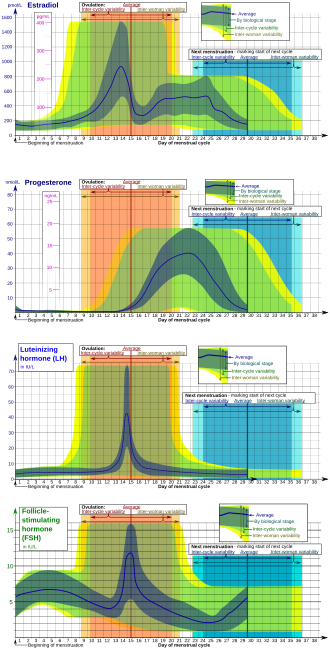
Reference curves for estradiol (the main oestrogen) and progesterone across a typical menstrual cycle, aligned to cycle timing. The figure highlights the mid‑cycle rise in estradiol and the luteal-phase elevation in progesterone, which underpins time-varying effects on temperature regulation, sleep, and substrate use in exercise physiology. Source
In male athletes, testosterone is usually more stable, but natural differences between individuals still affect adaptation and performance. A key principle is that hormones do not act in isolation; they interact with training load, nutrition, sleep, and environment.
Progesterone
Effects on thermoregulation
Progesterone tends to increase resting body temperature slightly. When progesterone levels are higher, an athlete may begin exercise with a higher core temperature and may feel heat strain sooner, especially in warm conditions or during prolonged exercise.
This matters because a smaller margin before overheating can make it harder to maintain pace, skill, and decision-making. For some athletes, higher progesterone may therefore reduce comfort and performance in the heat, even if the actual exercise intensity is unchanged.
Effects on sleep quality
Progesterone is also linked to sleep quality. Changes in progesterone across the cycle can alter how well an athlete sleeps, and poorer sleep can reduce recovery, concentration, motivation, and readiness to train.
The effect is not identical in every athlete. Some may notice little change, while others report worse sleep near phases when progesterone is elevated, partly because increased body temperature and related symptoms can disturb normal sleep patterns.
Effects on fuel availability
Progesterone also affects fuel availability, meaning the body’s access to usable energy during exercise. Higher progesterone can change how carbohydrate and fat are used, and it may reduce the availability of carbohydrate for high-intensity efforts if nutrition is not well matched to the session.
This is important because high-intensity exercise depends heavily on rapid carbohydrate supply. If progesterone is relatively high, athletes may need to pay closer attention to pre-exercise fueling and recovery nutrition to support training quality.
Estrogen
Glycogen sparing
Estrogen can promote glycogen sparing, which means less muscle glycogen is used at a given exercise intensity. In practice, this may increase reliance on fat as a fuel source and help preserve carbohydrate stores during submaximal endurance exercise.
For endurance performance, glycogen sparing can be beneficial because it may delay fatigue when exercise lasts a long time. However, the advantage depends on the activity because sprinting and very high-intensity efforts still require substantial carbohydrate use.
Joint stiffness
Estrogen also affects joint stiffness. Changes in estrogen can alter the mechanical behavior of connective tissues such as ligaments and tendons. Lower stiffness may improve mobility, but it can also change joint stability and force transmission.
For performance, altered joint stiffness can influence movement efficiency, technique, and injury risk. The effect is highly individual, so it is better to think of estrogen as changing the conditions under which movement occurs rather than guaranteeing better or worse performance.
Testosterone
Bone formation
Testosterone supports bone formation and bone maintenance. This matters for athlete health because strong bones tolerate repeated training loads better and are less vulnerable to stress-related injury.
Adequate testosterone is therefore important not only for performance but also for long-term skeletal health. Low testosterone levels can reduce bone density over time and may impair an athlete’s ability to tolerate consistent training.
Protein synthesis
Testosterone also increases protein synthesis, the process of building new proteins in the body. In sport, this supports muscle repair after exercise and contributes to gains in muscle size and strength when training is appropriate.
Because protein synthesis underpins adaptation, testosterone can influence how effectively an athlete responds to resistance training and recovers between sessions. This does not mean performance is determined by testosterone alone, but it is a major factor in muscular development.
Erythropoietin
Testosterone affects erythropoietin, a hormone involved in red blood cell production.
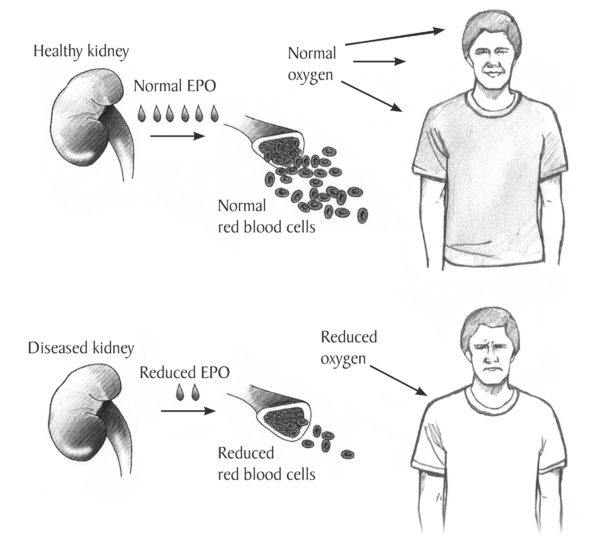
Diagram of the erythropoietin (EPO) pathway: kidneys release EPO, which stimulates the bone marrow to increase red blood cell production. This visual links hormonal signaling to oxygen-carrying capacity—one mechanism by which testosterone can support endurance performance via improved oxygen delivery to working muscles. Source
Higher erythropoietin activity can increase the oxygen-carrying capacity of the blood, which is especially relevant for endurance performance.
Through this pathway, testosterone may support aerobic performance by improving oxygen delivery to working muscles. It can therefore contribute to both training capacity and recovery from repeated endurance sessions.
Implications for athletes
The performance effects of reproductive hormones are usually context-dependent. The same hormonal profile may help one type of activity but challenge another. For example, glycogen sparing may help prolonged endurance work, while reduced carbohydrate availability can matter more in repeated high-intensity efforts.
Hormonal effects also vary between athletes. Some experience clear changes in heat tolerance, sleep, or movement quality, while others notice minimal effects. For this reason, monitoring symptoms, cycle patterns, training quality, and recovery can be more useful than assuming all athletes respond the same way.
In practice, coaches and athletes should use hormonal knowledge to support individualized training, recovery, and health monitoring rather than to make simplistic predictions about performance.
Practice Questions
State two ways progesterone can influence health or athletic performance.
1 mark for stating that progesterone affects thermoregulation or raises body temperature / may reduce heat tolerance.
1 mark for stating that progesterone affects sleep quality or fuel availability.
Accept any two valid points from the specification-based content.
Maximum 2 marks.
Explain how estrogen and testosterone can influence athletic performance.
Estrogen promotes glycogen sparing.
Glycogen sparing can preserve carbohydrate stores and delay fatigue in prolonged submaximal exercise.
Estrogen affects joint stiffness.
Changes in joint stiffness can alter mobility, stability, force transmission, technique, or injury risk.
Testosterone supports bone formation or bone maintenance.
Better bone health improves tolerance to repeated training loads and may reduce stress-related injury risk.
Testosterone increases protein synthesis, supporting muscle repair and muscular adaptation.
Testosterone affects erythropoietin or red blood cell production, improving oxygen transport and aiding endurance performance.
Maximum 5 marks.
FAQ
Hormonal contraceptives can reduce or alter the normal fluctuations of estrogen and progesterone. That means the pattern of temperature change, sleep disturbance, or fuel-use change may be different from a natural menstrual cycle.
Responses vary by method and by athlete. Some athletes report more stable symptoms, while others notice changes in mood, bleeding patterns, or training comfort. The specific formulation matters, so broad assumptions are not useful.
When energy intake is too low for training demands, the body may reduce reproductive hormone function to conserve energy. This can disturb menstrual function in females and lower testosterone in males.
Performance effects may include:
poorer recovery
reduced bone health
increased injury risk
lower training quality over time
This is one reason reproductive hormones are closely linked to both health and performance, not just reproduction.
Hormone level is only one part of performance. Athletes also differ in receptor sensitivity, training history, nutrition, sleep, stress, technique, and environment.
Two athletes with similar estrogen, progesterone, or testosterone levels may therefore show very different outcomes. One may notice heat strain or sleep changes, while another may feel almost no effect. This is why individualized monitoring is more useful than relying on hormone values alone.
During puberty, rising estrogen and testosterone help shape major physical changes that affect sport. Testosterone strongly supports muscle development and bone growth, while estrogen contributes to maturation, bone health, and tissue changes.
These hormonal shifts can influence:
strength development
body composition
recovery capacity
movement mechanics
Because maturation timing differs between individuals, the performance effects of these hormones do not appear at exactly the same age in every athlete.
Medical advice is important if hormone-related changes are persistent, severe, or linked to health concerns rather than normal short-term variation.
Examples include:
repeated missed periods
unusually low libido
unexplained fatigue
recurrent stress injuries
major sleep disruption
sudden drops in performance without a clear training reason
These signs may suggest an underlying issue with hormonal function, energy availability, or general health that needs proper assessment.
