
The Ancien Régime and pressure for change
· Ancien Régime = the old political and social system in France before 1789, based on absolute monarchy, privilege, and the Estate system.
· Louis XVI ruled as an absolute monarch, meaning royal authority was theoretically supreme, but in practice reform was blocked by privileged elites, parlements, and court politics.
· The First Estate = clergy; the Second Estate = nobility; the Third Estate = everyone else, including peasants, urban workers and the bourgeoisie.
· The Third Estate carried much of the tax burden but had the least political influence, creating deep resentment against social inequality and privilege.
· The bourgeoisie were especially frustrated because many were educated, wealthy and influenced by reform ideas, but excluded from high status and political power.
· Feudal dues, tithes, indirect taxes and seigneurial rights increased resentment among peasants.
· The key exam point: the Revolution was not caused by one factor alone; it resulted from the interaction of social inequality, financial crisis, political deadlock, and popular hardship.
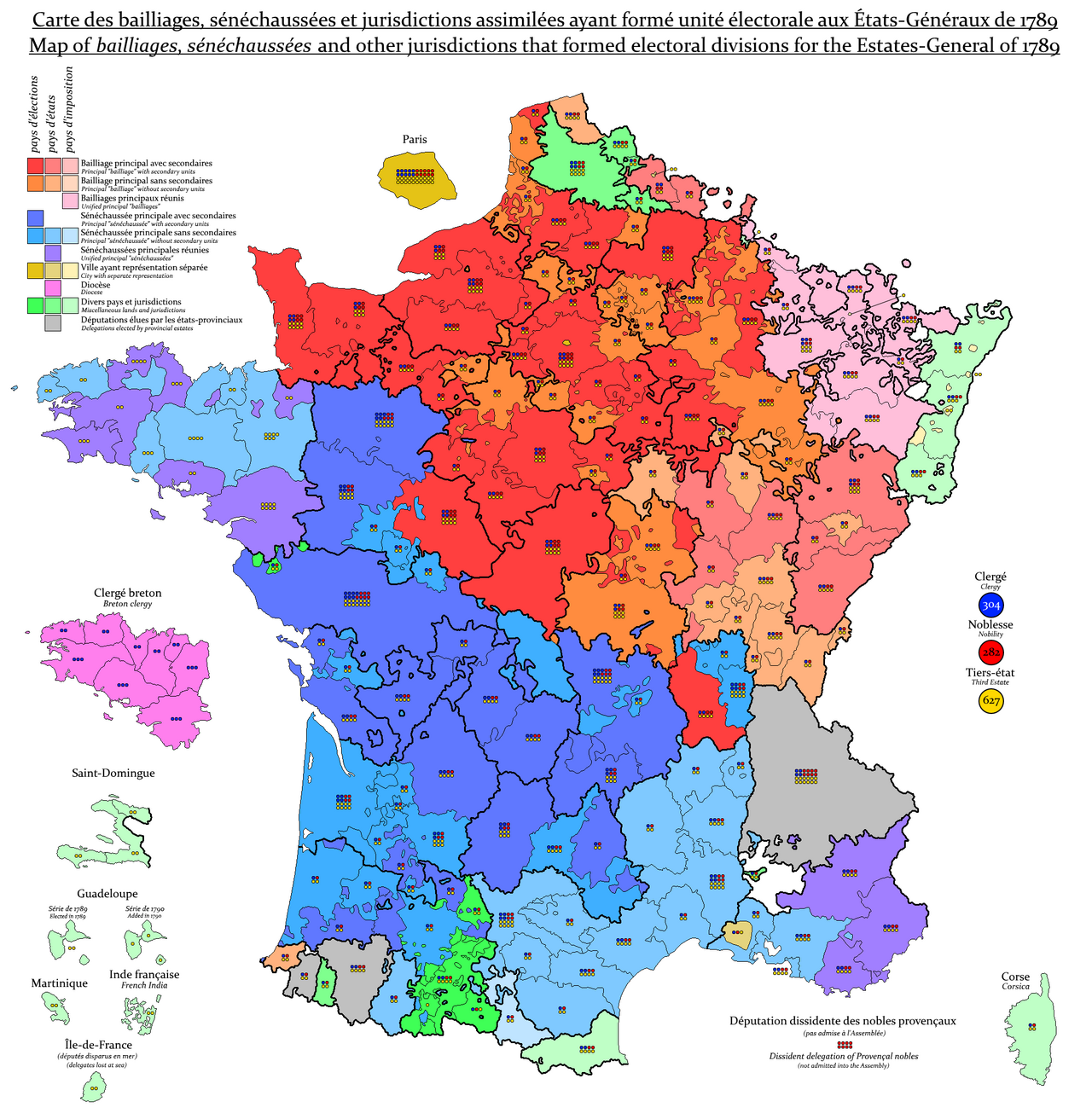
This image helps explain how French society was divided into the First, Second and Third Estates. It is useful for understanding why the Third Estate objected to voting by estate and demanded fairer political representation. Source
Absolute monarchy and royal government
· Absolute monarchy meant the king claimed authority from tradition and divine right, but royal government was inefficient and financially weak.
· France had no regular national representative assembly before 1789; the Estates-General had not met since 1614.
· Administration was complex, with overlapping courts, tax systems and local privileges, making reform difficult.
· Parlements were law courts that registered royal edicts; they could obstruct new taxes and present themselves as defenders of liberty.
· Louis XVI was not a strong reforming monarch: he often hesitated, dismissed ministers, and failed to force through consistent reform.
· Exam judgement: the monarchy’s weakness turned long-term problems into a revolutionary crisis.
French society and the discontent of the Third Estate
· The Estate system created legal inequality: privileged groups enjoyed exemptions and status while the majority paid taxes and had limited political voice.
· The First Estate benefited from church income, including the tithe, and held social influence.
· The Second Estate had privileges such as access to high offices, seigneurial rights and exemptions from many direct taxes.
· The Third Estate was diverse: peasants wanted relief from dues and taxes; urban workers wanted cheaper bread; the bourgeoisie wanted political influence and careers open to talent.
· Discontent of the Third Estate became politically powerful when economic suffering combined with demands for representation.
· Key phrase for essays: “The Third Estate transformed grievance into political action.”
The influence of the Enlightenment
· Enlightenment ideas challenged traditional authority and encouraged criticism of absolute monarchy and privilege.
· Voltaire criticised religious intolerance and arbitrary power.
· Rousseau argued that legitimate authority should be based on the general will and consent of the people.
· Montesquieu supported the idea of separation of powers, challenging concentrated royal authority.
· These ideas did not directly cause revolution by themselves, but they gave educated critics a language of rights, liberty, citizenship, and popular sovereignty.
· The Declaration of the Rights of Man and of the Citizen later reflected Enlightenment ideals of universal rights, liberty and equality before the law.
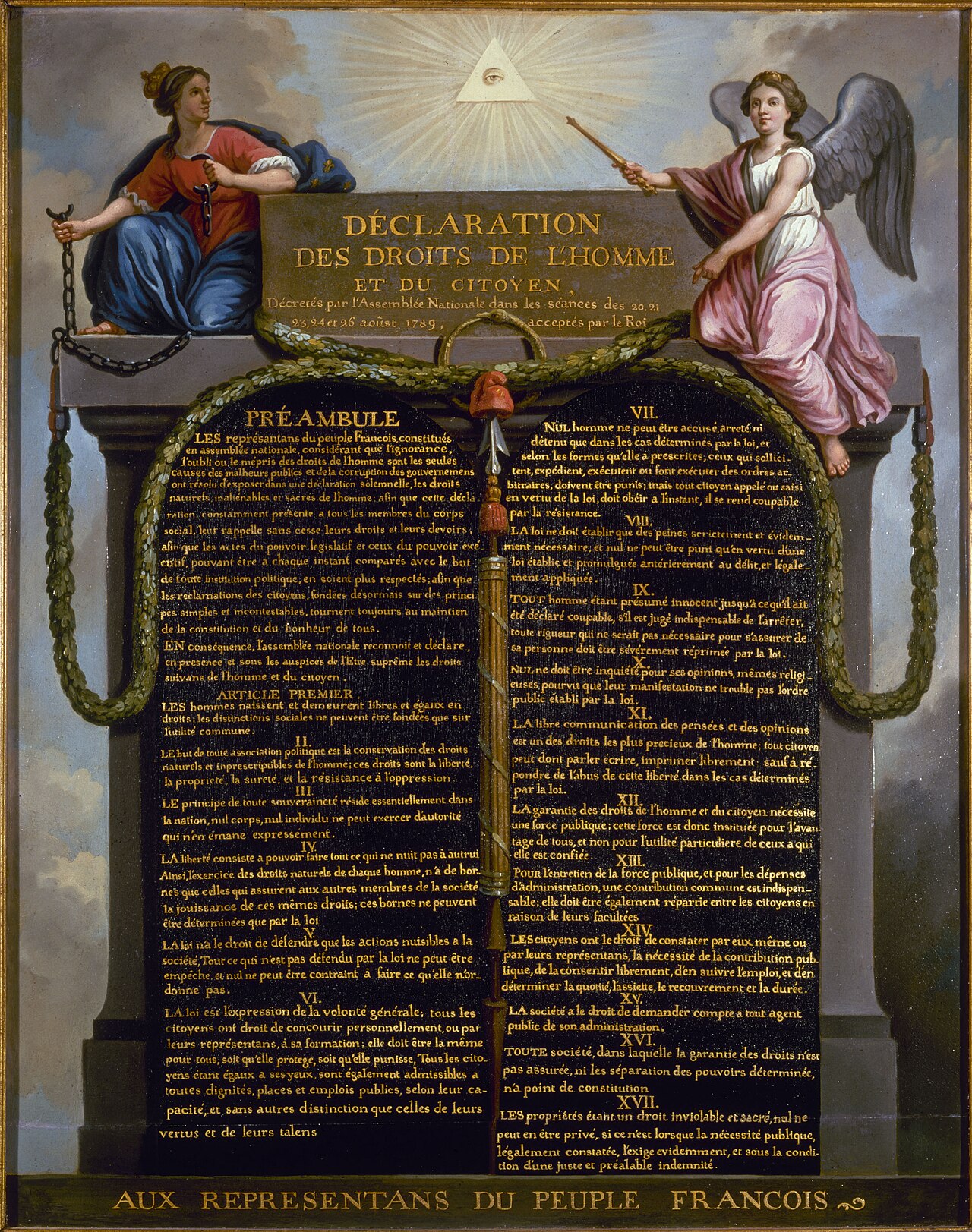
This image represents the revolutionary claim that rights were universal and not dependent on birth or estate. It links directly to Enlightenment ideals and the Revolution’s attack on privilege. Source
The American War of Independence
· French involvement in the American War of Independence worsened the financial crisis by increasing state debt.
· The war also exposed French soldiers and elites to ideas of constitutional government, liberty, and resistance to tyranny.
· The American example encouraged some reformers to believe that political change was possible.
· However, the most important impact for France was financial: war costs deepened the monarchy’s debt crisis.
· Exam judgement: American influence was important, but it was more of an accelerator than the main cause.
Economic problems and failed reform up to 1787
· France’s financial system was weak because taxation was inefficient, unequal and difficult to reform.
· Much royal income was spent servicing debt; by the late 1780s, debt repayment consumed a very large share of state revenue.
· Turgot tried to reduce spending and reform the economy, but his reforms faced opposition from privileged groups.
· Necker used loans to manage royal finances, but borrowing did not solve the structural tax problem.
· Calonne proposed major reforms, including a more universal land tax, but privileged elites resisted.
· The key issue was not simply poverty: it was the monarchy’s inability to make privileged groups contribute fairly.
· Exam phrase: “Financial crisis forced political crisis.”
The financial and political crisis, 1787–89
· Assembly of Notables, 1787: Calonne hoped leading nobles would approve reform, but they refused to accept new taxation without wider political consent.
· Calonne’s failure showed that even the monarchy could not easily overcome privileged resistance.
· Brienne replaced Calonne but also failed to resolve the crisis.
· The Parlement of Paris resisted reforms and argued that only the Estates-General could approve major new taxes.
· This turned a financial problem into a constitutional issue: who had authority to approve taxation?
· Louis XVI’s decision to call the Estates-General for 1789 was a major turning point because it opened national debate and gave the Third Estate a platform.
· The cahiers de doléances were lists of grievances that revealed widespread demands for tax reform, fair representation, and limits on arbitrary power.
Bad harvests, food shortages and popular anger
· Poor harvests in 1788–89 caused food shortages and pushed up bread prices.
· Bread was central to the diet of ordinary people, so price rises quickly became a political issue.
· Unemployment, rising prices and falling purchasing power increased urban unrest.
· Economic hardship made ordinary people more willing to support or join revolutionary action.
· Bad harvests did not cause the Revolution alone, but they created the immediate social pressure that made political crisis explosive.
· Exam judgement: popular hunger gave urgency to elite political conflict.
The Estates-General and the political deadlock
· The Estates-General opened at Versailles on 5 May 1789, the first meeting since 1614.
· The central dispute was whether voting should be by estate or by head.
· Voting by estate gave each estate one vote, allowing the First and Second Estates to outvote the Third Estate 2–1.
· Voting by head would give individual deputies votes, benefiting the larger Third Estate.
· The deadlock convinced the Third Estate that the privileged orders would block meaningful reform.
· On 17 June 1789, the Third Estate declared itself the National Assembly, claiming to represent the nation.
· This was revolutionary because sovereignty was shifting from the king and estates to the nation.
The National Assembly and the Tennis Court Oath
· On 20 June 1789, deputies found themselves locked out of their meeting place and gathered in a nearby tennis court.
· They swore the Tennis Court Oath, promising not to separate until France had a constitution.
· The oath was a direct challenge to royal authority because it claimed that the National Assembly had legitimate political power.
· Louis XVI eventually ordered the clergy and nobility to join the National Assembly, showing royal retreat.
· The oath marked a shift from reform within the old system to a demand for constitutional change.
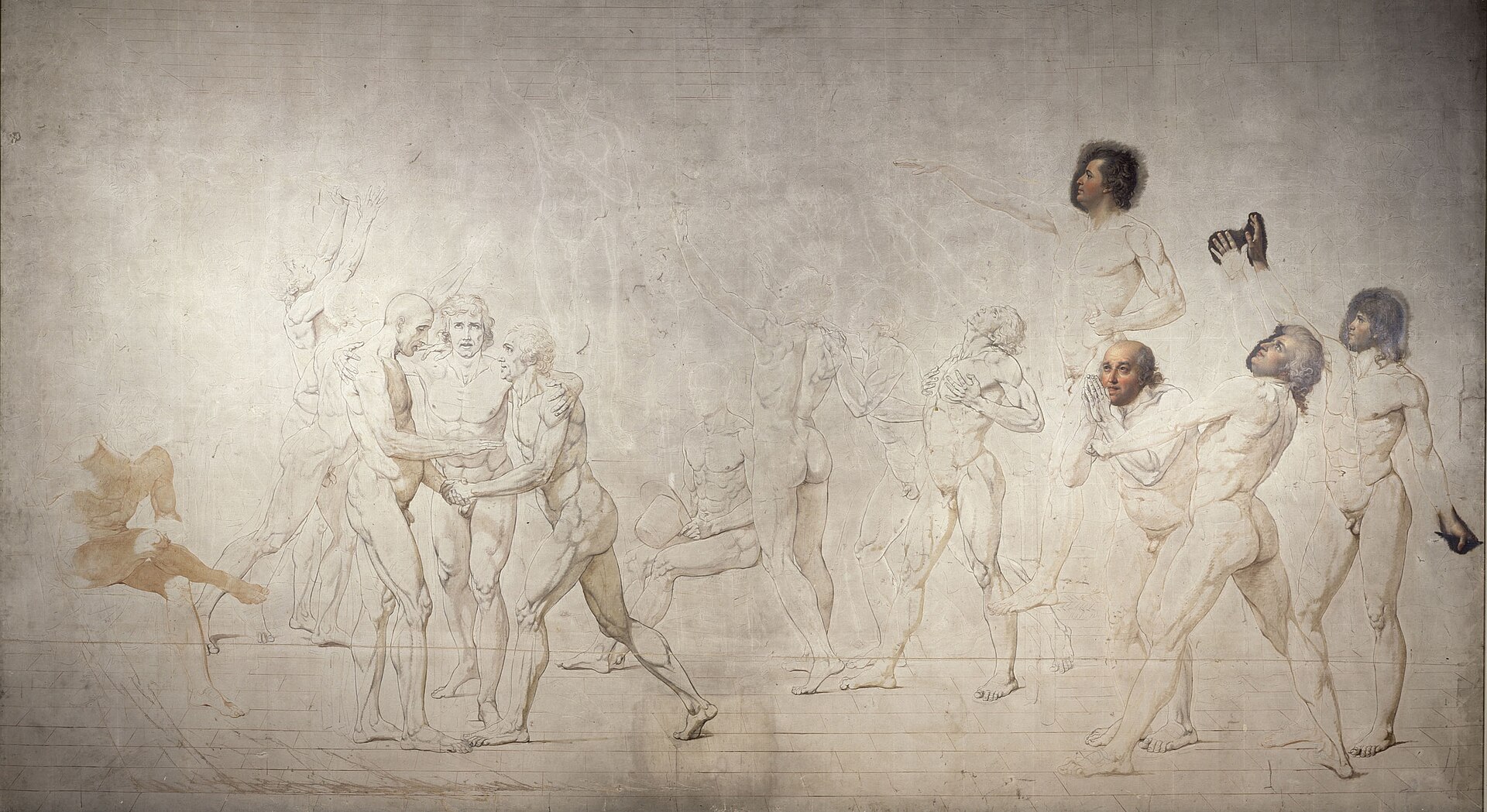
This image shows the deputies of the Third Estate/National Assembly pledging not to separate until France had a constitution. It captures the transfer of political initiative away from Louis XVI and towards representatives of the nation. Source
Louis XVI’s refusal to carry out reform
· Louis XVI’s actions in summer 1789 appeared inconsistent and untrustworthy.
· He accepted some changes but also gathered troops near Paris and Versailles, creating fear of royal repression.
· The dismissal of Necker in July 1789 alarmed many Parisians because Necker was seen as sympathetic to reform.
· Many believed the king intended to crush the National Assembly by force.
· This fear helped trigger popular revolutionary action in Paris.
· Exam judgement: Louis XVI’s hesitation and reliance on force made compromise less likely.
The outbreak of revolution: Storming of the Bastille
· The Storming of the Bastille took place on 14 July 1789.
· The Bastille was a royal fortress-prison and a symbol of arbitrary royal authority.
· Parisians attacked it partly to obtain weapons and gunpowder, but its symbolic importance made the event revolutionary.
· The fall of the Bastille showed that popular violence could affect national politics.
· It forced Louis XVI to accept the new political reality and reduced the chance of immediate royal repression.
· Key exam phrase: “The Bastille turned political revolution into popular revolution.”
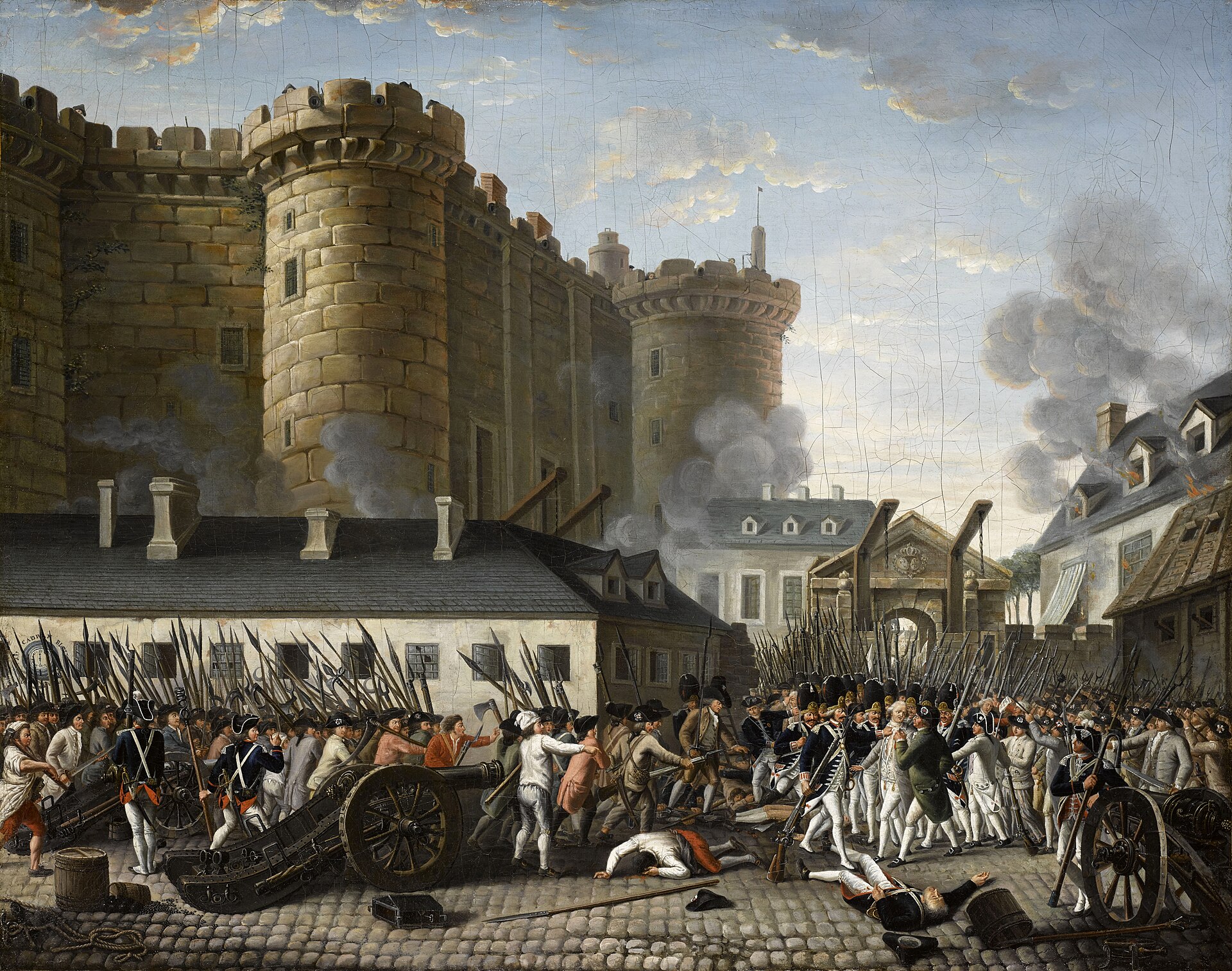
This image shows the popular uprising in Paris on 14 July 1789. It is useful because the Bastille symbolised royal despotism, making its fall a powerful sign that the monarchy had lost control of the capital. Source
The Great Fear and rural revolution
· The Great Fear was a wave of panic and peasant unrest across rural France in summer 1789.
· Rumours spread that nobles were hiring brigands to destroy crops or punish peasants.
· Peasants attacked châteaux, burned feudal records and challenged seigneurial rights.
· The Great Fear showed that revolution had spread beyond Paris into the countryside.
· It pressured the National Assembly to deal with feudalism and privilege.
· Exam judgement: rural unrest forced legal reform from above.
The August Decrees
· On 4 August 1789, the National Assembly moved to abolish many feudal privileges.
· The August Decrees attacked the legal foundations of the Ancien Régime, including feudal dues, noble privileges and church tithes.
· The decrees were partly a response to peasant unrest during the Great Fear.
· They marked a major move towards legal equality.
· However, some dues still required compensation, so the reforms did not immediately satisfy all peasants.
· Exam phrase: “The August Decrees destroyed privilege in principle, but not always in practice.”
The Declaration of the Rights of Man and of the Citizen
· Issued in August 1789, the Declaration of the Rights of Man and of the Citizen set out revolutionary principles.
· It declared ideas such as liberty, property, security, resistance to oppression, and equality before the law.
· It challenged the Ancien Régime because rights were presented as universal rather than based on estate or birth.
· It supported the idea that sovereignty belonged to the nation, not solely to the king.
· It became a key statement of revolutionary ideology and a foundation for constitutional reform.
· Limitation: it did not fully include women, enslaved people or the poorest citizens in political rights.
The March of the Women
· The March of the Women took place in October 1789, driven by anger over bread shortages and suspicion of the king.
· Thousands of women marched from Paris to Versailles demanding bread and political action.
· The crowd forced Louis XVI and his family to move from Versailles to Paris.
· This placed the monarchy under closer popular pressure and reduced royal freedom of action.
· It showed the importance of popular protest, especially by women, in shaping the Revolution’s direction.
· Exam judgement: the March of the Women made the king a political prisoner of Parisian pressure.
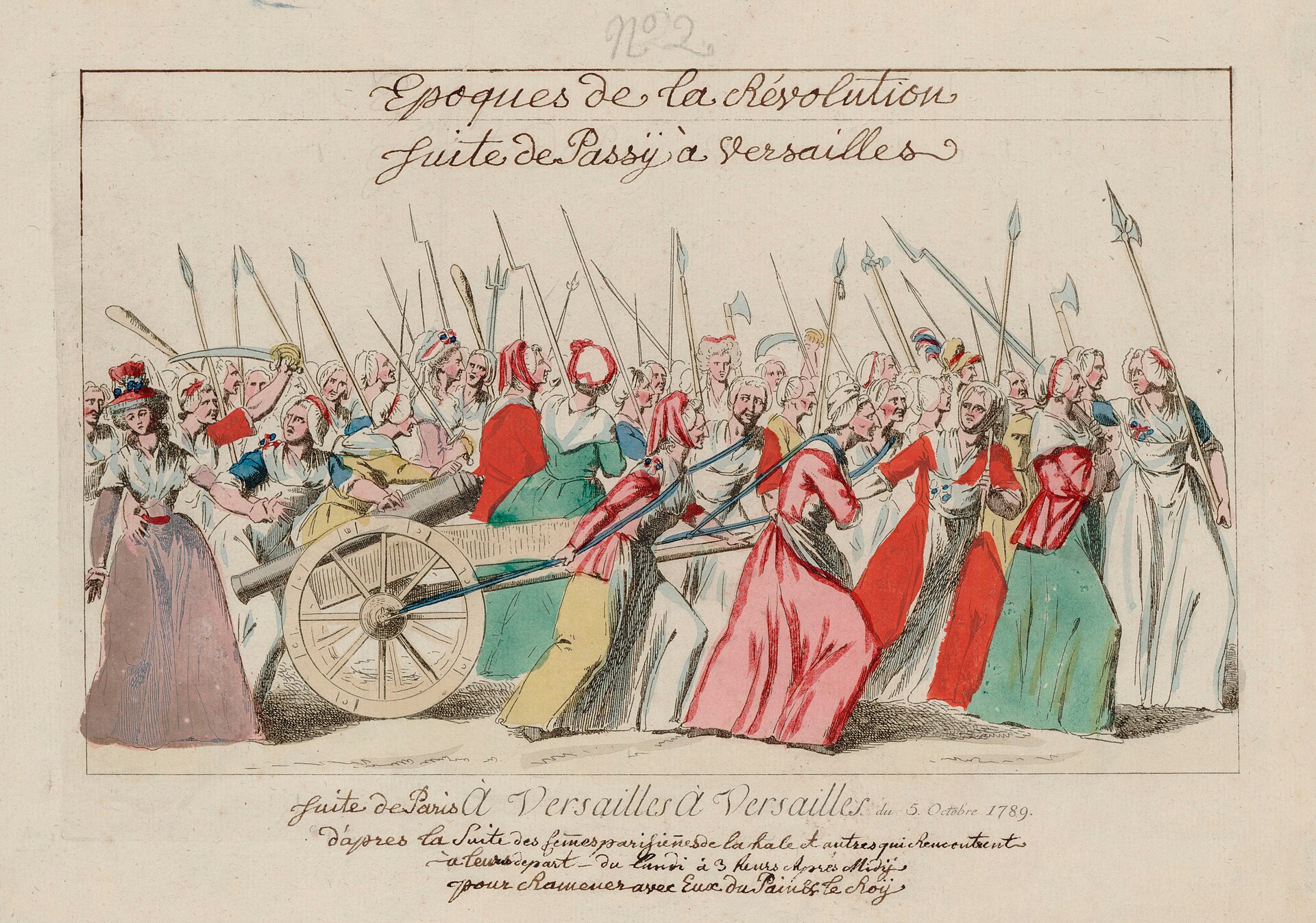
This image shows women from Paris taking direct political action over bread shortages and distrust of the monarchy. It highlights how economic hardship and popular protest forced Louis XVI to move to Paris. Source
Immediate consequences of the 1789 Revolution
· Royal authority weakened: Louis XVI was forced to accept the National Assembly and could no longer govern as before.
· National Assembly strengthened: it became the centre of political authority and began creating a constitutional monarchy.
· Feudal privilege challenged: the August Decrees attacked the legal basis of the Ancien Régime.
· Rights language spread: the Declaration of the Rights of Man introduced principles of equality, liberty and national sovereignty.
· Popular politics expanded: Paris crowds, peasants and women became active forces in the Revolution.
· The king moved to Paris after the October Days, making the monarchy more vulnerable to popular pressure.
· The Revolution did not immediately create a republic; in 1789, most reformers still aimed for a constitutional monarchy.
Cause-and-effect links for exam answers
· Financial crisis → political crisis: state bankruptcy forced Louis XVI to call the Estates-General.
· Estate inequality → Third Estate radicalisation: unfair representation pushed the Third Estate to form the National Assembly.
· Enlightenment ideas → ideological challenge: reformers used ideas of rights, liberty and sovereignty to justify change.
· Food shortages → popular unrest: bread prices and unemployment turned political conflict into mass action.
· Royal hesitation → loss of trust: Louis XVI’s inconsistent response encouraged fears of repression.
· Popular violence → Assembly reform: the Bastille and Great Fear pushed the Assembly towards abolishing privilege.
Common exam judgements
· Most important long-term cause: the structural weakness of the Ancien Régime, especially privilege and unequal taxation.
· Most important short-term cause: the financial and political crisis of 1787–89, which forced the monarchy to summon the Estates-General.
· Most important trigger: the deadlock at the Estates-General and the formation of the National Assembly.
· Most important popular factor: food shortages, bread prices and fear of royal repression.
· Most important immediate consequence: the collapse of absolute monarchy and the beginning of constitutional revolution.
Checklist: can you do this?
· Explain how absolute monarchy, the Estate system, and Third Estate discontent created pressure for change.
· Link financial crisis, Necker, Turgot, Calonne, the Assembly of Notables, and the Parlement of Paris into one clear chain of causation.
· Explain why the Estates-General, National Assembly, and Tennis Court Oath were politically revolutionary.
· Analyse how the Bastille, Great Fear, August Decrees, Declaration of Rights, and March of the Women changed events in 1789.
· Make a judgement on whether the Revolution was caused more by long-term structural problems or short-term crisis.