
What caused the rise and fall of Napoleon Bonaparte?
· CIE expects students to focus on Napoleon’s rise, authoritarian control, domestic reforms, and reasons for his fall, including the impact of war on France rather than detailed military campaigns.
· Key judgement: Napoleon rose because France wanted stability after revolutionary disorder, but fell because military overreach, economic failure, and declining domestic support weakened his regime.
Napoleon’s military reputation and political ambitions
· Napoleon gained fame through military success, especially as a successful general of the Republic.
· His reputation made him appear as a leader who could provide order, security and national glory after the weaknesses of the Directory.
· The Directory’s failures in finance, politics and war created an opportunity for a strong military figure.
· Napoleon was ambitious: he used his popularity with the army and public to move from military command to political power.
· Exam link: his rise was not only due to personal talent; it depended on the weakness of existing government.
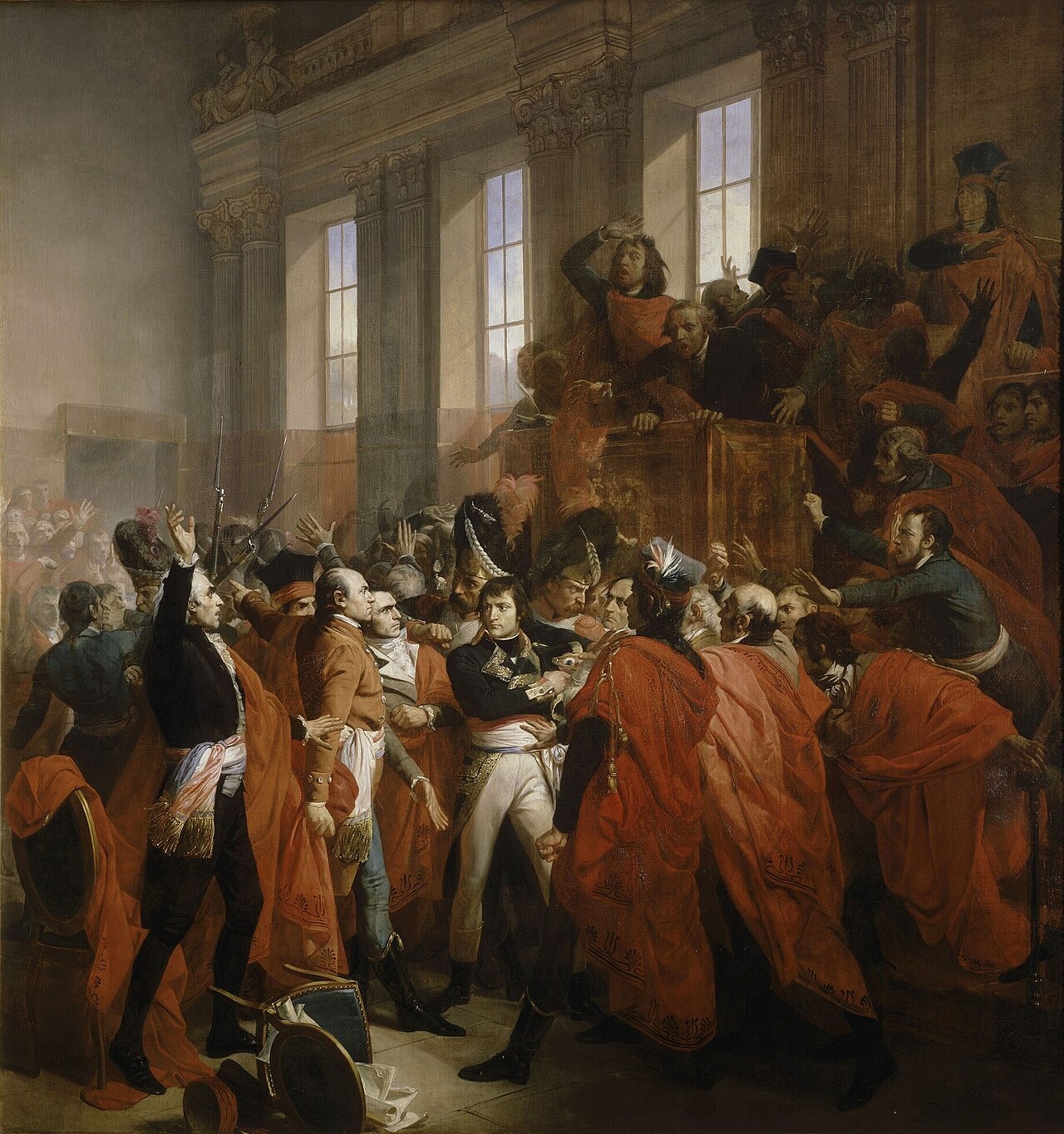
This image shows Napoleon during the Coup of 18 Brumaire, the event that helped bring him to power in 1799. It is useful for showing the link between military authority and the collapse of the Directory. Source
The coup of 1799: why Napoleon came to power
· The Coup of 18 Brumaire took place in November 1799 and overthrew the Directory.
· Napoleon became First Consul, giving him the strongest position in the new Consulate.
· The coup succeeded because:
· The Directory was associated with instability and corruption.
· Many elites feared a return of Jacobins or royalists.
· Napoleon had strong military prestige.
· France wanted order after revolution.
· Key judgement: the coup was presented as restoring order, but it marked the start of personal rule.
Napoleon’s initiatives as First Consul
· As First Consul, Napoleon aimed to stabilise France after years of revolution.
· He strengthened central government through efficient administration and more direct control from Paris.
· He created or strengthened institutions that helped the state function more effectively, including:
· New ministries
· Council of State
· Prefects to supervise local government
· These initiatives made Napoleon popular because they promised order, efficiency and national recovery.
· However, they also reduced political freedom by concentrating power in Napoleon’s hands.
Establishing authoritarian control
· Napoleon established authoritarian control by weakening opposition and limiting democratic participation.
· Methods included:
· New ministries and Council of State to centralise decision-making.
· Reform of the police force and judiciary to monitor opponents.
· Propaganda and censorship to control public opinion.
· Control of elections so popular participation became limited.
· In 1804, Napoleon became Emperor Napoleon I, showing the move from republican government to hereditary personal rule.
· Key judgement: Napoleon preserved some revolutionary gains, but destroyed much of the Revolution’s political liberty.
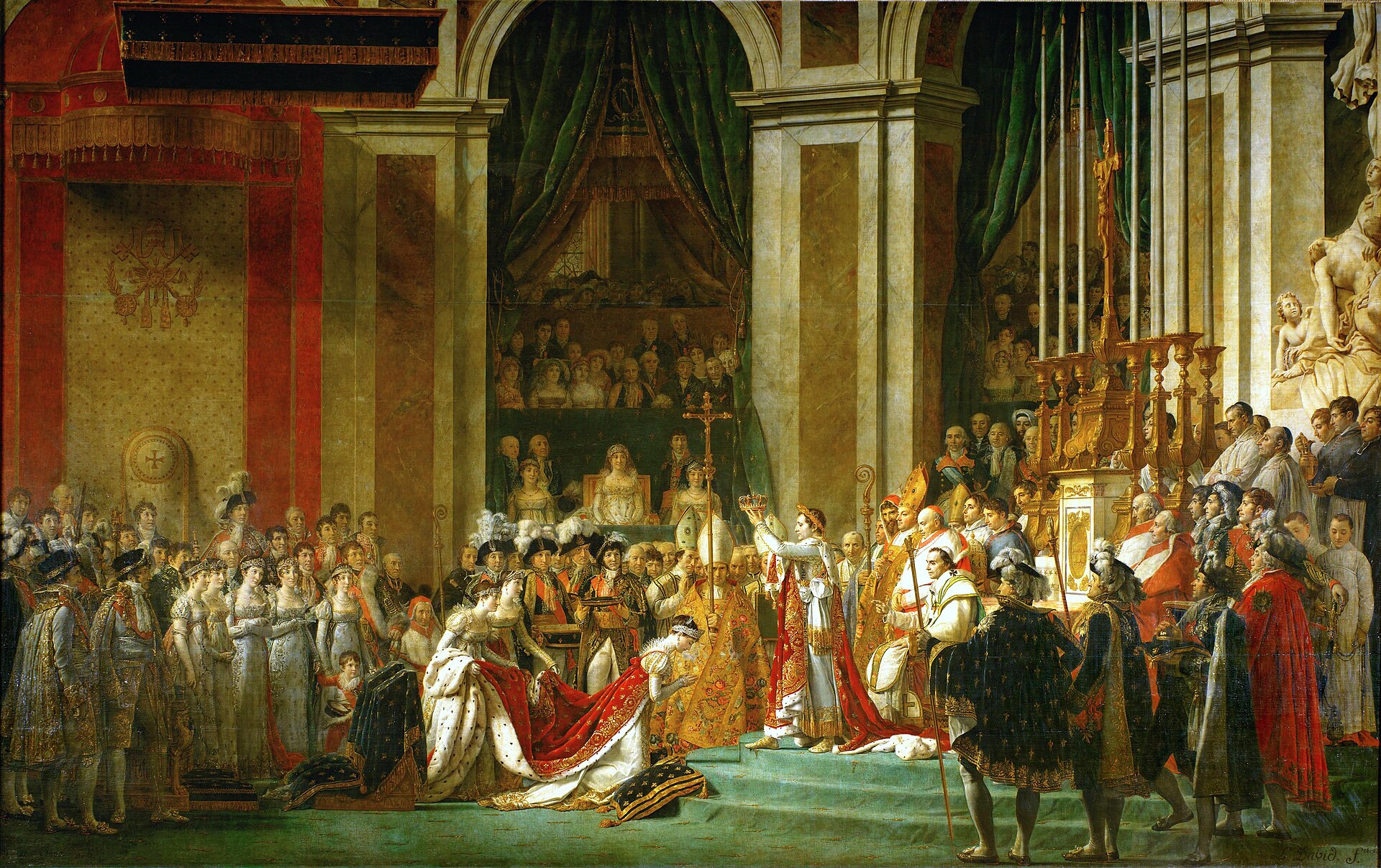
This painting shows Napoleon’s coronation in Notre-Dame Cathedral in 1804. It illustrates how Napoleon transformed from First Consul into Emperor, symbolising the growth of authoritarian and personal rule. Source
Domestic reforms: law, education, finance and religion
· Code Napoleon / Napoleonic Code: created a clearer legal system and preserved key revolutionary principles such as equality before the law, property rights and religious toleration.
· Education reforms: aimed to produce loyal, skilled officials and strengthen state control over future elites.
· Financial and economic reforms: included the Bank of France, taxation reform and attempts to control bread prices.
· Concordat with the Roman Catholic Church, 1801: restored better relations with the Church while keeping it under state influence.
· These reforms helped Napoleon rise because they gave France stability, order and administrative efficiency.
· Exam judgement: his reforms were successful because they created long-term stability, but they also strengthened centralised control.
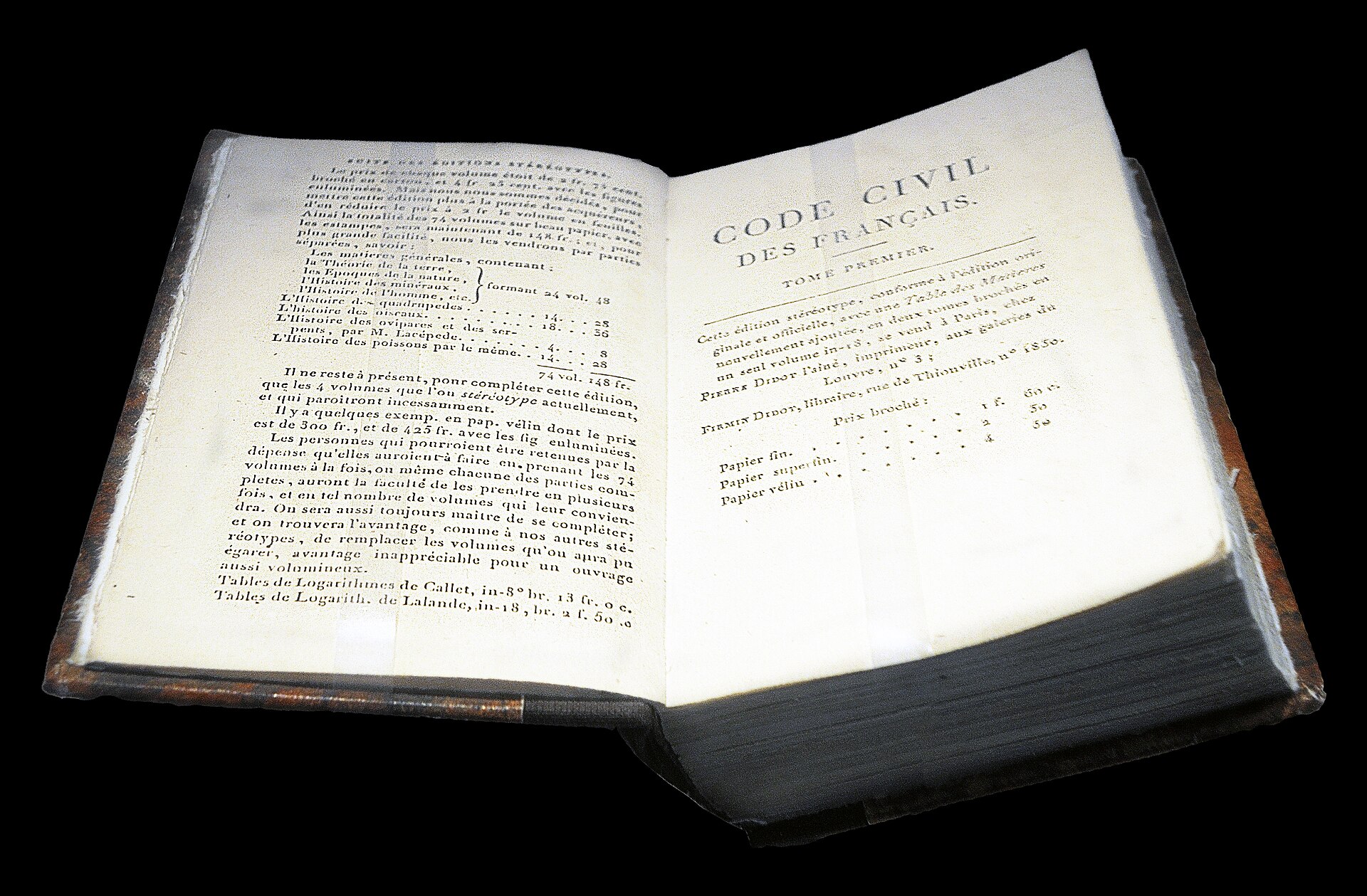
This image represents the Code Napoleon, one of Napoleon’s most important domestic reforms. It helped standardise French law and preserve parts of the Revolution, especially legal equality and property rights. Source
Reasons for Napoleon’s declining popularity at home
· Napoleon’s popularity declined because his rule became increasingly linked to war, conscription and economic hardship.
· Conscription caused resentment as French families faced the human cost of continuous warfare.
· The economy deteriorated because war disrupted trade and increased pressure on state finances.
· The benefits of reform became less important to many people as the costs of empire increased.
· Key judgement: Napoleon’s domestic authority depended on military success; when victories became costly or failed, support weakened.
Failure to defeat Britain and the Continental System
· Britain remained Napoleon’s most persistent enemy.
· Napoleon tried to defeat Britain economically through the Continental System, an embargo designed to block British trade with Europe.
· The system failed because:
· Britain continued trading through its empire and navy.
· Smuggling weakened enforcement.
· European states resented French economic control.
· The system damaged parts of the French and European economies.
· The Peninsular War, 1808–14 weakened Napoleon by draining troops, money and prestige.
· Exam judgement: the failure to defeat Britain exposed the limits of Napoleon’s power.
Empire, nationalism and overextension
· By 1812, Napoleon’s empire was at its greatest extent, but it was difficult to control.
· French domination encouraged nationalism in conquered or controlled areas.
· People increasingly resisted French rule because of:
· Taxation
· Conscription
· Economic disruption
· Resentment of foreign domination
· Nationalism turned Napoleon’s own revolutionary ideas against him: peoples claimed the right to defend their own nations from French control.
· Key judgement: empire made Napoleon powerful, but also made France overextended and vulnerable.
Russia, Leipzig and abdication
· Napoleon’s Russian campaign, 1812 was a major turning point.
· The campaign failed and caused the near-destruction of the Grande Armée, badly weakening Napoleon’s military power.
· After Russia, Napoleon’s enemies formed a stronger coalition against him.
· The Battle of Leipzig, 1813 was a decisive defeat that forced Napoleon back towards France.
· In 1814, Allied forces captured Paris and Napoleon abdicated.
· Key judgement: Napoleon fell because one defeat triggered wider consequences: military loss, loss of allies, invasion of France and political collapse.
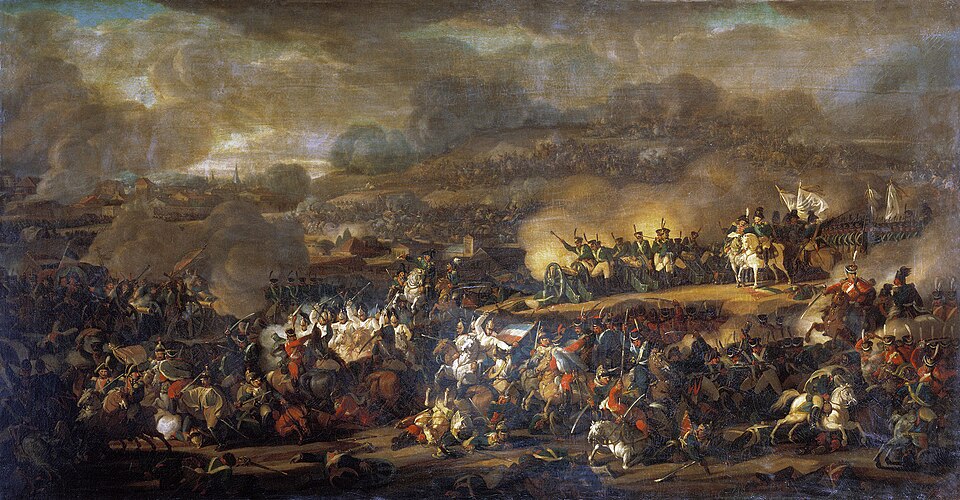
Leipzig was a major defeat for Napoleon in 1813. It showed that the European coalition could now defeat him and helped lead to the Allied invasion of France. Source
Overall reasons for Napoleon’s rise
· Weakness of the Directory: instability made a strong leader attractive.
· Military reputation: Napoleon appeared to offer victory and national glory.
· Political ambition: he used the coup of 1799 to seize power.
· Desire for order: many French people accepted authoritarian rule in exchange for stability.
· Domestic reforms: law, finance, education and religion helped consolidate his authority.
Overall reasons for Napoleon’s fall
· Declining popularity at home due to conscription and economic problems.
· Failure to defeat Britain, especially through the unsuccessful Continental System.
· Peninsular War drained French resources and weakened prestige.
· Growth of nationalism across the empire encouraged resistance.
· Russian campaign and Leipzig destroyed Napoleon’s military dominance and led to abdication.
Checklist: can you do this?
· Explain how military reputation, political ambition and the weakness of the Directory helped Napoleon rise.
· Describe how Napoleon established authoritarian control after 1799.
· Assess the importance of domestic reforms such as the Code Napoleon, Bank of France and Concordat.
· Explain why the Continental System, Peninsular War, nationalism and Russia weakened Napoleon.
· Make a balanced judgement on whether Napoleon fell mainly because of foreign/military failure or declining support inside France.