
France, 1774–1814: 1.2 How and why did France become a republic by 1792?
The syllabus focus is revolutionary and counter-revolutionary groups, reforms, political instability, and the shift from constitutional monarchy to republic.
Revolutionary groups: aims and influence
· Jacobins = radical revolutionary club; increasingly supported popular sovereignty, stronger revolutionary action and, by 1792, a more republican direction.
· Girondins = revolutionary group in the Legislative Assembly; favoured spreading revolution through war, especially against Austria, and often distrusted royal intentions.
· Feuillants = moderate constitutional monarchists; wanted to preserve the 1791 constitutional monarchy and limit further popular revolution.
· Sans-culottes = urban working-class radicals; pressured politicians through crowd action, demands for bread, suspicion of traitors and hostility to the monarchy.
· Key exam point: France became a republic because moderate constitutional monarchy lost credibility, while radical and popular pressure increased.
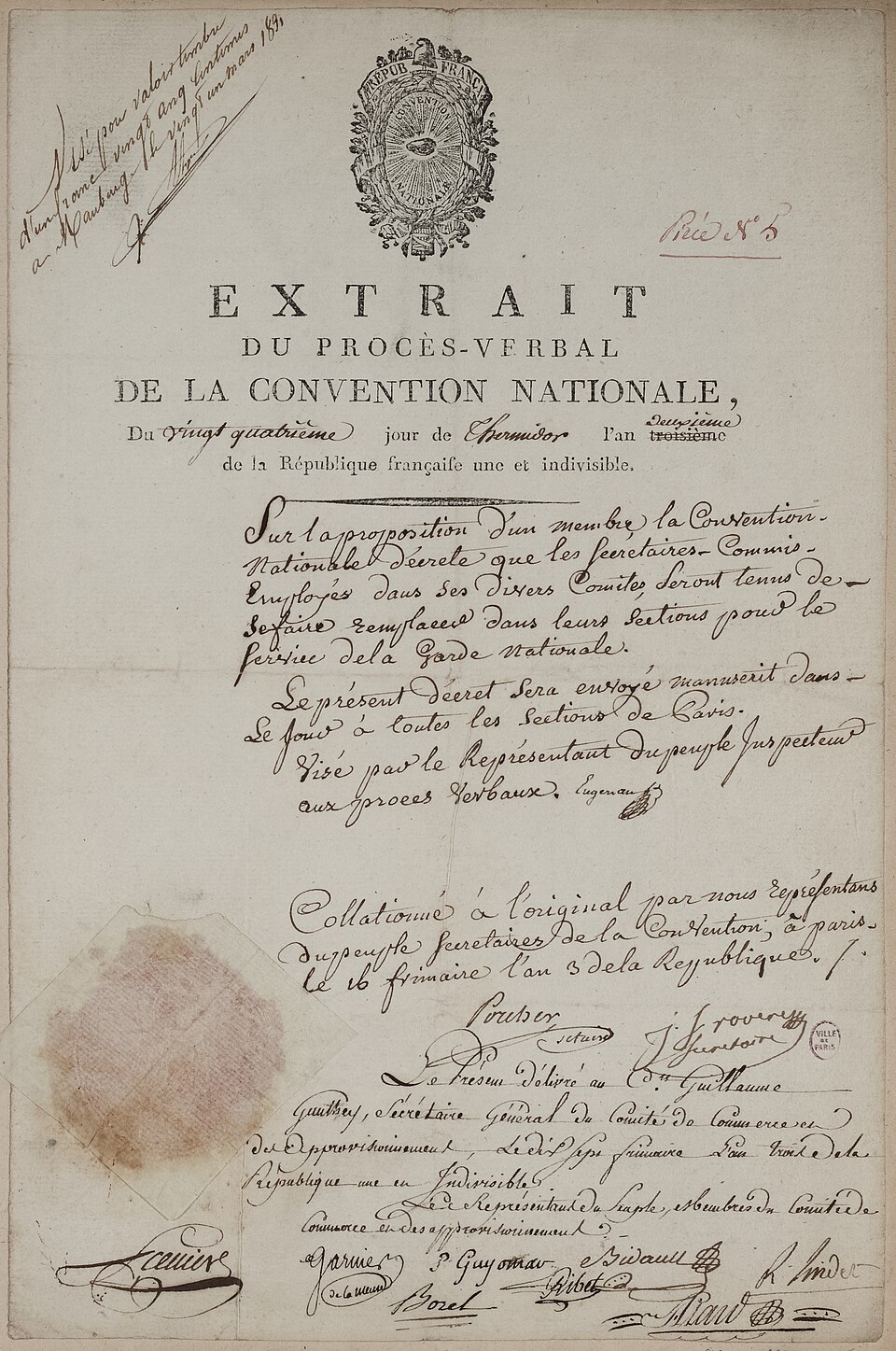
This diagram helps show that revolutionary politics became divided between groups such as Girondins, Jacobins/Montagnards and moderates. It is useful for understanding why the monarchy collapsed into a more radical republican political system. Source
Counter-revolutionary groups: reasons for failure
· Royalists wanted to restore stronger royal authority, but were divided between cautious supporters of constitutional monarchy and hard-line émigrés.
· Émigré nobles fled France and encouraged foreign intervention, making revolutionaries more suspicious that the king was linked to treason.
· Refractory priests opposed the Civil Constitution of the Clergy, creating religious resistance, especially in more Catholic rural areas.
· Counter-revolution failed because it lacked unity, depended heavily on foreign support, and was weakened by revolutionary control of Paris and the National Guard.
· Counter-revolution also helped radicalise the revolution: fear of internal enemies made republican arguments stronger.
Reforms: financial, legal, local and Church changes
· Assignats = paper money backed by confiscated Church lands; intended to solve financial crisis but later contributed to inflation and economic instability.
· Taxation reform aimed to remove many old privileges and create a more equal system of taxation, weakening the Ancien Régime order.
· Local government reform replaced older provinces with more uniform departments, helping centralise revolutionary administration.
· Justice reform aimed to make law more equal and rational, weakening privilege-based courts and feudal legal traditions.
· Church reforms were highly divisive: the Civil Constitution of the Clergy placed the Church under state control and required clergy to swear loyalty to the constitution, dividing France between juring and refractory priests. (Wikipedia)
· Key exam judgement: reforms modernised France but also caused resistance, especially religious resistance, which increased instability.
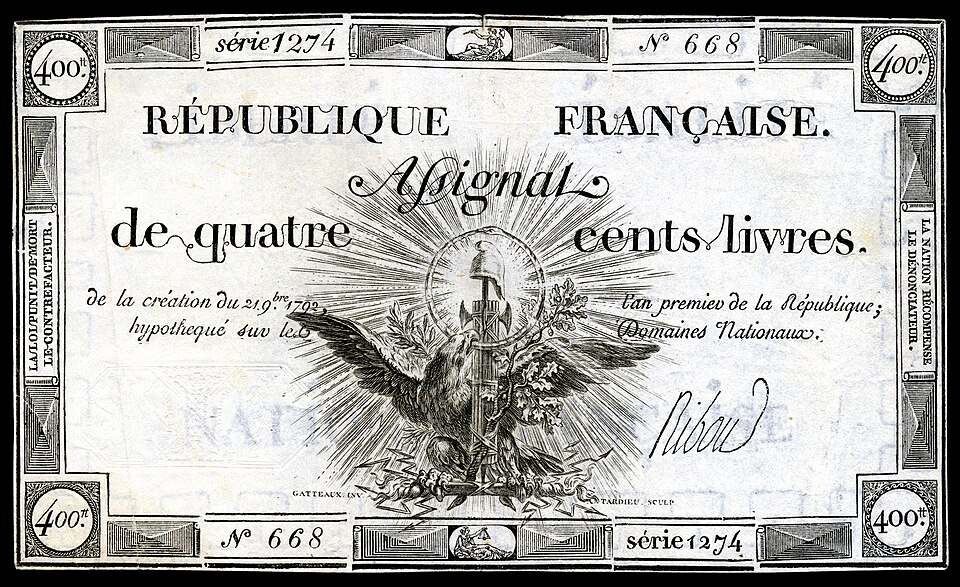
The image shows revolutionary paper money used during the French Revolution. It links directly to the financial reforms that tried to solve France’s debt crisis but also created economic pressures that weakened support for constitutional monarchy. Source
Political instability: why constitutional monarchy failed
· The 1791 Constitution created a constitutional monarchy, limiting the king’s power and creating the Legislative Assembly.
· However, the constitution kept the king as executive and allowed a suspensive veto, so Louis XVI could delay laws, which made radicals see him as obstructing reform.
· The Flight to Varennes in June 1791 was a turning point: Louis XVI attempted to flee Paris and was captured, making many revolutionaries believe he had betrayed the revolution.
· After Varennes, demands for a republic increased, but moderates tried to preserve monarchy.
· The Champ de Mars Massacre in July 1791 showed the split between moderate revolutionaries and republican radicals when the National Guard fired on republican petitioners.
· Key exam judgement: constitutional monarchy failed because it depended on trust in the king, and Varennes destroyed that trust.
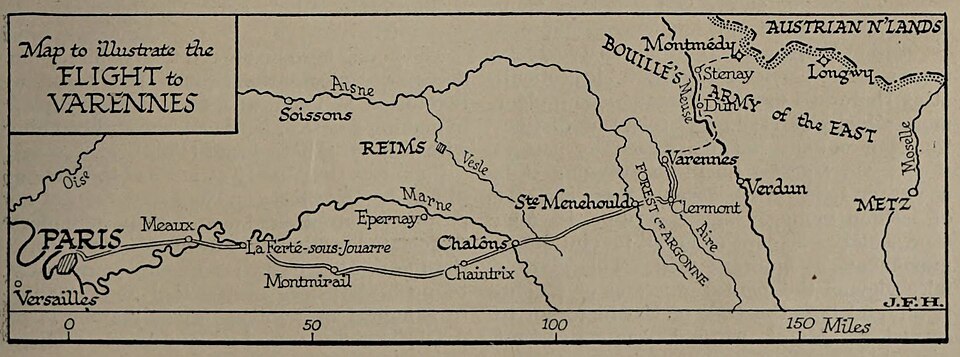
This image represents the failed escape of Louis XVI and the royal family in June 1791. It is important because Varennes made the king appear disloyal to the revolution and accelerated republican feeling. Source
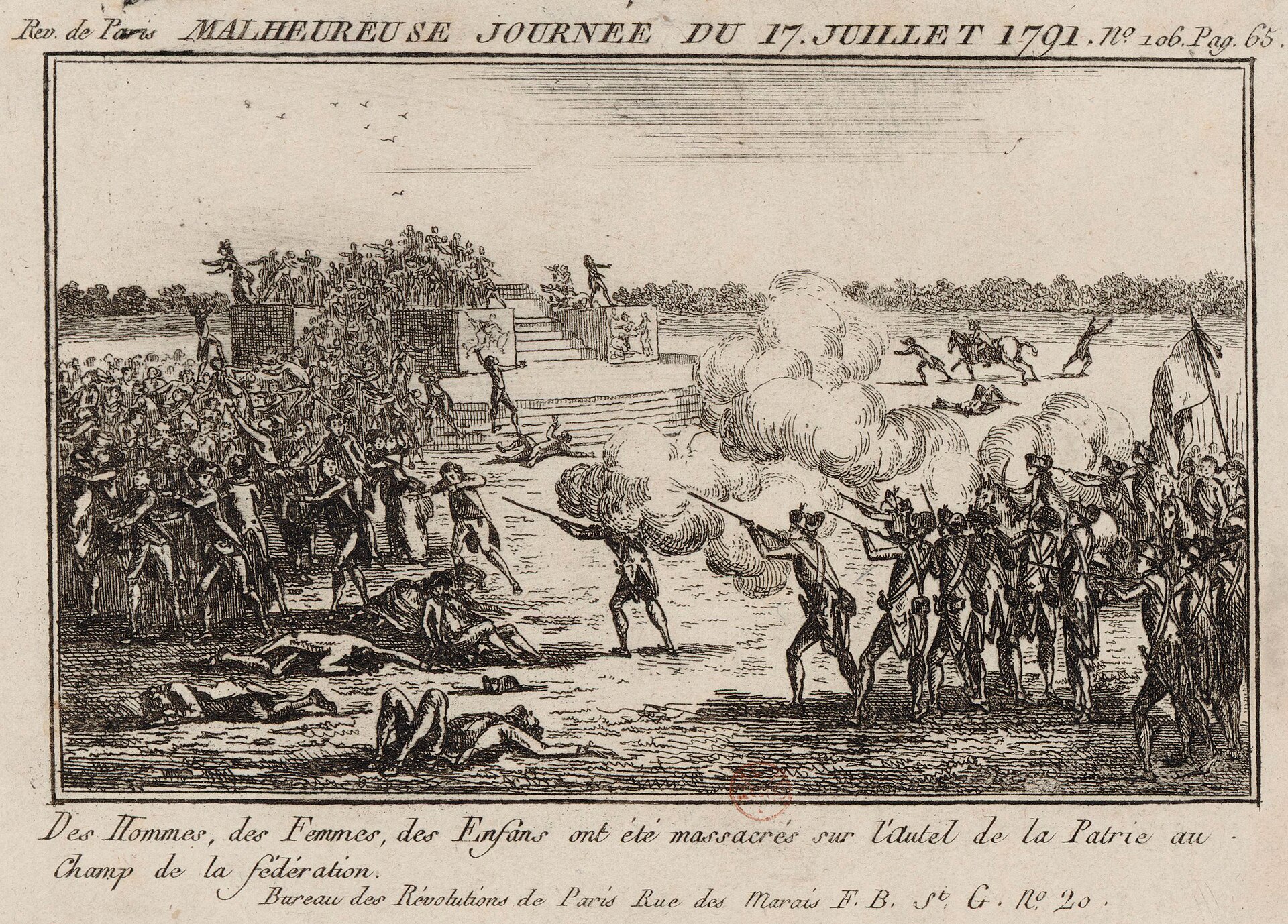
This image shows the violent repression of republican demonstrators in July 1791. It illustrates how the revolution became divided between moderates who wanted constitutional monarchy and radicals who wanted a republic. Source
From constitutional monarchy to republic, 1791–1792
· The Legislative Assembly replaced the National Constituent Assembly in 1791 and had to manage war, economic crisis and political division.
· In April 1792, France declared war on Austria, beginning the French Revolutionary Wars.
· War made politics more radical because military defeats encouraged suspicion of treason, especially against Louis XVI and royalists.
· The Brunswick Manifesto threatened Paris if the royal family was harmed, making the monarchy appear linked to foreign enemies.
· On 10 August 1792, the Tuileries Palace was stormed and the monarchy was suspended.
· The September Massacres showed extreme fear of counter-revolution, as crowds killed prisoners suspected of being enemies of the revolution.
· The National Convention met in September 1792 and abolished the monarchy on 21 September 1792, creating the First Republic.
· Key exam judgement: the republic was created through a combination of war crisis, popular radical pressure, loss of trust in the king and collapse of moderate control.
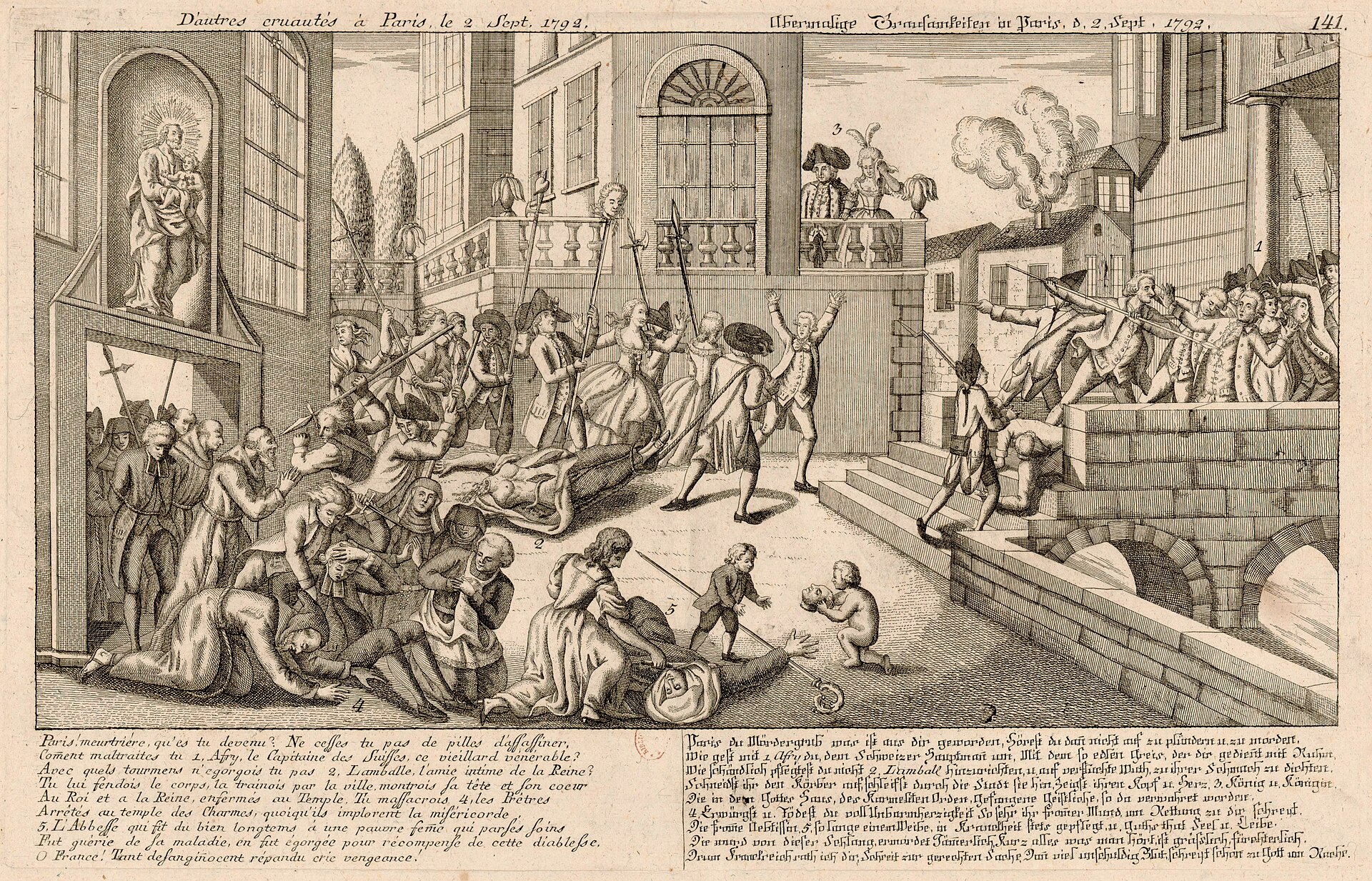
This image shows the violence and fear that dominated Paris in September 1792. It helps explain why the monarchy’s collapse was linked to war panic, suspicion of counter-revolution and radical popular action. Source
Why France became a republic: main causes
· Royal mistrust: Louis XVI’s vetoes and the Flight to Varennes convinced many that the king opposed the revolution.
· Political division: Feuillants, Girondins and Jacobins disagreed over how far the revolution should go.
· War: conflict with Austria intensified fears of royal betrayal and strengthened radical voices.
· Popular pressure: sans-culottes and Parisian crowds pushed politicians beyond constitutional monarchy.
· Counter-revolutionary fear: émigrés, refractory priests and foreign threats made compromise seem dangerous.
· Weak constitutional settlement: the 1791 Constitution tried to balance monarchy and popular sovereignty but satisfied neither royalists nor radicals.
Key timeline for exams
· July 1790: Civil Constitution of the Clergy passed, dividing Church and nation.
· June 1791: Flight to Varennes destroys trust in Louis XVI.
· July 1791: Champ de Mars Massacre deepens split between moderates and republicans.
· September 1791: 1791 Constitution establishes constitutional monarchy.
· April 1792: France declares war on Austria.
· 10 August 1792: Storming of the Tuileries; monarchy suspended.
· September 1792: September Massacres and election of the National Convention.
· 21 September 1792: Abolition of monarchy.
· 22 September 1792: France becomes the First Republic.
Exam focus: how to explain “how” and “why”
· How France became a republic: through a step-by-step collapse of constitutional monarchy — Varennes, war, Tuileries, National Convention, abolition of monarchy.
· Why France became a republic: because the king lost legitimacy, war radicalised politics, and popular movements pushed beyond moderate reform.
· Strong answers should link short-term triggers to longer-term weaknesses in the constitutional monarchy.
· Avoid saying “France became a republic simply because people hated the king”; stronger explanation = political mistrust + war crisis + radical pressure + failed constitutional compromise.
· Use precise evidence: Flight to Varennes, Champ de Mars, war with Austria, September Massacres, National Convention.
Checklist: can you do this?
· Explain the aims of the Jacobins, Feuillants and Girondins.
· Describe why counter-revolutionary groups failed and how they increased revolutionary fear.
· Explain how reforms, especially assignats and the Civil Constitution of the Clergy, created instability.
· Analyse why the Flight to Varennes and war with Austria weakened constitutional monarchy.
· Judge why the National Convention abolished the monarchy in September 1792.v