

OCR Specification focus:
‘Reactivity trends from Mg to Ba shown by oxidation with oxygen to form oxides; observations compared across the group.’
Group 2 metals show a clear and useful trend in their behaviour when reacting with oxygen. Understanding how magnesium, calcium, strontium, and barium react with oxygen offers insight into group reactivity patterns, oxidation processes, and the formation of ionic oxides. These reactions also provide strong evidence for increasing reactivity down Group 2, an important theme across this unit.
Reactions of Group 2 Metals with Oxygen
Group 2 elements all contain s² outer-shell electron configurations, making them strong reducing agents. Each metal typically loses two electrons to form a 2+ ion, while oxygen gains electrons to form oxide ions. These reactions illustrate consistent oxidation patterns and allow comparisons of increasing reactivity down the group.
When Group 2 metals react with oxygen, they undergo oxidation by losing electrons, generating solid metal oxides with the general formula MO. The reactions are exothermic and become more vigorous from magnesium to barium due to decreasing ionisation energies and increasing atomic size.
Oxidation and Formation of Metal Oxides
When discussing these reactions, it is essential to recognise that oxidation refers to the loss of electrons.
Oxidation: The loss of electrons by a species during a chemical reaction, often increasing its oxidation number.
A single sentence must appear here to separate definition blocks, ensuring clarity and ease of reading.
Magnesium and Oxygen
Magnesium reacts readily with oxygen when heated strongly. The reaction produces a brilliant white flame and a white solid known as magnesium oxide.
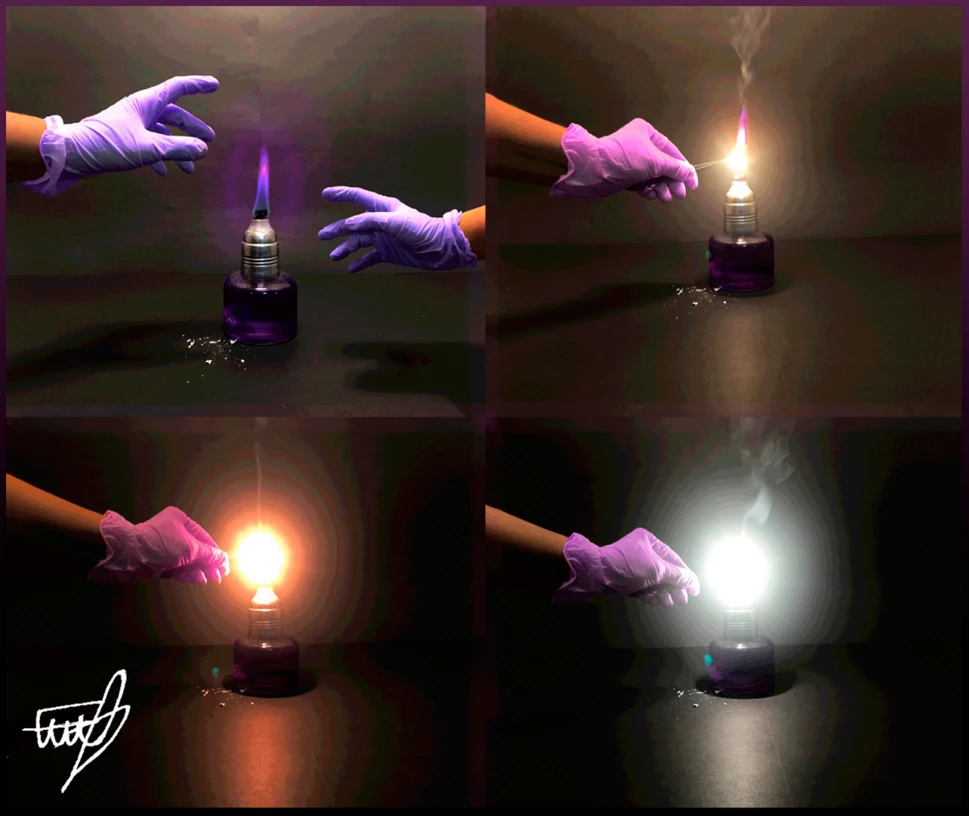
Magnesium ribbon is ignited and burns with an intense white flame as it reacts with oxygen in air to form solid magnesium oxide. The brightness reflects the highly exothermic nature of the oxidation reaction, in which magnesium is oxidised from Mg to Mg²⁺. This demonstration visually reinforces the characteristic appearance of Group 2 metal–oxygen reactions at A-level. Source
Formation of Magnesium Oxide (2Mg + O₂ → 2MgO)
Mg: Magnesium metal (solid)
O₂: Oxygen molecule (gas)
MgO: Ionic magnesium oxide (solid)
Key observations for magnesium:
Burns with an intense white flame.
Produces a white powder of MgO.
Reaction requires heating to initiate due to the stable oxide layer on the surface.
After this reaction occurs, the oxide layer formed is highly stable, meaning magnesium powder can continue reacting more effectively than magnesium ribbon.
Calcium, Strontium, and Barium with Oxygen
As we descend Group 2, the metals become more reactive, and their reactions with oxygen require less energy to initiate. The formation of solid oxides remains consistent, but the vigour of the reaction increases.
Important observations across the group:
Calcium burns with a brick-red flame, forming calcium oxide (CaO).
Strontium burns with a crimson flame, producing strontium oxide (SrO).
Barium burns with a pale green flame, generating barium oxide (BaO).
These flame colours are characteristic of the metal ions and provide qualitative evidence for increasing reactivity. The reactions also demonstrate decreasing activation energy requirements as atomic radius increases and ionisation energies fall.
A single normal sentence is placed here before using the next equation format for clarity.
General Group 2 Oxide Formation (2M + O₂ → 2MO)
M: Group 2 metal (Mg, Ca, Sr, Ba)
MO: Metal oxide product (solid)
Reactivity Trend Down Group 2
The key trend demonstrated by reactions with oxygen is increasing reactivity from magnesium to barium. This trend reflects two core ideas taught throughout Periodicity and Group Chemistry:
Increasing atomic radius: Outer electrons are further from the nucleus and more easily lost.
Greater electron shielding: More inner shells reduce effective nuclear charge on valence electrons.
Lower first and second ionisation energies: Electrons are more readily removed, allowing faster oxidation reactions.
These principles explain why:
Magnesium requires strong heating.
Calcium ignites more readily.
Strontium reacts quickly in air.
Barium can oxidise even at room temperature, forming a surface layer of barium oxide.
Observational Differences and Practical Considerations
To understand these reactions fully, students must recognise both the chemical equation and physical observations accompanying the process. Some key differences include:
Appearance of the Metals Before Reaction
Magnesium: shiny silver, often coated with thin oxide.
Calcium: silvery-grey, tarnishes slowly.
Strontium: soft, pale metal, tarnishes rapidly.
Barium: very reactive, stored under oil to prevent oxidation.
Behaviour During Oxidation
Vigour increases down the group.
Flames change colour according to electron transitions in the metal ions.
Oxide formation becomes progressively easier as ionisation energy decreases.
Nature of the Metal Oxides
Group 2 oxides produced from these reactions are basic oxides, meaning they react with water to form alkaline solutions. Although this property is formally explored in a later subsubtopic, the basic nature underlines why these reactions are important for understanding group trends.
Bullet points illustrating oxide characteristics:
Oxides are white ionic solids (though may appear grey if contaminated).
Lattice energy varies across the group, but all oxides contain the O²⁻ ion.
Their formation always involves the metal being oxidised and oxygen being reduced.
Understanding these reactions helps build a foundation for later study of hydroxides, solubility trends, and the increasing alkalinity down Group 2.
Practice Questions
Magnesium burns in oxygen to form magnesium oxide.
Write the balanced chemical equation for this reaction and state one observation you would see during the reaction.
(2 marks)
1 mark: Correct balanced equation:
2Mg + O2 → 2MgO
1 mark: Correct observation, e.g.:
Bright white flame
White solid/powder produced
Magnesium glows intensely
(Any one suitable observation scores the mark.)
The reactivity of Group 2 metals with oxygen increases from magnesium to barium.
Explain why reactivity increases down Group 2, and describe what you would observe when calcium, strontium, and barium react with oxygen.
Your answer should refer to trends in ionisation energy and atomic structure.
(5 marks)
Explanation of increasing reactivity (3 marks):
1 mark: Atomic radius increases down the group.
1 mark: Increased shielding from more inner electron shells.
1 mark: First and second ionisation energies decrease, so electrons are lost more easily and the metal is more readily oxidised.
Observations of reactions (2 marks):
1 mark: Calcium burns with a brick-red flame forming a white solid.
1 mark: Strontium burns with a crimson flame and barium with a pale green flame (or equivalent correct flame colours), both forming solid oxides.
(Allow equivalent correct descriptions of vigour, e.g., “reaction becomes more vigorous down the group.”)
FAQ
Group 2 metals have two outer electrons that they lose to form M2+ ions, while oxygen gains two electrons to form O2–. This 1:1 ratio naturally produces oxides of the form MO.
Higher oxides are not formed because the metals cannot stabilise higher oxidation states, and oxygen does not typically form polyatomic oxide ions under these reaction conditions.
Finer forms such as powders react more readily because they have a larger surface area in contact with oxygen.
This increased exposure allows oxidation to occur faster and with greater intensity.
In contrast, ribbon or blocks react more slowly as protective oxide layers can form and inhibit further reaction.
Metals like strontium and barium react so readily that the oxide layer formed is insufficient to protect the metal beneath.
Storing them under oil prevents continuous oxidation and reduces fire risk.
This also preserves the metal surface for accurate experimental use.
Flame colours arise from electronic transitions within the metal ions, not from reactivity itself.
However, more reactive metals ignite more easily, meaning their flame colours are often observed more readily.
The colours act as useful identifiers:
Calcium: brick-red
Strontium: crimson
Barium: pale green
Magnesium’s smaller atomic radius holds its outer electrons more tightly, requiring more energy to initiate oxidation.
Down the group:
Atomic radius increases
Shielding increases
Ionisation energies decrease
These factors combine to make electron loss—and therefore oxidation—much easier for calcium, strontium and barium.
