

AP Syllabus focus:
‘Islands have been colonized over time as new species arrive from other locations, shaping island biodiversity.’
Island communities form through repeated arrivals of organisms from mainland or other islands. Whether a species merely arrives or successfully establishes a population determines how island biodiversity develops through time.
Core concepts: immigration and colonization
Immigration is the movement of individuals into an island from elsewhere; colonization occurs when immigrants survive and reproduce enough to form a self-sustaining population.
Colonization: The establishment of a reproducing population in a new area after arrival, resulting in a persistent presence across multiple generations.
In island systems, immigration can be frequent (nearby islands) or extremely rare (remote islands), but even rare events can matter if they lead to successful colonization.
How species reach islands (immigration pathways)
Natural dispersal vectors
Immigrants typically reach islands via physical transport processes:
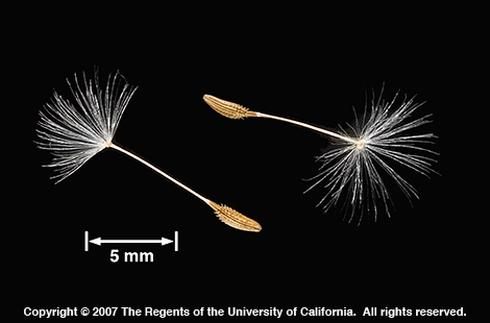
Wind-dispersed dandelion seeds (achenes) with a parachute-like pappus that increases drag and keeps the seed aloft. The image emphasizes the structural trait (pappus) that makes long-distance aerial transport more likely, illustrating why some plant species arrive on islands more often than others. Source
Wind dispersal: Lightweight seeds, spores, insects, and small arthropods can be carried by storms or prevailing winds.
Water dispersal: Floating seeds, plant fragments, and rafting animals can travel on ocean currents, logs, or mats of vegetation.
Animal-mediated dispersal: Birds can carry seeds stuck to feathers or pass seeds through digestion; insects may hitchhike on birds.
Active movement: Strong fliers (many birds, bats, insects) can reach islands under their own power, especially when distances are short.
The traits that improve transport (small size, dormancy, salt tolerance, desiccation resistance) strongly influence which groups arrive most often.
Human-assisted movement (modern immigration)
Although island colonization can be entirely natural, modern travel can unintentionally move organisms:
Contaminants in cargo (soil, insects, seeds)
Organisms on hulls or in ballast water
Pets, ornamental plants, and agricultural species that escape confinement
This pathway increases arrival rates and can rapidly change which species are available to colonize.
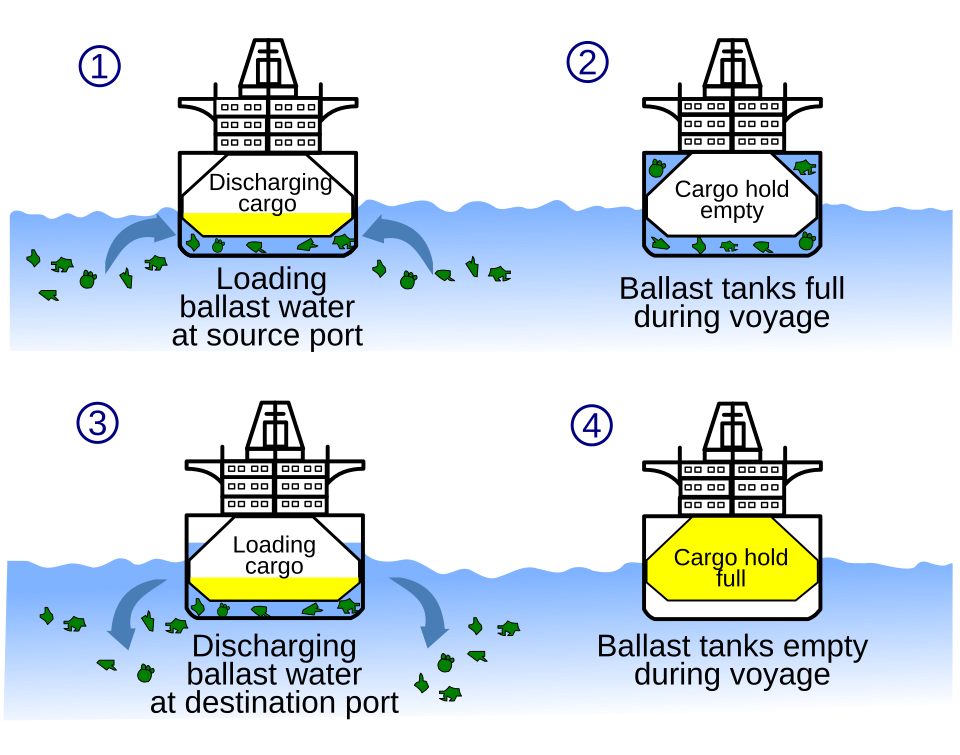
Diagram of a ship cross-section illustrating how ballast water can be taken up and later discharged, releasing transported organisms into a new coastal environment. This provides a concrete mechanism for human-assisted immigration that can elevate propagule supply and increase the probability of successful colonization. Source
From arrival to establishment (colonization steps)
Immigration does not guarantee colonization. Establishment depends on passing successive filters:
Arrival and initial survival: Immigrants must find suitable microhabitat and avoid immediate stressors (heat, limited freshwater, salt spray).
Finding resources: Individuals must access food, shelter, or host plants within the island’s available habitat.
Reproduction: Successful breeding requires mates (or self-fertilization/asexual reproduction) and conditions that support offspring.
Population persistence: The new population must withstand variability (storms, droughts) and avoid dying out from low numbers.
Spread within the island: If conditions allow, colonists expand beyond the landing site, increasing resilience to local disturbances.
Two practical constraints frequently limit colonization: propagule supply (how many individuals arrive and how often) and habitat match (how well island conditions fit a species’ requirements). Even when the island appears suitable, early populations can fail due to chance events (a storm, a poor breeding season) before they become established.
How colonization shapes island biodiversity over time
As new species arrive and some successfully colonize, island biodiversity becomes a historical record of repeated immigration events:
Early colonists can persist for long periods, creating a baseline community that later arrivals must fit into.
Each successful colonization changes local resource use and habitat structure, influencing which future immigrants can establish.
Biodiversity patterns reflect who can get there (transport) and who can stay (establishment), not just who exists on the nearest mainland.
Because islands have been colonized over time, island biodiversity is dynamic: it is continually reshaped as arrivals occur, some lineages establish, and community composition shifts with changing conditions and ongoing dispersal.
Practice Questions
Explain the difference between immigration and colonisation in an island context. (2 marks)
1 mark: Immigration described as arrival/movement of individuals to an island from elsewhere.
1 mark: Colonisation described as successful establishment of a reproducing, self-sustaining population.
Describe four factors that influence whether an organism that reaches an island will successfully colonise it, and briefly link each factor to establishment success. (5 marks)
1 mark each (any four, with brief link) for:
Number/frequency of arrivals (greater propagule supply increases chance of mates and persistence).
Abiotic suitability (freshwater, temperature, shelter; mismatch reduces survival/reproduction).
Resource availability (food/host plants/nesting sites needed for survival and breeding).
Ability to reproduce at low density (mate-finding, selfing/asexual reproduction improves establishment).
Chance events/variability (storms/droughts can eliminate small founding populations).
Dispersal traits enabling spread within island (expansion increases resilience and persistence).
FAQ
No. Colonisation rate depends on isolation, prevailing winds/currents, and the availability of “source” populations nearby.
More transport pathways and more frequent arrivals generally increase colonisation opportunities.
Traits that survive long journeys help, such as:
Salt-tolerant, buoyant seeds (water dispersal)
Tiny, wind-borne seeds or spores
Dormancy and desiccation resistance
These traits increase survival until suitable habitat is reached.
They combine lines of evidence such as:
Species distributions across island chains
Geological ages of islands
Genetic relatedness among island and mainland populations
Fossil/pollen records where available
Together these indicate likely origins and timing of arrivals.
Small founding populations are vulnerable to bad luck: no mate available, a poor breeding season, or a single extreme weather event.
Low numbers can also prevent normal social or breeding behaviours needed for persistence.
Intermediate islands can reduce effective distance by allowing sequential dispersal.
Species may first establish on nearer islands, then later disperse onward, increasing colonisation probability across an archipelago.

