AP Syllabus focus:
'The Northern Renaissance kept a stronger religious focus while adapting Renaissance ideas to the needs of Christian reform.'
In Northern Europe, Renaissance learning did not become mainly secular. Instead, scholars used new critical methods and classical study to deepen Christian faith, improve the Church, and encourage moral reform.
Defining Northern Religious Humanism
Northern Renaissance thinkers embraced religious humanism, a form of humanism that valued education, language study, and moral improvement but directed them toward Christianity.
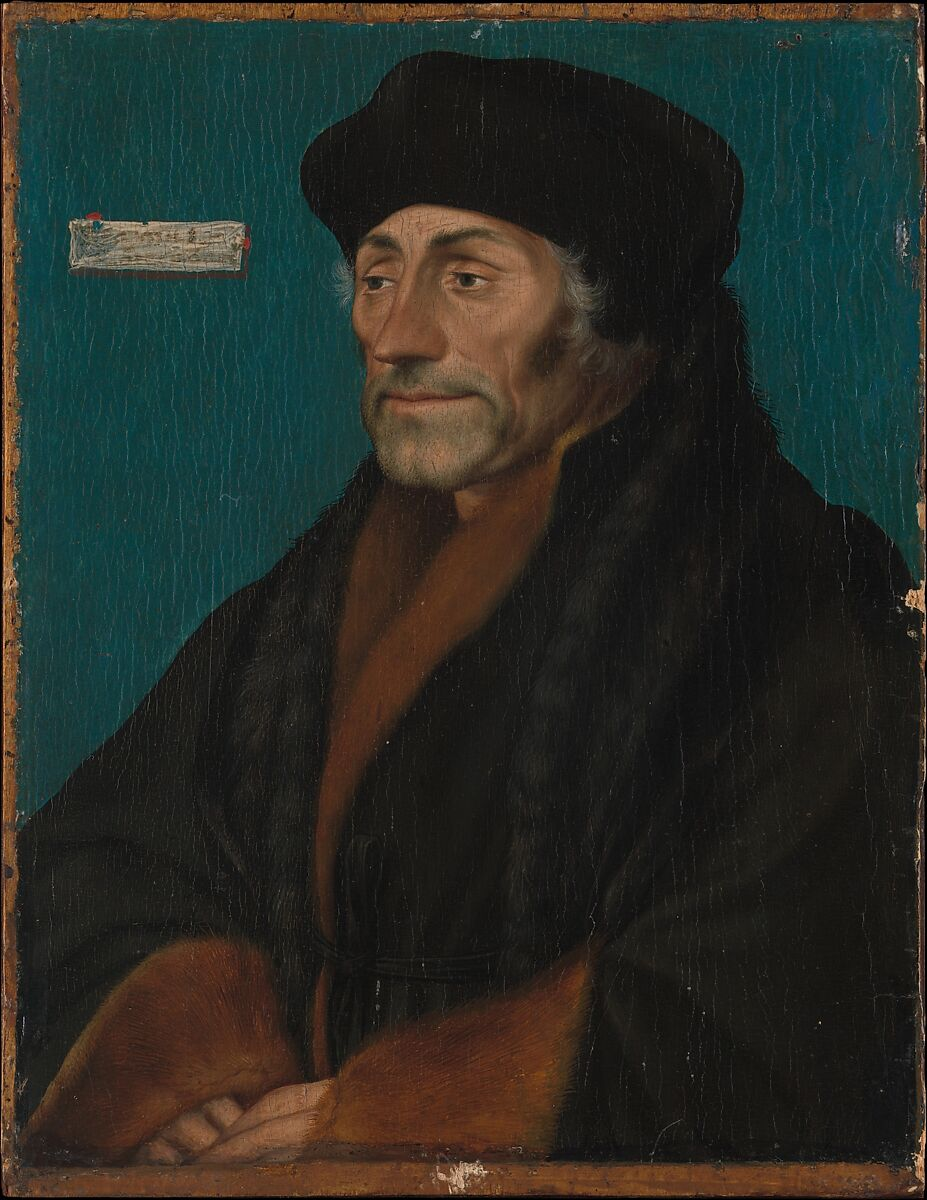
Hans Holbein the Younger’s portrait of Erasmus presents the leading Northern humanist as a professional scholar rather than a courtly celebrity. The sitter’s austere dress and composed, analytical gaze underscore the movement’s ideal of learned piety: rigorous education and moral seriousness directed toward Christian reform. As an educational image, it reinforces that religious humanism was both an intellectual program and a recognizable social identity in Northern Europe. Source
Rather than admiring classical culture for its own sake, Northern scholars asked how learning could make Christian life more sincere, disciplined, and ethical.
Religious humanism: A Northern Renaissance approach that applied humanist learning to Christianity in order to improve belief, morality, and Church life.
This outlook assumed that educated Christians could renew society by reforming the way people read, taught, and lived their faith. The movement was therefore less focused on worldly fame and more focused on spiritual seriousness.
Main Features of the Movement
A Christian Use of Humanist Learning
Northern humanists applied the Renaissance habit of returning to important texts to Christian writings. They studied the Bible and early Church authors carefully, believing that truth could be recovered by reading authoritative sources more accurately.
They also believed that Christianity should shape everyday behavior. Their writings stressed:
personal morality
humility and charity
better religious education
criticism of ignorance among clergy and laity
inward devotion rather than empty routine
Reform Without Rejecting Christianity
Religious humanists generally wanted reform, not destruction, of the Church. Many criticized abuses, superstition, and mechanical religious practices, but they usually hoped to correct these problems from within established Christianity. Their goal was a cleaner, better educated, and more morally serious Christian society.
Methods and Intellectual Tools
One of the most important tools of Northern religious humanism was philology, the close analysis of words, grammar, and historical context. Scholars believed that mistakes in copying, translation, or interpretation could distort religious truth.
Philology: The close study of language, grammar, and historical context in order to recover a text's most accurate meaning.
By comparing manuscripts and studying Greek, Latin, and sometimes Hebrew, they aimed to recover the most authentic meaning of sacred texts.
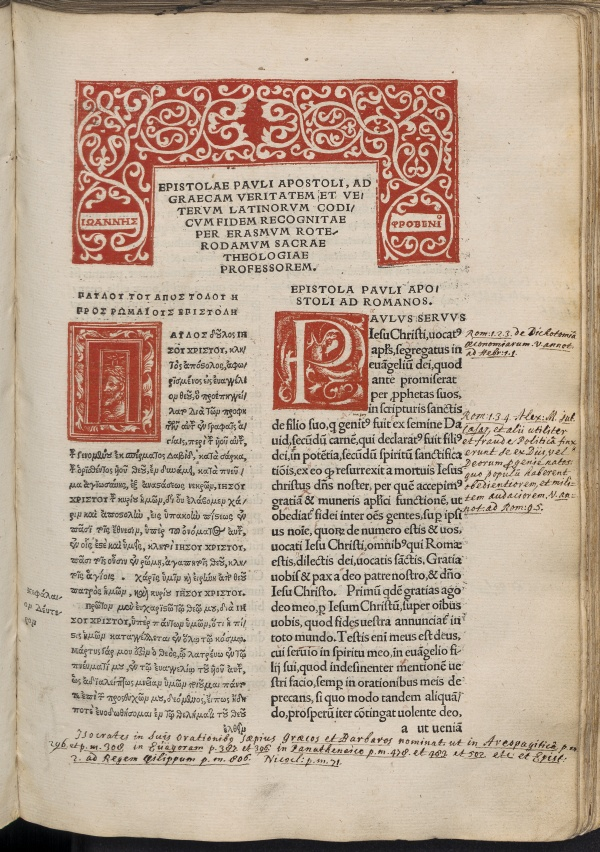
An opening from Erasmus’s 1516 Novum Instrumentum showing the Greek text printed alongside a new Latin translation. The parallel columns and dense marginalia exemplify the philological approach Northern humanists used to scrutinize wording, argue about meaning, and promote reform through more accurate Scripture. It also reflects the practical goal of making scholarly methods serve Christian renewal rather than secular prestige. Source
This method reflected a major Renaissance impulse: confidence that disciplined scholarship could improve understanding.
A key principle was ad fontes, or “back to the sources.” In Northern Europe, this meant returning not only to classical literature but also to the Scriptures and the early Christian tradition. Religious humanists thought that later customs had sometimes obscured the simplicity and moral clarity of original Christianity.
Their scholarship supported reform in several ways:
it exposed weak translations and careless interpretations
it encouraged better preaching and teaching
it promoted educated clergy
it made piety seem compatible with learning rather than opposed to it
How Northern Europe Shaped Humanism
The Northern Renaissance developed in societies where religion remained the central framework of life. Universities, schools, churches, and courts all operated within a deeply Christian culture. As a result, Northern scholars usually treated learning as a servant of religion, not a rival to it.
This gave Northern humanism a different tone from much of the earlier Italian Renaissance. Italian humanism often celebrated rhetoric, civic life, and the dignity of human achievement in a more secular public setting. Northern humanism kept those methods of scholarship and literary criticism, but redirected them toward Christian reform.
Important differences included:
stronger emphasis on moral and religious renewal
greater concern with biblical study and early Christian texts
more criticism of formalism in worship
less interest in purely secular models of fame or civic glory
Even so, Northern religious humanism was still clearly part of the broader Renaissance. It shared the Renaissance respect for education, eloquence, textual criticism, and the belief that human beings could improve themselves through learning.
Goals of Christian Reform
Religious humanists believed that the health of Christianity depended on changing both institutions and individuals. They aimed to:
improve the education and conduct of the clergy
encourage laypeople to understand religion more deeply
promote practical ethics over ceremonial display
connect faith with disciplined study
renew Christian life through persuasion and teaching
Their view of reform was often gradual and intellectual. Better books, better teaching, and better interpretation of texts would, they believed, produce better Christians. This was not simply academic work; it was meant to reshape belief and conduct.
Historical Significance
Northern religious humanism mattered because it linked Renaissance scholarship with Christian renewal. It showed that classical methods of study could be used in the service of religion rather than against it. In doing so, it broadened criticism of ignorance, corruption, and shallow devotion.
It helped create a more questioning and text-based religious culture in Northern Europe by:
making careful textual study central to reform
defining educated clergy as a religious ideal
encouraging criticism of superficial devotion
tying moral reform to scholarship and teaching
Practice Questions
Briefly explain ONE way Erasmus used Renaissance learning to promote religious reform. (2 marks)
1 mark for identifying a method such as philology, studying Greek and Latin texts, comparing manuscripts, or applying humanist criticism.
1 mark for explaining that this method was used to improve biblical accuracy, criticize abuses, educate clergy, or encourage more sincere Christian practice.
Evaluate how Erasmus’s writings reflected the goals of Christian humanism. (6 marks)
1 mark for describing Christian humanism as the use of Renaissance scholarship in the service of Christianity.
1 mark for explaining Erasmus’s emphasis on returning to original Christian sources.
1 mark for discussing his Greek New Testament, new Latin translation, or textual criticism.
1 mark for discussing The Praise of Folly or another work that criticized corruption, superstition, or empty ritual.
1 mark for explaining his goal of moral reform, better education, or more sincere devotion.
1 mark for evaluating his preference for reform within the Church rather than open schism.
FAQ
Their schools stressed disciplined reading, moral seriousness, and practical devotion rather than abstract speculation alone.
That background suited Erasmus perfectly. He kept the movement’s respect for education and inward religion, even after he became a famous scholar. It helped explain why he valued careful study as a path to spiritual improvement.
Latin was the international language of educated Europeans. By writing in polished Latin, Erasmus could reach scholars, clergy, teachers, and officials across many regions.
It also matched his humanist ideals. He believed style mattered because clear and elegant language encouraged clear thinking. Writing in Latin helped him join a Europe-wide intellectual conversation rather than a purely local one.
The “Republic of Letters” was the informal community of scholars who exchanged letters, books, manuscripts, and advice across political borders.
Erasmus depended on this network. It gave him patrons, friends, critics, and readers. It also helped him build influence without holding great political office, making him one of the best examples of a pan-European scholar.
He valued independence. Permanent posts often brought obligations, factional politics, and pressure to serve a ruler or institution’s interests.
By staying relatively mobile, Erasmus kept greater control over what he wrote and whom he criticised. That freedom suited a thinker who wanted to correct abuses broadly, not become the spokesman of one prince, church party, or academic school.
Erasmus defended the idea that human beings retained some capacity to respond to God’s grace. He worried that denying free will would weaken moral responsibility.
The dispute showed his broader temperament: cautious, moderate, and resistant to extremes. He preferred ambiguity to absolute claims when scripture seemed difficult, and he believed Christian teaching should encourage humility and ethical effort rather than sharp doctrinal confrontation.