AP Syllabus focus:
'Rulers and popes commissioned art and architecture in classical styles to enhance prestige and display personal, political, and religious power.'
In Renaissance Italy, art was rarely created for its own sake alone. Wealthy patrons funded works that advertised status, shaped public image, and connected power with beauty, learning, and religion.
Patronage and Competition
Renaissance Italy was politically divided into city-states, princely courts, and papal territories. In this competitive environment, elites used visual culture to show that they possessed wealth, refinement, and authority. Art and architecture became public statements about who deserved influence.
Patronage was central to this process.
Patronage: Financial and social support given by rulers, church leaders, and wealthy families to artists and architects in return for prestige, loyalty, commemoration, or political advantage.
A powerful family could commission a palace, chapel, portrait, or fresco cycle and turn it into a visible claim to status. Because prestige depended on comparison, patrons tried to outdo rivals through scale, beauty, and learned references to the ancient world. Supporting art was therefore both cultural and political.
Renaissance commissions often drew on classical styles inspired by ancient Greece and Rome.
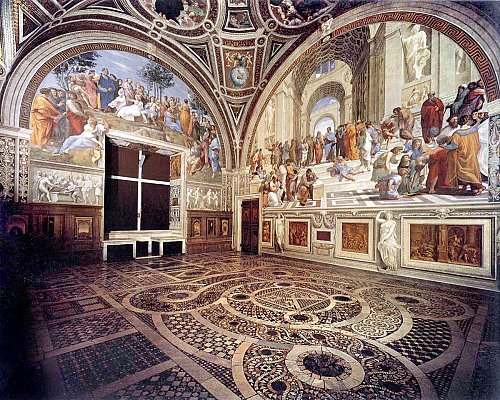
Raphael’s "School of Athens" (Vatican) stages ancient philosophy inside an idealized classical architectural setting, using linear perspective to convey harmony, order, and intellectual authority. As a papal commission, it shows how the Church could appropriate the prestige of antiquity to reinforce Rome’s cultural leadership. The fresco also demonstrates how Renaissance patrons linked political and religious power to learned classical references. Source
Classical styles: Artistic and architectural forms modeled on Greco-Roman balance, proportion, symmetry, columns, domes, and idealized yet natural human figures.
Using classical styles suggested education, order, and a connection to the admired civilization of antiquity. This helped patrons present themselves as sophisticated leaders rather than merely rich individuals.
Major Patrons in Renaissance Italy
Ruling Families and Urban Elites
Italian rulers and wealthy families were among the most important patrons. The Medici in Florence are the clearest example. By supporting artists, architects, and scholars, they linked their family name to civic glory and cultural superiority. Their commissions helped turn private wealth into public honor.
Other courts followed similar patterns. Families such as the Sforza, Gonzaga, and Este used art to decorate palaces, celebrate marriages, mark dynastic continuity, and impress ambassadors or visitors. Court patronage made power visible in daily life. A palace facade, a sculpted courtyard, or a frescoed reception room could all communicate discipline, magnificence, and legitimacy.
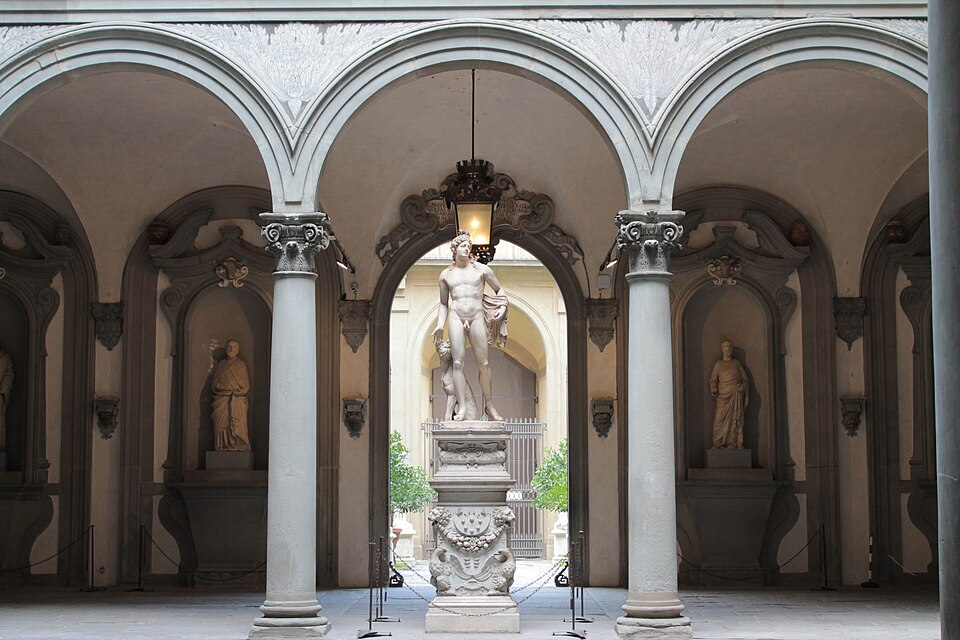
The courtyard of the Palazzo Medici Riccardi (Florence) exemplifies how ruling families used architectural space to make authority visible. Its symmetry, arcades, and classical vocabulary signal order and cultivated taste, turning a private residence into a public-facing statement of prestige. As a Medici-sponsored environment, it illustrates how patronage translated wealth into political legitimacy. Source
Patrons also used art to shape memory. Portraits, tombs, and family chapels ensured that political authority continued beyond a ruler’s lifetime. In this sense, patronage was closely tied to dynastic prestige, since art helped present a family as permanent and worthy of obedience.
Popes and the Papal Court
The papacy was one of the greatest artistic patrons of the Renaissance. Popes commissioned major building projects, paintings, and sculptures not only for devotion but also to strengthen the authority of Rome. By beautifying the city and its churches, they projected the papal court as the center of Western Christianity.
Popes such as Julius II and Leo X employed leading artists including Michelangelo, Raphael, and Bramante. Their projects, from Vatican decorations to the rebuilding of St. Peter’s Basilica, advertised both spiritual leadership and worldly magnificence.
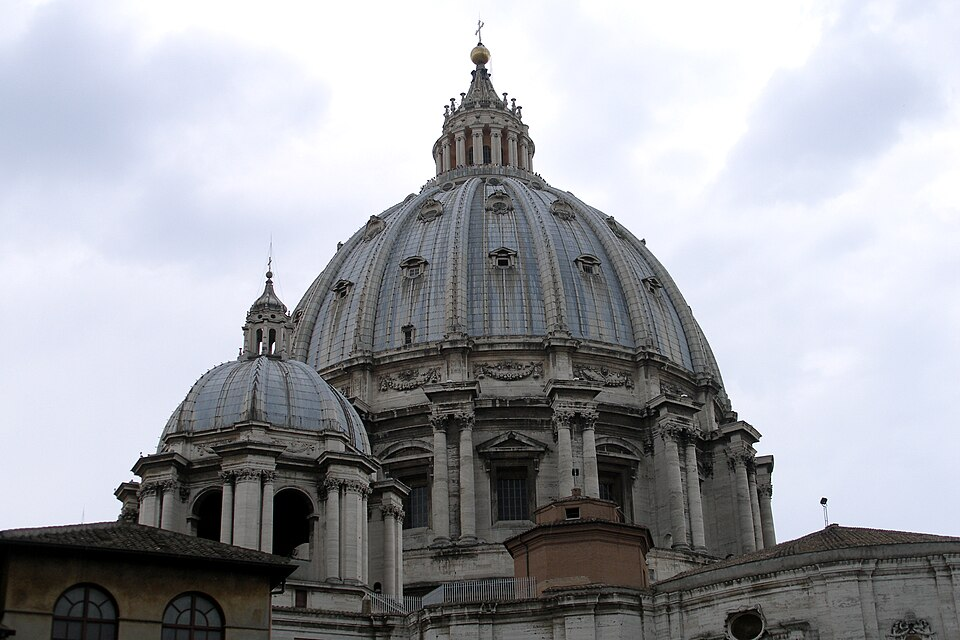
Michelangelo’s dome at St. Peter’s Basilica is a monumental example of how papal patronage used architecture to communicate power on a citywide scale. The massive classical forms and commanding silhouette translate spiritual leadership into an unmistakable public image of permanence and grandeur. As part of the rebuilding program in Rome, it reflects how the papacy tied religious prestige to visible, enduring construction. Source
These commissions showed that the pope possessed the resources, taste, and authority to command the best talent in Europe.
How Art and Architecture Displayed Power
Personal Prestige
Patronage enhanced personal ambition. A ruler or pope who sponsored impressive works gained fame as a cultured and generous leader. Patronage suggested that the sponsor had discernment, education, and control over valuable resources. For elites in Renaissance Italy, reputation was political capital.
Works commissioned for private chapels, villas, or palaces often blended luxury with symbolism. Classical references, mythological scenes, and carefully designed spaces signaled that a patron belonged to an educated elite. Art thus elevated social standing as well as visual surroundings.
Political Authority
Art also strengthened political power. Public buildings and civic commissions could associate a ruler with order, peace, and stability. Monumental architecture suggested permanence; carefully planned urban spaces implied effective government. Even when authority was contested, art could make rule appear natural and admirable.
Because many Italian states were unstable, visual magnificence helped compensate for political weakness. A patron who lacked ancient noble status or broad popular support could still craft an image of command through architecture, ceremony, and commissioned imagery. Patronage therefore worked as a form of persuasion.
Religious Purpose
Religious commissions served both devotion and authority. Altarpieces, chapels, and church decorations encouraged worship, but they also advertised the donor’s piety. For rulers, this reinforced moral legitimacy. For popes, it linked religious leadership to spectacular visual expression.
In church settings, patronage could unite private and public goals. A donor might seek salvation, family remembrance, and social prestige at the same time. This overlap explains why religious art was often so politically meaningful in Renaissance Italy.
Effects on Artists and Artistic Production
Patron Control and Artistic Opportunity
Patronage gave artists employment, materials, and access to elite circles, but it also limited them. Contracts often specified subject matter, size, deadlines, materials, and payment. Patrons shaped what was represented and how it would be seen.
At the same time, competition among patrons created opportunities for innovation. Artists who satisfied powerful sponsors could win further commissions and wider fame. This helped raise the social status of some artists from skilled craftsmen toward celebrated creative figures.
Prestige Through Association
A famous artist increased a patron’s reputation, while a prestigious patron increased an artist’s standing. This mutual relationship explains why major names became attached to courts and the papacy. Patronage was not just economic support; it was a system that linked artistic achievement to the display of power.
Practice Questions
Identify ONE way rulers in Renaissance Italy used artistic patronage to strengthen political authority. (2 marks)
1 mark for identifying a valid method, such as commissioning palaces, civic buildings, public frescoes, portraits, or family chapels.
1 mark for explaining how that commission increased legitimacy, displayed wealth, promoted stability, or made rule appear more natural and impressive.
Evaluate the extent to which patronage by rulers and popes in Renaissance Italy was motivated by the desire for power and prestige rather than by purely religious devotion. (6 marks)
1 mark for a clear, defensible thesis that makes a judgment about the relative importance of power, prestige, and devotion.
1 mark for relevant contextualization about the competitive political environment of Italian courts or papal Rome.
2 marks for specific evidence from at least two relevant examples, such as the Medici, Julius II, Leo X, the Vatican, or St. Peter’s Basilica.
1 mark for explaining how one example demonstrates political or personal ambition.
1 mark for analysis that weighs mixed motives, compares rulers and popes, or shows that religious and political goals often overlapped.
FAQ
Family chapels offered a rare combination of privacy and visibility. They were sacred spaces linked to burial, prayer, and remembrance, yet they were also seen by clergy, visitors, and local communities.
This made them ideal for:
displaying family wealth
asserting lineage
linking the family name with piety
creating a lasting memorial in a respected public setting
A chapel could therefore work as both a devotional site and a dynastic advertisement.
Patrons balanced prestige, speed, cost, and reliability. A celebrated master brought immediate honour and could raise the status of an entire court or household.
However, workshops were often preferred when patrons needed:
quicker completion
multiple panels or decorations
lower costs
consistent production under a known design
Many commissions used both. A master might design the work, while assistants completed large portions. What mattered most was whether the final result served the patron’s image.
Isabella d’Este, marchioness of Mantua, was one of the most influential female patrons of the Italian Renaissance. She collected paintings, antiquities, medals, and luxury objects, and she corresponded actively with artists and agents.
Her importance lies in the way she shaped taste. She did not simply fund art; she selected themes, requested specific subjects, and built a learned image around herself.
Her patronage shows that elite women could direct cultural life and use art to construct political and intellectual authority.
They made the patron visibly present within a sacred setting. A kneeling donor portrait suggested humility and devotion, but it also reminded viewers who had paid for the work.
Family emblems served a similar purpose. They marked ownership, reinforced lineage, and turned a religious commission into a statement of identity.
These features helped patrons connect spiritual duty with social recognition. Even when presented modestly, they ensured that prayer, memory, and prestige remained tied to one family name.
Not all patronage was permanent. Rulers and church authorities also paid for triumphal arches, stage sets, banners, costumes, and street decorations for entries, weddings, and feast days.
These temporary displays mattered because they reached large crowds and turned power into spectacle. They could:
celebrate a ruler’s arrival
present political messages quickly
link a regime with splendour and order
demonstrate control over urban space
Although they disappeared after the event, they could leave a strong impression and were often recorded in written descriptions or images.