AP Syllabus focus:
'The printing press helped spread Renaissance learning beyond Italy and widened access to new knowledge.'
Printing transformed the Renaissance from a mostly Italian movement into a Europe-wide intellectual development. By making texts cheaper, more consistent, and more widely available, print expanded audiences for classical learning and new scholarship.
Why Printing Changed the Scale of the Renaissance
Before printing, books were copied by hand.
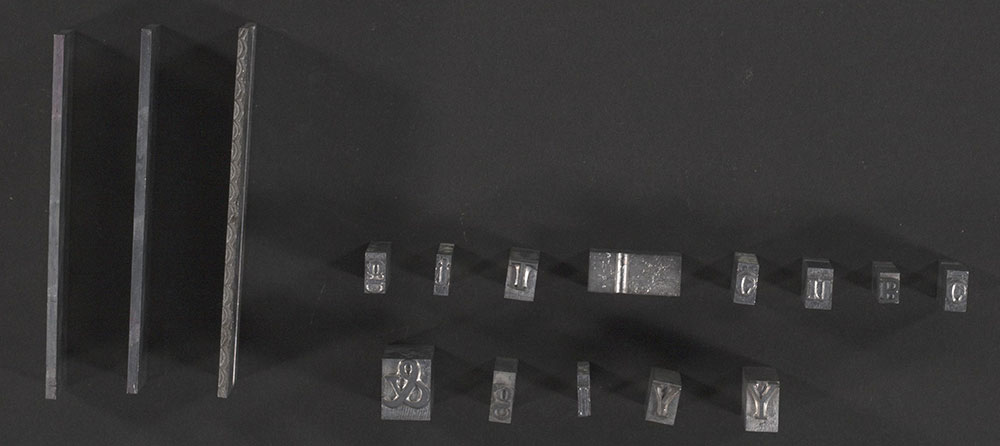
A curated digital-collections photograph of metal type pieces (sorts), the small reusable units that printers arranged into lines and page forms for printing. Seeing the objects themselves reinforces how printing depended on physical components that could be reset and reused, making duplication far more scalable than manuscript copying. This material infrastructure helps explain why print lowered costs and expanded access to texts over time. Source
That made them expensive, slow to reproduce, and vulnerable to copying errors. Renaissance learning first flourished in Italian cities, but manuscript culture limited how quickly humanist texts and scholarly methods could circulate to the rest of Europe.
The arrival of movable type changed this situation dramatically.
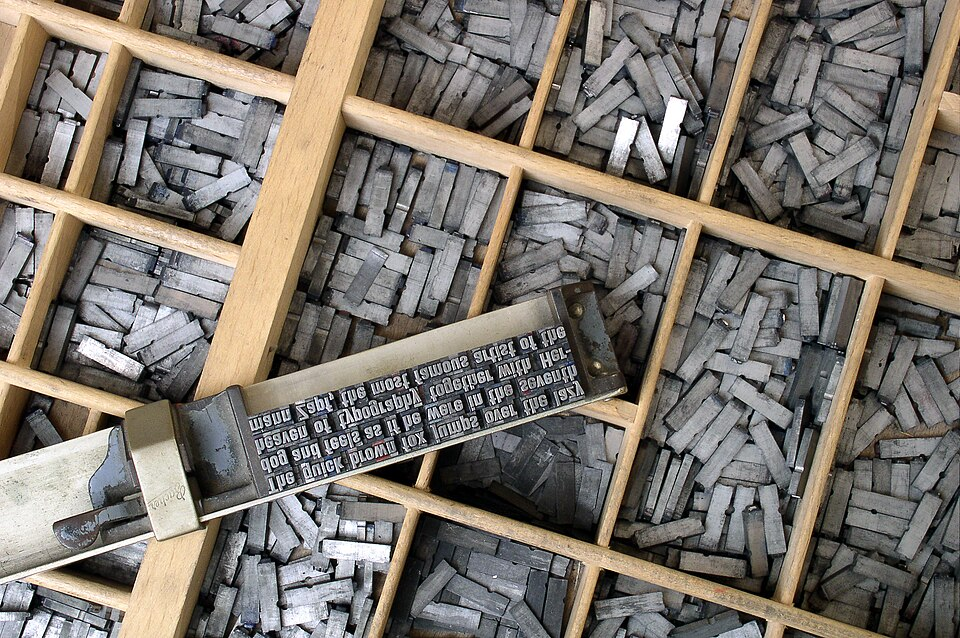
A typesetter’s case of cast metal letters (movable type) alongside a composing stick holding lines of assembled text. The image makes clear that printing relied on reusable individual characters that could be arranged, locked into a page form, and then reused for later print runs. This material process is what enabled faster reproduction and greater consistency than hand-copied manuscripts. Source
Movable type: A printing method using individual reusable metal letters that could be arranged into a page, inked, and pressed onto paper many times.
Because printers could produce hundreds of copies of the same work, important texts no longer depended on a small circle of manuscript owners.
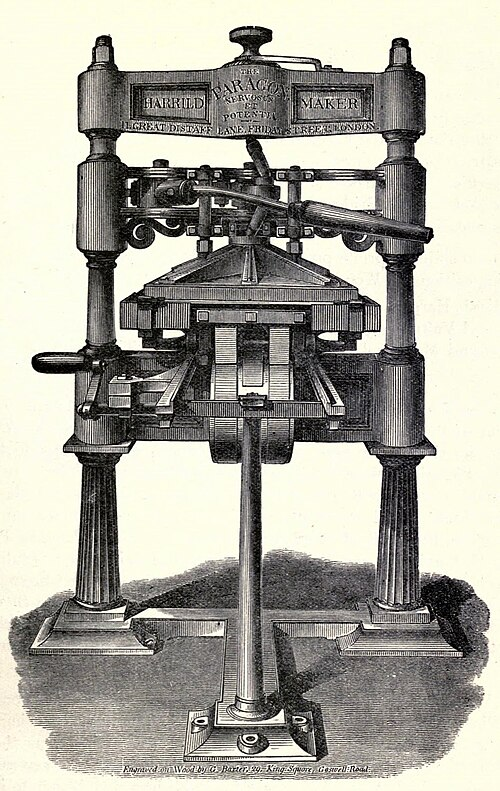
A woodcut depiction of a hand-operated printing press, showing the press structure and the pressing action that transfers ink from type to paper. The press mechanism helps explain how printers could produce large batches of near-identical pages far more efficiently than scribes copying by hand. In practice, this mechanical repeatability underpinned the wider and faster circulation of Renaissance texts across Europe. Source
A book printed in one city could be sold, transported, and read in many others. This gave the Renaissance a much broader geographical reach.
How Print Carried Renaissance Learning Beyond Italy
Classical texts and humanist scholarship
One of the central features of the Renaissance was renewed interest in Greek and Roman writings. Printing helped spread editions of classical authors such as Cicero, Virgil, and Livy to readers far beyond Italy. Scholars in France, the Low Countries, the German states, England, and Spain could now obtain texts that had previously been difficult to access.
Print did more than multiply copies. It also encouraged editors to compare manuscripts, correct errors, and produce more reliable versions. That strengthened the scholarly habits associated with Renaissance learning, especially close reading, language study, and textual criticism. In this way, printing supported the intellectual methods of the Renaissance as well as its content.
Networks of scholars, printers, and merchants
Printing houses became part of larger European networks. Printers selected works they believed would sell, merchants transported books across regions, and scholars recommended titles to students and patrons. As a result, Renaissance ideas were no longer confined to the courts and city-states of Italy. They moved through commercial and educational networks into northern Europe and other parts of the continent.
This wider circulation helped create a shared learned culture. A student trained in Paris, Leuven, or Oxford could encounter texts and commentaries similar to those used in Florence or Venice. Printing thus linked distant centers of learning and made the Renaissance less local and more European.
Widening Access to New Knowledge
Lower cost and larger readership
Printed books were still not cheap for everyone, but they were far less costly than handwritten manuscripts. This reduced price widened access to knowledge for students, teachers, clergy, professionals, and urban lay readers. More people could build private libraries, borrow books, or encounter printed material in schools and universities.
Access widened in two important ways:
More copies of a text existed at the same time.
More readers outside elite court circles could obtain them.
More subjects could be printed, including grammar books, histories, maps, and scholarly commentaries.
This expansion mattered because Renaissance learning depended on reading, comparison, and debate. The more readers had access to texts, the more new knowledge could circulate and develop.
Standardization and the preservation of knowledge
Printing also made texts more standardized. While early printed books still contained mistakes, they generally offered greater consistency than hand-copied manuscripts. Readers in different places could refer to the same wording and page sequence, which made teaching and scholarly discussion easier.
Standardization supported the spread of Renaissance education. Teachers could assign the same text to larger groups of students, and scholars could respond to one another more precisely. Print therefore helped preserve and stabilize knowledge while also making it easier to challenge old errors.
Effects on Renaissance Culture
Expansion of the reading public
As printing spread, the audience for Renaissance learning grew beyond a narrow educated elite. Urban readers with some schooling could participate in intellectual culture more easily than before. This did not create universal literacy, but it did enlarge the public able to engage with books, textbooks, and scholarly works.
The Renaissance became more than a set of ideas held by a few Italian humanists. It increasingly reached lawyers, administrators, merchants, and teachers, helping embed Renaissance learning in everyday institutions such as schools, universities, and city governments.
Faster circulation of innovation
New editions, translations, and commentaries could be issued much more quickly than manuscripts could be copied. When scholars recovered a classical work or produced a new interpretation, that knowledge could spread across Europe within years rather than generations. This accelerated the pace of intellectual exchange and helped Renaissance scholarship maintain momentum.
Limits to Wider Access
Printing widened access, but it did not make knowledge equally available to all. Literacy remained limited, especially in rural areas. Books still required money, time, and education to use effectively. Church authorities, governments, and local conditions could also shape which books circulated most widely.
The benefits of print were strongest in towns, universities, courts, and commercial centers where books, schools, and literate readers were already concentrated. In those settings, the wider circulation of printed texts made Renaissance learning easier to acquire, discuss, and transmit across Europe.
Practice Questions
Answer all parts briefly.
a) Identify ONE reason printed books helped Renaissance learning move beyond Italy.
b) Identify ONE group outside Italian courts that gained greater access to Renaissance learning through print.
c) Explain ONE way printed texts changed Renaissance scholarship.
(3 marks)
a) 1 mark for identifying a valid reason, such as lower cost, faster reproduction, easier transport, or the ability to produce many identical copies.
b) 1 mark for identifying a valid group, such as students, clergy, teachers, professionals, merchants, or urban lay readers.
c) 1 mark for explaining a valid change, such as more standardized texts, easier comparison of sources, broader classroom use, or more reliable editions.
Evaluate the extent to which the printing press transformed the Renaissance from a primarily Italian movement into a broader European intellectual development in the period c. 1450–1600. (6 marks)
1 mark for a clear thesis that makes a defensible argument about the extent of change.
1 mark for relevant context, such as the limits of manuscript culture or the early concentration of Renaissance learning in Italian cities.
Up to 2 marks for specific evidence, such as the spread of classical editions, the role of printers and merchants, lower book costs, university readership, or more standardized texts.
Up to 2 marks for analysis and reasoning, including explaining how print expanded access beyond Italy and/or discussing limits such as uneven literacy or unequal access to books.
FAQ
Venice combined wealth, trade, and geography. Its port linked Italy to northern Europe and the eastern Mediterranean, making it easier to import paper and export books.
It also attracted scholars, craftsmen, and investors. That meant printers could find skilled labour, educated editors, and large markets in one place, which made the city especially powerful in spreading Renaissance texts.
Book fairs acted as distribution hubs where printers, booksellers, and agents met to buy, sell, and exchange stock. A title printed in one city could quickly be offered across a much wider region.
They also helped people learn what was available. Catalogues and repeated seasonal contact made it easier to track new editions, judge demand, and connect distant print markets.
No. Manuscripts and printed books existed together for a long time. Some wealthy patrons still preferred handwritten copies, especially for deluxe or personalised works.
Early printed books often imitated manuscript styles so that readers would accept them more easily. The shift was gradual, and manuscript habits continued to shape how people read, annotated, and collected texts.
Yes, though their work is often less visible. Widows in particular sometimes took over printing houses or bookshops after a husband’s death and kept the business running.
Women could also appear in related roles such as bookselling, financing, and workshop labour. Their participation varied by city and legal custom, but they were part of the wider print economy that helped circulate Renaissance learning.
They made books easier to navigate. Readers could find passages more quickly, compare sections, and refer others to exact locations in a text.
This encouraged a more active style of study. Scholars, teachers, and students could organise information better, which made printed books especially useful for teaching, commentary, and detailed textual analysis.