AP Syllabus focus:
'Printing encouraged vernacular literature, which gradually contributed to the development of national cultures.'
As printing spread across Europe, more texts appeared in local languages.
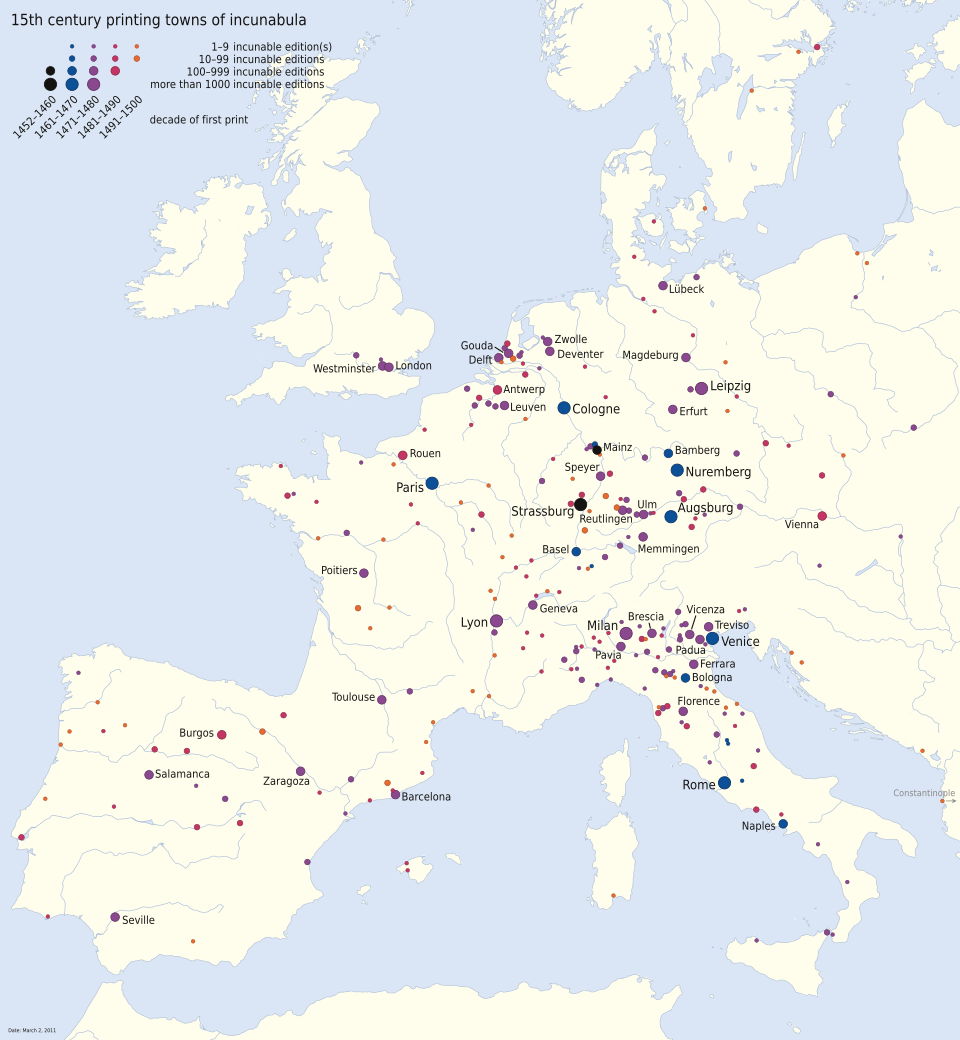
This map visualizes the rapid establishment of printing shops across Europe by 1500. Seeing printing as a continent-wide network helps explain how vernacular works could circulate beyond a single city or region and contribute to shared cultural reference points. Source
This change widened readership, strengthened written forms of spoken languages, and helped create shared cultural references that supported emerging national cultures.
The Shift Toward Vernacular Writing
Before the spread of print, Latin dominated much of Europe’s learned culture. Clergy, scholars, and many officials used it because it allowed communication across regions. Yet most people did not speak Latin in daily life. They spoke local languages such as Italian, French, English, Castilian, or German.
When printing expanded, it encouraged the production of more works in these everyday languages because printers needed buyers.
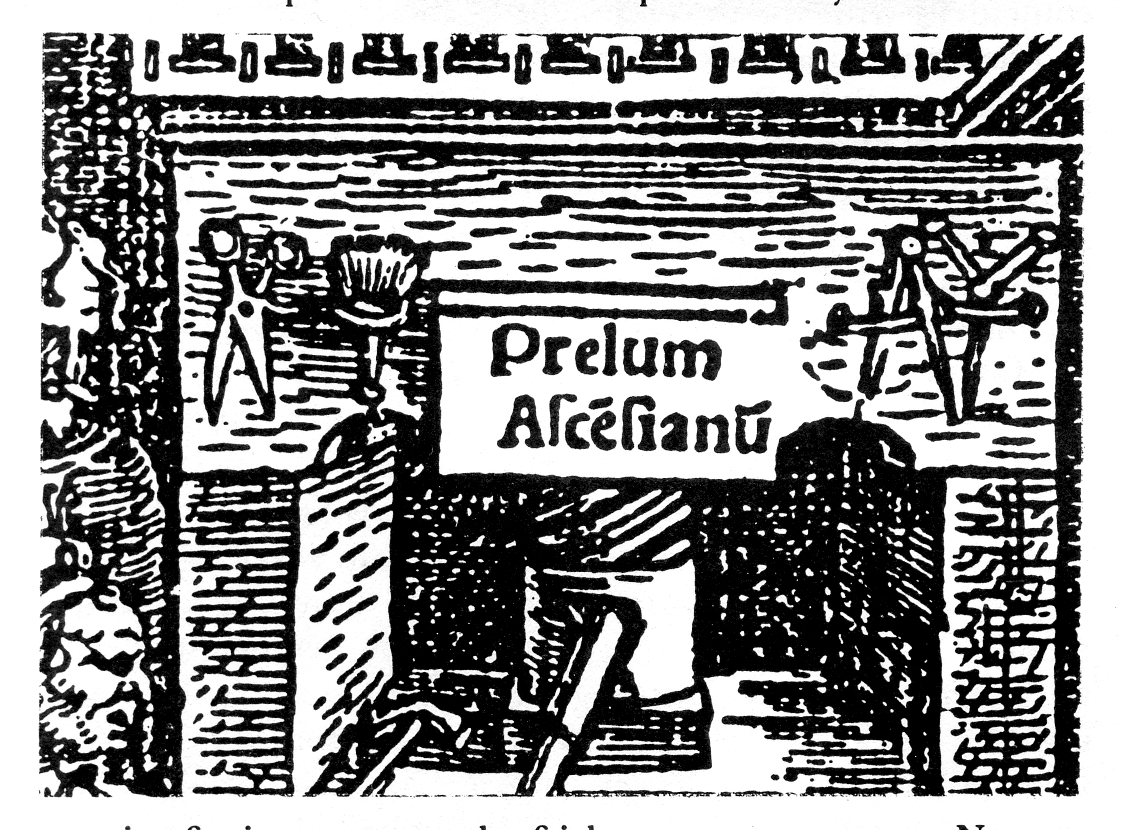
This woodcut-style illustration depicts an early modern printing operation (letterpress) and highlights key tools used by printers and compositors. It helps explain why print increased output and lowered the marginal cost per copy, making it economically rational to publish in languages that could reach larger reading publics. Source
A book written in a familiar language could reach a much larger audience than one limited to the Latin-educated elite.
Vernacular: The everyday spoken language of a particular region or people, rather than Latin or another learned language.
The rise of printed vernacular texts did not end Latin’s importance, but it shifted part of European culture away from an exclusively elite written world.
Why Printers and Readers Supported Vernacular Literature
Commercial demand
Printing made books easier to reproduce in large numbers, so printers had to think about market demand. Vernacular works often sold well because they were accessible to merchants, artisans, urban households, and local officials.
Printers found audiences for many kinds of vernacular writing, including:
poetry and stories
chronicles and histories
practical manuals
moral and devotional reading
translations of older respected works
Because printed books could be reissued, successful vernacular texts circulated repeatedly and reached readers far beyond the place where they were first written.
Literary prestige and cultural value
Printing also increased the prestige of writing in local languages. Authors could gain fame by addressing a broader public, not just educated clerics or scholars. Earlier vernacular writers, such as Dante or Chaucer, could now reach new generations through printed editions.
As more respected literature appeared in local languages, those languages gained status. They were no longer seen only as tools of everyday speech; they became vehicles for serious expression, memory, and artistic achievement.
From Vernacular Literature to National Culture
The importance of vernacular literature went beyond convenience or profit. Over time, printed works in local languages helped readers imagine that they belonged to a wider community linked by language and shared culture.
National culture: A body of shared language, texts, symbols, and traditions that helps people see themselves as part of a larger collective community.
In early modern Europe, this development was gradual and uneven, but print played an important role in moving culture in that direction.
Standardizing language
One major effect of print was the standardization of written language. Printers had to make choices about spelling, word forms, punctuation, and dialect. Once those choices appeared in many copies, they became more familiar and influential.
This mattered because:
repeated editions encouraged consistency
readers across different regions encountered similar written forms
one dialect often gained influence because it was tied to a court, capital city, or major commercial center
Over time, printed language could make a kingdom’s or region’s speech seem more unified than it had been before.
Creating shared texts and references
Vernacular literature helped build common cultural knowledge. If many people read the same chronicles, poems, tales, or moral works, they shared references that could connect them to a broader linguistic community.
Printed vernacular works contributed to:
common historical memory
shared heroes and stories
wider circulation of local customs and values
the idea that a people’s language expressed its character
This was important because culture was no longer transmitted only locally. Print allowed the same language and stories to move across a much larger territory.
Broadening cultural participation
Vernacular printing also widened participation in written culture. People who had no advanced training in Latin could still engage with literature in their own language. This did not create full equality, since literacy remained limited, but it did expand the social base of reading.
As a result, culture became less exclusively controlled by Latin-trained elites. A larger reading public could take part in discussions of morality, history, and identity through texts they could actually understand.
Limits and Uneven Development
Vernacular literature did not instantly produce modern nations. Its effects unfolded slowly, and there were important limits.
Why change remained gradual
Several factors slowed the process:
Latin remained essential in universities, theology, diplomacy, and much official life.
Many people were still illiterate and experienced literature through oral reading or performance.
Europe contained many strong regional dialects, which did not disappear quickly.
People often identified more strongly with their town, province, dynasty, or religion than with a nation.
For that reason, it is best to see vernacular literature as laying cultural groundwork rather than creating fully developed national identity on its own. Printing encouraged local languages to become written languages of prestige, and those written languages helped form the shared culture from which national traditions later grew.
Practice Questions
Identify ONE way printing encouraged vernacular literature in early modern Europe, and explain ONE way vernacular literature contributed to national cultures. (2 marks)
1 mark for identifying a valid way printing encouraged vernacular literature, such as expanding the reading market beyond Latin-educated elites or allowing repeated circulation of texts in local languages.
1 mark for explaining a valid contribution to national cultures, such as standardizing language, spreading shared stories, or creating a broader sense of cultural community.
Evaluate the extent to which printing contributed to the development of national cultures through vernacular literature in Europe. (5 marks)
1 mark for a clear argument that printing significantly contributed to national cultures.
1 mark for specific evidence that printing expanded access to texts in local languages.
1 mark for specific evidence that repeated publication helped standardize spelling, vocabulary, or dialect.
1 mark for explaining how shared vernacular texts promoted common cultural references or historical memory.
1 mark for addressing a limitation, such as the continued importance of Latin, low literacy rates, or the persistence of regional identities.
FAQ
Printers usually chose forms of language that would sell widely and be recognised by influential readers. That often meant the dialect of a political capital, royal court, or major trading city.
Manuscript traditions also mattered. If a dialect already had respected literary works or administrative use, printers were more likely to adopt it and help turn it into a standard written form.
Translation showed that local languages could handle serious material, not just everyday conversation. When printers issued translations of history, poetry, moral writing, or classical works, they raised the prestige of the vernacular.
This mattered culturally as well as linguistically. Readers could see their own language as capable of refinement, learning, and artistic expression, which made it easier to treat that language as a marker of collective identity.
No. Regional loyalties remained strong, and many people continued to speak and write in local forms that differed from any emerging standard language.
In practice, identities often overlapped:
local or town identity
regional identity
loyalty to a ruler or dynasty
wider linguistic identity
Vernacular print could encourage broader cultural unity without removing older attachments.
They travelled easily between written and oral culture. A printed ballad or play could be read aloud, performed, memorised, or adapted for local audiences.
This gave vernacular literature a reach beyond strictly literate readers. It also helped popular expressions of language become culturally important, since ordinary people could encounter shared words and stories through listening as well as reading.
Women often had greater access to vernacular reading than to Latin education. In some households and courts, they read, commissioned, translated, or circulated works in local languages.
Their participation varied by class and region, but vernacular print created openings for:
female readers in urban and courtly settings
women as patrons of literary works
women as contributors to manuscript and print culture
This helped broaden the social reach of literary culture, even if access remained unequal.