AP Syllabus focus:
'Europeans expanded the trade in enslaved Africans because plantation economies grew in the Americas.'
The expansion of plantation agriculture in the Americas created an enormous demand for forced labor. That demand made the trade in enslaved Africans central to European overseas wealth and Atlantic commerce.
Plantation Economies and Labor Demand
A plantation economy was built around large estates that produced export crops for distant markets rather than for local consumption.
Plantation economy: A large-scale agricultural system focused on producing export crops with a coerced labor force.
European colonists established plantations in parts of the Americas where climate and soil favored lucrative crops. These enterprises were not small family farms. They were commercial operations organized for steady output, close supervision, and sale in Atlantic markets. Because plantation owners aimed at high volume and regular profits, they needed a large labor force that could be directed according to the demands of planting, cultivating, harvesting, and processing.
The key point is that plantation growth turned labor into the most urgent economic problem in many colonies. As planters opened more land and increased production, they required more workers than voluntary migration could reliably provide. This made the purchase of enslaved Africans increasingly attractive to Europeans who wanted a controllable and expandable labor supply.
Why plantations needed so much labor
Major crops such as sugar, tobacco, and later coffee demanded continuous, exhausting work.
Plantation agriculture often required coordinated gang labor under strict supervision.
Processing, especially for sugar, had to occur quickly after harvest, increasing pressure for a permanent workforce.
Profitable Crops and Expanding Demand
Among plantation crops, sugar was especially important in driving the expansion of the slave trade. Sugar brought high returns in European markets, and its cultivation was extremely labor-intensive. A profitable sugar plantation could generate enormous wealth, but only if enough workers were available to clear fields, tend cane, cut the crop, and operate mills and boiling houses. This created a direct link between rising consumer demand in Europe and rising demand for enslaved labor in the Americas.
Other crops strengthened the same pattern. Tobacco plantations required large workforces to plant, weed, cure, and prepare leaves for export. As plantation acreage increased, labor demand increased with it. European merchants, investors, and colonial elites therefore had a strong financial incentive to support a larger Atlantic trade in enslaved Africans.
Planters did not simply need labor at one moment; they needed a system that could supply workers repeatedly and in large numbers. This helped transform forced migration from Africa into a regularized commercial enterprise rather than a series of isolated transactions.
Why profits mattered to Europeans
Plantation crops were cash crops, grown primarily for sale and profit.
High profits encouraged merchants to finance voyages, insure cargoes, and extend credit to planters.
States benefited because plantation wealth increased customs revenue, shipping activity, and overseas influence.
Atlantic Trade Networks and the Scaling of Slavery
The trade expanded because plantation economies could not function as isolated local systems.
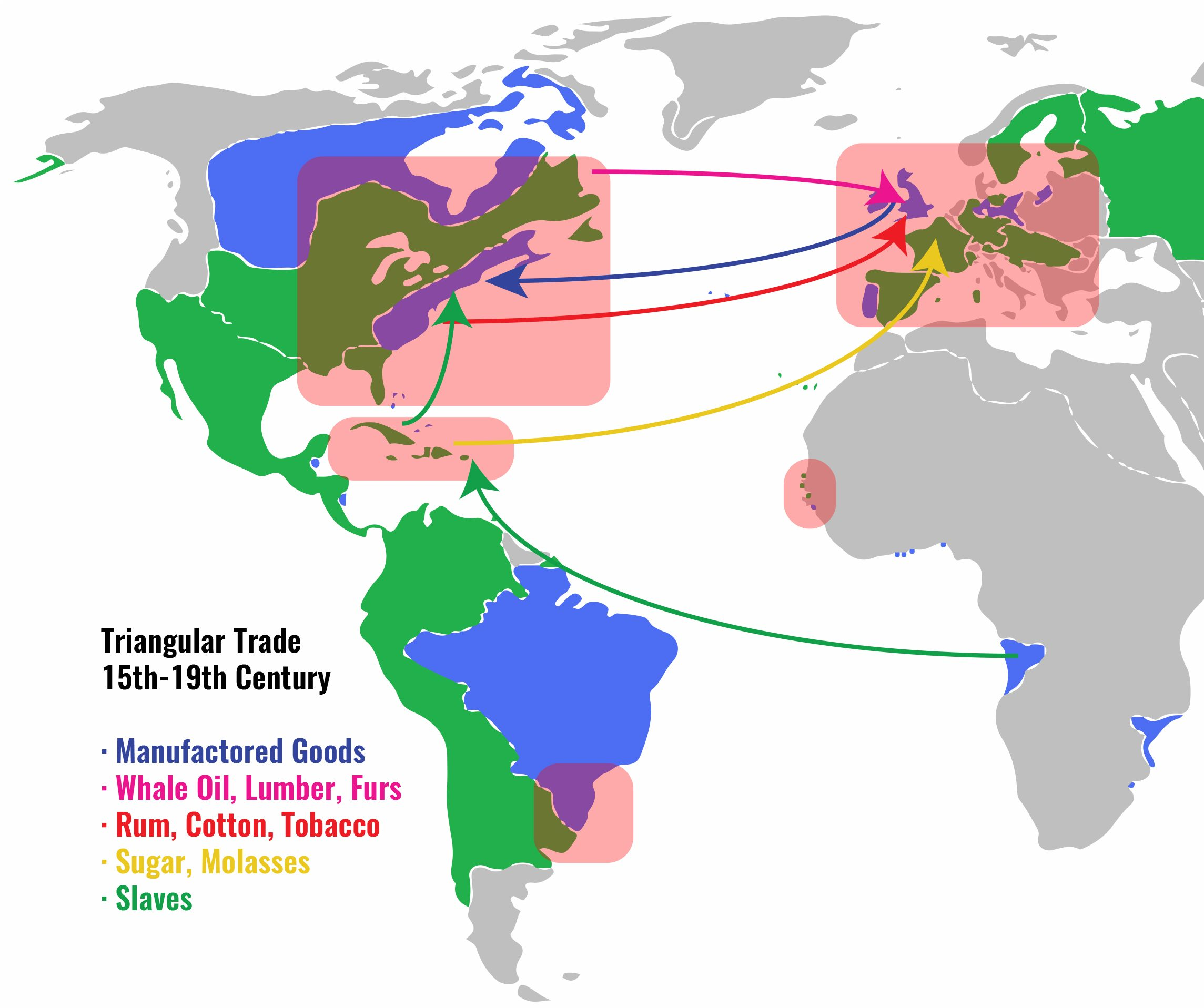
This map summarizes the “triangular trade” structure that linked Europe, Africa, and plantation regions in the Americas. It visually reinforces how plantation exports (such as sugar) and the forced transport of enslaved Africans were integrated into a single, profit-driven Atlantic system. Source
They depended on a wider Atlantic network linking European merchants, African traders, shipowners, insurers, and American planters. As plantation agriculture spread, this network became more organized and more profitable. Europeans did not merely seek labor; they built commercial structures that treated enslaved Africans as commodities within a transoceanic market.
Scale mattered. A few scattered plantations would not have produced the same result. But once plantation zones multiplied, especially in the Caribbean and parts of mainland America, demand became persistent and predictable.
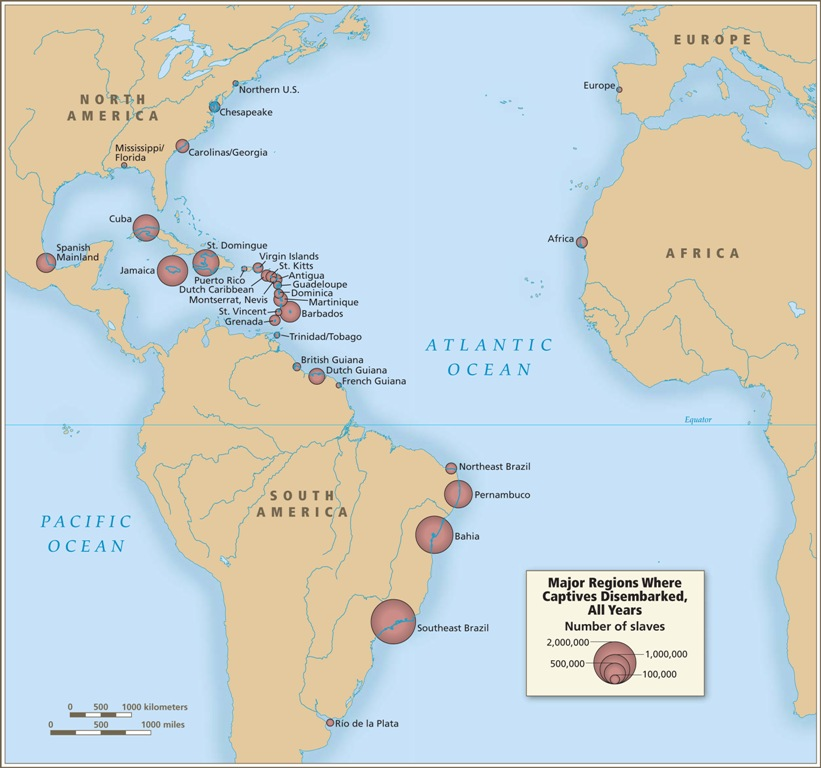
This SlaveVoyages “Introductory Maps” page provides data-driven maps showing where captives embarked in Africa and where they disembarked in the Americas, highlighting the geographic concentration of arrivals in major plantation zones. Using one of these maps (especially the disembarkation map) helps connect plantation expansion to sustained, large-scale demand for coerced labor across the Atlantic world. Source
Merchants could expect repeat business, investors could anticipate returns, and colonial authorities could promote expansion. The slave trade grew not only because labor was needed, but because that need became steady enough to support specialized shipping routes, port facilities, contracts, and credit arrangements.
This process also tied plantation success directly to the expansion of slavery. Larger harvests brought more profits, and more profits encouraged planters to buy more land and increase output. Increased output then required even more enslaved labor. Plantation growth and slave-trade growth therefore reinforced each other.
Self-Reinforcing Expansion
Once plantation societies were established, demand for enslaved labor became self-reinforcing. Planters who profited from one harvest often expanded acreage, equipment, and workforce. Merchants responded by organizing more voyages, while investors treated slave trading as part of a broader Atlantic business. West and west-central African coastal trade zones were increasingly drawn into this system because plantation markets generated regular demand.
Colonial legal systems further stabilized this labor regime by treating enslaved Africans and their descendants as a permanent source of labor. From the perspective of plantation owners, this reduced uncertainty and made long-term investment more attractive. The expansion of the slave trade was therefore not accidental. It was driven by the logic of export agriculture: as plantation economies grew richer and larger, Europeans expanded the trade in enslaved Africans to sustain production and profit.
Practice Questions
Identify two ways the growth of plantation economies in the Americas encouraged Europeans to expand the trade in enslaved Africans. (2 marks)
1 mark for identifying that plantation crops such as sugar or tobacco required large, continuous labor forces.
1 mark for identifying that high profits from export crops encouraged merchants, planters, or states to secure more enslaved labor.
Explain how the rise of plantation economies in the Americas led to a major expansion of the trade in enslaved Africans from the sixteenth to the eighteenth centuries. (5 marks)
1 mark for a clear claim that plantation growth increased demand for coerced labor.
1 mark for explaining the labor-intensive nature of plantation crops such as sugar or tobacco.
1 mark for explaining that profitability encouraged further investment by merchants or colonial elites.
1 mark for explaining that Atlantic trade networks made large-scale slave trading more regular and efficient.
1 mark for using specific historical evidence, such as Caribbean sugar plantations or Brazilian sugar production.
FAQ
Sugar cane had to be cut and processed very quickly, so plantations needed large gangs of labourers available at the same time.
Mills and boiling houses also required round-the-clock work during harvest periods. That combination of field labour and immediate processing made sugar especially demanding. As a result, sugar colonies often purchased enslaved Africans at a faster rate than regions centred on less time-sensitive crops.
Many plantation owners lived far from their estates, sometimes in Europe or in colonial port towns. They relied on attorneys or overseers to maximise output and remit profits.
That arrangement often encouraged harsh management and repeated labour purchases. Distant owners judged success by shipments and income, so managers had strong incentives to keep plantation labour forces large enough to maintain production.
Many Caribbean colonies became highly specialised export economies. Large portions of their best land were devoted to sugar rather than food production.
This created dense plantation zones closely tied to shipping routes and port facilities. Because these islands were deeply dependent on export agriculture, they imported enslaved Africans in very high numbers relative to their size.
No. Buyers often had preferences shaped by crop type, local conditions, and labour organisation.
Sugar plantations frequently sought young adult men for gang labour.
Some colonies also purchased women for fieldwork, domestic labour, and reproduction within enslaved communities.
Planters sometimes valued captives with particular agricultural or artisanal skills.
These preferences affected how traders organised sales and marketed captive people in different ports.
Slave voyages were expensive and risky, so merchants depended on credit, partnerships, and marine insurance. These tools spread financial risk and made repeated voyages more feasible.
Planters also used credit secured against future crops. That meant a planter could buy labour before the harvest was sold. In practice, financial services helped connect European capital to plantation demand, allowing the trade to grow beyond what ready cash alone would have permitted.