AP Syllabus focus:
‘French and Dutch colonization relied on trade alliances and intermarriage with American Indians to build diplomatic relationships and obtain furs and other products for export to Europe.’
French and Dutch colonial ventures in North America centered on forging cooperative relationships with Indigenous nations, constructing profitable fur trade networks, and sustaining settlements through diplomacy rather than widespread territorial conquest.
French and Dutch Colonial Goals
The French and Dutch approached colonization with objectives distinct from the Spanish and English. Rather than seeking extensive territorial control or large-scale agricultural settlements, these empires prioritized profit through commercial exchange, especially the fur trade.
French Objectives
French colonization focused on establishing a North American trade empire rooted in access to rich fur-bearing regions.
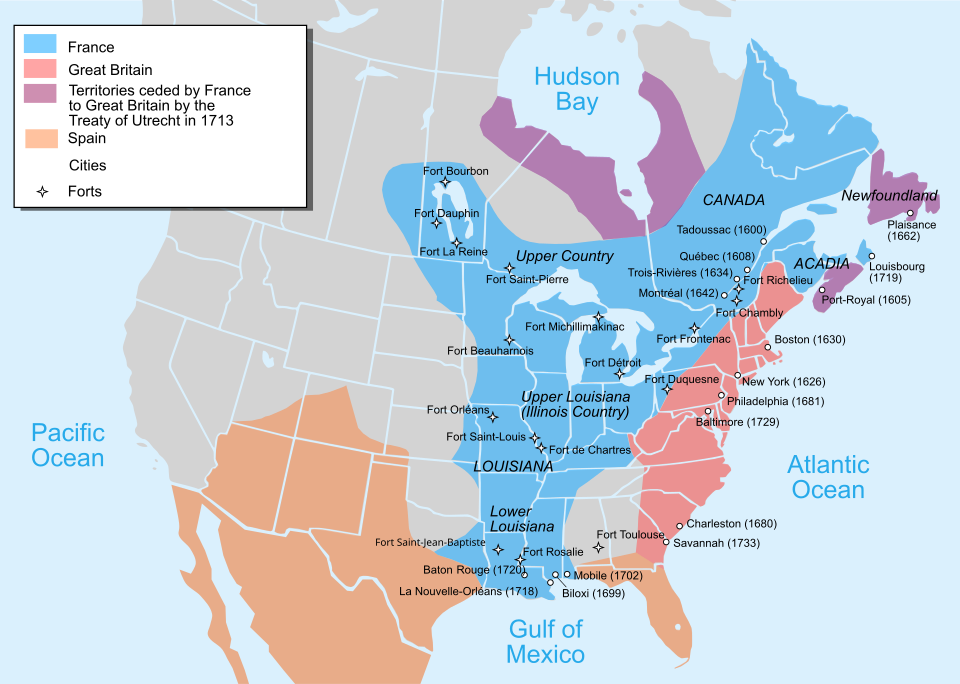
Map of New France around 1750, highlighting the river-based geography that supported French fur trade networks. It shows additional territorial detail beyond the fur-trade core, but all regions shown help explain the scope of French colonial power. Source.
French traders and imperial authorities recognized early that Indigenous nations controlled the land and resources most essential to their economic goals.
Dutch Objectives
The Dutch, through the Dutch West India Company, aimed to solidify their status as global commercial competitors. Their North American colonies, especially New Netherland, were designed as strategic trade outposts linking Atlantic markets and tapping into regional Indigenous trade systems.
Trade Alliances with Indigenous Nations
Sustaining fur economies required durable diplomatic and economic partnerships with powerful Indigenous nations.
Central Role of Indigenous Nations
Native groups such as the Huron, Algonquian, and Iroquois Confederacy controlled territories rich in beaver and other valuable fur-bearing animals. Since Europeans lacked both the local knowledge and the labor force needed to harvest furs, alliances were indispensable.
Structure of Trade Alliances
European traders exchanged metal tools, firearms, textiles, and manufactured goods for furs supplied by Indigenous hunters.
Long-distance Indigenous trading networks remained intact, as Native nations served as both producers and intermediaries.
Alliances often included mutual defense agreements, aligning Europeans with Indigenous nations in regional conflicts.
Intermarriage and Cultural Interaction
Both French and Dutch colonists cultivated close relations through intermarriage, especially among French traders.
Intermarriage: Marriage between European colonists and Indigenous peoples, often used to strengthen diplomatic and commercial alliances.
Intermarriage helped reinforce trust and facilitated negotiation across cultural boundaries. It also produced métis communities—children of mixed French and Indigenous heritage—who became vital cultural and economic brokers.
French missionaries, particularly the Jesuits, promoted religious exchange while accepting many Indigenous practices, further strengthening alliances.
The Fur Trade Economy
The fur trade dominated French and Dutch colonial economies, shaping labor systems, settlement patterns, and diplomatic priorities.
Characteristics of the Fur Economy
Furs, especially beaver pelts, were exported to Europe, where high demand for felt hats fueled massive commercial growth.
Trade required mobility, leading to dispersed French settlements along rivers such as the St. Lawrence and Mississippi.
Dutch traders operated out of New Amsterdam, a bustling Atlantic port integrated with global Dutch mercantile networks.
French Commercial Networks
French coureurs de bois and voyageurs (independent and contracted traders) ventured deep into the interior. Their success depended on cultivating Indigenous partnerships and adapting to local customs.
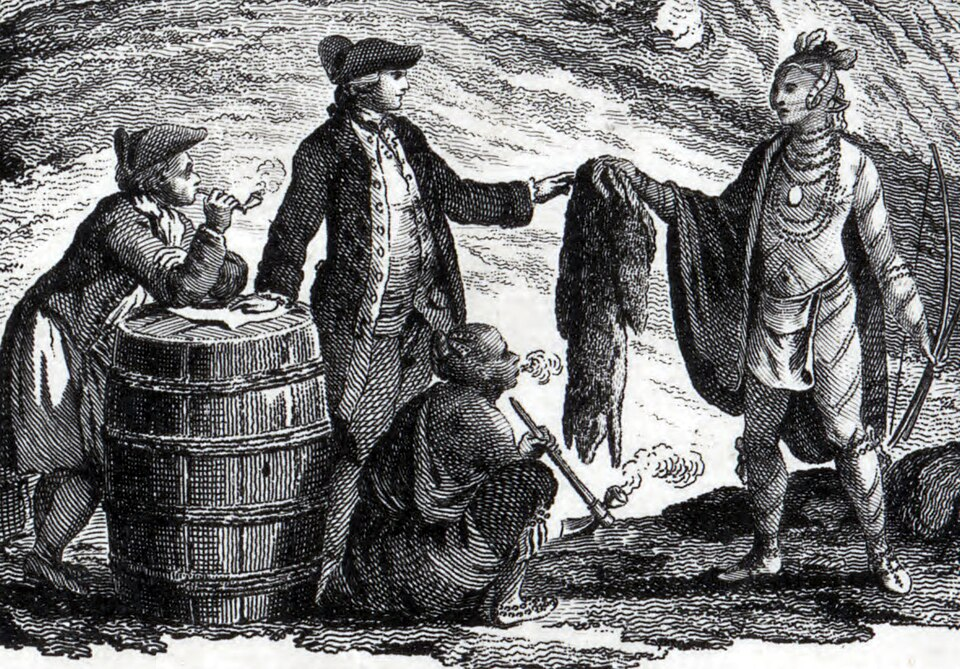
Eighteenth-century depiction of fur traders meeting with Indigenous people, with furs and trade goods prominently displayed. The scene highlights the negotiation and personal relationships central to the fur trade. Artistic details not required by the syllabus appear, but they reinforce authentic cultural interaction. Source.
Dutch Trade Strategies
The Dutch emphasized efficient commercial organization:
Centralized control through the Dutch West India Company
Strong maritime transport capacity
Investment in fortified trading posts such as Fort Orange (present-day Albany)
Dutch traders often supplied firearms to the Iroquois Confederacy, reshaping regional power dynamics.
Impact on Colonial Society
The prominence of diplomacy and trade produced distinctive social structures in French and Dutch colonies.
Social and Cultural Patterns
Small settler populations created societies heavily dependent on Indigenous allies.
Cross-cultural communities emerged, particularly among the French, blending European and Indigenous traditions.
Missionaries and traders lived among Native nations, fostering linguistic and cultural exchange.
Settlement Patterns
Few large towns developed; instead, scattered trading posts and missionary villages characterized French and Dutch colonial space.
Colonial governments invested more in diplomatic missions and commercial infrastructure than in agricultural expansion.
Indigenous Agency and Regional Consequences
Indigenous nations played an active role in shaping French and Dutch colonization.
Indigenous Diplomacy
Native groups strategically partnered with Europeans to:
Secure trade advantages
Acquire new goods, especially firearms
Strengthen their position against rival Indigenous nations
Shifts in Regional Power
French alliances with Algonquian-speaking peoples heightened tensions with the Iroquois.
Dutch weapon supplies helped the Iroquois launch the Beaver Wars, expanding their influence over the fur trade.
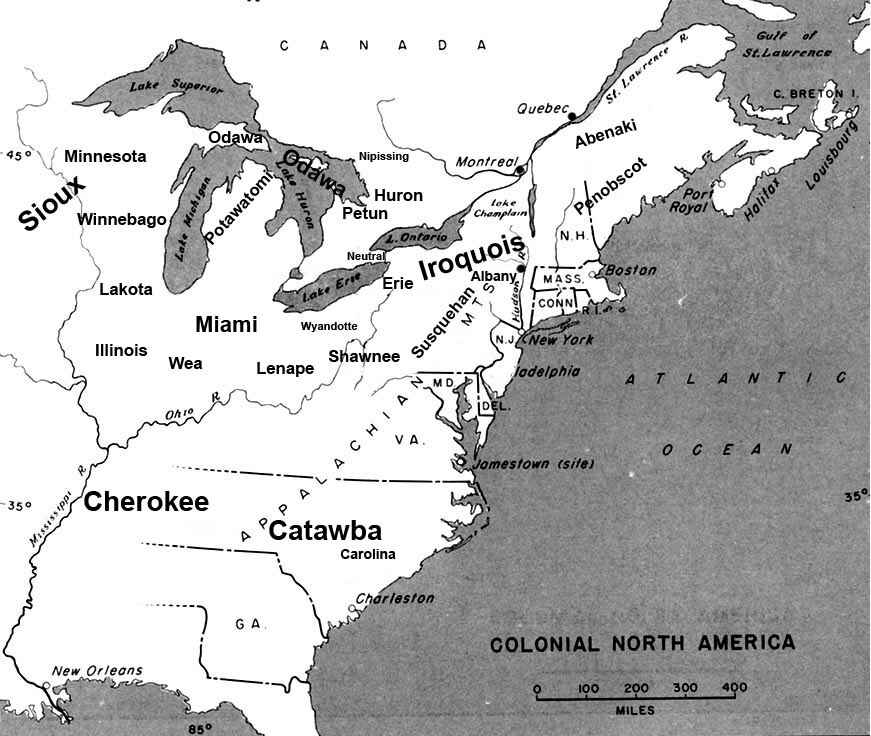
Map showing Indigenous nations involved in the Beaver Wars, including the Iroquois and neighboring groups. It illustrates how conflict linked to the fur trade shifted regional power and control of hunting territories. The map includes additional tribal labels beyond the syllabus requirement, but all remain relevant to the competition for furs. Source.
Legacy of French and Dutch Colonies
The French and Dutch experiments in North America left enduring effects on the region’s economic and cultural landscape.
Long-Term Significance
Trade-based colonization reinforced the importance of Indigenous sovereignty in early North American geopolitics.
Cross-cultural communities influenced later French, Canadian, and Mid-Atlantic identities.
Diplomatic traditions established during this period shaped subsequent European–Indigenous relations, even after Dutch and much French territory fell under British control.
FAQ
French traders often adapted to Indigenous expectations by participating in gift-giving ceremonies, exchanging goods in ways that reinforced diplomacy, and respecting established trading protocols.
The Dutch generally focused on fixed-price commercial exchanges and prioritised efficiency, though they still engaged with Indigenous customs when necessary to secure political alliances or trading rights.
French settlements were centred along major rivers such as the St Lawrence and the Great Lakes, enabling deep penetration into the interior for fur collection.
Dutch trading centred on coastal and river-mouth locations like New Amsterdam and Fort Orange.
These differences shaped the French focus on mobile trading networks and the Dutch emphasis on centralised, maritime-oriented commerce.
Many nations leveraged trade goods to reinforce leadership authority, as chiefs who controlled access to European items gained prestige.
Some groups used European alliances to consolidate alliances with neighbouring Indigenous polities or to acquire firearms, enhancing military power and political cohesion.
French fur traders lived for long periods within Indigenous communities, making social integration through marriage common and strategically beneficial.
Dutch settlers more often lived in compact European-style towns, reducing opportunities for sustained cultural integration and making intermarriage less central to their diplomatic approach.
Intensive trapping led to depletion of beaver populations in heavily traded areas.
This forced Indigenous hunters to expand into new territories, sometimes triggering conflicts with neighbouring groups.
Environmental shifts also altered local ecosystems, as beavers were key to managing waterways, wetlands, and biodiversity.
Practice Questions
(1–3 marks)
Explain one way in which French or Dutch colonisation in North America relied on alliances with Indigenous peoples.
Question 1 (1–3 marks)
1 mark:
• Identifies a valid example (e.g., trade partnerships, intermarriage, or diplomatic alliances).
2 marks:
• Provides a brief explanation of how the example supported French or Dutch colonial aims (e.g., access to furs, securing trade routes).
3 marks:
• Offers a clear, accurate explanation linking Indigenous alliances to the wider goals of French or Dutch colonisation, such as commercial success or regional influence.
(4–6 marks)
Analyse how the fur trade shaped political and social relations between European colonisers and Indigenous nations in the French and Dutch colonies during the seventeenth century.
Question 2 (4–6 marks)
4 marks:
• Describes relevant features of the fur trade, including patterns of exchange and the role of Indigenous nations.
• References both political and social dimensions at a basic descriptive level.
5 marks:
• Provides developed analysis of the effects of the fur trade on alliances, rivalries, or regional power dynamics.
• Shows accurate understanding of how Indigenous agency shaped French or Dutch policies.
6 marks:
• Presents a well-structured, analytical response with specific evidence (e.g., Iroquois relations with the Dutch, French alliances with Algonquian-speaking groups, impacts of intermarriage).
• Clearly connects the fur trade to broader colonial strategies and Indigenous–European interactions.