AP Syllabus focus:
‘English colonization drew large numbers of migrants seeking opportunity and freedom; many settled on land taken from Native Americans and focused on agriculture in separate communities.’
English colonization in North America expanded rapidly as migrants sought land, opportunity, and autonomy, creating dispersed agricultural communities that transformed environments, economies, and Indigenous relationships.
English Migration Motivations
Large numbers of English migrants crossed the Atlantic in the 17th century driven by intertwined economic, social, and religious factors that shaped settlement patterns throughout Britain’s North American colonies.
Push and Pull Factors
Migrants were attracted by the promise of landownership, economic mobility, and religious freedom, while hardships in England such as population pressures and limited land availability encouraged departure.
Population growth in England increased competition for resources and work.
Economic dislocation stemmed from enclosure and shifts toward commercial agriculture.
Religious dissenters, including Puritans and Separatists, sought more autonomy.
Opportunities for landownership in the colonies appealed to landless English laborers.
Varied Migrant Profiles
Although most English settlers were common laborers or farmers, their demographic composition varied by region. For example, the Chesapeake drew predominantly single men, while New England communities welcomed families seeking stable, religiously focused towns.
Indentured Servant: A laborer who agreed to work for a set number of years in exchange for passage to the colonies, food, and shelter.
These migrants laid the foundation for agricultural communities and helped expand English claims over vast tracts of Indigenous land.
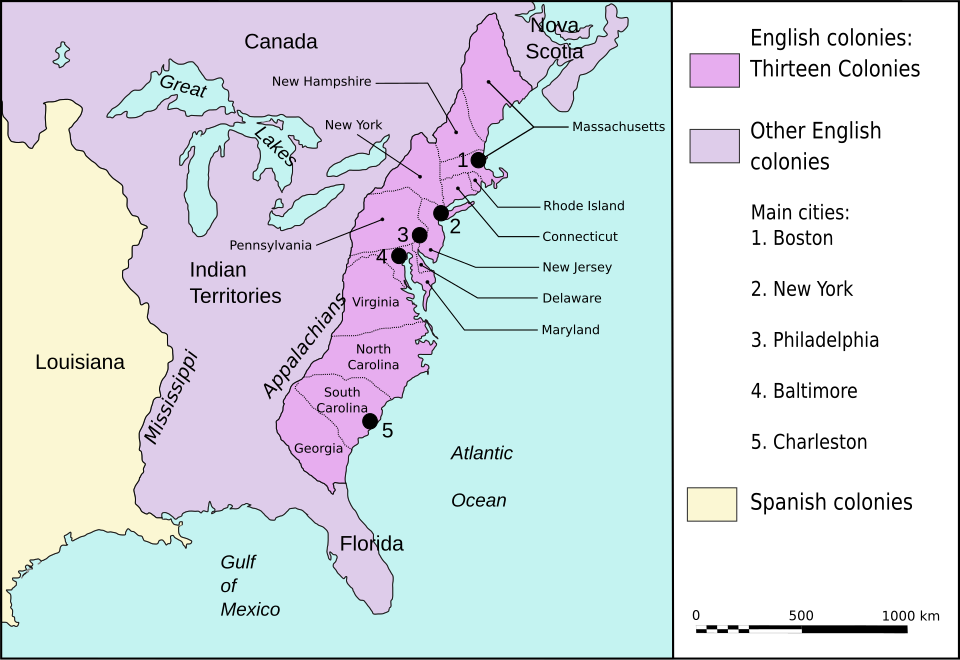
Map of the Thirteen English Colonies along the Atlantic coast, illustrating coastal settlement patterns and territorial boundaries. It highlights how English migrants established dispersed agricultural communities. Although the map reflects the 1775 political moment, its geographic distribution mirrors earlier English colonial expansion. Source.
Land Acquisition and Settlement Patterns
Land availability was central to English colonization, driving strategies that fundamentally reshaped North American environments and Native communities.
Taking Land from Native Americans
English colonists acquired land through treaties, purchases, or outright seizure. Growing settler populations increased demand for farmland, leading to recurring conflicts with Indigenous groups.
Many early agreements were misunderstood or manipulated, as English concepts of private property differed from Native understandings of land use.
English expansion frequently led to displacement of Native peoples, altering long-standing territorial and political boundaries.
This relentless push for land was a key factor in tensions that defined colonial development and later colonial–Indigenous relations.
Dispersed Agricultural Communities
Unlike the centralized, urban models of the Spanish or the fur-trade–oriented settlements of the French and Dutch, English colonies typically grew as dispersed agricultural communities built around privately owned farms.
Colonists prioritized individual landholding, often forming isolated homesteads rather than compact towns.
Agriculture dominated everyday life, shaping labor systems, family organization, and economic relationships.
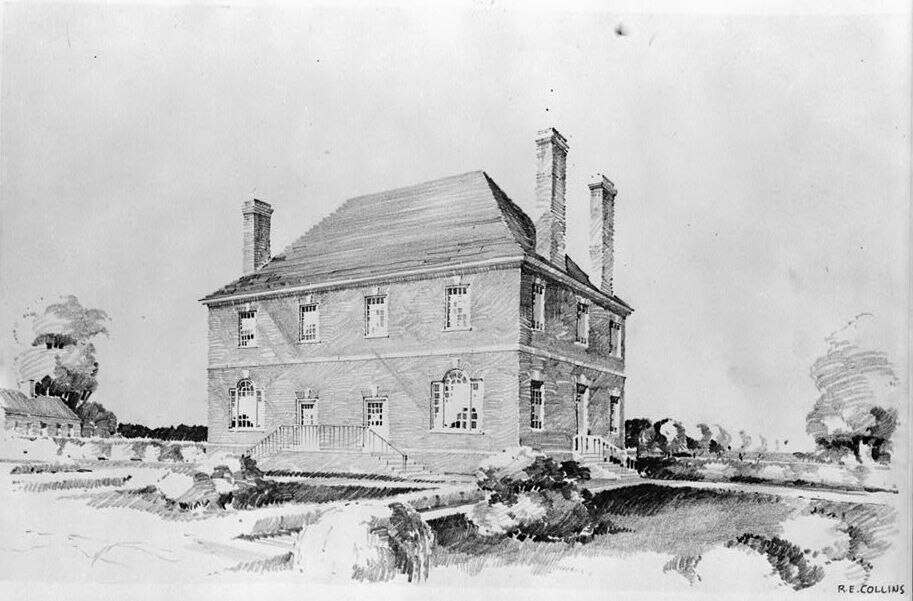
Drawing of Nomini Hall, a Virginia plantation estate, illustrating how extensive private landholdings shaped plantation landscapes. The architectural detail goes beyond the syllabus, but it reinforces themes of property ownership and dispersed rural settlement patterns. Source.
Proprietary Colony: A colony granted by the English Crown to an individual or group, allowing them to control land distribution and governmental structures.
Colonial proprietors often encouraged rapid settlement to solidify territorial claims, reinforcing the pattern of scattered agricultural communities.
Agricultural Foundations of English Colonization
Agriculture lay at the core of English colonial expansion, determining labor needs, environmental changes, and economic structures throughout the 17th century.
Staple Crops and Regional Variation
Environmental diversity produced distinct agricultural systems, though most English settlers engaged in some form of farming.
Chesapeake and southern colonies grew tobacco and other cash crops requiring intensive labor and fertile soil.
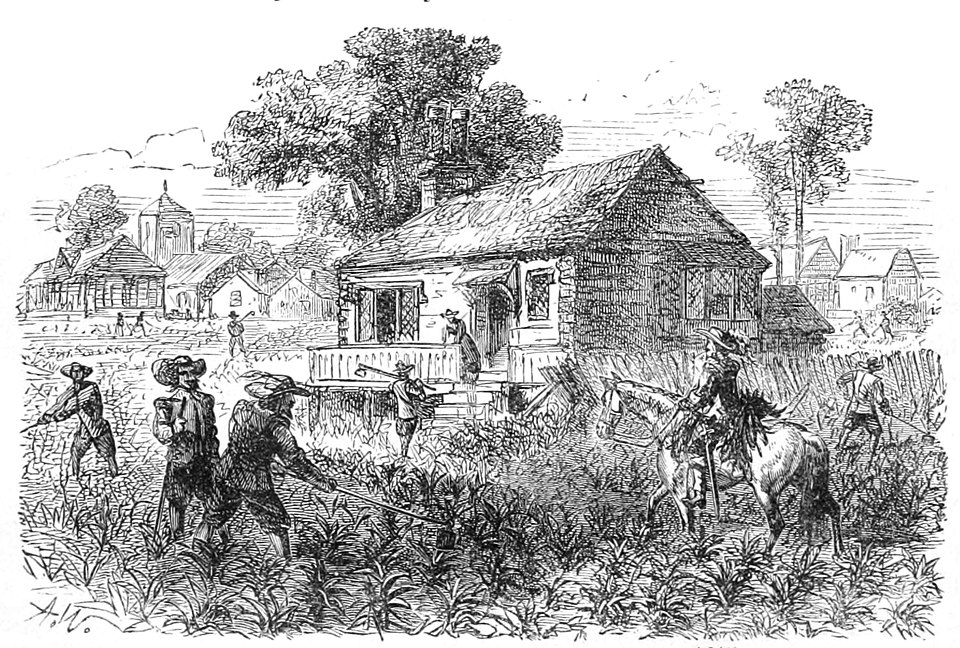
An 1878 illustration of tobacco cultivation at Jamestown, showing early English agricultural practices in Virginia. The image emphasizes the centrality of tobacco fields and labor systems in shaping the Chesapeake economy. Some background structures exceed syllabus detail but accurately reinforce the agricultural context. Source.
New England settlers cultivated subsistence crops on rocky terrain, combining farming with fishing and trade.
Middle colonies produced grains such as wheat and barley, benefiting from temperate climates and broad river valleys.
These variations reflected differing ecosystems and migrant populations but consistently centered on land-based production.
Labor Demands and the Transition to Enslaved Labor
Early English agriculture relied heavily on indentured servants. However, rising demand for staple crops, declining indentured migration, and growing racialized systems of control drove a shift toward enslaved African labor by the late 1600s.
Planters sought permanent, heritable labor forces, making slavery economically advantageous.
Racial laws emerged to solidify distinctions between enslaved Africans and free European settlers.
Growing reliance on slavery transformed social hierarchies and reinforced inequality across the colonies.
One consequence of this agricultural labor system was the creation of deeply entrenched racial divisions that shaped colonial society.
Environmental and Cultural Consequences of English Agriculture
English agricultural expansion reshaped landscapes and profoundly affected Indigenous communities.
Environmental Transformation
Clearing forests for farming altered ecosystems across the eastern seaboard.
Introduction of European livestock, such as pigs and cattle, damaged Native crops and forests.
English field rotation, fencing, and permanent property boundaries clashed with Indigenous ecological practices.
Soil depletion from tobacco and other crops pushed settlers to acquire new land repeatedly.
These practices intensified pressure on Native territories and accelerated colonial expansion.
Impact on Indigenous Peoples
As English agricultural settlements expanded:
Native food sources, hunting grounds, and village sites were disrupted.
Conflicts erupted over property boundaries and resource use.
Some Indigenous groups formed alliances with English settlers for trade or protection, but many resisted encroachment.
Land Tenure: A system defining land ownership, use rights, and distribution within a society.
English land tenure systems, rooted in private property, became a central catalyst for cultural conflict with Indigenous peoples.
FAQ
English settlers brought with them inheritance practices such as primogeniture, in which the eldest son received most or all of the family land. This encouraged younger children to migrate westward or establish new homesteads rather than remain on subdivided family property.
In some colonies, these customs were gradually relaxed as land became more available, but the initial pattern helped shape dispersed settlement and continual expansion into Indigenous territories.
Land companies, often chartered by the Crown, actively advertised and sold parcels of land to prospective settlers in England. They produced promotional materials promising fertile soil, commercial opportunity, and social mobility.
These companies also pressured colonial authorities and Indigenous leaders to open additional land for expansion, accelerating English occupation of new regions.
English colonists viewed land as a commodity that could be owned, fenced, improved, and inherited. They expected exclusive control over defined parcels.
Many Indigenous societies emphasised communal access, seasonal use, and fluid territorial boundaries. These contrasting systems made English claims appear permanent and exclusionary, fuelling disputes.
Free-roaming English livestock often ate Native crops, trampled fields, and altered natural vegetation. This forced many Indigenous communities to adjust agricultural timing or relocate fields.
Additionally, grazing animals compacted soil and reduced certain plant species, transforming ecosystems previously used for hunting and food gathering.
Scattered farms left households isolated, limiting rapid communication and mutual defence. This increased exposure to conflict, environmental hardship, and crop failure.
However, dispersal also offered economic benefits, such as direct access to fields, water sources, and timber, making it a persistent feature of English colonial settlement.
Practice Questions
Explain one reason why English colonists migrated to North America during the seventeenth century. (1–3 marks)
Question 1 (1–3 marks)
1 mark
• Identifies a valid reason for English migration (e.g., economic opportunity, land availability, religious freedom).
2 marks
• Provides a brief explanation of the identified reason, showing how it encouraged migration.
3 marks
• Offers a developed explanation demonstrating clear understanding of how and why this factor motivated English settlers to move to North America.
Acceptable examples: desire for landownership, escape from poverty, seeking religious autonomy, demographic pressures in England.
Unacceptable: vague statements without explanation (e.g., “They wanted a better life” without further detail).
Analyse how English patterns of land use and agricultural settlement affected relations with Indigenous peoples in the seventeenth century. (4–6 marks)
Question 2 (4–6 marks)
4 marks
• Provides a clear explanation of English agricultural practices or land use patterns AND their basic impact on Indigenous communities (e.g., displacement, conflict, resource competition).
5 marks
• Shows more detailed analysis linking English settlement patterns—such as dispersed farms, private property concepts, or expansion of tobacco cultivation—to specific consequences for Indigenous peoples.
6 marks
• Demonstrates sustained analysis with precise historical knowledge, clearly connecting how English economic goals, demographic growth, and attitudes toward land shaped long-term tensions, conflicts, or alliances with Indigenous groups.
High-scoring responses may reference: differing land tenure systems, environmental disruption, pressure on Indigenous hunting or farming grounds, encroachment through tobacco expansion, or cultural misunderstanding over property concepts.