AP Syllabus focus:
‘Cultural change and protest contributed to political backlash, as many Americans demanded greater social stability and tougher responses to unrest.’
Widespread social change, activism, and escalating protest during the 1960s fueled a conservative backlash that increasingly demanded law and order, reshaping American politics and public expectations.
The Growth of Backlash in a Turbulent Decade
The late 1960s saw dramatic transformations in American society, including civil rights activism, the counterculture, urban unrest, and antiwar protest. Many Americans viewed these developments with anxiety, perceiving that traditional values, social discipline, and national unity were under strain. This environment created support for leaders who promised stability and firm governance. The rhetoric of “law and order” emerged as a powerful political response, mobilizing voters concerned about crime, disorder, and rapid cultural change.
The Politics of “Law and Order”
Calls for law and order referred to demands that government restore public safety and social stability. Politicians used this language to frame protest movements as threats to national cohesion while positioning themselves as defenders of mainstream values.
The Appeal of Law-and-Order Rhetoric
Several interconnected developments increased the resonance of this message:
Urban riots following racial injustice incidents heightened fears that unrest was spiraling beyond control.
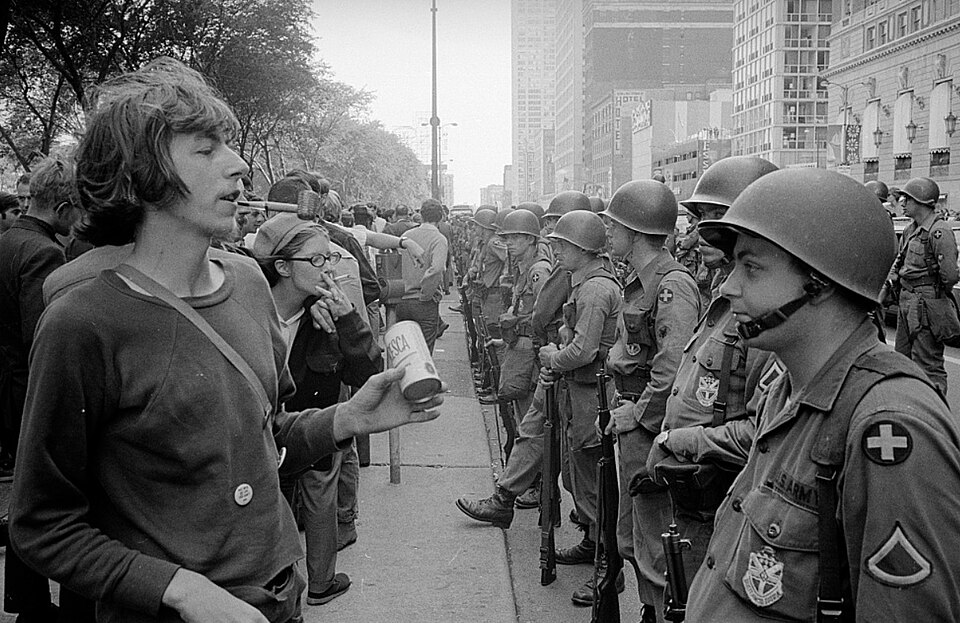
This photograph shows a young protester standing before a row of National Guard soldiers holding rifles during the 1968 Democratic National Convention. It highlights how stark confrontations between demonstrators and armed authorities shaped public perceptions of disorder. The scene includes military equipment and street details beyond the syllabus but helps contextualize the visible scale of security response. Source.
Antiwar demonstrations became more confrontational as the Vietnam conflict escalated.
Youth counterculture rejected conventional norms, worrying more conservative Americans.
Media coverage amplified images of disorder, creating a perception of widespread crisis.
Law and Order: A political demand emphasizing strong enforcement, public safety, and restoration of social stability, often used to critique protest movements and social change.
The use of this framing shifted national debate by suggesting that broad social movements, including those seeking equality, were contributing to national instability. Political leaders often connected cultural change to rising crime—even when data did not always support these associations—shaping public attitudes toward activism.
Richard Nixon and the Rise of Law-and-Order Politics
The political potency of the law-and-order theme became especially clear during the 1968 presidential campaign, when Richard Nixon made it a cornerstone of his platform.
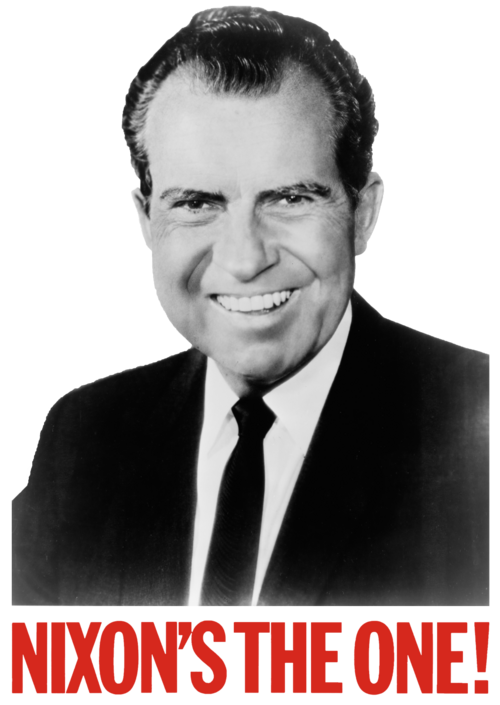
This 1968 campaign poster features Richard Nixon above the slogan “Nixon’s The One!”. It illustrates the candidate’s effort to present himself as the leader capable of restoring stability during a period of social turmoil. Although the poster does not explicitly use the phrase “law and order,” it visually represents the broader messaging strategy tied to that theme. Source.
Nixon appealed to the “silent majority,” a phrase referring to Americans who felt overshadowed by vocal protest movements and who desired a return to order and traditional values.
Nixon’s Strategy
His campaign positioned him as uniquely capable of restoring calm amid turmoil. Key features included:
Portraying dissent and protest as disruptive and unpatriotic.
Emphasizing the need for stricter policing and stronger federal support for law enforcement.
Linking calls for order to broader concerns about social change, including shifting family norms and cultural liberalism.
Criticizing the perceived permissiveness of prior administrations, especially regarding protest and civil unrest.
This rhetoric tapped into anxieties about national identity, moral values, and the limits of acceptable dissent. It resonated across political lines, attracting both conservative Democrats and moderate Republicans.
Federal and State Responses to Demands for Order
The cultural and political shifts of the 1960s prompted tangible governmental actions aimed at strengthening law enforcement capabilities.
Expansion of Policing and Federal Support
Law-and-order advocates pushed for increased funding for state and local police forces, expanded surveillance authority, and new crime-control legislation. Examples included:
The Omnibus Crime Control and Safe Streets Act (1968), which provided federal funding to police departments and set national standards for criminal justice procedures.
Growth of federal agencies concerned with domestic security.
Broader acceptance of tougher sentencing and policing practices.
These policies reflected widespread public support, even though critics argued they risked civil liberties and disproportionately targeted minority communities.
Social Movements and Reactions to Law-and-Order Policies
As the government strengthened its stance, social movements experienced intensified scrutiny. Many activists contended that law-and-order rhetoric was used to delegitimize legitimate dissent, especially regarding civil rights, war policy, and youth culture.
Targeting of Protest Movements
Groups that faced heightened backlash included:
Student antiwar protesters, who were frequently labeled as extremists or threats to national security.
Civil rights organizations, some of which were portrayed as disruptive or radical.
Countercultural groups, whose unconventional lifestyles symbolized broader cultural transformation.
Black Power activists, often depicted through disproportionately negative media portrayals that reinforced demands for tougher policing.
Despite criticism, these movements persisted, but public debate increasingly centered on balancing civil liberties with public order.
The Broader Cultural and Political Consequences
The law-and-order backlash helped shift American politics rightward, contributing to the unraveling of the postwar liberal consensus. It also influenced long-term policy developments, such as expanded policing, greater federal involvement in criminal justice, and rising incarceration rates in subsequent decades.
Transformation of Party Alignments
Law-and-order themes played a key role in political realignments:
Many white working-class voters moved toward the Republican Party.
Suburban voters increasingly supported candidates promising stability.
Democrats faced internal divisions between reform-minded liberals and more conservative members concerned about disorder.
These changes foreshadowed broader ideological shifts that defined American politics well after 1980, demonstrating the enduring impact of 1960s backlash and demands for law and order.
Practice Questions
Question 1 (1–3 marks)
Explain one reason why the theme of “law and order” gained political support in the United States during the late 1960s.
Question 1
1 mark for identifying a valid reason (e.g., rising fears of urban unrest, increased visibility of protest movements, or public perception of social disorder).
1 mark for providing a clear explanation of how this reason contributed to support for “law and order” politics.
1 mark for contextual detail (e.g., reference to media coverage, the 1968 Democratic National Convention, or reactions to countercultural change).
Question 2 (4–6 marks)
Analyse how Richard Nixon used “law and order” rhetoric in the 1968 presidential campaign to appeal to American voters.
Question 2
1–2 marks for describing Nixon’s use of “law and order” language in general terms (e.g., presenting himself as the candidate who would restore stability).
1–2 marks for explaining specific strategies (e.g., appealing to the “silent majority”, criticising perceived permissiveness, linking unrest to broader moral or cultural decline).
1–2 marks for providing contextual evidence or examples (e.g., widespread protests, urban riots, clashes at the 1968 Democratic National Convention, concerns about youth counterculture).
Full marks require both explanation and historical specificity.
FAQ
Television news brought images of protests, riots, and clashes with police directly into American homes, giving many viewers the impression that unrest was widespread and escalating.
Coverage often lacked context, focusing on dramatic confrontations rather than underlying causes. This selective visibility made social change appear threatening to some Americans and increased support for law-and-order rhetoric.
Many suburban residents felt physically removed from urban protest movements but were exposed to them through national media, heightening perceptions of instability.
Suburban voters often associated unrest with declining civic control and looked favourably on political promises of increased policing and stronger government responses to disorder.
Older Americans frequently viewed youth activism as disrespectful or destabilising, contrasting sharply with younger people who saw protest as a legitimate avenue for reform.
These divides amplified political tensions, as many older voters endorsed tougher measures to maintain social norms, while younger activists rejected what they perceived as authoritarian responses.
Yes. State and local leaders often used more direct language linking unrest to crime or moral decline, as they were responsible for immediate policing decisions.
National politicians, including Nixon, framed the issue more broadly, connecting local disturbances to national unity and cultural change, thereby appealing to a wider electorate.
Many African Americans saw law-and-order messaging as a coded response to civil rights activism rather than crime itself.
In practice, increased policing and surveillance disproportionately affected Black neighbourhoods, leading to concerns that the rhetoric justified harsher enforcement rather than addressing systemic inequality or protecting civil liberties.